The Counties With The Youngest Populations
The national median age is currently a record high of 39.4, per the U.S. Census Bureau, and the "Graying of America" implies that the nation's median age will soon be 40. Some geographic pockets across the country are resisting this trend, however. Whether due to the presence of colleges and universities, military bases, cultural expectations, or lower life expectancies, median ages within these counties skew much younger than the national median age. Read on to learn more about where and why counties are recording younger-than-average populations across the United States.
Major College Towns - the Effect of Higher Education
Madison County, Idaho

Located in eastern Idaho's Upper Snake River Valley and home to about 54,600 people, Madison County consistently ranks as the youngest county in the nation, with a median age of 21.4 years. Only 5.7% of Madison County residents are age 65 or older, compared to the national average of 18%. This gap is largely driven by the presence of Brigham Young University-Idaho in Rexburg, whose student body accounts for more than half of the entire county's population. It is also impacted by a higher percentage of married undergraduate students starting young families.
Utah County, Utah

Utah County, in north-central Utah, just south of Salt Lake County, ranks as the youngest large county with a population over 100,000. The county is home to over 747,000 people and has a median age of 26.5. This demographic trend is partially due to the presence of Brigham Young University's campus in Provo and Utah Valley University in Orem. The birth rate is also high in Utah County, at 16.6 per 1,000 residents, with children under 18 making up 30% of the county's total population. The influence of the Church of Jesus Christ of Latter-day Saints is believed to promote higher birth rates and family formation trends within Utah County.
Brazos County, Texas

Home to Texas A&M University in College Station, one of the largest single-campus universities in the country by enrollment, the median age of Brazos County is 26.9 years. University students make up almost 30% of the total county's population of 249,000. Situated in southeast central Texas between the Brazos and Navasota Rivers, the county also features a larger Hispanic population of 28%, a demographic group in the state that skews younger on average with higher birth rates.
Tippecanoe County, Indiana

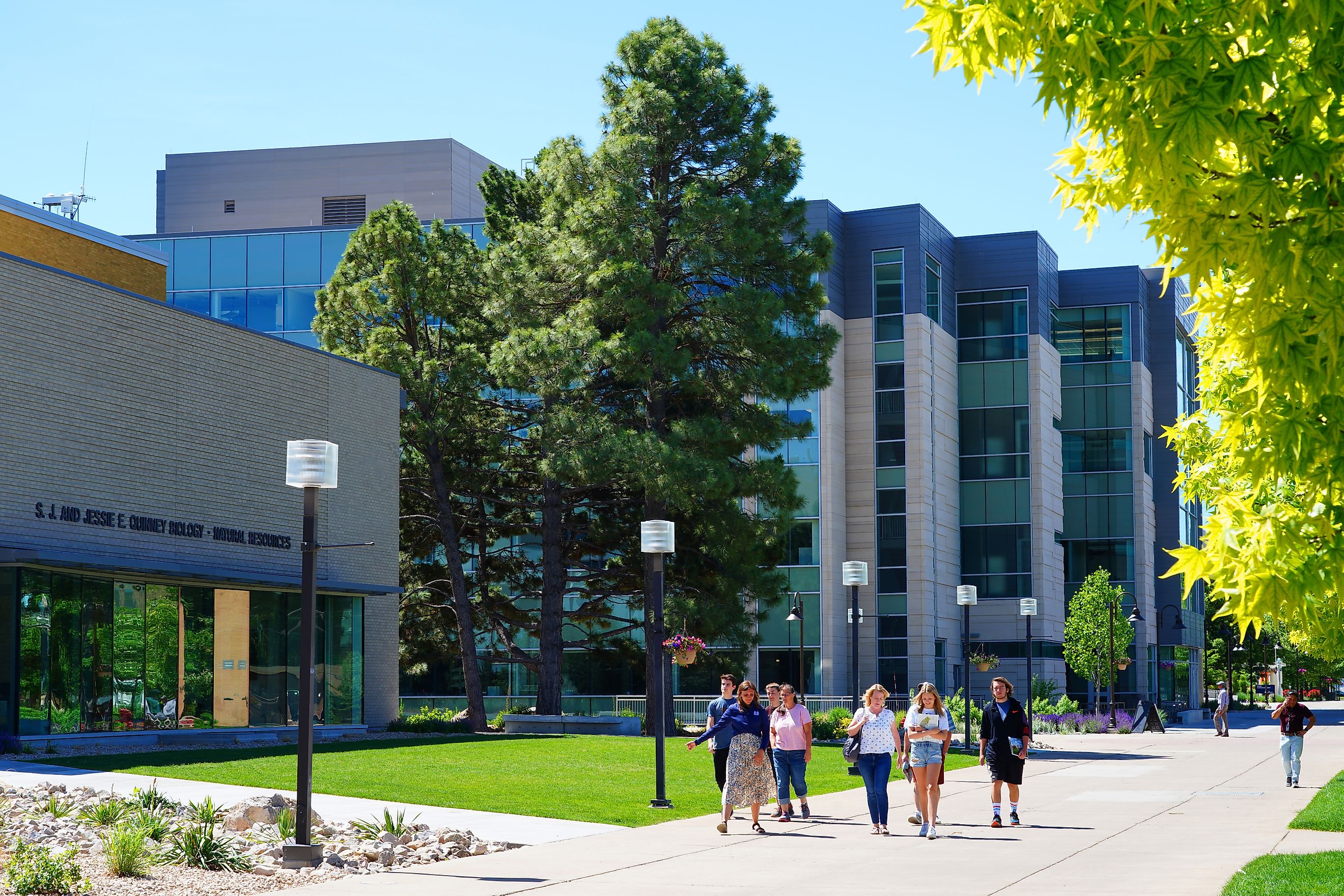
In the west-central part of Indiana, Tippecanoe County is home to Purdue University's main campus. Its on-campus student body accounts for about 26% of the total county population of 191,650, meaning that the university's presence is a strong driver in demographics. The median age in the county may be a bit higher than other counties discussed here, at 28.8. It is interesting to note, however, that the Wabash River divides the county into two halves. The side housing West Lafayette, built around Purdue, has a low median age of 22.5 years. Lafayette, on the other side of the river, has a median age closer to 33 years.
High-Fertility and Cultural Regions - The Effect of Family
Cache County, Utah

Utah is the youngest overall state in the US, with a state median age of 32.4 years. This is largely reflective of the beliefs and values associated with the Church of Jesus Christ of Latter-day Saints. Cache County, in the state's northern region bordering Idaho, has an even lower median age than the state average, at 26.8 years. According to the U.S. Religion Census, 73% of the county's population of over 145,000 people identify as Mormon, based upon administrative church adherence records. This religious influence is also likely responsible for the higher birth rate in Cache County of 19.6 per 1,000 residents, compared to the national rate of 10.7 births per 1,000 residents. Additionally, almost half of the county's population live in the county seat, Logan, home to Utah State University.
Webb County, Texas

Along the border with Mexico in southwest Texas is Webb County, home to over 272,000 people. The lower median age of 30.4 in this county is thought to be due to the higher percentage of young Hispanic residents, who make up 95% of the county's population, and a birth rate that is 1.4 times that of the national birth rate. A quarter of the county's population is under 19. Although Texas A&M International University is in Laredo, Webb County, the university is not the driving factor in the younger demographics of the county. Native fertility rates, cultural family structures, and a high level of entry-level employment for young adults due to Laredo's inland port status are thought to be behind the county's younger demographic.
Military Bases - The Effect of Enlistment
Pulaski County, Missouri

Located in Missouri's south-central Ozarks region, the median age in Pulaski County is 27.8 years, mainly due to the presence of the Army basic training post Fort Leonard Wood, near the towns of St. Robert and Waynesville. Its constant intake of 18-to-21-year-old recruits surely helps to drive down the county's median age. Beyond the basic training recruits who stay in the county for a few months, permanent military personnel stationed at the post tend to be young adults in their early- to mid-20s who are starting families. Children under 18 make up more than a quarter of the county's population of almost 54,000.
Chattahoochee County, Georgia

Bordered by the Chattahoochee River, Chattahoochee County, Georgia is in the state's west-central area. Its population of over 8,800 has a low median age of 24.4 years, thought chiefly to be because of the presence of Fort Benning, just south of Columbus, where the U.S. Army infantry and armor forces are trained. Over 45% of the county's population is between the ages of 20 and 29. The county's small total civilian population means that the thousands of young soldiers training at Fort Benning dominate the county's demographics. This shows what happens when a major military installation dominates a smaller rural county, pushing its median age down further than that of most traditional college towns in the U.S.
Shorter Life Expectancies - The Effect of Early Death
Todd County, South Dakota

The small county of Todd County in south-central South Dakota is home to just over 9,200 people. It has a low median age of 25.5, with 56% of its population under the age of 30, and over 40% under the age of 18. Its low median age and younger demographic can be attributed to the fact that the entire county sits inside the Rosebud Indian Reservation, home to the Rosebud Sioux Tribe. More than 80% of the county's population identifies as Native American. Its birth rate is about 1.4 times the state average, but that's not the whole story. Not only are there more young people in Todd County, but there are fewer older people. According to data from the CDC's National Center for Health Statistics compiled by County Health Rankings, the life expectancy in Todd County is just 67.4 years, much lower than the South Dakota average of 77.3 years and the US average of 77.5 years. Higher birth rates, premature adult mortality, limited healthcare, systemic poverty, and high rates of chronic disease all contribute to Todd County's younger demographic.
Oglala Lakota County, South Dakota
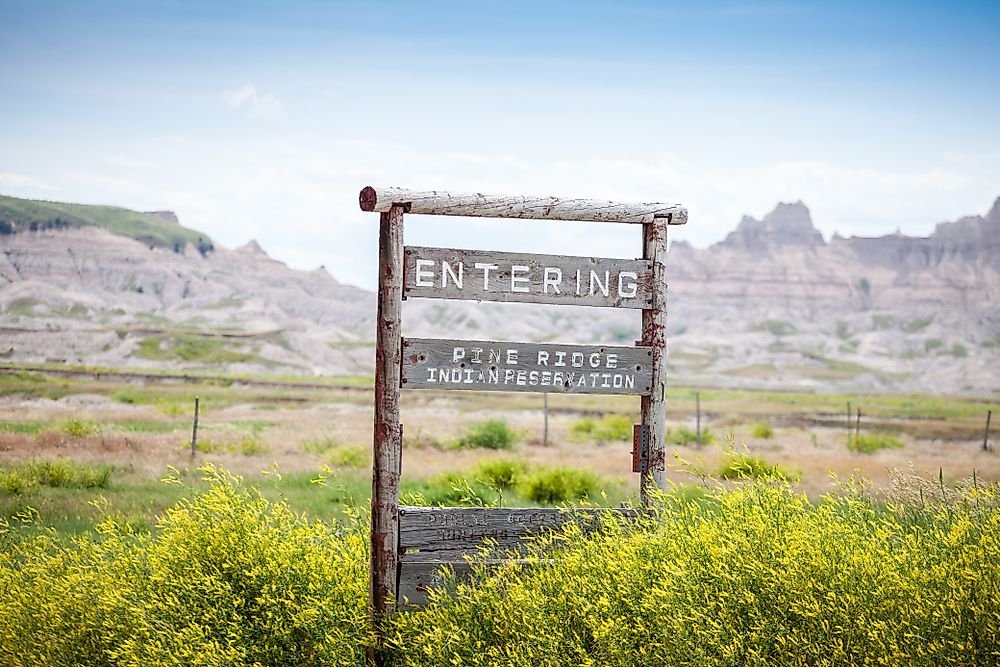
Oglala Lakota County, also in South Dakota, also ranks among the lowest life expectancies in the US, between 66 and 67 years. The county lies entirely within the Pine Ridge Indian Reservation, and over 90% of its population identifies as Native American. The result is that this county of over 13,000 people has one of the youngest populations in the country, with a median age of 28 years. Children under 18 account for 40% of the total population. Unlike temporary student or military influxes, Oglala Lakota County's relative youth is driven by high birth rates, generational poverty, a lack of health care support and social services, and premature adult mortality.
Counties Resisting the Graying of America
While national headlines focus on an aging population in America, these youthful counties reveal a fragmented future. The United States is not aging uniformly. Rather, it is becoming concentrated in specific cultural, institutional, and geographic areas. This will create a higher demand for starter homes, school funding pressures, and a robust entry-level labor force within these areas that buck the trend of the graying of America.