Where People Are Moving To In Delaware In 2026
Delaware keeps adding people, and most are landing in the south. The state has pushed past one million residents and grown about six percent since 2020. Sussex County is absorbing the largest share through beach spillover, retirement demand, and healthcare expansion. Up north Middletown carries New Castle County while Wilmington redevelops. Kent County grows more slowly behind Dover and Smyrna. Here is where the moving trucks are actually heading across Delaware.
Milford

Milford is the clearest growth story in the state. The city has pushed past 13,000 residents, up close to a fifth since 2020, faster than almost any other Delaware town its size. The engine is healthcare. Bayhealth's Sussex Campus, a 250-acre hospital that opened in 2019 and has grown to around 157 beds, reset Milford's role on the Kent-Sussex line. Manufacturing, food processing, and downtown redevelopment fill in the rest. The pitch is simple: room to build, a major hospital, and Route 1 to the coast without paying beach-town prices. The Mispillion Riverwalk runs right through the middle of it.
Middletown

Middletown is where New Castle County's growth jumped the line south of Wilmington and Newark. The town has climbed past 25,000 residents, up more than ten percent since 2020, and it is closing in on the county's mid-size cities. Cheap land and a tangle of highways did it. Route 1, U.S. 301, and U.S. 13 keep Middletown inside commuting range of Wilmington, Dover, and Maryland's job centers. Amazon already operates nearby, and there is talk of a next-generation warehouse on farmland west of town. New subdivisions keep pushing out along the edges while Main Street and the Westown development hold the center. People move here for space that still plugs into the northern job market.
Wilmington

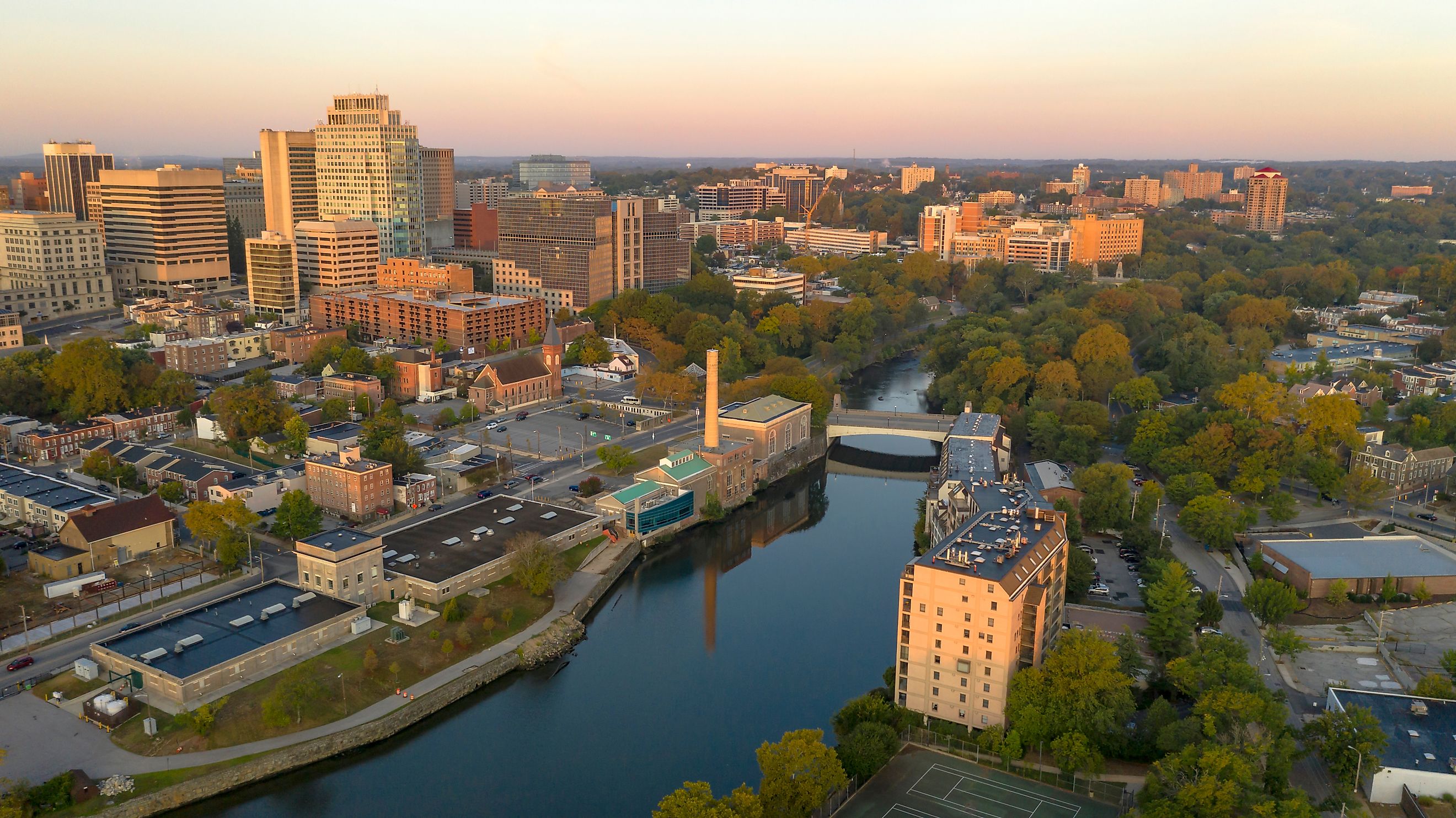
Wilmington is not a boom town, and that is the point. The city has held roughly steady, edging just over 71,000, but it remains Delaware's jobs engine and its only true urban center. Corporate, legal, financial, and healthcare work clusters downtown, and the Amtrak station gives commuters a regional reach no other Delaware town can match. The Riverfront keeps the momentum going, adding apartments, offices, restaurants, and hotels along the Christina. The story here is less raw growth than who is moving back in, drawn by transit, jobs, and walkable blocks. It is the urban counterweight to Delaware's beach and suburban stories.
Seaford

Seaford spent years trying to rebuild after its nylon-plant heyday faded, and it is finally working. The city has grown to about 8,700, up roughly ten percent since 2020, giving western Sussex County a bigger place on the map. The turnaround runs on redevelopment. The old Nylon Capital Shopping Center is becoming a mixed-use campus with healthcare, education, coworking, and retail, and TidalHealth has a new facility planned on the 22-acre site. That builds on TidalHealth Nanticoke and the U.S. 13 service corridor already anchoring the town. Seaford is adding people because it is becoming more than its industrial past.
Millsboro

Millsboro shows how far the beach boom has pushed inland. The town has grown to about 7,600, up well over ten percent since 2020, one of the faster climbs in Sussex County. It sits at the crossroads of U.S. 113 and Route 24, within easy reach of Rehoboth Beach, Lewes, Georgetown, and Long Neck. That location has pulled in subdivisions, shopping, and medical offices along both highways. The draw is not the beach itself but a lower-pressure inland base with the coast still half an hour away.
Georgetown

Georgetown grows because it works for a living. The Sussex County seat has reached about 7,900, up roughly ten percent since 2020, riding the same southern boom without being a resort town. The courthouse, county offices, Delaware Tech's Owens Campus, and the Delaware Coastal Airport give it a practical economy built on government, education, trades, and aviation. Growth spreads across The Circle, the U.S. 113 corridor, and the airport district rather than any single subdivision. People settle here because it sits near the coast but functions as the inland hub that keeps southern Delaware running.
Dover

Dover grows slowly and steadily, the way a capital city does. The state's second-largest city has edged toward 40,000, up modestly since 2020, on the strength of jobs that serve far more than its own limits. State government, Dover Air Force Base, healthcare, and Delaware State University form the base, with consumer-goods and food plants ringing the city. Bayhealth's Kent Campus and the retail along U.S. 13 add to it. A multi-year downtown revitalization, anchored by a new parking garage, is working to bring more life back to the core. Dover does not spike; it accumulates.
Smyrna

Smyrna is central Delaware's commuter play. The town has grown to about 13,300, up a few percent since 2020, modest next to Sussex County but well placed. Sitting where Route 1 meets U.S. 13, it connects easily to Dover, Middletown, and Wilmington. The planned Duck Creek Business Campus, a 206-acre site between the two highways, could eventually add thousands of jobs in offices, research, and warehousing. That kind of employment land tends to pull housing and daytime business along with it. Smyrna keeps growing because central Delaware keeps adding practical places to live and work.
Where Delaware's Growth Is Heading
The pattern is consistent: Delaware's growth is still moving south. Sussex County is taking most of it through retirement demand, inland housing, and beach spillover, while New Castle County leans on Middletown and a reviving Wilmington, and Kent County tracks Dover and Smyrna. For people already here, the strain will show up first in home prices, in traffic on Route 1 and U.S. 13, and in school and hospital capacity. The towns that come out ahead will be the ones that can add housing near jobs without turning every errand into a longer drive.