9 Southern California Small Towns With Unmatched Friendliness
A few of SoCal's friendliest towns sit up the coast in wine country, close enough for a spur-of-the-moment weekend. One is a ferry ride off the coast of Los Angeles. A couple are pine towns above six thousand feet, where the whole community turns out every July for a chili cook-off. In another, half the population puts on traditional Danish dress for a September festival. What they have in common is an ease with strangers. It surfaces at the free summer concert everyone drifts to, and in the tasting room where the person pouring made the wine. The nine below are worth a Saturday, and in a few you will want a good deal longer.
Ojai

The arts scene defines Ojai, and the friendliest weekend of the year comes with the Ojai Music Festival each June. Over four days, concertgoers and residents cross paths at hillside performances, small parlor recitals, and coffee-shop conversations that carry on well past the last set. The rest of the year, the welcome is quieter. Downtown, the Arcade Plaza is a covered walkway of Spanish-style storefronts where shopkeepers know their regulars. At the Ojai Valley Museum, volunteer docents lead tours and trade stories about the valley's citrus-growing past.
The best-known stop in town is Bart's Books, an open-air shop billed as the largest outdoor bookstore in the country, with more than 130,000 titles shelved along walls facing the street. When the store closes, the sidewalk shelves stay out, and browsers pay on the honor system through a slot in the door. On the edge of town, flat, easy trails cross the restored wetland of the Ojai Meadows Preserve, where birders gather most mornings. A short climb up Shelf Road opens a wide view over the valley. At dusk, the surrounding peaks often turn a soft rose during the local phenomenon everyone here calls the "pink moment."
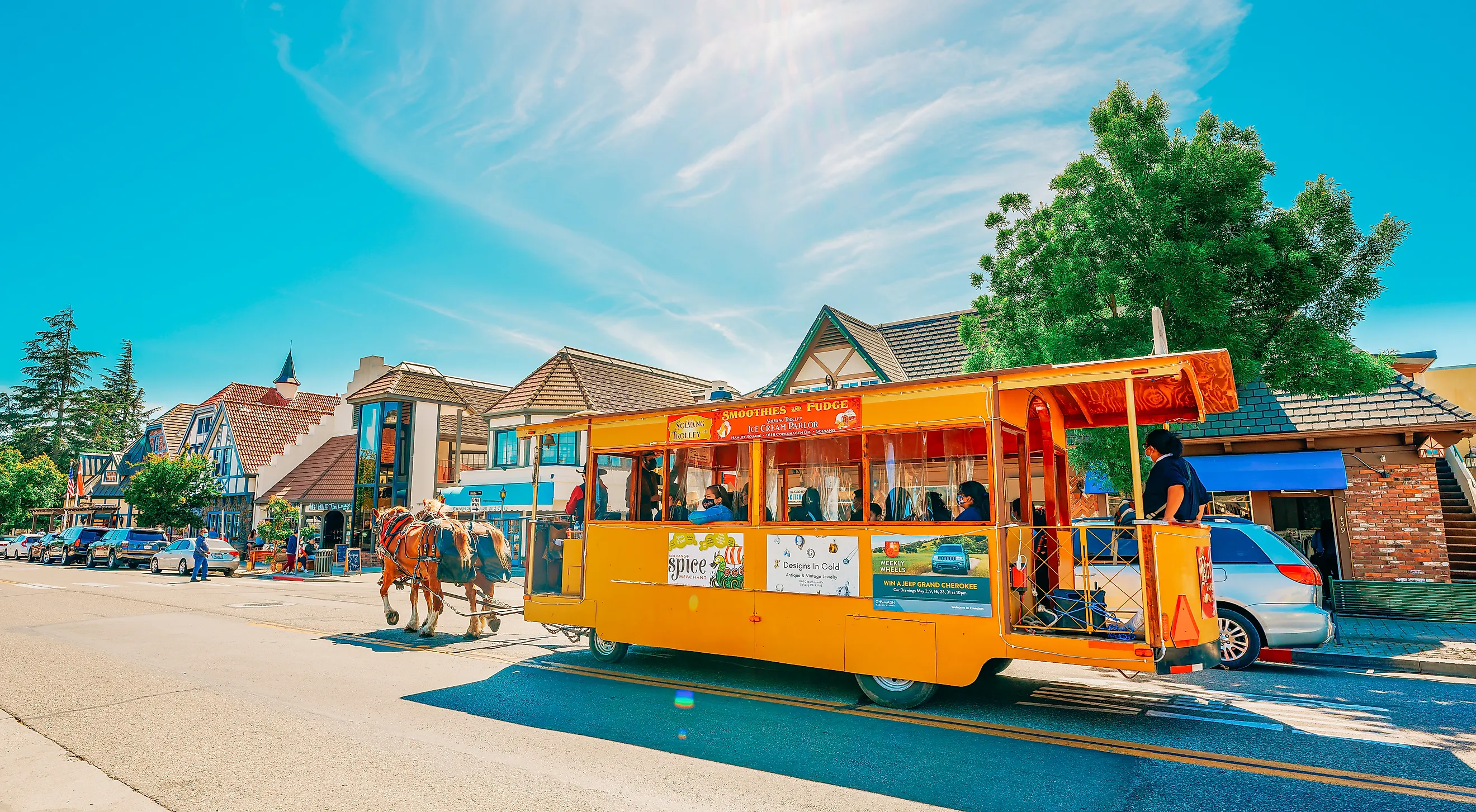
Solvang

Danish immigrants founded Solvang in 1911, and residents still celebrate that heritage every September during Danish Days. For a long weekend, residents pull on traditional dress for a parade, folk dancing, and craft demonstrations that turn the whole downtown into a street party with a century of history behind it. Half-timbered buildings and a few working windmills line the blocks, and the shops between them stock Danish sweets. Mortensen's Bakery is the one to reach early, since the kringle and kransekage go fast. Across the plaza, the Solvang Vintage Motorcycle Museum holds a small, carefully restored collection that most visitors walk right past.
A few minutes on foot from the shops, the Alisal River Trail follows the water for close to three miles under oaks and sycamores. Joggers, cyclists, and dog walkers nod as they pass, and the path ends at a picnic area where people linger on the benches. If you want a break with something to eat, the Copenhagen Sausage Garden serves up Danish-style sausages with mustard and sauerkraut.
Los Olivos

Wine is the language of Los Olivos, a small grid of tasting rooms set among the vineyards and oaks of the Santa Ynez Valley. Every October, Day in the Country fills the streets with a parade, live music, and artisan booths, and longtime residents roll out vintage tractors and tables of homemade jam that give the day an old-fashioned, county-fair warmth. The heart of the town is walkable and close-packed, with more than two dozen tasting rooms inside a few blocks, many of them family-run and poured by the people who made the wine.
Carhartt Family Wines has a small backyard patio where the staff talk you through each bottle. Nearby, at Stolpman Vineyards, the pours run to bold reds, often set out by someone with deep roots in the valley. Wine is not the only draw. Jedlicka's Western Wear has outfitted the valley's ranchers for generations, and its boots, hats, and gear nod to the working history that still runs underneath the tasting-room culture.
Coronado

Every Sunday evening from May through September, residents gather at Coronado's Spreckels Park for Concerts in the Park, spreading blankets on the grass for jazz or classical music while kids chase each other around the gazebo. It is the town at its most relaxed and most welcoming. Down at the shoreline stands the Hotel del Coronado, the red-turreted Victorian resort that opened in 1888 and gained National Historic Landmark status in 1977. Guided tours inside cover its ghost lore and its early ties to Hollywood.
Orange Avenue is the center of daily life in town, with cafes, galleries, and small shops easy to wander between. The Coronado Museum of History and Art sees fewer visitors than it deserves, with rotating exhibits and guided walks past the historic homes nearby. Down at the Coronado Ferry Landing, you can rent a kayak or paddleboard and glide out toward the San Diego skyline. For a longer outing, the Silver Strand runs roughly eight miles of separated bike path south toward Imperial Beach, part of the wider Bayshore Bikeway that loops the bay.
Tehachapi

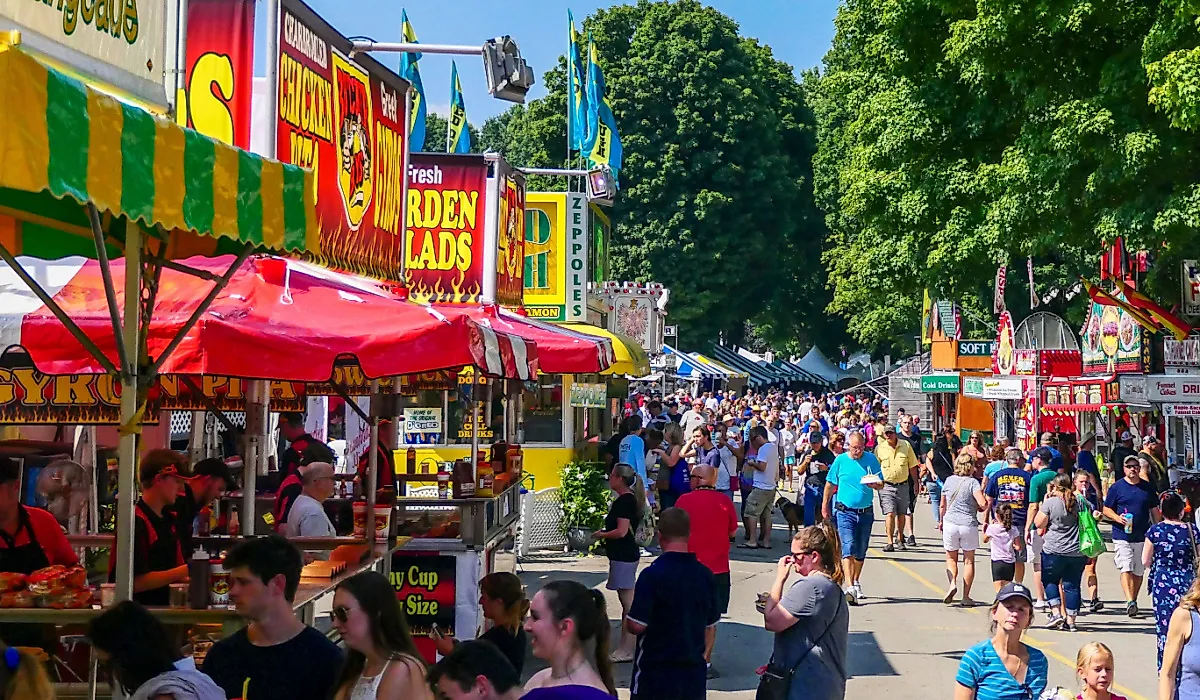
High in the mountains between Bakersfield and the Mojave Desert, Tehachapi's biggest party each August is the Mountain Festival. Over the weekend, Philip Marx Central Park fills with live music, handmade crafts, food booths, and a car show, and a hometown parade winds through downtown. Show up on your own and you are likely to be waved onto someone's picnic blanket before the afternoon is out.
The town grew up around the railroad, and it has not let go of that history. The Tehachapi Depot Railroad Museum holds original rail tools, maps, and a working model of the Tehachapi Loop, the spiraling engineering landmark a few miles west where long freight trains cross over their own tails as they climb. Next door, the Errea House Museum is one of the few structures still standing from the 1800s settlement. A small wine and cider scene has grown up around town as well, with valley views at Triassic Vineyards and a pour poured by the winemaker himself at Stray Leaves Vineyard.
Barstow

Barstow grew up at the crossroads of the railroads and Route 66, and its welcome has a rugged, road-trip edge. The Main Street USA Car Show each October lines the downtown blocks with classic cars, vintage signs, and booths of old-school memorabilia, drawing owners and onlookers into easy conversation. The Route 66 Mother Road Museum, housed in the historic Harvey House depot, keeps the artifacts and photographs that trace the highway's heyday.
Just outside town, the Rainbow Basin Natural Area catches many visitors off guard. Its banded canyons and tilted rock layers look almost engineered, and you can take them in on foot around the loop or from the seat of a car along the scenic drive.
Avalon

Step off the ferry at Avalon, the only real town on Santa Catalina Island, and someone will usually offer directions and a smile before you ask. The openness peaks each September during the Catalina Film Festival, when filmmakers and islanders mix at screenings in the historic Avalon Theatre and the Casino ballroom, trading opinions on the indie films and documentaries between shows.
Crescent Avenue curves along the harbor past small shops, ice cream counters, and island cafes. Above town, the Wrigley Memorial and Botanic Garden is planted with species native to the island and was built by local crews to honor chewing-gum magnate William Wrigley Jr., whose family shaped much of Catalina. From the memorial terrace, the whole bay opens up below. Down at the water, the Descanso Beach Club hosts paddleboard lessons, beach yoga, and casual volleyball, the kind of thing strangers join without much prompting.
Buellton

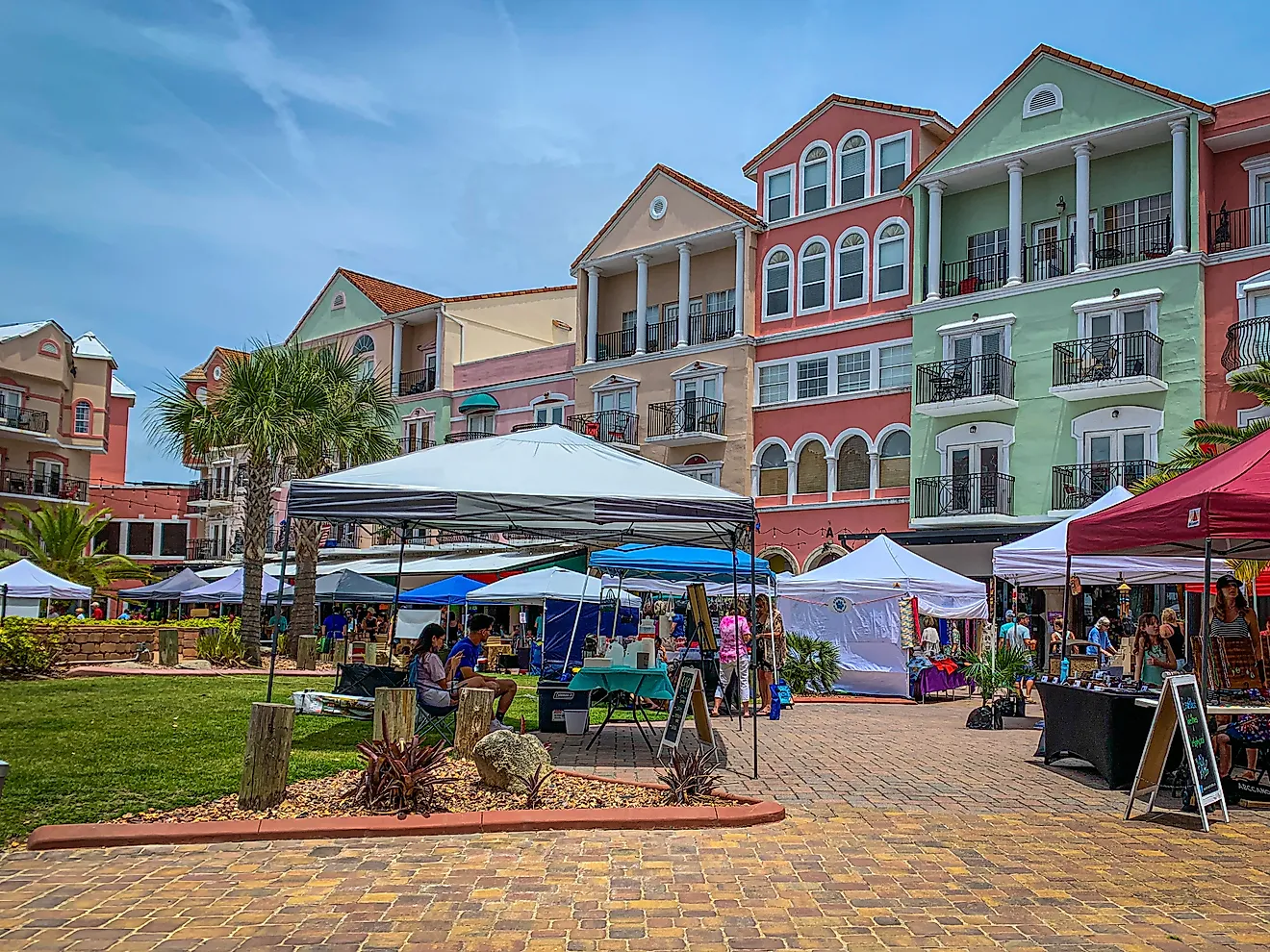
Buellton is an easy, unhurried stop in the Santa Ynez Valley, and twice a year two big events turn it into a place for mingling. The Buellton Brew Fest gathers more than fifty breweries, wineries, and distillers at River View Park each May, with country music playing while people compare pours under the oaks. Come November, the Fall Festival runs down the Avenue of the Flags for three days of carnival rides, artisan booths, local bands, and street food.
The rest of the time, the town's gathering spots are close together and low-key. Locals fill the pepper-tree-shaded patio at Figueroa Mountain Brewing Co. on trivia nights and slow afternoons. Before you leave, look for the Mendenhall Museum of Gasoline Pumps and Petroliana, a private collection of restored pumps, glass globes, porcelain signs, and roadside Americana that its owner has spent decades assembling.
Wrightwood

At 6,200 feet in the San Gabriel Mountains, Wrightwood residents have put on Mountaineer Days for more than six decades, a two-day July celebration with a parade, live music, pony rides, a petting zoo, axe-throwing, and a chili cook-off. Over Labor Day weekend, the Mountain Music Festival fills Vivian Null Park with a free outdoor bill of regional bands, singer-songwriters, and food booths.
The trails start close to the front doors. The Big Pines Nature Trailhead sits half a mile out, and the Acorn Canyon Trail leads through wildflowers and tall pines where deer turn up often enough that regulars expect them. In winter, families and locals head to the Mountain High ski resort a few miles west for the tubing hills, and instructors trade tips by the lodge fire.
The Thread That Ties Them Together
The friendliness in these nine towns is not a marketing line; it shows up in what people actually do. It is the Los Olivos winemaker who pours a second glass and starts telling you about the harvest. It is the neighbor in Buellton who saves you a seat at the Fall Festival, and the Tehachapi docent who stays past closing to finish a story about the Loop. None of it depends on knowing anyone in advance.
What holds the list together is simple. In the island cafes of Avalon and on the pine trails of Wrightwood alike, the welcome comes from residents rather than any single attraction. You do not have to live in these places to feel folded into them. You mostly just have to turn up, and once you do, someone will usually have a story ready and a reason for you to stay a little longer.