The Safest Small Towns In Pennsylvania
On a weekday morning in one of Pennsylvania's smaller boroughs, the pace tells you almost everything. A crossing guard waves the last kids across Main Street. The bakery already has its lights on. What ties these towns together is a shared sense of ease built on walkable streets and steady community life. Each one also holds crime rates that sit well below state and national averages. These are places where daily life still has room to unfold slowly.
Lititz

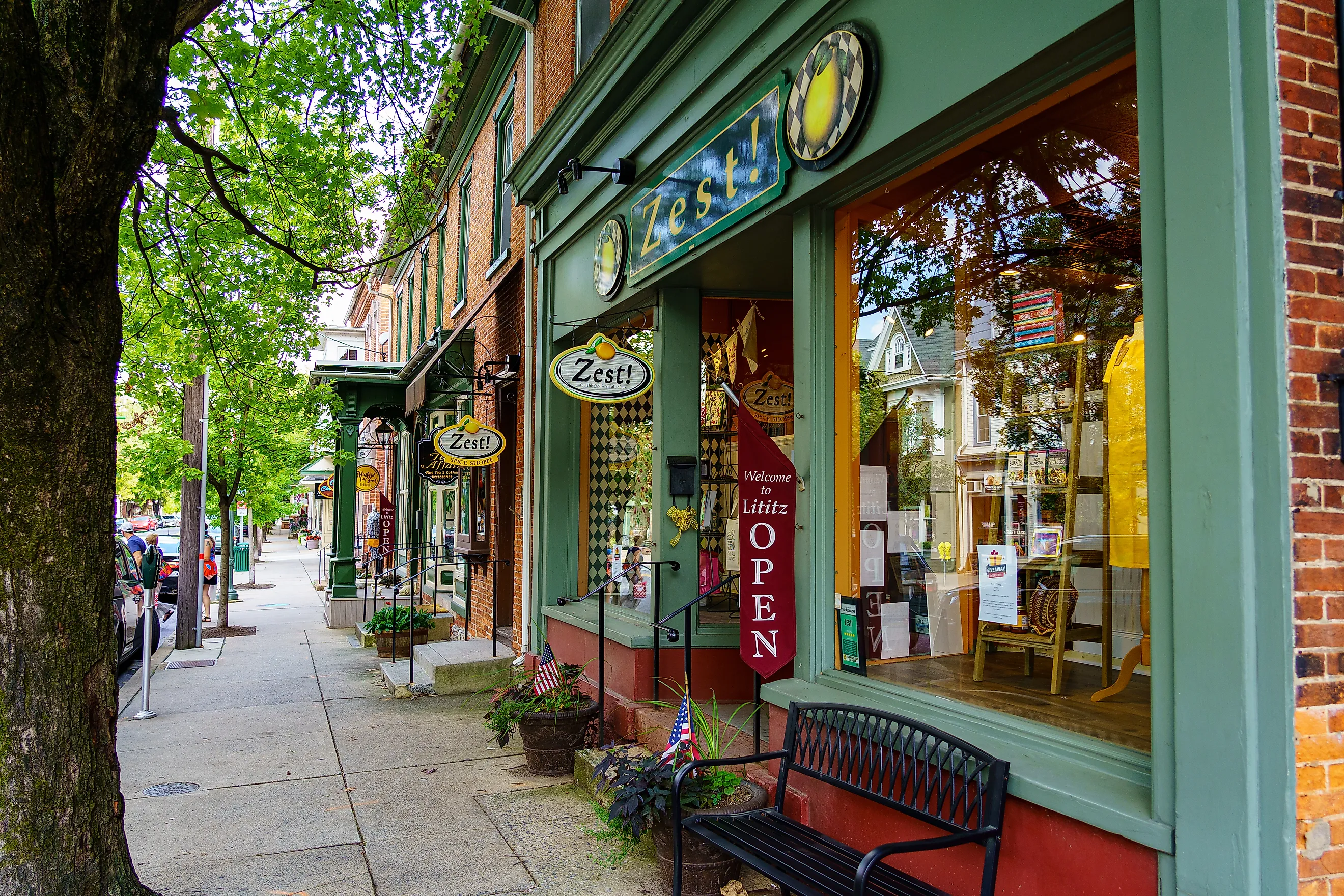
Lititz built its reputation on small pleasures done well. The Julius Sturgis Pretzel Bakery has been twisting dough on Main Street since 1861, and it still runs tours that end with a warm sample. A few doors down, the Wilbur Chocolate shop keeps the town's sweet tooth satisfied, while Lititz Springs Park gives families a shaded green at the center of everything. The borough traces its roots to a 1756 Moravian settlement, and the Lititz Historical Foundation keeps that story close at hand. Regularly named among America's friendliest and most livable towns, this Lancaster County borough stays walkable and low-key, the kind of place where the sidewalks do more work than the roads.
Kennett Square

Kennett Square wears its title as the Mushroom Capital of the World without a trace of irony, since farms in and around the borough grow a large share of the country's mushrooms. Downtown, State Street runs tree-lined and easy, with the year-round Kennett Square Farmers Market anchoring the community's farming pride. Every September the Mushroom Festival fills the streets with tastings, music, and cooking contests. Just outside town, Longwood Gardens spreads across more than a thousand acres of fountains and glasshouse blooms. Set in one of Pennsylvania's lower-crime counties, this Chester County town keeps its walkable core friendly and unhurried.
Doylestown

Doylestown packs an unusual amount of ambition into a compact county seat. Henry Mercer left it three connected concrete landmarks, the Mercer Museum, Fonthill Castle, and the Moravian Pottery and Tile Works, all within reach of downtown. The James A. Michener Art Museum adds another cultural stop, and the 1938 County Theater still screens independent and foreign films on Main Street. The walkable center draws an arts festival at the end of summer and stays busy with independent shops the rest of the year. Doylestown pairs that energy with consistently low crime, which helps explain why it lands so often on lists of Pennsylvania's most livable small towns.
Lewisburg

Lewisburg reads like a well-kept 19th-century town that happens to host a university. Its historic district holds hundreds of preserved period buildings, and Market Street stays lively with antique shops, galleries, and the long-running Lewisburg Farmers Market every Wednesday. The Campus Theatre, an art deco cinema approaching its hundredth year, still draws crowds for date nights and family outings. Bucknell University sits at the edge of it all without overwhelming the small-town feel. Set in one of Pennsylvania's quieter, lower-crime counties along the West Branch Susquehanna, Lewisburg keeps its walkable heart intact.
Emmaus

Emmaus grew out of a closed Moravian settlement founded in 1759, and its original colonial street grid is still largely intact. That tight, low-traffic layout is part of why the borough keeps crime rates well below state and national averages, backed by its own police department. The Shelter House, a 1734 log building, ranks among the oldest log structures in the Lehigh Valley, and the Emmaus Historical Society fills in the rest of the town's mining and railroad past. The vintage Emmaus Theatre sign still marks Main Street, and a growing craft-beer scene includes Funk Brewing and Yergey Brewing. For open space, the Wildlands Conservancy's South Mountain Preserve puts hundreds of wooded acres within easy reach.
Elizabethtown

Elizabethtown organizes itself around a genuine town square, where High and Market Streets meet at Center Square in the middle of downtown. Locals call it E-town, and the borough carries one of the lower crime rates in Lancaster County, with property numbers running below both state and national figures. Elizabethtown College brings a steady student presence, while the Masonic Village has anchored the community's south side since 1910. The five-mile Conewago Recreation Trail draws walkers most days, and the Masonic Village Farm Market keeps produce and baked goods close by. It is an easy, unpretentious place to spend an afternoon on foot.
Collegeville

Collegeville folds a college, a creek, and a very low crime rate into a small Montgomery County footprint. The Perkiomen Creek and its trail define daily life here, filling on weekend mornings with cyclists, runners, and dog walkers beneath the sycamores. Ursinus College adds the Philip and Muriel Berman Museum of Art, and the early Perkiomen Bridge Hotel still marks the borough's older history. Public-safety numbers are reassuring, with essentially no homicides and property crime below the national average in recent years. Nearby Evansburg State Park widens the options with thousands of acres of woods and trails just outside town.
Waynesboro

Waynesboro sits at the foot of the mountains in southern Franklin County, close enough to Michaux State Forest and the Appalachian Trail to feel like a gateway to them. Renfrew Museum and Park preserves an early farmstead and its grounds on the edge of town, giving walkers trails and open meadows a short drive from Main Street. The downtown carries the marks of the borough's industrial past while local shops and restaurants keep it in everyday use. Waynesboro turns up on lists of Pennsylvania's safer small towns, with violent crime that stays low year to year. It rewards travelers who like their small towns close to the woods.
What Safety Looks Like Here
None of these towns leads with its crime statistics, and that is the point. What actually shows up on the ground is scale. You see it in streets you can cross on foot, a downtown worth walking, parks that get used, and businesses that neighbors keep busy. The numbers back up the feeling, with rates that sit below state and national averages, but the numbers are not what you notice first. You notice a place that still leaves room for an ordinary morning.