The Best State Parks In The Rocky Mountains
A river that disappears underground, a lake known for its striking blue water, and rugged mountain landscapes are just some of the features found in the Rocky Mountains' state parks. The national parks might be the ones that get the most attention, but they are not the only places where travelers can experience the mountain scenery that draws visitors to the region. Some state parks can be explored in a single day, while others have enough trails, campsites, and views to fill a longer weekend. For travelers who want the scenery and recreation associated with the Rockies without following the most obvious route, these eight state parks offer some of the best alternatives.
Bear Lake State Park, Utah

Bear Lake sits within a basin shaped by tectonic activity, with faulting creating the depression that holds the lake today. Its intense aqua-blue water is the defining feature that draws visitors to Bear Lake State Park, with calcium carbonate floating in the water creating its signature color. The effect is especially eye-catching against the sandy beaches and surrounding mountains, giving the 112-square-mile lake a Caribbean-like appearance despite sitting at an elevation of 5,923 feet.
The park itself is divided into three recreation areas, each offering a different way to experience the lake. Its Marina sits in Garden City along the shore of Bear Lake and focuses on boating, while Rendezvous Beach provides a sandy shoreline for relaxing and four campgrounds. The Eastside provides additional access to the water, with additional campsites and boat launches available in the area. Bear Lake offers plenty of opportunities for swimming, boating, fishing, and other water-based sports. But Eastside's Cisco Beach in particular stands out for its unusual winter activity, when Bonneville Cisco fish gather near the shoreline to spawn for up to two weeks every January. The whitefish species draws anglers to the area every winter, while the beach's steep drop and rocky bottom make it a popular spot for inland scuba diving in the summer. If visitors would like to stay overnight but would rather avoid setting up a tent after a long day, mini cabins are also available for rent in the Eastside.
Cheyenne Mountain State Park, Colorado

Cheyenne Mountain State Park occupies a large stretch of open land south of Colorado Springs, where the flatter terrain around the city gradually gives way to the slopes of Cheyenne Mountain. Grasslands, oak-covered foothills, and pine forests create a varied landscape across the park's 2,701 acres, giving visitors several different environments to explore within one destination. The land was once part of the JL Ranch, a property that grew under the Jones family before plans for mixed-use development threatened to change the area. Instead, much of the former ranch was preserved for conservation, eventually leading to the development of the state park in 2000. Today, the park preserves one of the last significant pockets of undeveloped land along the southern Front Range.
The variety of terrain also gives the park's trail system plenty of range, with more than 28 miles of routes. Hiking and biking are popular ways to explore, while designated trails also accommodate horseback riding. The different habitats support a surprisingly broad collection of wildlife, including mule deer, prairie dogs, coyotes, black bears, foxes, along with numerous bird species. Visitors can also do something beyond the usual mountain recreation at the park's archery range, which includes traditional targets as well as three-dimensional foam animal targets. Those looking to stay longer can make use of the park's 61 campsites, making it easy to turn a visit into a weekend-long wilderness getaway.
Golden Gate Canyon State Park, Colorado

Just an hour from Denver, Golden Gate Canyon State Park offers an expansive mountain escape across more than 12,000 acres. The park's terrain changes considerably throughout the landscape, with open meadows, forests, rocky summits, and streams creating a setting that feels much more remote than its proximity to the city suggests. More than 35 miles of hiking trails run through these different landscapes, offering a range of easy, short paths to longer, more strenuous ones. Some trails also lead to elevated viewpoints, like Panorama Point, where a 100-mile view stretches across the natural ridge line of the Continental Divide.
Golden Gate Canyon State Park offers plenty to do beyond hiking trails, with several ponds providing opportunities for fishing during the warmer months. Winter changes the experience, as the park's trails remain open for cross-country skiing and snowshoeing after snowfall. For the more adventurous visitors, there are plenty of rock climbing spots as well, connected to some backcountry hiking areas. Wildlife is another major part of the experience, with moose, elk, bobcats, black bears, weasels, and plenty of other mammals and birds roaming the area. Overnight options include 156 campsites along with cabins and yurts, giving visitors several ways to spend the night in the mountains.
Mueller State Park, Colorado

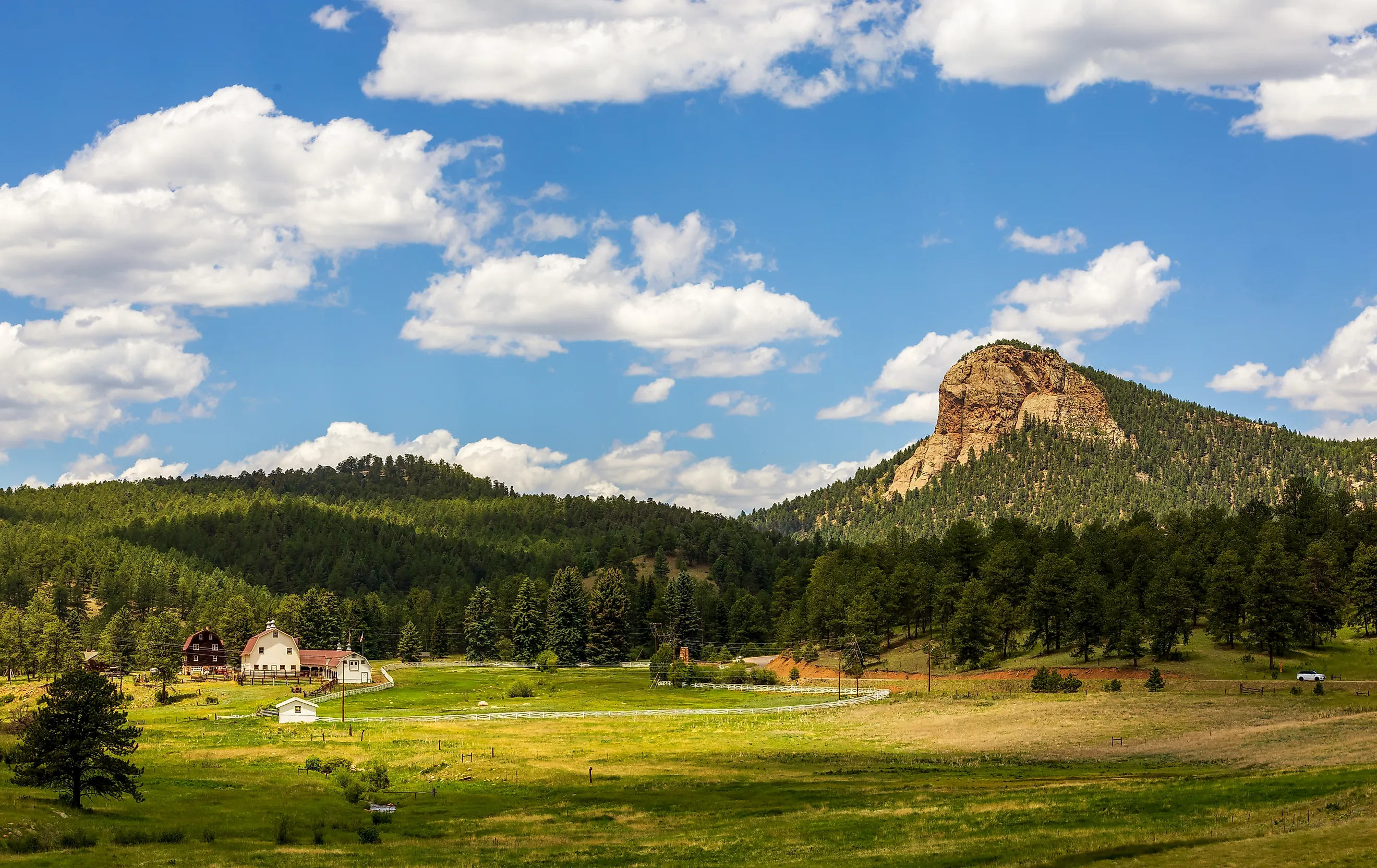
Set against the western foothills of Pikes Peak, Mueller State Park combines open meadows, dense forests, and enormous granite formations across more than 5,100 acres. The land was originally part of the Mueller Ranch in the 1950s and was later purchased for conservation purposes, eventually becoming the state park visitors see today. The exposed rock is part of the same ancient granite formation associated with Pikes Peak, creating prominent outcroppings throughout the park that contrast with the surrounding forests. At an elevation of 9,600 feet, Mueller State Park provides expansive views of Pikes Peak and the surrounding mountains, with several overlooks offering places to take in the scenery.
Elk, mule deer, black bears, and 158 species of birds inhabit the park's forests, meadows, and wetlands. More than 44 miles of trails give visitors plenty of opportunities to explore these habitats, with routes spanning easy 0.5-mile walks and longer, three-mile hikes that could take hours. Three beautiful self-guided nature trails add an educational element, including the Children's Dragonfly Trail that takes families by Dragonfly Pond to explore bugs, birds, deer, and small forest animals. The park also supports fishing at several ponds, while winter brings fun for all ages with sledding, snowshoeing, and cross-country skiing throughout the hiking paths. Those looking to stay overnight can choose from year-round campsites or three rustic log cabins tucked away in the wilderness with views of Pikes Peak.
Sinks Canyon State Park, Wyoming

Water seemingly vanishes into the ground at Sinks Canyon State Park, where the Popo Agie River flows into a cavern known as The Sinks. The river eventually resurfaces about a quarter mile farther down the canyon in a calm pool that is home to rainbow trout. Set within Wyoming's Wind River Mountains, the park surrounds this geological oddity with steep canyon walls and a range of natural habitats that support many plant and animal species.
The unusual river may be the park's signature attraction, but the surrounding canyon makes rock climbing one of its best activities. Limestone and sandstone cliffs provide a variety of routes for climbers, while hiking and mountain biking trails give visitors access to the canyon and surrounding Wind River Mountains. Visitors can also learn more about The Sinks through cave tours and at the park's visitor center for a closer look at the area's odd geology. Fishing provides another way to experience the Popo Agie River, while the canyon's varied habitats allow wildlife viewing of mule deer, black bears, bighorn sheep, and the occasional moose. Visitors who want to stay overnight can choose from tent and RV campsites as well as rentable yurts.
State Forest State Park, Colorado

At nearly 71,000 acres, State Forest State Park is a massive park with enough space to include mountain peaks, forests, lakes, miles of backcountry, and a whopping 228 campsites. Water is one of the park's defining features, with North Michigan Reservoir providing a large setting for boating and fishing, while dozens of smaller lakes occupy the surrounding mountains. Lake Agnes is particularly notable, sitting at roughly 10,600 feet above sea level and reachable by a short hike of less than a mile. The combination of high-elevation lakes and rugged mountain terrain gives the park a remote feel.
Moose are particularly associated with State Forest State Park, as it is often referred to as the "Moose Viewing Capital of Colorado," according to Colorado Parks & Wildlife. Mule deer, snowshoe hares, river otters, and numerous bird species can also be found throughout the park, giving visitors multiple opportunities to spot wildlife while exploring. The massive trail system accommodates hiking, biking, and horseback riding, while the park's lakes provide opportunities for fishing, boating, and ice fishing in the colder months. Winter also brings other fun activities like snowmobiling, cross-country skiing, sledding, and snowshoeing. Of the 228 campsites, options include regular campgrounds, cabins, yurts, and backcountry sites for those wanting to be a little closer to nature.
Staunton State Park, Colorado

Staunton State Park packs a remarkable amount of mountain terrain into its nearly 4,000 acres, with meadows at lower elevations giving way to forests and granite cliffs. The park spans elevations between about 8,100 and nearly 10,000 feet, creating noticeable changes in scenery as visitors travel farther into the landscape. Its granite formations and wooded slopes are also part of a property with a long history of human use, including homesteading, ranching, and logging. The first major piece of land for the park was donated to Colorado Parks and Wildlife in 1986. This created a snowball effect and led to the conservation acquiring more land in the following decades from various donors, creating the park people see today.
More than 30 miles of trails provide ways to explore Staunton on foot, by mountain bike, or on horseback, with routes spanning short loops and challenging day hikes. One of the park's most adventurous paths is the 12-mile round-trip trek to Elk Falls, which takes hikers up to five hours to complete. Rock climbers have plenty of options too, with more than 400 climbing routes spread across the park's rock formations. There is also something more unique about Staunton State Park, as it focuses heavily on accessibility. Its all-terrain Track Chair Program allows visitors with disabilities to explore three designated trails and reach views of Pikes Peak, Mount Rosalie, and Lions Head. The park's year-round walk-in campsites are another helpful aspect for people who may be too tired to travel back home after a day on the trails.
Whitefish Lake State Park, Montana

At just 10 acres and an elevation of 3,012 feet, Whitefish Lake State Park packs a beautiful lakeside escape with mountain backdrops into a compact setting. Woods surround the park's shoreline, where a sandy beach opens onto Whitefish Lake and provides a natural focal point for recreation. The calm waters invite visitors to enjoy swimming, fishing, and water-skiing, while the boat launch makes it easy to hop on a watercraft and enjoy a day on the water. Picnic areas tucked among the trees offer places to relax between activities, adding to the park's appeal as a simple place to spend the day beside the lake.
The Montana park's compact size makes it well suited for overnight stays, with campsites accommodating both tents and RVs beneath the surrounding trees. For cyclists passing through the area, a separate hike-bike campsite provides a convenient resting area before getting back on the close by Great Divide route. Meanwhile, seasonal equipment rentals make it possible to enjoy the park without packing your car to the brim, offering kayaks, paddleboards, and pedal boats during the warmer months.
Explore the Rocky Mountains One State Park at a Time
The Rocky Mountains offer more than a single version of mountain scenery, and these state parks make that variety especially apparent. Their landscapes take in lakeshores, forests, granite formations, high-elevation meadows, and dramatic canyons, while the activities in each park vary just as much. Some destinations are better suited for relaxing days beside the water, while others cater to visitors who want to spend hours on the trails or watching local wildlife. The best Rocky Mountain state park depends entirely on the kind of experience you are looking for.