The US Towns With The Lowest Cost Of Living On The Coast
Cost of living can mean different things in different places, and the coastal towns in the US with the lowest costs may not necessarily be the most affordable places to live. Low home prices can be offset by expensive flood insurance, repeated storm damage, costly repairs, or high crime rates that increase the need to spend more on security. Beyond just pressure on a household budget, these factors can also mean sleepless nights during storm season and the emotional strain of worrying about personal safety or unexpected expenses. So rather than relying on cheap housing alone, this list weighed everyday services, healthcare access, and safety along with exposure to flooding and hurricanes. Some neighboring towns may have cheaper housing, but these towns' reasonable expenses and dependable facilities make them more cost-effective over time, and each comes with an honest drawback so you can judge the full picture.
Port Lavaca, Texas

Located on Lavaca Bay, Port Lavaca offers beach-town living without the expensive price tag. While the town enjoys no state income tax thanks to its location in Texas, its housing is also well below the national average, at $185,020. And complementing the inexpensive costs are a couple of facilities and attractions, including the Memorial Medical Center, which provides basic healthcare, emergency, and specialty services such as orthopedic care. Recent data suggest overall crime in Port Lavaca runs below the national level, and there's plenty to do in the area, including fishing and seafood dining at the Indianola Fishing Marina and relaxing on the sandy shore and watching birds at Lighthouse Beach Park.
- Con: High property taxes, vulnerability to hurricanes, and coastal flooding.
Gulfport, Mississippi

Widely considered the economic engine of the Mississippi coast, Gulfport is an incredibly affordable place to live. Here, homeownership is within reach of many, with homes valued at $206,122, plus rent is cheap at $1,467, about 24% lower than the national average. Even more appealing, the town has facilities to meet the needs of residents without the need to travel out of town. For healthcare, Memorial Hospital Gulfport provides emergency services, alongside stroke, heart, and surgical care, among other services. For frequent travelers, the Gulfport-Biloxi International Airport sits right in town, bringing several Gulf Coast destinations closer to home. To crown it all, Gulfport is a paradise for recreation, featuring attractions like the Mississippi Aquarium, which houses over 200 species across freshwater and saltwater habitats. The Gulf Islands Waterpark is also in town, offering fun for all ages, with waterslides, a lazy river, a wave pool, and rides.
- Con: Hurricane exposure, storm surge, flooding, and the risk of being a victim of crime.
Port Isabel, Texas

Port Isabel sits on the Laguna Madre at the mainland end of the Queen Isabella Causeway, which puts the beaches of South Padre Island a short drive away while residents pay mainland prices. According to Zillow, the typical home here is valued at $263,288, well below the $366,157 national figure and under the Texas average of $296,424. Like Port Lavaca, the town also benefits from the state's zero income tax. Daily needs are covered by local health clinics, a pharmacy, and full-size grocery stores, while hospital care and the Brownsville South Padre Island International Airport are both roughly 25 miles away in Brownsville. The town's centerpiece is the Port Isabel Lighthouse, built in 1852 and open to visitors, and the bay side is lined with marinas for fishing charters, dolphin-watching trips, and kayaking on the shallow Laguna Madre.
- Con: Rent runs slightly above the national average at $1,993, there is no full hospital in town, and the low-lying shoreline is exposed to hurricanes and storm surge.
Panama City, Florida

Panama City is one of Florida's most beloved towns, which also happens to be among the coastal destinations with a considerably lower cost of living. On average, homes in Panama City are valued at $282,475, way below the state average of $375,361. But that's not all. The area is also full of things to do, with attractions like St. Andrews State Park in neighboring Panama City Beach, where residents can enjoy the pleasures of the Gulf, with over a mile of beaches, and activities like snorkeling, swimming, surfing, hiking, camping, and fishing. Meanwhile, a long drive is not required to get quality medical care, as the esteemed HCA Florida Gulf Coast Hospital is right on 23rd Street, providing comprehensive surgical and emergency care, among other services. Notably, Panama City has a sizable collection of newer homes built with updated engineering standards to withstand storms and strong winds, which can mean fewer surprise bills compared to older coastal towns. Rent is also below the national average at $1,655, according to Zillow, and amenities like the Northwest Florida Beaches International Airport, which offers regular flights to several domestic destinations, adds more convenience to life in Panama City.
- Con: Hurricane risk is real, and homes closer to the water may carry higher insurance premiums.
Myrtle Beach, South Carolina

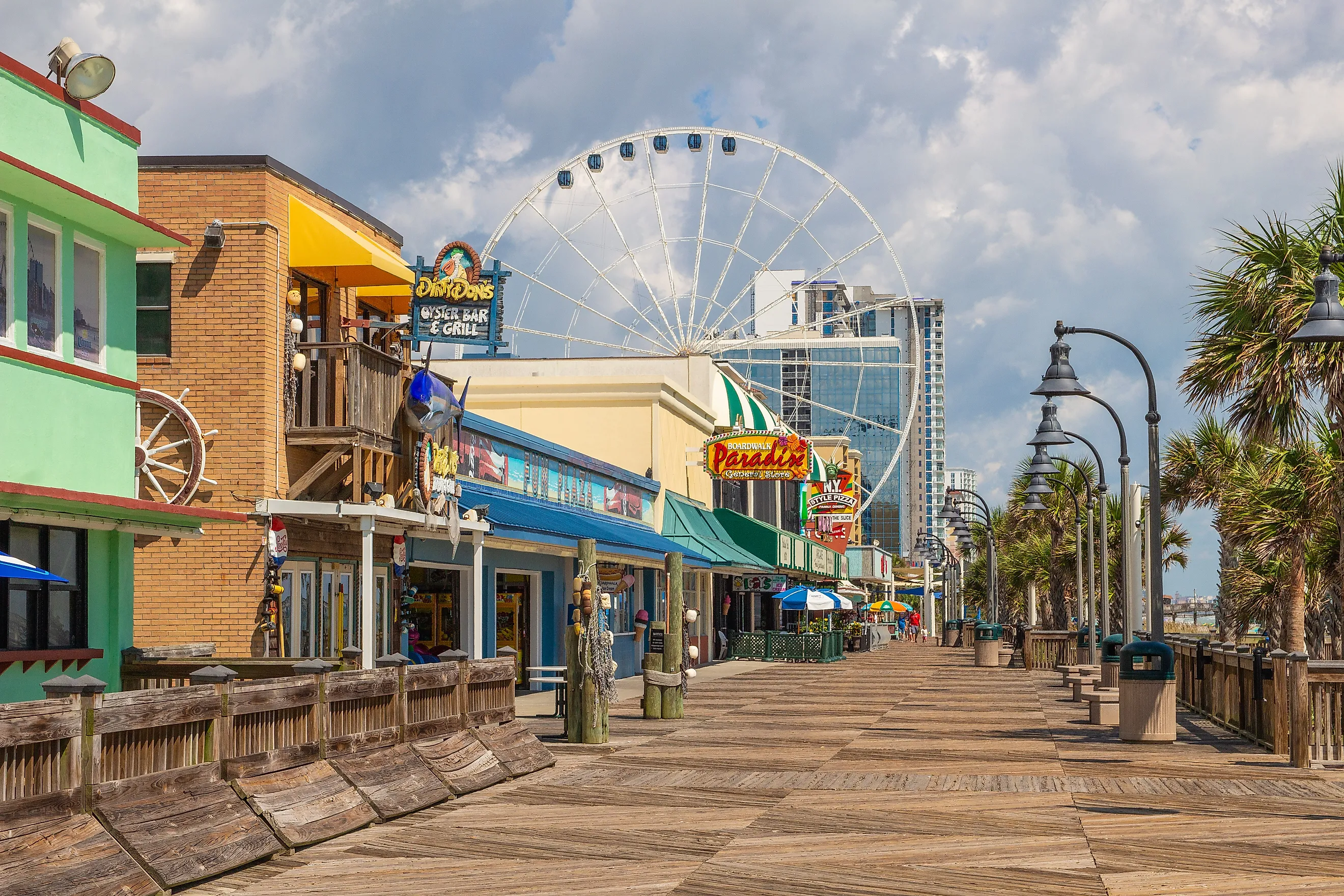
Myrtle Beach makes a strong case for coastal affordability with its combination of moderately priced housing, extensive healthcare, convenient air travel, and abundant recreation. According to Zillow's September 2026 housing data, the average home value in Myrtle Beach sits at $323,033. And while that may be slightly above the South Carolina average of $304,319, it remains below the $366,157 national average, plus there are plenty of reasons the town is considered incredibly cost-effective and one of the fastest-growing destinations in the US. For starters, rent in Myrtle Beach averages $1,697, about 12% below the national average, and the town is home to the Grand Strand Medical Center, offering a Level I Adult Trauma Center, a 24/7 emergency department, a pediatric intensive care unit, and specialty services such as orthopedic and vascular care. On top of that, the Myrtle Beach International Airport is right in town, offering nonstop connections to more than 50 destinations, making domestic travel more convenient. For recreation, the town is loaded with attractions, including its Atlantic beach, the Myrtle Beach Boardwalk near several amusement parks, and Broadway at the Beach, one of the best shopping and entertainment complexes on the Atlantic coast.
- Con: Peak-season tourist traffic is heavy, and utility prices are generally above the national average, so air conditioning bills may sting in summer.
Long Beach, Washington

In a state where the average home is valued at $587,533, Long Beach has a lower cost of living, with the average home valued at $344,488, according to Zillow. Long Beach also benefits from the state's zero income tax, which matters especially for retirees and remote workers, plus the town sits deep on the Long Beach Peninsula, far from the congestion and price pressure of Seattle. So while housing here may not be near the affordability levels of Gulf Coast towns, a peaceful setting with access to recreation is a good bargain on the US Pacific Coast, plus the Ocean Beach Hospital in nearby Ilwaco ensures access to everyday medical needs without long, expensive drives. Services offered include 24/7 emergency care, surgical care, and diagnostics. For recreation, the beach is a great place to relax and fly kites, while the Discovery Trail offers a pleasant 8.5-mile coastal adventure with impressive views of pine forests, the Pacific Ocean, and dunes.
- Con: The area is remote, and specialty care may require long travel, plus the town sits on a peninsula with significant tsunami risk.
Surfside Beach, South Carolina

Self-described as "The Family Beach," Surfside Beach makes its case as one of the country's coastal towns with the lowest cost of living, particularly with its housing and rental markets. According to Zillow, homes in this town are valued at $360,202, below the US average, while rent sits at $1,612, about 17% below the national average. On top of that, the town is laid-back and has a violent-crime rate well below the national average, while providing easy access to the premium pleasures of the wider Myrtle Beach area, with facilities like Myrtle Beach International Airport just minutes away. And while the town may not have notable medical facilities, it is within short distances of several, like Tidelands Waccamaw Community Hospital, which is just five miles south and provides surgical care, alongside 24-hour emergency care, among other services. Such convenience cuts road travel time, adding to the town's cost-effectiveness, plus the state's low property taxes further reinforce its appeal. For things to do, the Surfside Beach Fishing Pier is a wonderful spot for beach fun, fishing, and sunbathing, plus Huntington Beach State Park is a few miles outside town with a three-mile beach and opportunities for hiking, camping, fishing, and bird watching.
- Con: Coastal flooding and hurricane exposure.
Coastal Affordability Is About More Than Cheap Houses
The most economical coastal towns are not necessarily those with the lowest home prices. Oftentimes, it takes a broader view of a place to truly see its affordability appeal. The towns on this list have been held to that standard and judged by not just housing costs, but disaster risks, crime rates, and proximity to big city amenities. To be clear, no affordable coastal town is perfect, so each one involves trade-offs that depend on personal preference. So measure each town with its pros and cons to get the full picture and know how much you'll really save.