11 Best North Carolina Towns For A Weekend Trip
Seagrove is a pottery town, Oriental is a sailing town, Pinehurst is a golf town, Tryon is a horse town, and nobody who lives in any of them would argue with the label. That is the whole idea behind this list. In each of these eleven towns the thing to do is settled before the bag is packed, so the weekend goes into doing it rather than deciding. The thing is usually older than the road in, too. Seagrove's families have fired kilns since the 1700s, and the riding club in Tryon has put on its horse show since the 1920s. Towns with a pleasant downtown and nothing like that behind it did not make the cut.
Edenton

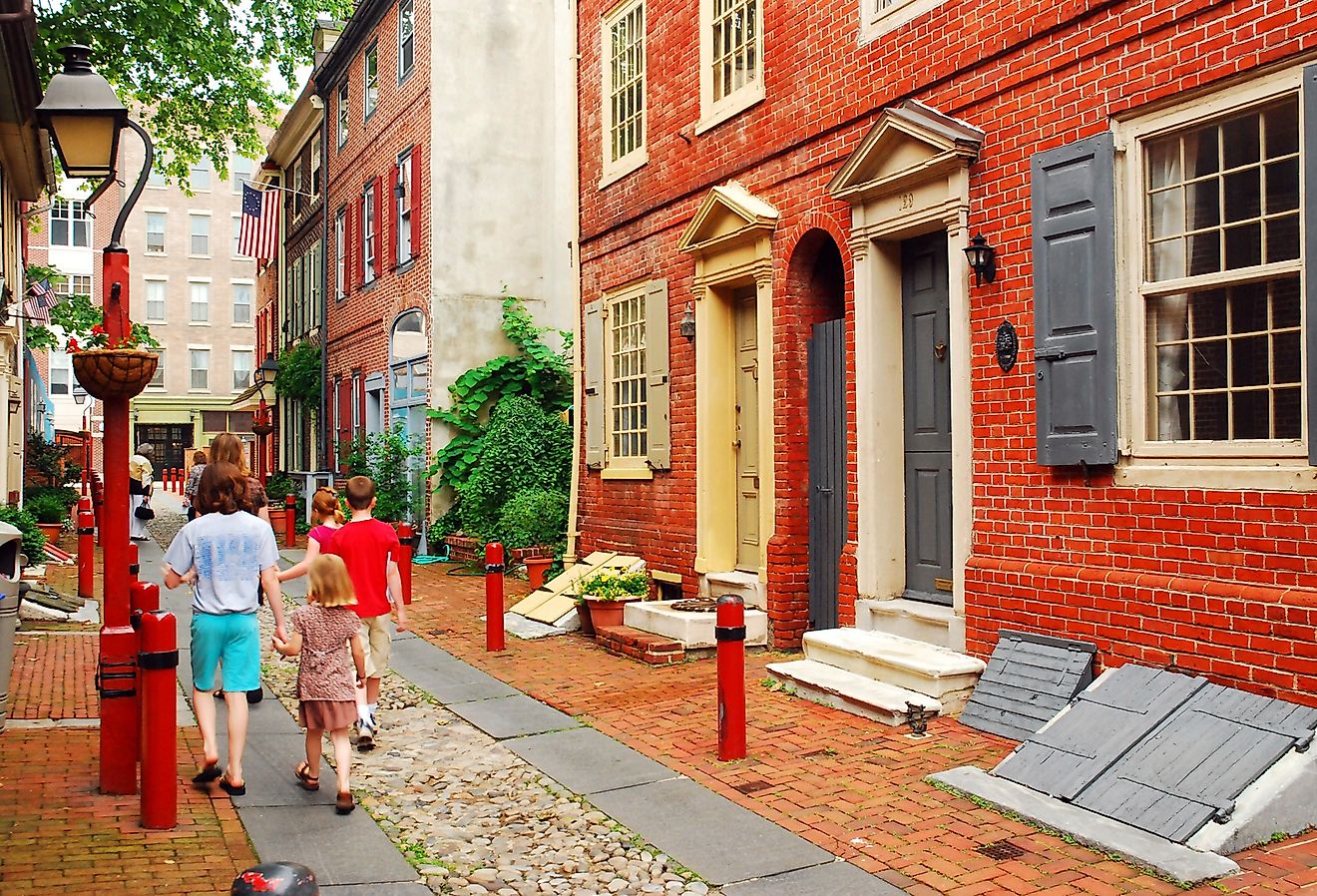
The Chowan County Courthouse on East King Street in Edenton went up in 1767 and is one of the oldest public buildings in the state still standing. In October 1774, Penelope Barker and fifty other women signed a pledge in town to boycott British tea, one of the earliest organized political acts by women in the colonies. Edenton had been the colony's seat of government earlier that century, and the houses along Water Street and Broad Street date to that stretch of its history. The Cupola House, built in 1758, is a few blocks away and open to the public.
The 1886 Roanoke River Lighthouse, a square screw-pile station that once marked the mouth of the Roanoke River on Albemarle Sound, was moved to the Edenton waterfront in 2007 and restored. Beyond it, Colonial Park and the town dock open onto Edenton Bay. Rooms at the Inner Banks Inn are in a set of restored historic houses a short walk off Broad Street.
Washington

The courthouse crowd in Edenton would have known Washington as the port at the head of the Pamlico River, and the town's historians count it as the first in the country named for George Washington, in 1776. Locals still call it Little Washington. The waterfront boardwalk runs along the Pamlico past the marinas and public docks, and the North Carolina Estuarium at the east end of Water Street explains the rivers and sounds of the Inner Banks with tanks of the fish, crabs, and turtles that live in them.
Goose Creek State Park, a short drive east on the north bank of the river, has boardwalk trails through cypress swamp and a campground. West Main Street, a few blocks back from the water, is where the port's merchant families built their houses, and the Elmwood 1820 Bed and Breakfast Inn is in one of them.
Oriental

Downstream on the Neuse, where the river widens to several miles across before Pamlico Sound, Oriental has adopted the slogan Sailing Capital of North Carolina, and the marinas, the sailing school, and the number of masts in the harbor make it a fair claim. The name comes from a Union transport ship, the Oriental, lost off the Outer Banks in 1862; the postmaster's wife took it off a salvaged nameboard. Sailing lessons and charters leave the marinas on Smith Creek, and Lou Mac Park on South Water Street is where the boats come back into view late in the afternoon.
The Bean, the coffee shop on Hodges Street across the road at the head of the harbor, is where most of the sailing crowd starts the morning. The exhibits at Oriental's History Museum on Broad Street are about the fishing and boatbuilding years before the sailboats arrived. Kayak rentals get you onto the creeks that cut into town off the river. Rooms at the Oriental Marina and Inn have harbor views.
Southport

Salt water replaces river water at Southport, where the Cape Fear meets the Atlantic and river pilots have boarded inbound ships since the 1700s to steer them past Frying Pan Shoals and upriver to Wilmington. Those ships still pass close enough to the benches in Waterfront Park to read the names on the hulls. The North Carolina Maritime Museum at Southport on Moore Street has the pilots' story alongside the river's pirates and blockade runners, and the Fort Johnston-Southport Museum and visitors center is in the garrison house of a fort begun in the 1740s.
Howe Street runs straight down to the water through the historic district, and the streets off it were used for the 2013 film Safe Haven. The house on North Lord Street where the novelist Robert Ruark spent boyhood summers with his grandparents is now the Robert Ruark Inn, a bed and breakfast that has kept a limited schedule in recent seasons, so book ahead. Oak Island's beaches are a short drive over the bridge.
Pinehurst

Inland, the pines take over, and James Walker Tufts bought several thousand acres of cut-over sandhills in 1895 to build the resort village that became Pinehurst. Frederick Law Olmsted's firm drew the curving street plan, and Donald Ross's No. 2 course opened in 1907. The U.S. Open has been played there four times, most recently in 2024, and the USGA has named the course an anchor site with the championship due back in 2029. The Carolina Hotel, open since 1901, is still the place to stay in the village.
The Tufts Archives, inside the Given Memorial Library on Cherokee Road, hold the village's early plans and Donald Ross's course drawings. The Cradle, a nine-hole short course beside the main clubhouse, takes about an hour and no handicap. Sandhills Horticultural Gardens, on the Sandhills Community College campus, is a walking break between rounds.
Seagrove

A short drive north of Pinehurst, the sand gives way to the clay that the potters around Seagrove have been digging since the 1700s, when English-born potters set up the first kilns. Dozens of working studios are scattered along NC 705 and the side roads off it, most of them family-run and many open to walk-ins on Saturdays. The North Carolina Pottery Center on East Avenue has the state's history of the craft in one building and a map for the studio drive. Ben Owen Pottery, on NC 705 south of town, is in its third generation under Ben Owen III.
Each November, the potters hold a festival weekend in town that doubles as the year's biggest sale. The North Carolina Zoo in Asheboro, twenty minutes north, is the usual second day, and the Hampton Inn in Asheboro is the practical base for both.
Tryon

The clay country ends at the foothills, and Tryon is the first town where the Blue Ridge escarpment comes into view. Carter Brown, a hotel man from Michigan, arrived in 1917 and founded the Tryon Riding and Hunt Club a few years later, and horse farms have covered the Polk County countryside ever since. Morris, the wooden horse on Trade Street, was built in 1928 as a mascot for the club's horse show and has been rebuilt and repainted more than once. Nina Simone was born in Tryon in 1933, and her statue is a block away.
Tryon International Equestrian Center in Mill Spring, the site of the 2018 World Equestrian Games, holds shows most weekends in season, and spectators can usually watch for free. The Foothills Equestrian Nature Center has trails open to walkers as well as riders, summer concerts are held in Rogers Park on Trade Street, and the galleries along Trade Street fill the time between events. Saluda's inns are ten miles up the hill, which is the easiest way to stay the night.
Saluda

The rail line out of Tryon climbs about 600 feet in three miles to reach Saluda, a stretch known as the Saluda Grade and, until the last train ran in 2001, the steepest standard-gauge mainline railroad grade in the country. The Saluda Historic Depot on Main Street is now a museum run by a local volunteer group, and Main Street's brick storefronts date to the years when summer boarders arrived by train.
The Purple Onion on Main Street books live music most weeks. The Gorge Zipline's course drops through the Green River Gorge. The Orchard Inn, built in 1926 as a mountain retreat for the Southern Railway's clerks, is a mile out of town and has rooms and dinner.
Little Switzerland

Railroad money built the next stop too. The Clinchfield Railroad planted the Orchard at Altapass in 1908, and Heriot Clarkson, later a justice of the state supreme court, founded Little Switzerland as a summer colony in 1909, with his Switzerland Company building a toll road up from the rail station a few years later. NC 226A, the road up the escarpment below town, has about 190 curves in eleven miles, and motorcyclists call it the Diamondback.
The Switzerland Inn, at milepost 334 on the Blue Ridge Parkway, has rooms, a restaurant, and a terrace facing the mountains. The Orchard at Altapass is open May through late October with heritage apples and weekend music, and is still recovering from the trees it lost to Helene in 2024. Emerald Village, on the road toward Spruce Pine, has an underground mine walk and gem flumes. The Parkway between here and Mount Mitchell has been closed for Helene repairs, with full reopening promised by the end of 2026, so check the road status before planning the drive.
Burnsville

Mount Mitchell, at 6,684 feet the highest point east of the Mississippi, is in Yancey County, and Burnsville is the county seat at its foot. The state park reopened in September 2025 once the Parkway was repaired on the Asheville side, and the drive up still depends on which sections are open, so check before setting out. The town square, named for the privateer Otway Burns, has galleries on three sides, several of them showing work by the potters and glass artists in the Toe River Arts network. The network's studio tours run twice a year, in June and December.
Actors have performed summer seasons at the Parkway Playhouse, a few blocks off the square, since 1947. The Carolina Country Inn, a motel on West Main Street, is the simple option a short walk off the square.
Highlands

Samuel Kelsey and Clinton Hutchinson picked the site of Highlands in 1875 by drawing two lines on a map, one connecting New York and New Orleans, the other Chicago and Savannah, and building where they crossed. The plateau is at 4,118 feet, which is why the summer crowd arrives in June and why the leaves turn early in October. Dry Falls, three miles west on US 64, drops 75 feet off a ledge, with a paved path that passes behind the water. Whiteside Mountain's loop trail runs along sheer cliffs several hundred feet high.
The Bascom, a visual arts center in a converted barn complex on Franklin Road, has galleries and a class schedule. Main Street's shops and restaurants are within a few blocks, and the Old Edwards Inn and Spa is on Main Street itself.
What Makes These Weekends Work
The weekends that work best here are in towns where somebody chose a trade long ago and the people who came after kept at it. The pilots still board ships off Southport, the Owens still fire kilns outside Seagrove, and the riding club still puts on its horse show in Tryon. Where the original trade stopped, as the trains did at Saluda in 2001, the depot museum and the clerks' old inn are what remain of it, and they are enough to fill two days. That length of time is about right for seeing one of these traditions up close without wearing it out, and a second weekend in the same town rarely feels like a repeat.