10 Best Towns In The Rockies To Retire Comfortably
There is a bathhouse in Thermopolis, Wyoming that the state is legally obliged to let you use for free. When the Shoshone and Arapaho sold the hot springs to the federal government in 1896, they did it on the condition that some of the water stay open to everyone at no charge, and the State Bath House has honoured that for well over a century.
That is the kind of thing the Rocky Mountains hide in towns of a few thousand people. The range runs from Alberta and British Columbia down into New Mexico, and the settlements along it were built by mining, railroads, and irrigation rather than tourism, which is why so many of them still have a hospital, a theatre, and a main street at a price that makes sense. These ten are the ones worth a long look.
Golden, British Columbia

Golden sits where six national parks converge, which is not a claim many towns of 4,000 can make. Yoho, Glacier, Banff, Jasper, Kootenay, and Mount Revelstoke are all within reach, and the Columbia River wetlands north of town form one of the longest undammed wetland systems in North America.
Kicking Horse Mountain Resort runs the longest vertical descent in Canada and keeps the gondola turning through summer for hiking, biking, and a restaurant at 7,700 feet. The Golden Skybridge has two suspension bridges over a 426-foot canyon, the highest in the country.
Housing runs well below the British Columbia average, which is doing a lot of work in a province this expensive. Golden and District Hospital provides 24-hour care, and the restored Civic Centre programs concerts and theatre year-round.
Sandpoint, Idaho

Lake Pend Oreille is over 1,150 feet deep, and the US Navy runs an acoustic research station on it, testing submarine designs at scale in fresh water because the depth and the quiet make it the best proxy for open ocean anywhere inland. That is the lake Sandpoint sits on.
The downtown along First Avenue is the real thing rather than a resort strip: independent bookshops, a brewery, galleries, and the 1927 Panida Theater, which the town bought by public subscription in the 1980s to stop it being carved into retail units. It still programs film and live music.
Schweitzer, the largest ski area in Idaho, is eleven miles up the mountain. The Long Bridge carries the highway almost two miles across the lake with a separate pedestrian span beside it. Bonner General Health is the hospital in town.
Thermopolis, Wyoming

Hot Springs State Park is built around what is billed as the largest mineral hot spring in the world, pushing out millions of gallons a day at around 127 degrees. Terraces of travertine have grown over the riverbank in orange and white, and the free State Bath House is a condition of the 1896 purchase rather than a municipal gesture.
The town also sits on a serious fossil bed. The Wyoming Dinosaur Center holds complete mounted skeletons and runs active dig sites where visitors can join a working excavation for the day, which is rarer than it sounds.
Wind River Canyon runs south of town, a 2,500-foot gorge with a highway through it and geological signage marking each rock layer as you descend through 3 billion years. Hot Springs County Memorial Hospital is in town, and Wyoming charges no state income tax.
Libby, Montana

Kootenai Falls is the largest undammed waterfall in Montana, and a swinging bridge crosses the gorge above it. The site is sacred to the Kootenai people, and it has turned up in films often enough that people recognise it without knowing where it is.
Libby sits in the far northwest corner of the state on the Kootenai River, one of the wildest in the lower 48, with the Cabinet Mountains Wilderness to the south. Housing is among the more affordable in Montana, and Cabinet Peaks Medical Center provides emergency services in town.
Be realistic about the isolation. Libby is three hours from Spokane and further from anywhere in Montana, and the winters are long. It has the oldest population of any town here, with over a third of residents aged 60 or more, which is either the attraction or the warning depending on what you want.
Dillon, Montana

William Clark climbed a limestone outcrop above Dillon in August 1805 and sketched the valley below. Clark's Lookout State Park preserves the spot and takes ten minutes to walk up, and the view has barely changed.
Half an hour west is Bannack, Montana's first territorial capital and now a genuine ghost town, with around sixty buildings standing and nobody living in any of them. No reconstruction, no costumed staff, just an empty street you can walk down.
The Beaverhead and Big Hole rivers are blue-ribbon trout water, and Beaverhead-Deerlodge is the largest national forest in the state. Housing runs below the Montana average, and Barrett Hospital and HealthCare is in town, which is better coverage than a community of 4,000 usually gets.
Leadville, Colorado

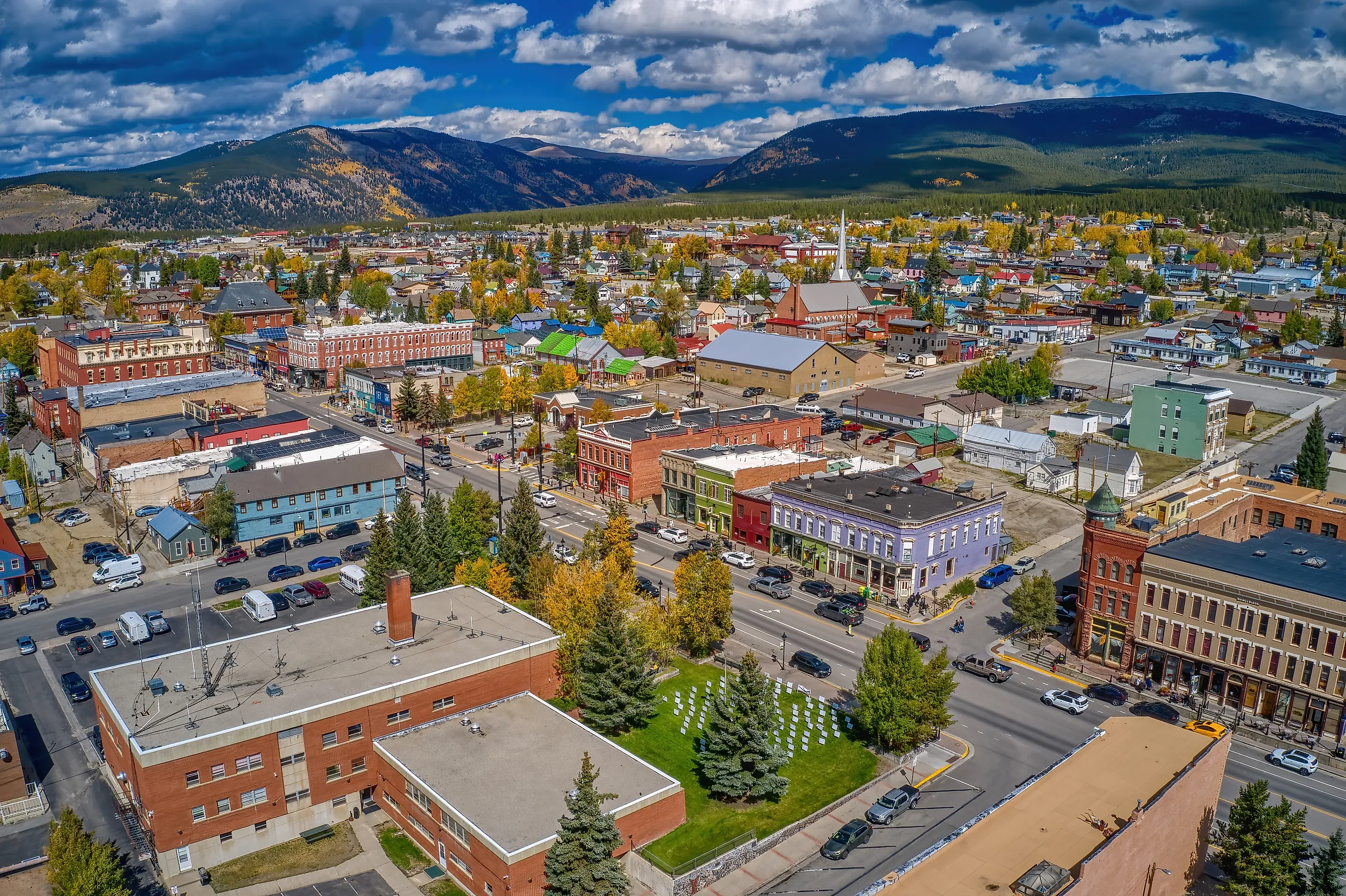
At 10,152 feet, Leadville is the highest incorporated city in the United States, and the two tallest mountains in Colorado, Elbert and Massive, stand directly west of it. Silver money built a Victorian main street that the town has kept almost entirely intact.
The Leadville Race Series is the local institution, including a 100-mile trail run and a 100-mile mountain bike race, both held entirely above 9,200 feet. Nobody is expected to enter them, but the town's relationship with altitude explains a lot about the place.
Twin Lakes is 25 minutes south, and the Leadville Colorado and Southern Railroad runs excursions along the old high line. St. Vincent Health is a small hospital in town, with larger facilities over the pass. The altitude is the honest caveat: two miles up, the air holds about a third less oxygen, and anyone with a cardiac or respiratory condition should take advice before committing.
Craig, Colorado

Craig calls itself the elk hunting capital of the world, and the claim rests on something real: the White River herd that ranges across this part of northwest Colorado has been among the largest migratory elk populations in North America.
The town sits on the Yampa River, the last major tributary of the Colorado that still runs largely undammed, which makes it unusually good water for rafting and fishing. Elkhead Reservoir State Park is ten miles east, and Dinosaur National Monument is about ninety minutes west.
Housing is among the cheapest in Colorado, a consequence of the coal plants winding down, and Memorial Regional Health is the hospital in town. One honest note: Craig skews younger than most towns on this list, so anyone looking for an established older community will find more of it in Libby or Leadville.
Alamosa, Colorado

North America's tallest sand dunes sit half an hour from Alamosa, piled against snowcapped peaks in the middle of a high desert valley. Star Dune rises around 750 feet, and in late spring Medano Creek runs along the base so you can wade at the foot of them.
Alamosa sits in the San Luis Valley at 7,500 feet between the Sangre de Cristos and the San Juans, and the valley is one of the stranger corners of Colorado: alligator farms, a UFO watchtower, and some of the darkest night skies in the state. Adams State University gives the town lectures, theatre, and college sport.
The Rio Grande Scenic Railroad runs excursions into the mountains. San Luis Valley Health Regional Medical Center is in town. The winters here are long and genuinely cold, with the valley floor regularly among the coldest inhabited places in the state.
Mount Pleasant, Utah

Wasatch Academy has been running here since 1875, which makes it the oldest continuously operating boarding school in Utah, and it gives a town of 3,500 a concert and lecture calendar it would not otherwise have.
Mount Pleasant sits in the Sanpete Valley beneath the Wasatch Plateau, and the Skyline Drive runs along the top of it, one of the longest high-elevation dirt routes in the state with the Manti-La Sal National Forest on both sides.
This is working farmland rather than resort country, and the housing reflects that, running well under a Utah state average that has climbed steeply. Intermountain Sanpete Valley Hospital is in town.
Glenwood, New Mexico

Fewer than 300 people live in Glenwood, and the night sky above it is about as dark as anywhere on the continent. The Cosmic Campground, twenty minutes northwest, was the first International Dark Sky Sanctuary certified on National Forest land, with no permanent artificial light within roughly 40 miles in any direction.
The Catwalk National Recreation Trail is the other reason to come, a steel walkway bolted to the walls of Whitewater Canyon along the route of an 1890s pipeline that served a mining operation upstream. It hangs directly over the water.
Glenwood sits at the southern end of the Rockies inside the Gila National Forest, where the Gila Wilderness became the first protected wilderness on earth in 1924. Be clear about the trade-off: this is the most remote town on the list, and the nearest hospital is Gila Regional Medical Center in Silver City, about an hour away. For anyone managing a condition that needs regular attention, that distance is the deciding factor.
Which One Fits
These ten are not interchangeable. Sandpoint, Golden, and Leadville have the fullest calendars, with a theatre, a ski hill, and something happening most weeks of the year. Dillon, Libby, and Glenwood are the quiet end, and all three suit someone who wants the mountains more than the company. Thermopolis, Alamosa, and Craig sit in between, each built around one genuinely unusual feature.
Two practical things cut across all of them. Every town here has a hospital except Glenwood, which is an hour from one, and that gap matters more with each passing year. And altitude is not a detail: Leadville at 10,152 feet and Alamosa at 7,500 are different propositions from Libby or Sandpoint, both of which sit near 2,000. Visit in February rather than July, and the choice usually makes itself.