The Most Picturesque Towns In The United States
Some American towns are worth the trip for the view alone. Sedona sits ringed by red sandstone walls that glow at sunrise. Telluride sits at the dead end of a Colorado box canyon under a 365-foot waterfall. Carmel-by-the-Sea packs cottages and white sand into a single square mile. These eight places turn ordinary errands into scenery, and each one earns its spot on looks alone.
Sedona, Arizona

Few towns in the United States leave as lasting an impression as Sedona. This classic Southwestern locale is nearly surrounded by towering red sandstone buttes and steep canyon walls, combining Arizona's dramatic desert scenery with a thriving arts community, a plethora of resorts, and abundant opportunities for outdoor recreation.
On the road, scenic drives such as Red Rock Scenic Byway reveal constantly changing views, while hiking trails lead to landmarks including Cathedral Rock, Devil's Bridge, and Bell Rock. Epic sunrises and sunsets cast the nearby cliffs in brilliant shades of red and orange, making Sedona a favorite destination for photographers throughout the year.
Beyond its natural beauty, this town of close to 10,000 residents is home to several renowned galleries, locally owned restaurants, and Southwest architecture that blends into the landscape rather than competing with it. While downtown, you can even visit Oak Creek, which winds through the area, creating cool swimming holes and shaded picnic spots that give respite from the surrounding desert. Whether viewed from a scenic lookout point or explored on the highway, Sedona delivers enduring scenery wherever you go.
Bar Harbor, Maine

Perched on the rocky coast of Mount Desert Island, Bar Harbor combines classic New England character with some of the most dramatic coastal scenery the country has to offer. Much of its appeal comes from its location beside Acadia National Park, where granite mountains, forests, horse-drawn carriage paths, and wave-battered shorelines create unforgettable views around every corner.
The Shore Path offers an easy walk past historic cottages and Frenchman Bay, while nearby Cadillac Mountain rewards early risers with wide panoramas over the Atlantic. Just over in downtown Bar Harbor, you will also find colorful storefronts, fresh seafood restaurants, and a working waterfront where lobster boats still head out each day. Whale-watching cruises and kayaking excursions provide another perspective of the rugged coastline, often with chances to spot seals and seabirds.
During autumn, changing foliage adds even more color to the landscape, drawing flocks of photographers toward the end of every year. Summer brings gardens, blooming wildflowers, open beaches, and long daylight hours that make the scenery even more inviting for an oceanside getaway.
Leavenworth, Washington

On the eastern slopes of the Cascade Mountains in Washington State, Leavenworth stands out with its Bavarian-inspired architecture and dramatic alpine setting. The town reinvented itself as a Bavarian village in the 1960s to revive its economy, and today its chalet-style buildings, flower-filled balconies, and mountainous backdrop still create a scene that seems to transport you to another continent.
The Wenatchee River is a fine local touch where you can dip your feet on a hot summer day, while a web of trails in the surrounding mountains leads to waterfalls, alpine lakes, and viewpoints high above town and its adjacent vineyards and orchards. Waterfront Park provides another peaceful place to enjoy the river, beneath stands of towering cottonwoods just steps from downtown.
Seasonal changes continually reshape the scenery here, with wildflowers in spring, autumn foliage in fall, and snow-covered peaks in winter that draw skiers. Numerous community festivals, German eateries, mom-and-pop shops, beer gardens, and local wine tasting rooms keep the streets lively throughout the year. Few American towns combine such dramatic mountain sights with so distinctive a cultural and architectural identity, making Leavenworth a draw for foodies and outdoors enthusiasts alike.
Cape May, New Jersey

At the southern tip of New Jersey, Cape May is celebrated for its beautifully preserved Victorian architecture and wide Atlantic beaches. More than 600 colorful 19th-century buildings give the town its distinctive appearance, and the entire district is recognized as a National Historic Landmark.
Along the waterfront, the Cape May Promenade offers uninterrupted ocean views, while nearby Cape May Point features quieter beaches, rolling dunes, and one of the East Coast's most important bird migration routes. The historic Cape May Lighthouse is a great spot for looking out across the shoreline and over Delaware Bay.
Whether admired from the beach or explored on foot, Cape May offers a blend of Mid-Atlantic scenery and small-town beauty that is difficult to match anywhere else along the eastern coast.
Telluride, Colorado

Sitting at the end of a narrow box canyon deep in the Rocky Mountains, the town of Telluride is framed by sheer cliffs that rise thousands of feet above its long-standing streets. This former mining town retains much of its original layout, and many of its buildings date to the mid-to-late 1800s.
Just a hike from its downtown core, the 365-foot Bridal Veil Falls, Colorado's tallest free-falling waterfall, tumbles from the canyon rim. For a more relaxed outing to an even loftier elevation, a free gondola carries you high above the valley where expansive views of the San Juan Mountains open up.
Summer in this part of Colorado brings hillsides bursting with wildflowers and open hiking trails reaching alpine basins, while winter blankets the peaks in deep snow that makes the region a sought-after destination for downhill sports at the Telluride Ski Resort. Despite its reputation as a ski retreat, Telluride remains surprisingly walkable all year, with restaurants, galleries, and entertainment venues occupying many of its restored historic storefronts. To top it off, the Telluride Film Festival, one of the most prestigious of its kind, takes place each Labor Day weekend and draws fans and film stars alike to this otherwise quiet community.
Carmel-by-the-Sea, California

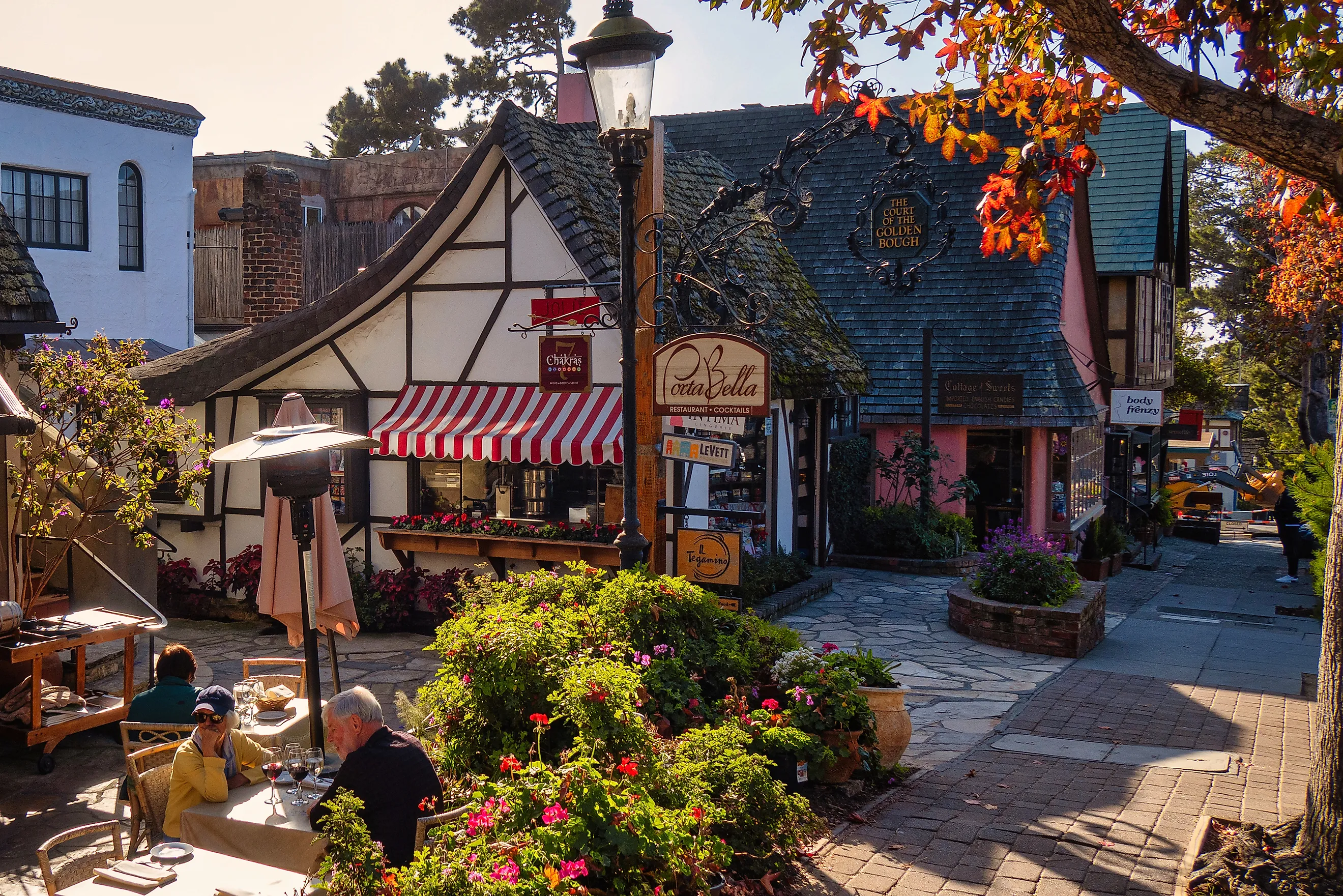
Many Pacific Coast destinations rely on boardwalks and high-rise hotels, but Carmel-by-the-Sea built its reputation on a laid-back mood and a strong connection to the land. Downtown, narrow lanes wind past cottages and courtyards before opening onto one of California's most beautiful white-sand beaches. Cypress trees cling to rocky bluffs above the Pacific Ocean, and the nearby 17-Mile Drive reveals windswept headlands, secluded coves, and the famous Lone Cypress.
The town itself feels deliberately understated, with no neon signs and few chain stores competing for attention. Instead, you are encouraged to explore places like Point Lobos State Natural Reserve, which showcases sea arches, turquoise coves, and kelp forests where harbor seals, sea otters, and migrating whales are regularly seen. The Carmel Mission adds a layer of history, dating back hundreds of years to the Spanish colonial era.
Carmel-by-the-Sea impresses through carefully preserved beauty, where nearly every street seems designed to lead the eye toward the ocean. It also makes an ideal base for the Monterey Peninsula and the scenic coastline that runs south toward Big Sur.
Mackinac Island, Michigan

Cars have been banned on Mackinac Island since 1898, and that single rule shapes everything a visitor sees. Horse-drawn carriages and bicycles move along Main Street past pastel Victorian storefronts, while the scent of fudge drifts out of shops that have used copper kettles and marble slabs for generations. Set in Lake Huron between Michigan's two peninsulas, the island is reachable only by ferry or small plane.
Fort Mackinac stands on the bluff above the harbor, its whitewashed walls looking out over the marina and the Straits of Mackinac. State park land covers roughly 80 percent of the island, threaded with wooded trails that lead to limestone formations such as Arch Rock, a natural stone window framing the teal water below. The 8-mile perimeter road, M-185, is the only state highway in the country where cars are forbidden, making a bike loop the classic way to take in the shoreline.
Gilded Age grandeur survives at the Grand Hotel, whose long front porch overlooks manicured gardens and the lake beyond. Between the fudge shops, the carriage tours, and the lilacs that bloom across town each June, Mackinac Island feels like a place where the calendar stopped somewhere in the 1890s.
Beaufort, South Carolina

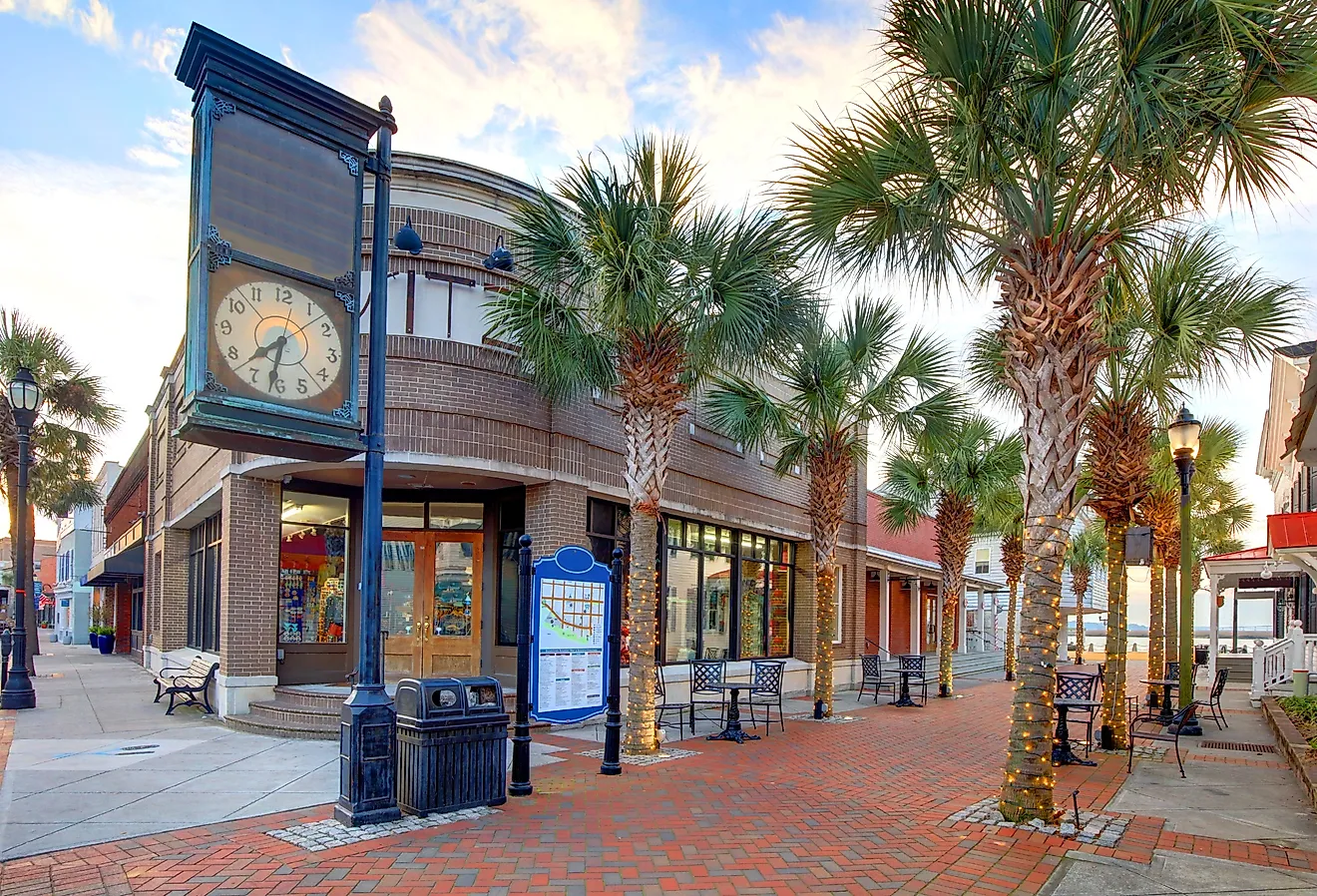
Ancient live oaks draped in Spanish moss arch over the streets of Beaufort, forming shaded canopies above rows of antebellum mansions. Founded in 1711, this is the second-oldest city in South Carolina, and its entire downtown carries a National Historic Landmark designation earned by few American towns. More than 150 historic structures survive here, in part because the town was occupied rather than burned during the Civil War.
The Henry C. Chambers Waterfront Park runs alongside the Beaufort River, where shaded swings and a walkway catch the sea breeze coming off the marsh. Just east of downtown, the Old Point neighborhood holds some of the most photographed streets in the Lowcountry, with 18th-century homes and river views at the end of quiet lanes. Bay Street rounds out the picture with sidewalk cafes, art galleries, and boutiques set among the historic facades.
Beyond the architecture, Beaufort anchors a landscape of tidal creeks and sea islands where dolphins surface in the channels and herons stalk the shallows. The Spanish Moss Trail traces an old rail line toward Port Royal, giving walkers and cyclists a shaded route through the marsh country that defines this stretch of coast.
The Beauty Of Small-Town America
These towns prove that awe-inspiring scenery is not limited to the country's national parks or its famous skylines. A red rock canyon in Sedona, a car-free island in Lake Huron, and a moss-draped waterfront in Beaufort could hardly look more different from one another, yet each rewards the same simple act of slowing down and looking around. Taken together, they make the case that some of America's most memorable landscapes wait in its quietest corners.