8 Indiana Towns With A Slower Pace Of Life
When it’s time to take a break and maybe even a long, deep breath, consider heading to one of these small towns in Indiana, where life moves at a slower pace. Take Jasper, for example, where preserved German heritage lives on through riverside mills, historic barns, and a hilltop monastery known as the “Castle on the Hill.” In Porter, you can escape the crowds and explore rare bog trails and towering sand dunes along the Lake Michigan shoreline at Indiana Dunes National Park. And what better place to relax than a town called New Harmony, with its peaceful labyrinths, utopian history, and thoughtfully designed spaces for reflection? Whether you prefer lakeside strolls, historic districts, or quiet nature trails, these Indiana towns offer the perfect excuse to slow down and stay awhile.
Jasper

Founded by German immigrants, Jasper and the nearby community of Ferdinand have a strong German culture that's highlighted in its food scene and architecture. Its Old Jasper District includes several historic landmarks, like the Jasper City Mill on the Patoka River and the Schaeffer Barn, which was built of chestnut logs with a cantilever overhang that was commonly used in German structures. The most stunning landmark in Jasper is the Monastery Immaculate Conception, a Romanesque-style building that's nicknamed the Castle on the Hill. It's home to a large group of Benedictine nuns, and also features a brewery on its grounds, St. Benedict's Brew Works. Jasper is also home to the Dubois County Museum, one of the largest county museums in Indiana, featuring a recreated “Main Street Dubois County” with 17 rooms depicting life around the turn of the 20th century.
Vincennes

Founded in 1732 by French colonists, Vincennes is the oldest city in Indiana by a large margin. Vincennes later served as the capital of the Indiana Territory and was the home of William Henry Harrison, governor of the territory and future President of the United States. Visitors to Vincennes can explore all aspects of the community's long history in structures ranging from the two-story Territorial Capitol to Jefferson Academy, founded in 1801 as the first institution of higher learning in Indiana and now preserved as part of the Vincennes State Historic Sites. Vincennes also contains George Rogers Clark National Historical Park, which commemorates the Revolutionary War capture of Fort Sackville in 1779, when George Rogers Clark defeated the British and helped secure the Northwest Territory for the fledgling United States.
Madison

Madison has often been called an outdoor museum because of its 133-block National Historic Landmark District, one of the largest contiguous historic districts in the United States. It was a major steamboat port on the Ohio River in the 19th century, contributing immensely to the town's growth, as reflected in its many preserved heritage sites. Many individuals gained great wealth from this trade route, including banker James F.D. Lanier, who built the Greek Revival-style Lanier Mansion in 1844, now preserved as the Lanier Mansion State Historic Site.
The 1840s were also a pivotal decade for Madison’s social development. In 1848, abolitionists founded Eleutherian College in nearby Lancaster as one of the first colleges in the United States to admit students regardless of race or gender, including formerly enslaved people. Today, the restored limestone college building operates as a museum and historic site, with tours available by appointment. Beyond its historic architecture, visitors can hike to multiple waterfalls in Clifty Falls State Park, which overlooks the Ohio River and the city of Madison.
Wabash

Located on the Wabash River, Wabash is notable for being the first city in the world to be illuminated by electric lights. On March 31, 1880, four 3,000-candlepower carbon-arc lamps were mounted atop the Wabash County Courthouse, lighting the town in a landmark public demonstration. The town’s history goes back even further to 1826, when Miami and Potawatomi leaders signed treaties with the United States near Paradise Spring, ceding lands north of the Wabash River. Today, that site is preserved as Paradise Spring Historical Park, which features reconstructed log cabins, interpretive exhibits, and walking trails. Visitors to Wabash can also find plenty of exciting activities to enjoy, such as browsing through local art or appreciating musical performances at the Honeywell Center, as well as catching a classic or modern flick at the 5-story Eagle Theatre, which was first built in 1906.
New Harmony

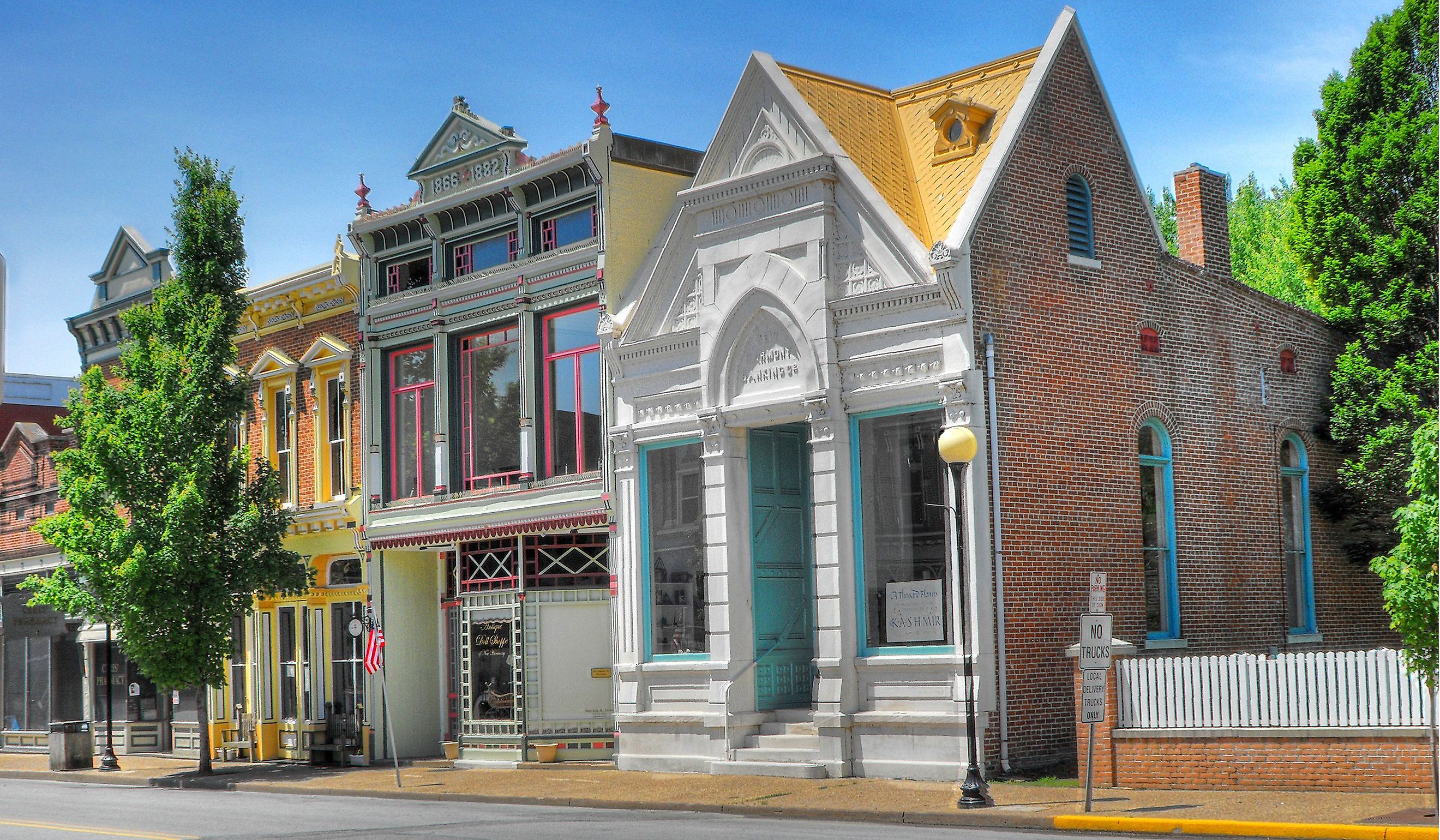
For New Harmony, keeping a slower pace is a way of life. The town gets this peaceful attitude from its founders, the utopian Harmonists and Owenites. Both of these groups believed they could create the perfect society, free of conflict and oppression. Their heritage remains within carefully crafted spaces in New Harmony, such as Community House No 2, or at the Harmonist Labrinth, which was designed to inspire meditative practices. Modern Harmonists keep that town spirit alive through spaces that let in natural light, such as the Roofless Church or the outdoor sculpture garden of the JBO Sanctuary. Just a few miles south of town, hikers and anglers can enjoy the Wabash River at Harmonie State Park.
Porter

Indiana’s picturesque Lake Michigan shoreline is easily accessible from Porter, home to Indiana Dunes National Park. The park contains one of the most ecologically diverse landscapes in the Midwest, ranging from the 126-foot sand dune of Mount Baldy to the Cowles Bog Trail, a 4.7-mile route through wetlands, black oak savannas, forests, and marshes. Cowles Bog and Pinhook Bog are two of the best-known bog ecosystems in Indiana and are designated National Natural Landmarks. Along the Lake Michigan shoreline, visitors can relax on sandy beaches such as Porter Beach and nearby West Beach. Near the shore stands a collection of unusual homes originally built in futuristic styles for the 1933 Chicago World’s Fair. Today, these preserved structures are known as the Century of Progress Homes and are part of Indiana Dunes National Park.
Winona Lake

Winona Lake is known for its vibrant lake-centered culture and historic resort-town character. The community makes the most of its namesake lake with the Winona Lake Heritage Trail, a multi-use path popular with walkers and cyclists, as well as the Limitless Park and Splash Pad, a family-friendly lakeside recreation area. Public access points and boat launches make it easy for visitors to get out on the water for a paddle or a cruise. Those looking for a more relaxed experience can stroll the boardwalks and shops at the Village at Winona, a restored historic district overlooking the lake. The village features a variety of locally owned businesses, including LetterWood Paper Co. for handcrafted gifts, and Trailhouse Village Bicycles, which offers a range of bikes and accessories so you can explore the region's popular trails.
Aurora

Aurora's name means the dawn in Latin, which suits this town's character as a walkable community on the shores of the Ohio River. Visitors can tour the entire community on foot, beginning on Main Street at the Hillforest House Museum. This Italian Renaissance-style villa was built in 1855 by the father of the modern hotel, Isaiah Rogers, for financier Thomas Gaff and his family. Today, the museum has Victorian rooms, clothing, and artifacts. From here, strollers can go down for a riverside walk with their families or pets at Lesko Park or go across the George Street Bridge on Hogan Creek, one of the oldest still operating iron truss bridges in Indiana, and enjoy an ice cream cone or a sundae from Flavors Ice Cream.
Keeping A Slower Pace Isn't Just Routine
In a world overflowing with noise, maintaining a slower pace of life takes intention. These Indiana communities embrace that mindset through carefully preserved historic districts, welcoming public spaces, and landscapes that encourage visitors to slow down and linger awhile. Whether strolling through the 133-block historic district of Madison, walking Aurora’s riverside paths, or exploring the rare bog trails near Porter, travelers will find places designed for a quieter, more reflective experience. For anyone looking to step away from the rush of everyday life, these Indiana towns offer an inviting change of pace.