5 Tick Infested Areas In West Virginia
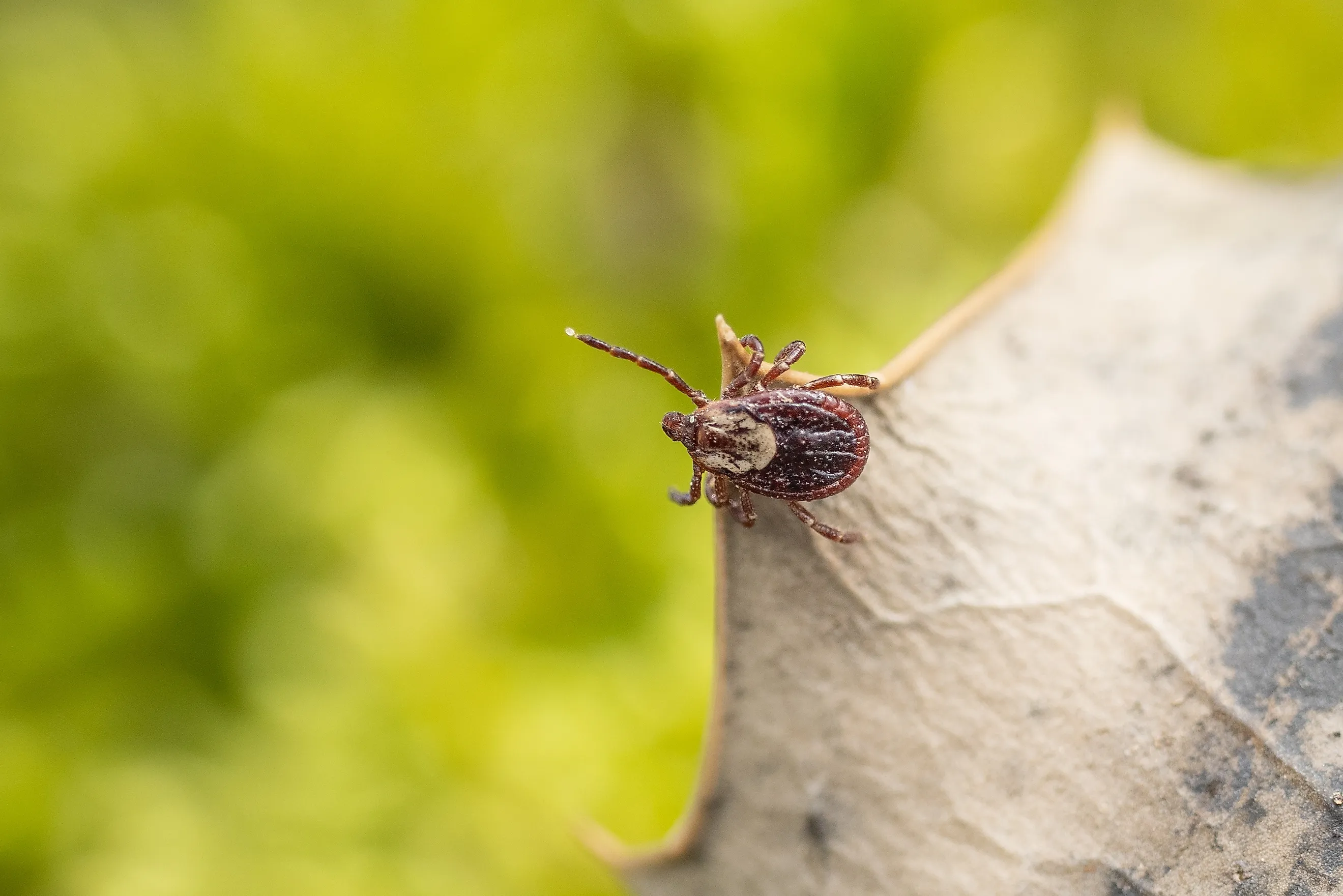
West Virginia's dense hardwood forests, high white-tailed deer populations, and humid river corridors create the kind of layered habitat where multiple tick species overlap. Ticks turn up in grassy and open woodland areas from the Panhandle to the coalfields. According to the West Virginia Department of Health, the blacklegged tick (Ixodes scapularis) and American dog tick (Dermacentor variabilis) are the two most commonly encountered tick species statewide. West Virginia has been designated a high-incidence Lyme disease state since 2017.
Lyme disease, spread by blacklegged ticks, is by far the most common tickborne disease in the state. Other diseases, including anaplasmosis, ehrlichiosis, and spotted fever rickettsiosis, are on the rise. Blacklegged tick nymphs, the life stage most responsible for the spread of Lyme disease, are most active from late spring through early summer. West Virginia University (WVU) researchers reported that human cases of anaplasmosis in the state tripled from 2022 to 2023, with blacklegged ticks confirmed as the vector of this disease.
Several counties and wilderness areas throughout West Virginia stand out for high tick densities.
The Eastern Panhandle

The Eastern Panhandle is the historic epicenter of Lyme disease in West Virginia. Berkeley, Jefferson, Hampshire, Mineral, and Morgan counties were among the original seven counties designated as Lyme-endemic in West Virginia since 2015. The CDC's Lyme disease case maps show that cases in the region have only increased since then. Jefferson County, for instance, reported only 18 cases of Lyme disease in 2015, but reported 52 cases by 2023.
The landscape is a mix of farmland, forested ridgelines, and dense vegetation along the Potomac River and its tributaries. Blacklegged ticks thrive in this kind of environment, particularly at forest edges where white-footed mice, their preferred larval and nymphal hosts, are abundant. The Appalachian Trail crosses Jefferson County through Harpers Ferry National Historic Park, where hikers regularly move through brushy, shaded terrain during peak tick season. American dog ticks are also present in the open grassy areas throughout the Panhandle, and are capable of transmitting Rocky Mountain spotted fever.
Monongalia and Preston Counties

The forests around Coopers Rock State Forest, which spans the Preston-Monongalia county line, feature mature deciduous canopies, dense understory shrubs, and shaded trail corridors.
The 2020 state tick surveillance report also flagged Monogalia and Preston counties as localities with high Lyme disease case counts relative to local tick density. This is a sign that exposure in this area may outpace what active surveillance can capture. After all, blacklegged tick nymphs are often smaller than the head of a pin.
In 2022, the Monongalia County Health Department reported that Lyme disease investigations in the county had doubled compared to the same point in the prior year. A 2024 study of tick biodiversity in north-central West Virginia found that of 1,684 ticks collected between 2018 and 2023, blacklegged ticks, the ones that spread Lyme disease, accounted for 58.5 percent of all specimens. This area also happens to be one of the few counties where the Gulf Coast tick (Amblyomma maculatum) has been spotted.
Randolph and Webster County Forests

The forestland spanning Randolph and Webster counties sits within the Monongahela National Forest and contains some of the most intact deciduous and mixed hardwood forest in the Appalachians. According to the 2021 to 2023 West Virginia Tick Surveillance Report, blacklegged tick nymph density was recorded in Randolph and Webster Counties at 14 and 16 tick nymphs per 1000 square meters respectively, the fourth and fifth highest counts in the state.
High deer density across this forestland creates sustained tick populations across the entire landscape. WVU Extension points directly to white-tailed deer populations as a key factor in blacklegged tick abundance and distribution. Holly River State Park in Webster County and the Cheat Mountain range in Randolph County draw significant foot traffic through forest edges, meadows, and shaded hollows. Here, ticks "quest", the name for perching on the tips of vegetation and reaching out to grab onto passing hosts. Blacklegged tick adults remain active into late fall and on any winter day above freezing, according to the CDC. Lyme disease and anaplasmosis are the primary documented disease risks from this species in these two counties.
Kanawha State Forest and the Elk River Valley

The mix of wooded hollows, brushy creek edges, and suburban greenspace around Charleston creates year-round habitat for multiple tick species. Lone star ticks (Amblyomma americanum) favor dense woodlands and areas frequented by deer and other large mammals. WVU Extension notes that they are commonly found around animal nesting areas and in thick forest understory. The Kanawha State Forest, about five miles south of Charleston, spans more than 9,300 acres of mixed hardwood forest with over 60 miles of hiking and biking trails. These conditions match CDC descriptions of habitat where both blacklegged and lone star ticks are regularly encountered by people. This is also one of the few places in the state where the Gulf Coast tick has been documented.
According to the 2021 to 2023 West Virginia Tick Surveillance Report, Kanawha County consistently holds some of the highest lone star tick nymph densities in West Virginia. In 2021 it had the highest reported density of any county in the state. According to the report, human ehrlichiosis cases were reported only in these counties where lone star ticks were present.
Allegheny Mountains in Greenbrier County

Greenbrier County in southeastern West Virginia recorded both blacklegged tick and lone star tick activity in state surveillance, and the blacklegged tick results stand out. The 2020 state surveillance report found that 15 percent of blacklegged tick nymphs collected from a Greenbrier County site were carrying lyme disease. A separate 15 percent of nymphs from that same site also tested positive for anaplasmosis.
The landscape around Lewisburg and the Greenbrier River corridor features shaded leaf litter, high humidity, and abundant white-tailed deer. The Greenbrier River Trail, stretching 78 miles through the county, runs through repeatedly wooded and brushy sections, with the trail edge providing ideal questing habitat for ticks from late spring through early fall. WVU Extension notes that blacklegged ticks are commonly encountered in mixed forests and along woodland edges, a description that fits long stretches of this trail closely.
Tick Tracking and Staying Safe
West Virginia residents heading outdoors from May through October should treat their clothing with permethrin and apply an EPA-registered repellent containing DEET or picaridin to exposed skin. After any time in wooded or brushy terrain, a thorough tick check is the most effective way to catch a tick before it has time to transmit pathogens. WVU entomologist Carlos Quesada recommends wearing light-colored clothing to make ticks easier to spot, tucking pant legs into socks, sticking to the center of established trails, and showering within two hours of coming indoors, followed by tumbling clothes in a dryer on high heat for at least 10 minutes to kill any ticks that you may have missed.
Helpful sources include the state's Office of Epidemiology and Prevention Services website, which includes tick surveillance reports and county-level species distribution maps, as well as the WVU extension page, which includes tick descriptions and population management information.