10 Most Charming Town Squares In Alabama
Talladega's courthouse dates to 1836 and remains the oldest one in continuous use in Alabama. Builders set Monroeville's square around the courthouse where Harper Lee watched her father practice law. Italianate mansions line Eufaula Avenue inside the state's second-largest historic district. French settlers laid out Demopolis around a public square in 1817. These 10 Alabama squares reward anyone who walks their courthouses and old brick storefronts.
Eufaula

The Seth Lore and Irwinton Historic District makes downtown Eufaula one of the great showcases of 19th-century American domestic architecture in the Deep South. The district holds the state's most extensive collection of domestic Italianate architecture, alongside intact mid-to-late 19th-century small-town commercial buildings. Eufaula Avenue, lined with dogwood, magnolias, and oaks, carries antebellum mansions that Alabama Tourism Director Lee Sentell once described as rising "like ornate wedding cakes."

The Shorter Mansion is one of the district's most recognizable structures. Named to the National Register of Historic Places in 1972, it houses the Eufaula Heritage Association and opens Monday through Saturday. Fendall Hall, completed in 1860 and operated by the Alabama Historical Commission, holds hand-painted murals from the 1880s recognized among the finest in the country. Each April, the Eufaula Pilgrimage, Alabama's oldest tour of historic homes, opens structures across the district to the public, with tours of historic churches, open-air art exhibits, tea gardens, and an antique show rounding out the event.
Monroeville

The Old Monroe County Courthouse, built in 1903, sits at the center of Monroeville's courthouse square and holds one of the most specific literary associations in American architecture. It joined the National Register of Historic Places on April 26, 1973. Harper Lee and Truman Capote were next-door neighbors during their early years in Monroeville, and both mention this building in their writings. Lee often sat in the balcony watching her father practice law there, and she made the courthouse a central setting in her Pulitzer Prize-winning novel To Kill a Mockingbird. When the 1962 film was produced, the set designer took careful measurements and photographs and recreated the courtroom on a Hollywood soundstage. The courtroom has since been restored to its 1930s appearance.

The courthouse is one of several properties operated by the Monroe County Museum, which maintains exhibits on Lee, Capote, and the town's literary legacy. Known as the Literary Capital of Alabama, Monroeville surrounds its square with independent shops, antiques dealers, and local businesses that together make up the community both writers called home.
Florence
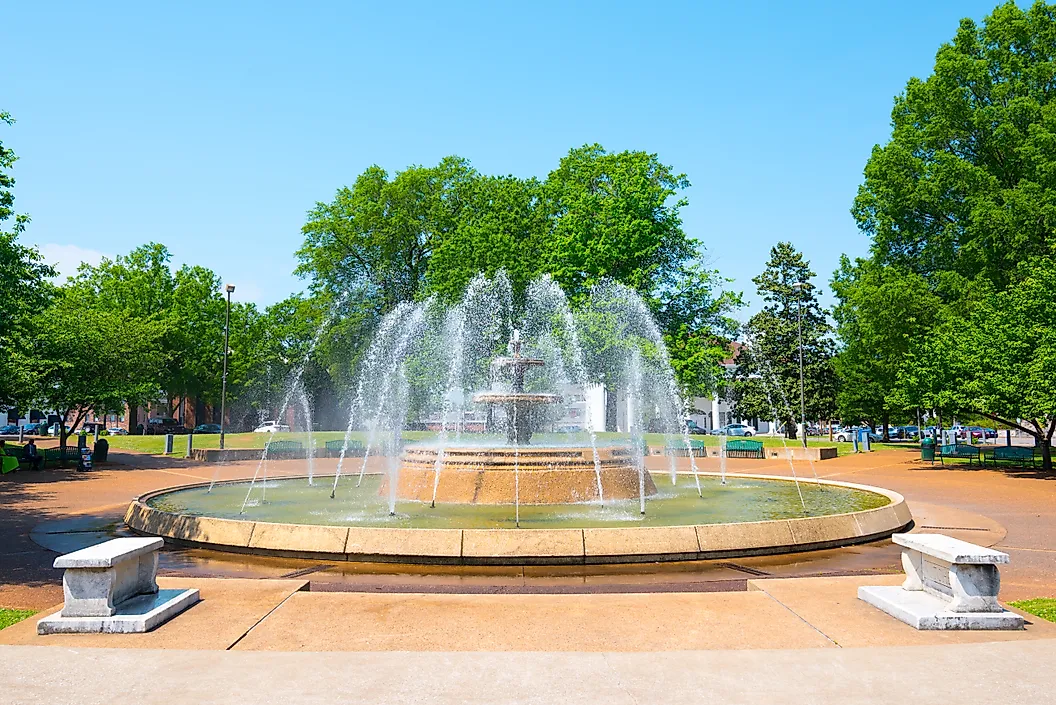
Wilson Park, a green rectangle at the center of downtown Florence, holds the civic and cultural life of the Shoals. Court Street runs near the park, lined with boutiques, galleries, and local retailers. The W.C. Handy Birthplace, Museum and Library marks the birthplace of the musician credited with first codifying and publishing the blues, giving Florence a musical significance well beyond its size.
The Kennedy-Douglass Center for the Arts, housed in historic homes across from Wilson Park, presents rotating exhibitions and juried shows throughout the year. The Shoals Theatre on Court Street, a 1940s-era building still in operation, hosts live music, theater productions, and film screenings. Each July, the W.C. Handy Music Festival brings live performances to multiple stages across the downtown corridor. The Alabama Renaissance Faire returns to Wilson Park every October, and First Fridays bring vendors, live music, and street activity to downtown on the first Friday of each month, May through November.
Athens

The Limestone County Courthouse stands at the center of The Square in downtown Athens, a Neo-Classical structure that gives the district its civic center. Athens was incorporated in 1818, before Alabama became a state, and the Athens Courthouse Square Commercial Historic District is listed on the National Register of Historic Places. The Square hosts parades, storytelling events, and art shows, and is ringed by shops and restaurants that have made it a gathering place for residents and visitors alike.
On the courthouse grounds stands a life-sized statue of Judge James E. Horton, the circuit judge who overturned a wrongful conviction in the Scottsboro trials in 1933. UG White, a dry goods mercantile in a storefront on The Square, remains one of the most visited small businesses in North Alabama. The Athens Farmers Market operates on Green Street, and the designated entertainment district lets visitors carry beverages while they shop and explore during events like Fridays After Five.
Opelika

The railroad rather than the river built Opelika's downtown identity. The Montgomery and West Point Railroad reached the city in 1848, and the brick blocks that went up along Railroad Avenue now form the Downtown Historic District, listed on the National Register of Historic Places. Courthouse Square, centered on the Lee County Courthouse, holds a fountain surrounded by green lawn and park benches, and a farmers market brings local producers to the square on a regular schedule.

The Northside Historic District, a short walk from the tracks, holds turn-of-the-century homes in Victorian, Neoclassical, and Mission Revival styles. John Emerald Distilling Company, in a restored cotton warehouse on North Railroad Avenue, produces Alabama's first legal whiskey since Prohibition, with tours and tastings available on site. The annual Opelika Songwriter's Festival brings artists to venues across the downtown corridor, while Noon Tunes and Summer Swing run free outdoor concert series through the warmer months.
Demopolis

The Public Square in Demopolis carries a long civic history rooted in the town's unusual origins. French immigrants first settled Demopolis in 1817, and the name itself is Greek for "city of the people." Both the town square and the surrounding downtown are designated historic sites. Rooster Hall, on the public square, is one of the oldest buildings in the city and went up in 1843 as part of the Presbyterian Church of Demopolis.
A short walk from the square, Gaineswood, a Greek Revival plantation home built between 1843 and 1861, is listed on the National Register of Historic Places, as is Bluff Hall, a Federal-style residence built in 1832 that now operates as a house museum. Each December, Demopolis hosts its Christmas on the River celebration, with lighted displays that float on the water, candlelight tours of homes, and a barbecue cookoff. The Sax in the City concert series, sponsored by the Two Rivers Arts Council, runs each spring and fall and offers free music across multiple genres.
Talladega

The Talladega Courthouse, built in 1836, is the oldest courthouse in continuous use in Alabama and the centerpiece of the Talladega Courthouse Square Historic District, listed on the National Register of Historic Places. Other buildings within the district include the Henderson Drug Store (1847), the Isbell Bank (1869), the first City Hall (1892), the Federal Post Office (1912), and the Ritz Theatre (1936). The courthouse survived a 1912 tornado that destroyed the original clock tower; after a 1925 fire, the rebuilt tower received a Seth Thomas clock.
Adjacent to the square, the Silk Stocking District joined the National Register of Historic Places on December 13, 1979. It covers 113 acres and held 120 contributing properties when first listed, in styles including Queen Anne, Classical Revival, Colonial Revival, and American Craftsman. Talladega College, Alabama's first private historically Black liberal arts college, is also part of the town's historic landscape. The April in Talladega event, running for more than 40 years, showcases the city's history and architecture through home tours, Art on the Lawn at Heritage Hall, and community programming, with all proceeds directed toward historic preservation.
Marion

Known as "College City," Marion is the county seat of Perry County and was the founding site of several higher educational institutions. Marion Military Institute, which took shape when Howard College president James T. Murfee turned the facility into a military school after Howard College (now Samford University) left Marion in 1887, remains one of a small number of military junior colleges in the nation. The Perry County Courthouse on Marion's historic square is a Greek Revival structure that continues to serve as the civic centerpiece of downtown.
In 1867, nine formerly enslaved people from Perry County founded the Lincoln School to educate African American children in the region. Its most famous alumna was Coretta Scott King. The Lincoln School closed in 1970 as part of integration in Marion and Perry County. The Lincoln Museum now houses memorabilia and historical items from the school on its former site. Kenworthy Hall, completed between 1858 and 1860, is listed on the National Register of Historic Places, as are several other structures across the Green Street, Judson College, West Marion, and Marion Courthouse Square historic districts. A historic marker outside the old county jail recalls the 1965 events in Marion that led directly to the Selma-to-Montgomery Voting Rights March.
Prattville

Prattville developed differently from most Alabama county seats. Instead of a traditional courthouse square, founder Daniel Pratt, a cotton gin manufacturer, built the town along the banks of Autauga Creek and modeled it on a New England mill town. The city has long carried the name "Fountain City" for its scores of artesian wells, many of which still supply decorative and drinking fountains across the cityscape. Heritage Park sits on the banks of Autauga Creek, where Pratt's original gin factory stood, and the Daniel Pratt Historic District, listed on the National Register of Historic Places, holds more than 150 buildings. Near the city on the banks of the Alabama River, the Robert Trent Jones Golf Trail at Capitol Hill offers three 18-hole public courses.
Wetumpka

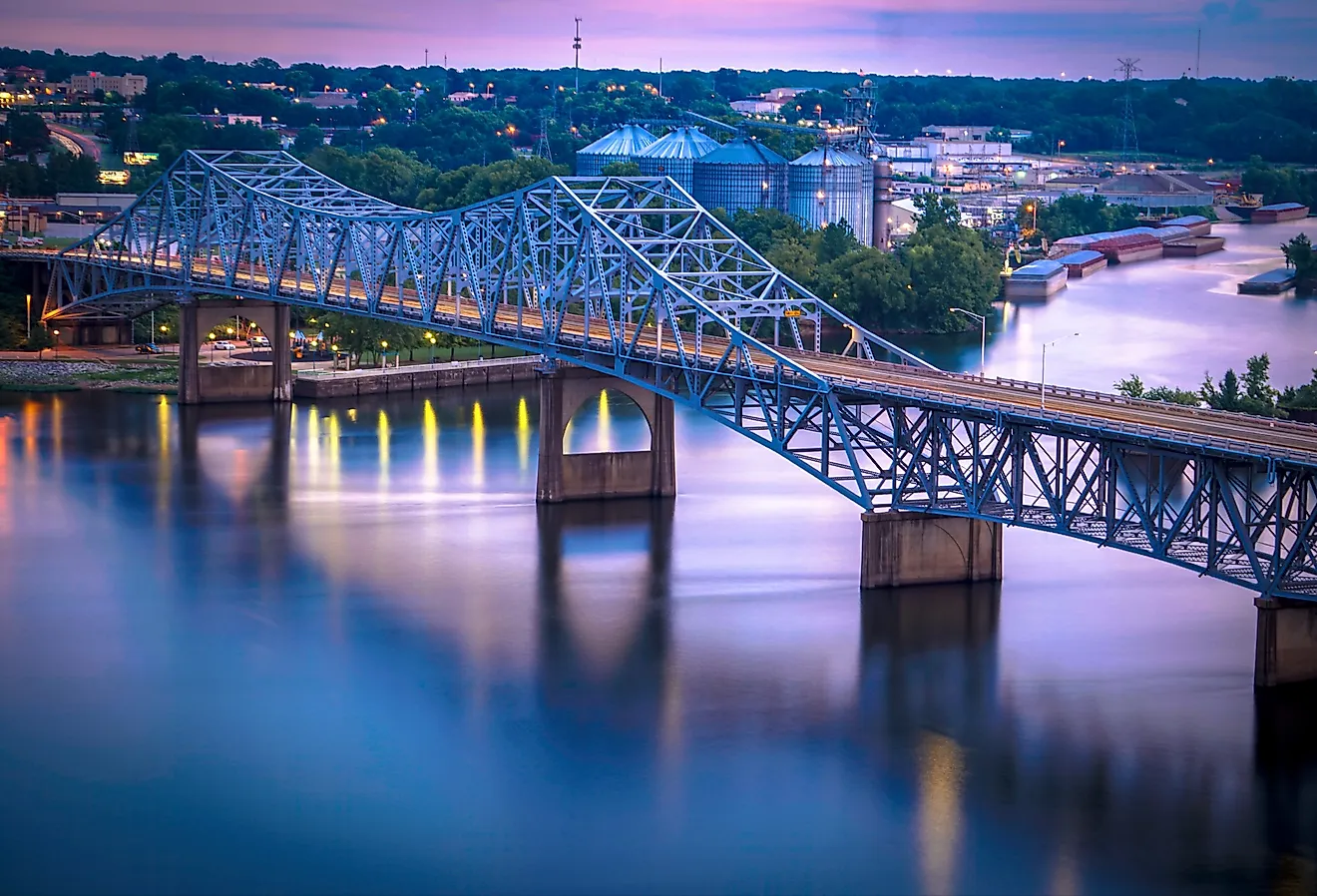
Wetumpka's most distinctive feature is the Bibb Graves Bridge, a five-arch concrete structure built in 1931 that spans the Coosa River at the edge of downtown. Walkable and running straight into the heart of the district, the bridge gives Wetumpka one of the most scenic downtown approaches of any Alabama river town. The East Wetumpka Commercial District is listed on the National Register of Historic Places. Gold Star Park threads walking trails along the riverbank past pedestrian bridges and picnic areas, and the Coosa River offers kayaking along the calm stretch skirting the park's edge.
Ten Squares, Ten Origins
The character of an Alabama square depends on what built the town around it. Eufaula and Marion carry antebellum architectural weight from the cotton era, their streetscapes filled with Greek Revival and Italianate homes. Monroeville and Marion both shaped American literary and civil rights history from their courthouse grounds. Wilson Park and The Square hold the cultural life of North Alabama in Florence and Athens, while Opelika and Talladega preserve the 19th-century brick blocks of a railroad town and a courthouse town. Demopolis traces a French colonial origin to a public square laid out in 1817. Prattville skipped the courthouse square for a New England mill plan, and Wetumpka wraps its downtown around a five-arch river bridge. Walking any one of these squares is the clearest way to read how its town came to be.