8 Picture-Perfect Main Streets In Georgia
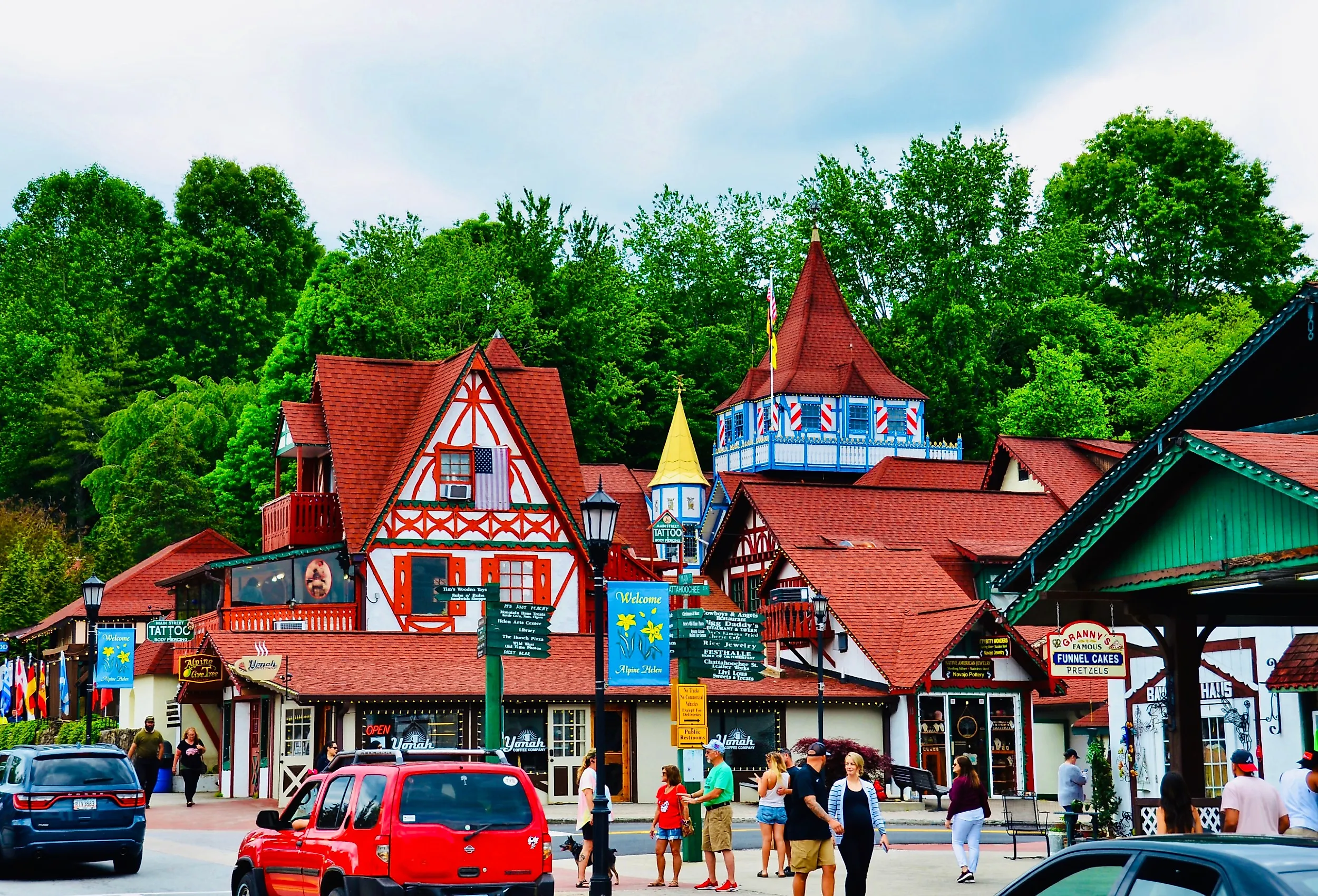
Helen tore down its ordinary storefronts in 1969 and rebuilt the whole strip as an alpine Bavarian village. The gamble worked. Today its downtown draws millions to a Main Street of timbered facades and beer halls in the north Georgia mountains. Other Georgia towns kept the courthouse squares their counties were laid out around in the 1800s. Covington turned its square into a film set known across the country. Dahlonega built its blocks around the gold rush that beat California's by twenty years. These eight Georgia main streets each tell a different story at street level.
Helen

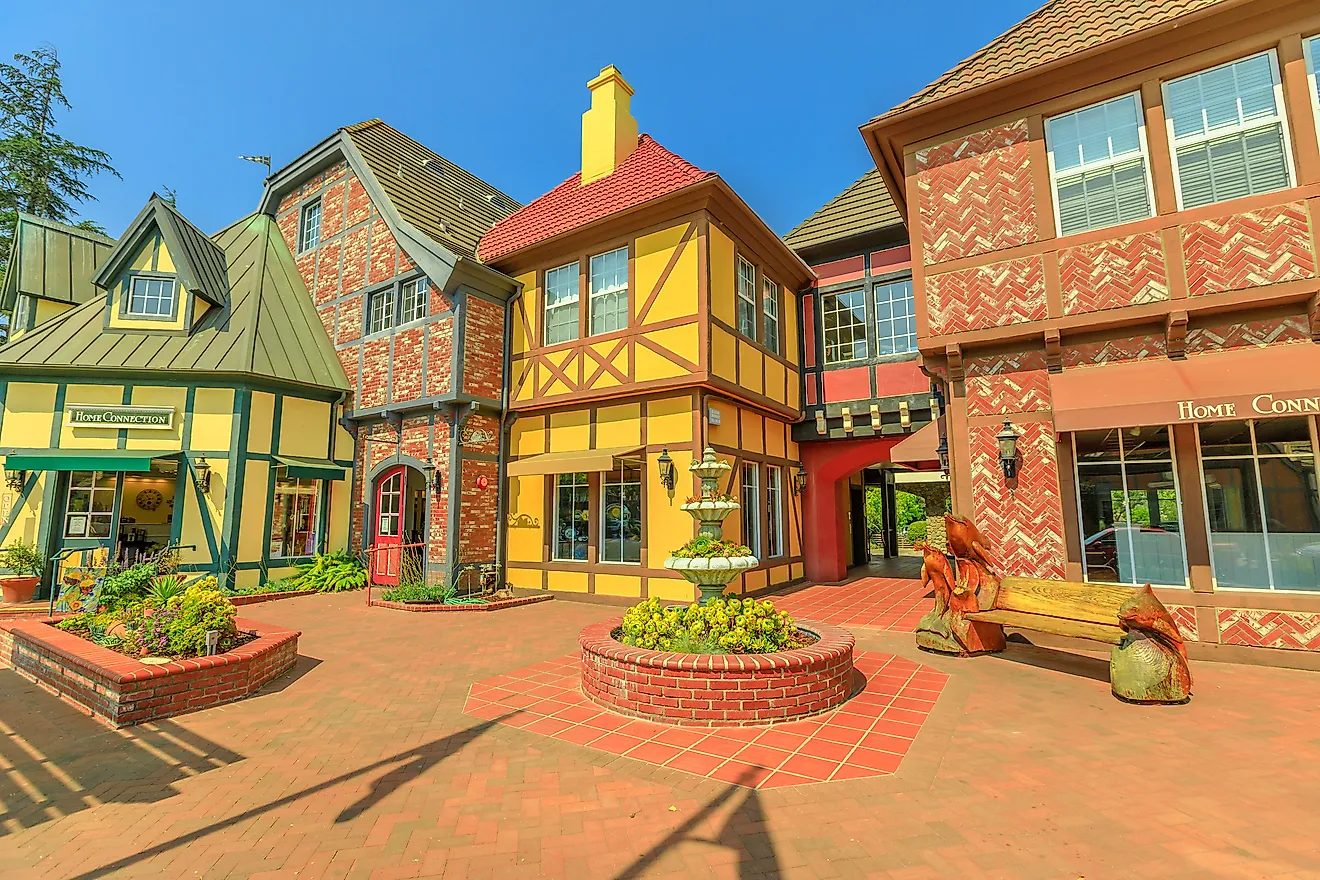
Helen reinvented itself in 1969, when local business owners reskinned the lumber town's plain storefronts as a Bavarian alpine village to pull travelers off the road to the mountains. The disguise stuck. Today the Helen strip runs on steep gabled roofs, painted murals, and cobblestone alleys, with the Chattahoochee River close enough that tubers float past the deck at the Hofbrauhaus. The restaurant's servers work in lederhosen and dirndls, and its Germanator challenge sets a two-and-a-half-pound patty stacked with sausage and bacon in front of anyone willing to try; clear the plate and the house hands over a souvenir stein. Mondays Pub books live music a few doors down, and Hansel and Gretel Candy Kitchen handles the sweet tooth. The German theme even shapes the autumn calendar, when Helen runs one of the longest Oktoberfest seasons in the country.
Americus

Americus grew its downtown around an idea as much as an industry. Habitat for Humanity built its international headquarters here, and that service streak runs through the storefronts on Lamar and Forsyth Streets. The restored Rylander Theatre, a 1921 vaudeville house, now stages school plays and dance recitals alongside rotating programs that reach as far afield as astronomy nights. Sweet Georgia Bakery and Cafe pours the morning coffee and builds the lunch sandwiches a block over. Just outside the center, Wolf Creek Vineyards pours a lineup of handcrafted wines. The combination of volunteer roots and a working arts scene gives the Americus square a downtown that locals actually use.
Bainbridge

Bainbridge sits on the Flint River in the southwest corner of the state, and its downtown gathers around Willis Park, where a restored Civil War cannon and a cluster of historical markers anchor the green. The grounds invite a slow walk through the town's military past. Southern Philosophy Brewing pours tasting flights a short stroll away, and its blueberry mojito pairs with a Buffalo Blue pizza for anyone settling in for the afternoon. Millie's Mercantile and Trading Co. fills its shelves with bright accessories and a deep run of candles, making it the stop for a souvenir. The mix of riverfront history and easy storefront browsing earns Bainbridge a place on a Georgia road trip.
Covington

Covington has been a film set since the 1980s, and the town square earned the nickname "Hollywood of the South" honestly, with more than 160 productions shot in and around it. Fans of The Vampire Diaries recognize the courthouse clock tower and the storefronts that doubled as Mystic Falls. Main Street Trolleys Movie Tours runs visitors past dozens of filming locations from the shows and movies made here. The Covington Walk of Stars threads the square with pavers marking the productions tied to the town and Newton County, a self-guided loop anyone can walk in an afternoon. The Main Street Place stocks show souvenirs and books the local tours, with staff who can place almost any scene by storefront. The square works as a stop for film fans and for anyone who likes recognizing a backdrop in person.
Rome

Rome takes its name and a surprising amount of its identity from the original, down to a bronze she-wolf on its main drag. The Capitoline Wolf on Broad Street is a replica of the statue in the Palazzo dei Conservatori, depicting the animal suckling the mythical twins Romulus and Remus and pointing to Rome's mythological origins. The Italian government sent it as a gift in 1929. Broad Street balances that imported symbol against the town's own past, rooted in Cherokee history and the Civil War. The Rome Area History Center runs tours, lectures, and exhibits, plus a Roman Holiday riverboat tour that traces how three converging rivers shaped the town. Swerve Off The Path teaches pottery and ceramics classes for all ages a few doors down. Rome's downtown ties its borrowed name to its real history and rewards visitors who slow down to read it.
Blue Ridge

Blue Ridge built its main street around a railroad depot, and trains still pull out of it. The Blue Ridge Scenic Railway runs excursions from the historic depot along the Toccoa River, the centerpiece of a downtown packed with galleries and makers. Downtown Blue Ridge City Park gives the strip a green heart, with a playground and a calendar of festival events. The Blue Ridge Mountain Mall gathers specialty shops under one roof for the one-of-a-kind finds, and 2nd Story Entertainment hides a themed mini-golf course and candy counter upstairs for families taking a break from browsing. A working arts scene and a walkable grid make Blue Ridge a mountain-town stop worth the parking.
Dahlonega

Dahlonega struck gold in 1828, two decades before California, and its public square still circles the courthouse that became a museum about it. The Dahlonega Gold Museum sits in the 1836 Lumpkin County Courthouse and tells the story of Georgia's gold rush, with a complete set of coins from the old U.S. branch mint and a nugget weighing more than five ounces. Around the square, the Dahlonega General Store stocks local jams and wooden-handled knives, while Underground sets out cocktails and patio seating for a slower evening. The blocks fill in with tasting rooms, since the surrounding hills now grow grapes as well as gold. Dahlonega's square pairs its mining past with a downtown easy to spend a day in.
Madison

Madison kept the antebellum streetscape that legend says Sherman spared, and its downtown trades on that intact Victorian and Greek Revival architecture. The Madison Trolley Company runs a 90-minute tour past the grand homes and explains how the town grew. The Rogers House Museum, built around 1809, is Madison's oldest house museum, a Piedmont Plain home that passed through 17 owners and served as a boarding house, an antiques store, and a dentist's office before restoration. The Madison Welcome Center makes a sensible first stop for maps, lodging, and a rundown of what is on that week. An afternoon of house museums and shaded streets gives Madison a downtown built for walking.
Georgia Main Streets Worth the Walk
The appeal shows up differently in each town. Helen sells a rebuilt alpine fantasy, Covington sells the screen, and Dahlonega sells the gold underfoot, while Madison and Americus lean on the architecture and arts that survived. What the eight share is enough street-level detail to reward parking the car and covering a few blocks on foot.