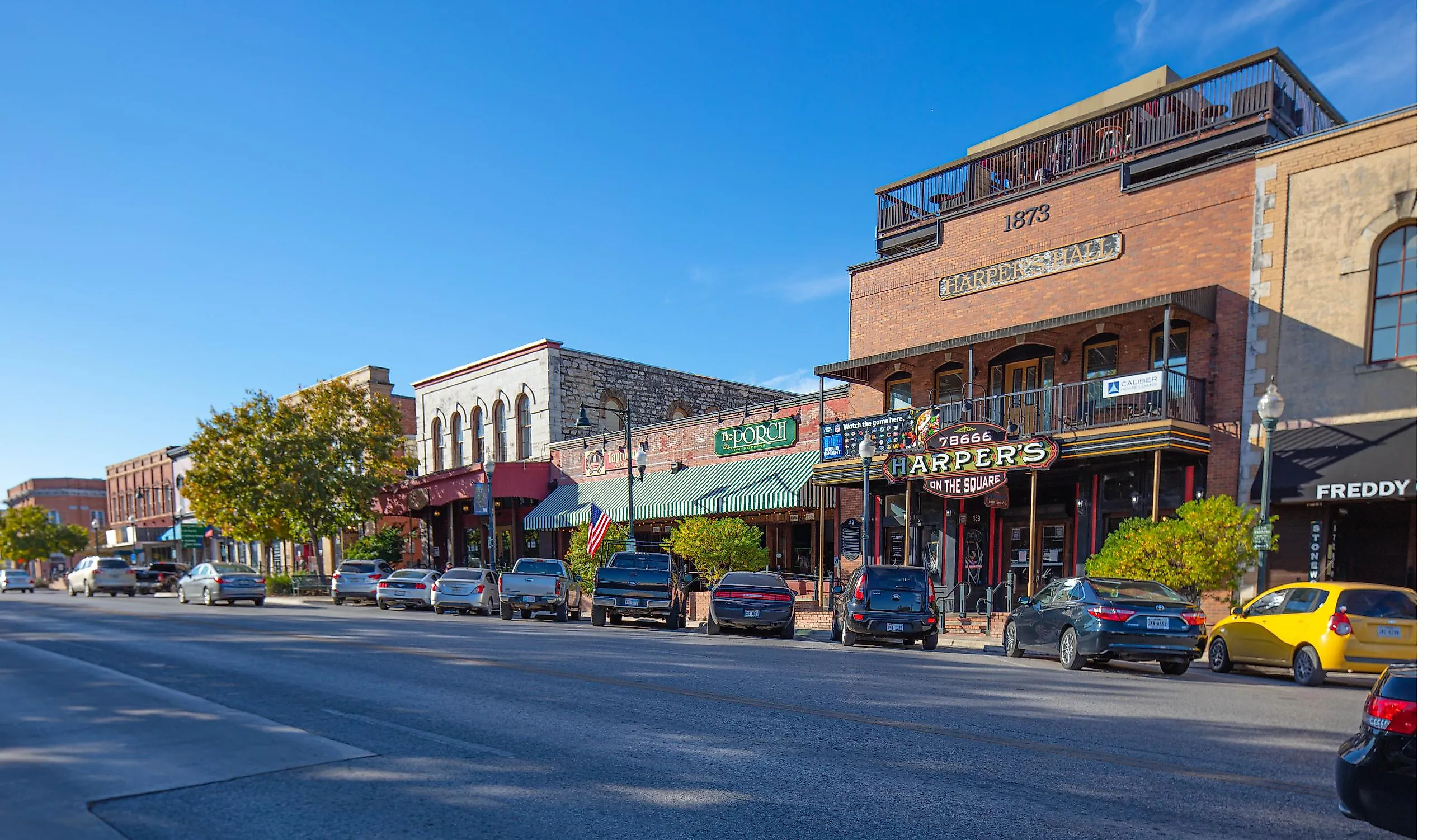
The Most Charming River Towns In Texas
Hundreds of Texas communities grew up along rivers. A handful match clear water with history-filled downtowns and easy outdoor access. Gruene sits along the Guadalupe River and holds the state's oldest continuously operating dance hall. Wimberley has a lively downtown minutes from the forested swimming area at Blue Hole Regional Park. Bastrop offers kayaking on the river plus biking and birdwatching through its pine forests. These seven river towns reward a weekend visit or a longer road trip.
Gruene

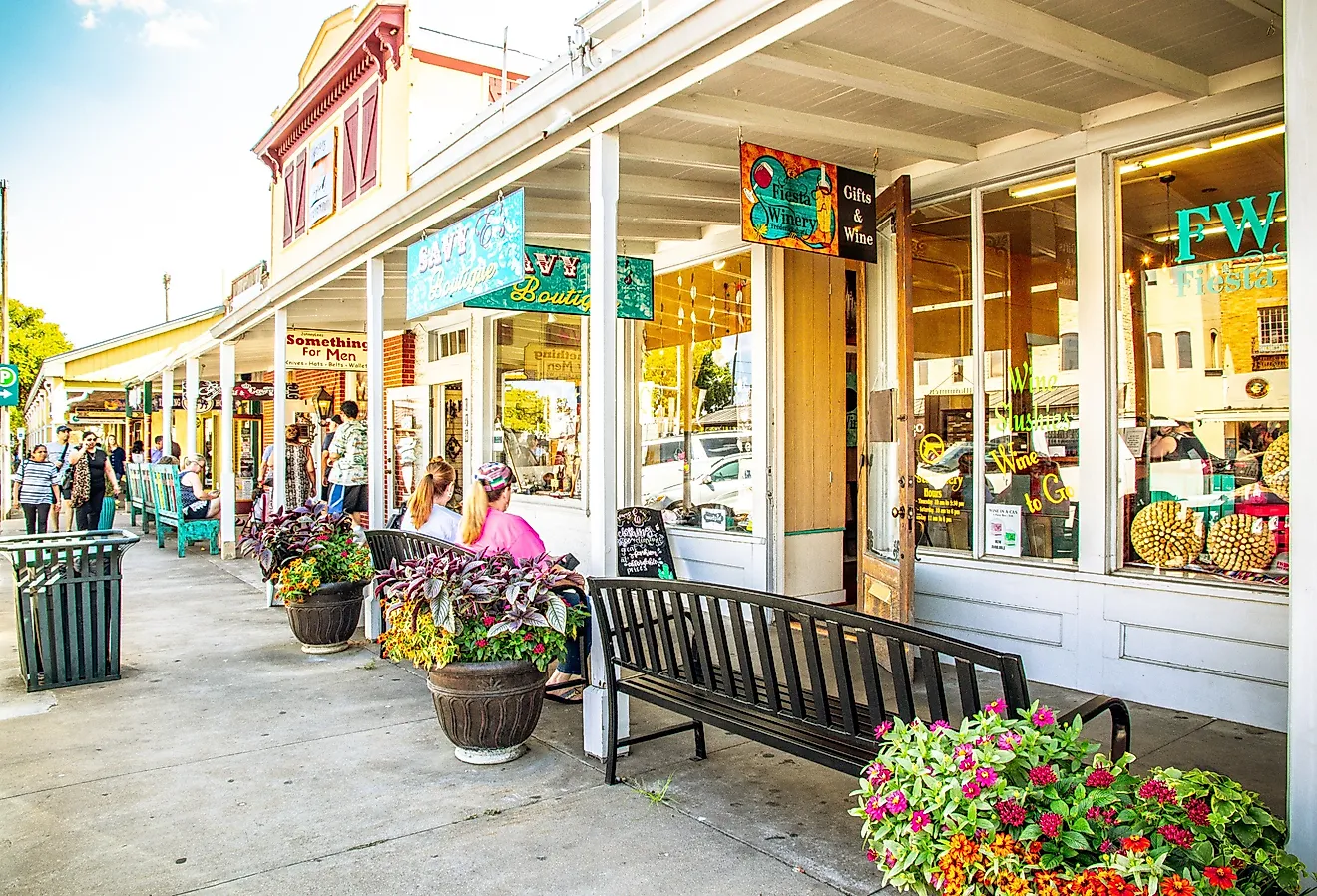
Set along the Guadalupe River, the town of Gruene is a classic Texas Hill Country community with one of the state's best-preserved historic districts. Founded in 1872 mainly by German settlers, the town has still retained much of its original character through its collection of restored 19th-century buildings, many of which now house locally owned shops, restaurants, galleries, and other useful amenities.

A visit to Gruene Hall, the oldest continually operating dance hall in Texas, is a good starting point. Live music and several other community events are scheduled there throughout the year. But the Guadalupe River is equally central to the town's appeal, offering opportunities for tubing, kayaking, swimming, and fishing, especially fun activities in the heat of a Texan summer. You should also browse the Gruene Antique Company, enjoy riverside dining at the Gristmill River Restaurant & Bar, or stay in the historic Gruene Mansion Inn.
Jefferson

Perched along Big Cypress Bayou, Jefferson became an important river port during the 1800s when steamboats were needed to carry both passengers and freight deep into East Texas. In fact, many of the town's historic commercial buildings and Victorian-era homes survive, giving the downtown core a distinctive atmosphere that reflects its unique riverfront past.

These days, you can take a narrated boat tour on the nearby bayou to learn about the area's history and wildlife in depth, explore the exhibits at the Jefferson Historical Museum, or stroll brick-lined streets filled with antique stores, boutiques, and cafés. Nearby Caddo Lake (one of Texas' biggest natural lakes) provides another pristine greenspace for paddling through more remote cypress swamps that are draped with Spanish moss.
To top it off, seasonal festivals, carriage rides, tours, and tons of old-timey architecture add to Jefferson's allure, making it a rewarding destination for travelers interested in diving deep into local history and scenery.
Wimberley

Where Cypress Creek meets the Blanco River between Austin and San Antonio, Wimberley has earned a reputation as yet another relaxed Hill Country town, one with easy access to clear water and limestone bluffs.
The main town square is host to a number of art galleries, locally owned boutiques, eateries, and a notable variety of wine tasting rooms (serving up vintages sourced from the highly productive surrounding countryside), making it a pleasant place for an afternoon of exploring on foot. If you'd like to sample the region's abundance of local produce, be sure to also browse the popular Wimberley Market Days, one of the largest outdoor markets in Texas, held monthly for much of the year.

For nature lovers, just outside downtown sits Blue Hole Regional Park, a local favorite swimming hole set within a lush woodland. Jacob's Well Natural Area is another well-known watery attraction here, famous for its striking artesian spring and underwater cave system. Various nearby hiking trails and river entry points provide additional ways to enjoy the outdoors in and around Wimberley. All in all, combining a plethora of natural attractions with a thriving arts/farming community, this spot delivers a river-centered getaway that feels both peaceful and distinctly Texan.
San Marcos

Flowing right through the heart of town, the San Marcos River gives aptly named San Marcos a character unlike almost anywhere else in Texas. Fed by one of the state's largest spring systems, the river maintains remarkably clear water throughout the year, making it a popular destination for kayaking, paddleboarding, tubing, and even snorkeling. But on land, a number of riverside parks, walking trails, and shaded picnic areas further encourage visitors to spend time along the water, while the very close-by downtown features mom-and-pop restaurants, coffee shops, bookstores, and public art around every corner.
Furthermore, history and nature enthusiasts alike ought to tour the LBJ Museum and then walk on over to Spring Lake at The Meadows Center for Water and the Environment, where, at the latter, glass-bottom boat tours showcase part of the river's unique aquatic ecosystem up close. If the weather is hot, try cooling off at Rio Vista Park, too, a favorite spot for swimming and watching tubers navigate the river rapids. Just outside town, Purgatory Creek Natural Area also has miles of hiking and mountain biking trails throughout the countryside.
Bastrop

Bastrop rests on a wooded stretch of the Colorado River in central Texas, where steep banks and dense stands of pines give the river here a darker, more enclosed feel than many of the previously mentioned waterways. Downtown Bastrop itself lines the river's western edge and is built around a preserved historic district with brick storefronts dating to the mid-1800s, adding a pleasant historic element.
Go see riverside spaces such as Fisherman's Park and Mayfest Park, both of which provide direct access to the water and shaded picnicking under the area's tall trees. Mayfest also boasts a rodeo space, with the Bastrop Homecoming & Rodeo taking place in late summer.
Just north of town, Bastrop State Park is the spot to go for hiking and cycling routes through the "Lost Pines" ecosystem, a rare outlier of East Texas forestland. On the other hand, the Colorado River Refuge area south of town encompasses a great collection of destinations for birdwatching and quieter river access points away from sometimes busier recreation zones.
Bastrop also has quite a history associated with film production, with several productions using its riverfront and forested surroundings as backdrops, namely pictures like horror classic The Texas Chainsaw Massacre (1974), as well as Boyhood (2014).
Columbus

Columbus can be found along a broad bend of the Colorado River, roughly halfway between Houston and San Antonio, where the waterway opens into a series of wide, slow-moving sections framed by cottonwood and pecan trees. Like many places on this list, its historic core is centered a short distance from the river and includes an old-timey courthouse square with a handful of early 20th-century commercial buildings.
Riverside access is best available at nearby Stafford Park, though, where boat ramps, fishing areas, and picnic sites sit directly on the riverbank. A short drive south leads to the Beason's Park area, a quieter stretch of river used mainly by paddlers and for informal swimming when water levels allow.
The lands between Columbus and neighboring Schulenburg are also known for their collection of "painted churches" in the surrounding countryside, many built by Czech and German immigrants; a quiet, worthwhile stop for anyone drawn to the region's living history.
Del Rio

Moving onto the Southwest, Del Rio sits directly on the Rio Grande River on the Mexican border, where it forms a wide, green corridor between the Edwards Plateau and the vast, arid desert terrain of northern Mexico. The city is also home to a network of other flowing waterways, most notably San Felipe Creek, a spring-fed tributary that flows through a number of neighborhoods and parkland before joining the Rio Grande.
Steps away in Downtown Del Rio includes a compact historic core with aged commercial buildings, while nearby Seminole Canyon State Park adds archeological sites going back hundreds or thousands of years into the past, and more off-the-beaten-path overlooks of the Rio Grande system.
However, Del Rio's main riverfront is accessible at places like Brown Plaza and the international bridge area. But for more water-based fun nearby, Lake Amistad, formed by the Amistad Dam just northwest of town, expands the river into a large reservoir known for its clear water, steep cliffs, and extensive shoreline access. Boat ramps at Diablo East and Rough Canyon also provide entry for fishing, boat cruising, and cliffside exploration.
Find Your Next River Adventure In Texas This Year
These seven towns share one thing: the water beside them shapes daily life. The San Marcos runs spring-fed and clear, the Colorado slides dark and pine-shadowed past Bastrop, and the Rio Grande opens into a wide green corridor at Del Rio. Each place turns its river into something different, a tubing run, a paddling route, a working port now lined with museums. Together they show that some of the state's most rewarding trips sit well beyond its largest cities.