12 Best Downtowns On The Gulf Coast
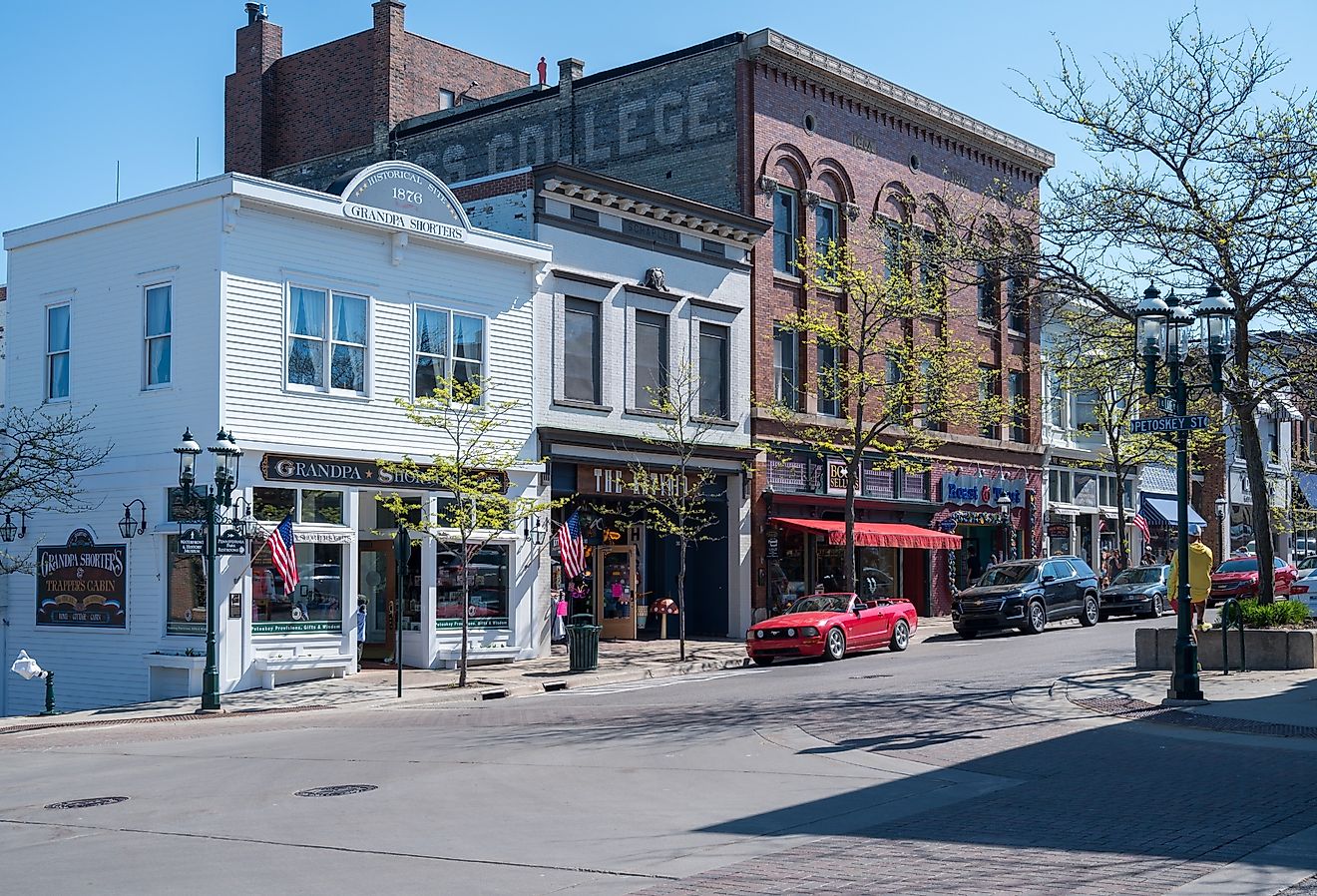
Mardi Gras did not start in New Orleans. It started in Mobile in 1703, fifteen years before New Orleans existed, and Mobile has never once let that go. That is the kind of argument you get into along the Gulf Coast, where the downtowns range between a cast-iron Victorian district in Texas and a village square laid out around oyster warehouses in Florida. Twelve of them follow, running west to east, and every one is best seen on foot.
Galveston, Texas

The Strand District holds one of the largest concentrations of Victorian cast-iron commercial architecture anywhere in the country, and the reason it survives is grim: these buildings came through the 1900 hurricane, still the deadliest natural disaster in American history, while most of Galveston did not.
Before that storm this was the richest city in Texas, which is why the facades are so elaborate on a street that now runs antique shops, bars, and the 1894 Grand Opera House. Mardi Gras here is a genuine production, and Dickens on the Strand each December fills the district with Victorian costume. Walk a few blocks south for the East End Historic District, where the mansions the merchants built are still standing.
New Orleans, Louisiana

The French Quarter was laid out in 1718 and is the oldest neighborhood in the city, which makes New Orleans the obvious entry on any list like this. Most of what you see is Spanish rather than French, because fires in 1788 and 1794 took out the original wooden town, and the Spanish rebuilt in brick with the courtyards and wrought-iron galleries everyone photographs.
Royal Street handles the antiques and the galleries and is considerably more pleasant than Bourbon one block over. Jackson Square has the cathedral, the artists, and the street musicians. Go early enough and you get the Quarter at its best, when the delivery trucks have gone and the crowds have not arrived.
Bay St. Louis, Mississippi

Old Town runs down to a seawall, which is unusual on this stretch, and the whole district was rebuilt with intention rather than speed after Katrina flattened the waterfront in 2005. Buildings kept their original bones and the zoning still favors porches and pedestrians.
Second Saturdays bring vendors, music, and crowds from the business district out to Depot Road. The Alice Moseley Folk Art Museum occupies the old L&N depot and honors a woman who started painting at 65 and became the town's best-known artist. The Mockingbird Cafe, in a 19th-century house, functions as the community's living room.
Ocean Springs, Mississippi

Washington Avenue is the spine here, a few walkable blocks under live oaks with galleries, independent shops, and a restaurant scene that punches well above a town this size. The French landed at this spot in 1699 and founded the first capital of French Louisiana, which gives Ocean Springs a claim on being older than most of the coast.
The town runs on Walter Anderson, the reclusive painter whose murals cover 3,000 square feet of the community center, painted on a city commission in 1950 for a fee of one dollar. The museum named for him holds the Little Room, the mural-covered space at his cottage that nobody entered until after his death in 1965.
Mobile, Alabama

Back to the Mardi Gras argument. The French celebrated it at Mobile in 1703, and the city's mystic societies have been parading in some form ever since, which makes this the oldest Carnival tradition in the country. The Mobile Carnival Museum, in an 1872 mansion on Government Street, lays out the costumes and the float history in detail.

Dauphin Street is the main run, several blocks of 19th-century storefronts holding bars, restaurants, and music rooms under oaks hung with Spanish moss. Mobile has four historic districts stacked around downtown, the Cathedral Basilica of the Immaculate Conception dating to the 1830s, and the battleship USS Alabama parked across the bay.
Fairhope, Alabama

Fairhope was founded in 1894 as a single-tax colony, an experiment in Henry George's economics, and the Fairhope Single Tax Corporation still holds land in common. That structure was designed to stop speculation, which is why a town this attractive has so much public waterfront and such a coherent downtown.
Flower baskets on every lamppost are a municipal line item. Fairhope Avenue runs the bookshops and galleries, Page and Palette has anchored the corner for decades, and Panini Pete's in the French Quarter courtyard does the muffulettas and lemon beignets. The municipal pier reaches about a quarter mile into Mobile Bay at the end of it all.
Pensacola, Florida

Palafox Street has been named one of the Great Streets in America by the American Planning Association, and it earns it: a wide, walkable run of restaurants, bars, and shops that spills into Palafox Market on Saturdays and stays busy after dark.
The history runs deeper than the street suggests. A Spanish expedition founded a settlement here in 1559, the first multi-year European settlement identified in what became the United States, though a hurricane wrecked it and the survivors left in 1561. Pensacola has flown five flags since. Historic Pensacola Village covers several blocks of preserved buildings, and the Blue Angels fly out of the naval air station on the edge of town.
Seaside, Florida

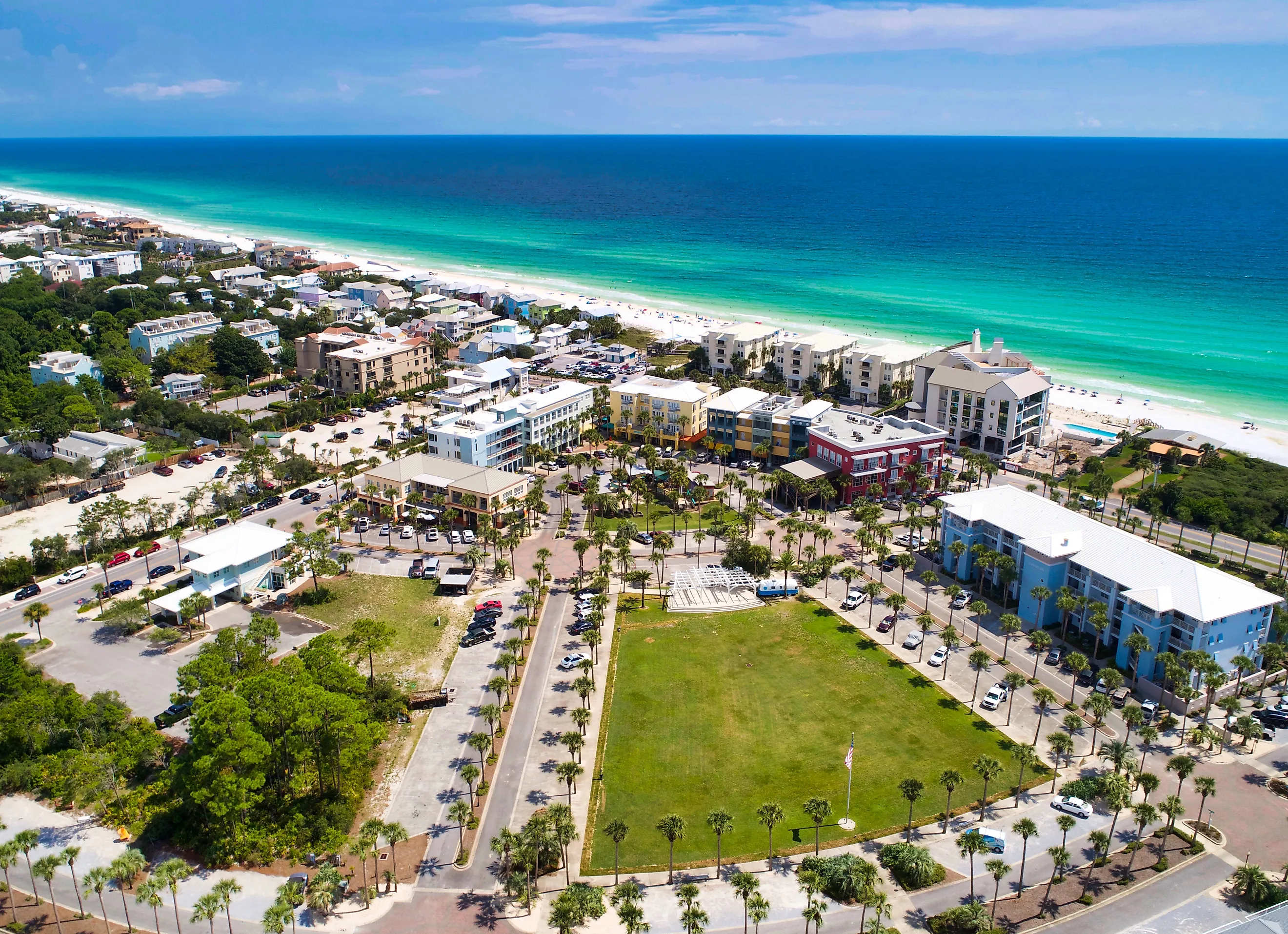
Seaside was built from scratch in 1981 as a deliberate experiment in New Urbanism, laid out so that everything sits within a short walk of a central square. It worked well enough to be copied across the country, and well enough to look artificial on camera, which is why The Truman Show filmed here in 1998 and used the town essentially unaltered as a set for a fake town.
The town center is small and dense: boutiques, a bookshop, an amphitheater that programs music through the year, and Airstream Row, a line of retrofitted campers serving food along 30A. For a planned community it has aged into something that genuinely functions.
Panama City, Florida

Historic Downtown Panama City runs along Harrison Avenue, and the reason to come now is that it is in the middle of a serious comeback. Hurricane Michael came ashore near here in 2018 as a Category 5 and gutted the city; the rebuilding since has put galleries, independent shops, and restaurants back into the brick storefronts.
The Panama City Center for the Arts occupies the old city hall and charges nothing for admission. The marina sits at the foot of the street on St. Andrews Bay. For a different angle, the St. Andrews district a few minutes west kept its old fishing-village layout and has the oyster bars to match.
Apalachicola, Florida

In the 1830s this was the third-largest cotton port on the Gulf, behind only New Orleans and Mobile, and the town was laid out around a grid of squares that still exist. That explains the scale of the downtown: wide streets and warehouse-sized storefronts in a town of a couple of thousand people.
The oyster industry that followed cotton has thinned since the bay closed to wild harvest in 2020, but the working waterfront is intact and shrimp boats still tie up behind Scipio Creek Marina. The 1913 Dixie Theatre programs live performance, Downtown Books and Purl handles the reading and the yarn, and Apalachicola runs a plaque walking trail that is genuinely worth following.
Venice, Florida

Venice was master-planned in the 1920s in Northern Italian Renaissance style by John Nolen, one of the first comprehensively planned cities in Florida, and the bones of that plan are why West Venice Avenue works: wide sidewalks, deep shade from palms and live oaks, and a consistent architectural vocabulary down the whole street.
Centennial Park anchors the middle with a bandshell and a Main Street information kiosk. The Hotel Venice opened in 1926, and the old Orange Blossom Garage now holds the Venice Theatre. The beaches south of town are the best place in the country to find fossilized shark teeth, which is the other reason people come.
Naples, Florida

Fifth Avenue South is the most polished downtown on the Gulf Coast and makes no apology for it: palm-lined, immaculately maintained, and lined with galleries, restaurants with sidewalk tables, and shops priced for the zip code. Third Street South a few blocks away is the older and slightly quieter version, with a Saturday farmers market.

The Naples Pier at the end of 12th Avenue South has been rebuilt repeatedly after hurricanes, most recently following Ian in 2022, so check what has reopened before you plan around it. Naples is the expensive end of this list, and the walk is free.
Twelve Downtowns, One Coastline
What separates these from a nice beach with shops behind it is that each was built as a town centre and still functions as one. Galveston has the cast iron, New Orleans has the oldest street grid, Mobile has the original Mardi Gras, and Apalachicola has squares laid out for a cotton port that no longer exists. Pensacola and Venice were planned, Seaside was planned twice over, and Fairhope's land is still held in common by a corporation founded in 1894. Pick two that sit near each other and walk both in a day, because the driving between them is the least interesting part.