9 Most Overlooked The United States Towns For 2026
Some American towns sit beyond the usual road-trip routes, between larger cities, or in landscapes that seem to stretch on without interruption. Ely, for example, a railroad town built around a vast rail yard, sits on the Loneliest Road in America. The Colorado Plateau town of Price has a museum loaded with dinosaur fossils and other prehistoric artifacts. Muscatine in Iowa preserves its unique history in the National Pearl Button Museum. These nine overlooked towns offer a chance to see a less familiar side of the United States, where local history and character have endured largely away from the spotlight.
Ely, Nevada

Ely is an Egan Mountain town on Nevada's eastern edge, on the US Route 50, a stretch of highway known as the Loneliest Road in America. Ely was originally founded in the 1870s as a stagecoach stop and trading post, but it quickly became a major copper mining region. The town’s mining history is preserved at the Ward Charcoal Ovens State Historic Park, which contains six beehive-shaped charcoal ovens that were used to process silver ore from 1876 to 1879.
As mining expanded, a 150-mile rail line was built to haul the copper ore from the mines into town. Today, the Nevada Northern Railway Museum preserves one of the country’s oldest surviving rail yards from the steam railroad era. A section of the line still operates for steam train rides. Ely’s historic character extends into downtown, where the Economy Drug Store resembles a 1950s diner, serving deli-style sandwiches and sodas from an old-fashioned soda fountain.
Price, Utah

Although Price’s roots are in agriculture and ranching, like Ely, it became a mining town with the arrival of the Denver and Rio Grande Railroad in 1883 and the coal industry expanded. The Bryner House Museum, dating back to 1892, houses a collection of artifacts and displays depicting early settler and pioneer life in Price. But the landscapes surrounding the town are much older than agriculture and mining.
The Prehistoric Museum looks much farther back in time, housing dinosaur fossils, tracks, and archaeological artifacts, many of which were discovered in the surrounding region of eastern Utah. That prehistoric history continues at Nine Mile Canyon, ten miles southeast of Price. It is considered the world’s longest outdoor art gallery because of the many Native American petroglyphs and pictographs.
Lewistown, Montana

Lewistown is in central Montana and surrounded by five different mountain ranges: the Snowy, Judith, Moccasin, Belt, and Highwood Mountains. However, it is not a typical Rock Mountain resort town. Rather than rugged peaks rising around town, it is mostly rolling prairie, farmland, and ranches. The Central Montana Museum contains many collections of photographs, history books, and displays highlighting the settlers who came to Lewistown to establish homesteads.
Agriculture remains a strong aspect of Lewistown to this day. The Big Springs Trout Hatchery is the largest cold-water production hatchery in Montana, producing up to two million fish annually. The region’s ranching heritage is celebrated more theatrically aboard the Charlie Russell Chew-Choo, a dinner train that passes through Central Montana’s ranchland. Actors dressed as masked bandits even board the train when passengers are dining on prime rib.
North Platte, Nebraska

North Platte is the largest town in Lincoln County and a major railroad transportation hub. The Golden Spike Tower provides views of Union Pacific’s Bailey Yard, one of the largest rail yards in the world. The Cody Park Railroad Museum continues North Platte’s railroad history. It has several locomotives and rail cars on display, many of which are filled with old railroad memorabilia.
But North Platte’s history is not limited to just the railroad. William F. “Buffalo Bill” Cody referred to North Platte as his hometown. His legacy is preserved at the Buffalo Bill Ranch State Historical Park. The park features his Second Empire house, built in 1886 and a large barn on 25 acres of what was originally the 4,000-acre Scout’s Rest Ranch.
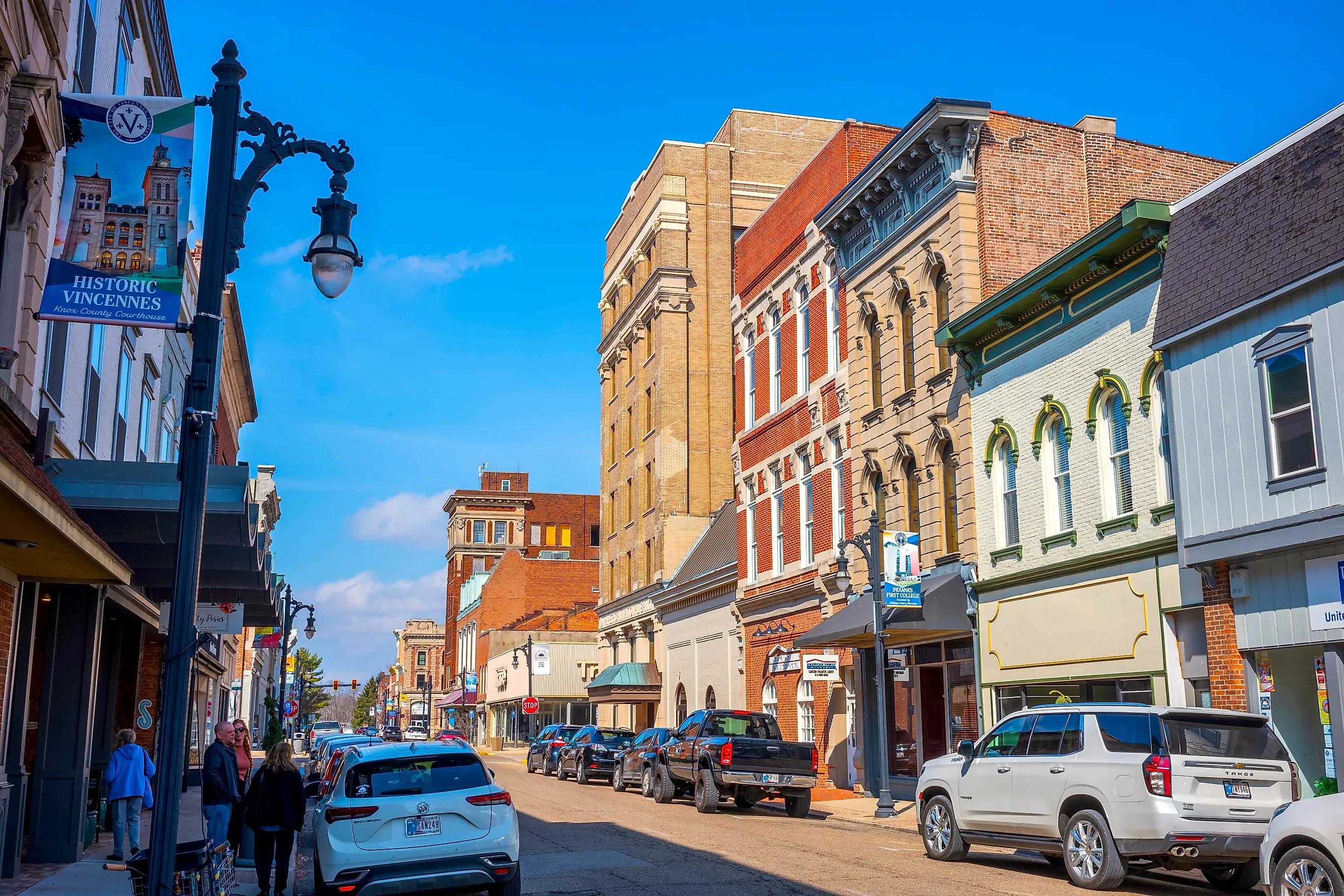
Vincennes, Indiana

Not only is Vincennes the oldest town in Indiana and the capital of the Indiana Territory, but it also shaped United States history by serving as a military outpost during the American Revolution. During the war, George Rogers Clark and his frontiersmen captured the fort, helping secure American claims to the frontier. The George Rogers Clark Memorial stands at the site of Fort Sackville in George Rogers Clark National Historical Park.
Vincennes’ military history covers more than just the American Revolution. The Indiana Military Museum displays tanks, artillery, aircraft, uniforms, and more from the Civil War, both World Wars, Korea, Vietnam, Desert Storm, and recent conflicts. Fort Knox II offers another glimpse into the town’s military history. Although the fort was built in 1803, it no longer stands and is instead marked with short posts.
Muscatine, Iowa

At its peak, Muscatine was responsible for producing one-third of the world’s pearl buttons, an industry built around mussels harvested from the Mississippi River. The National Pearl Button Museum tells the story of the town’s pearl button industry, explaining how workers harvested mussels, processed their shells into buttons, and how Muscatine became a major manufacturing center. The museum also explores the role of mussels in maintaining clean water in the Mississippi.
Muscatine’s connection to the Mississippi is on display at the museum. Riverside Park stretches 44 acres between downtown Muscatine and the Mississippi River. Mississippi Brewing Company is just steps from the park, serving beer and food on its outdoor patio overlooking the river.
Eufaula, Alabama

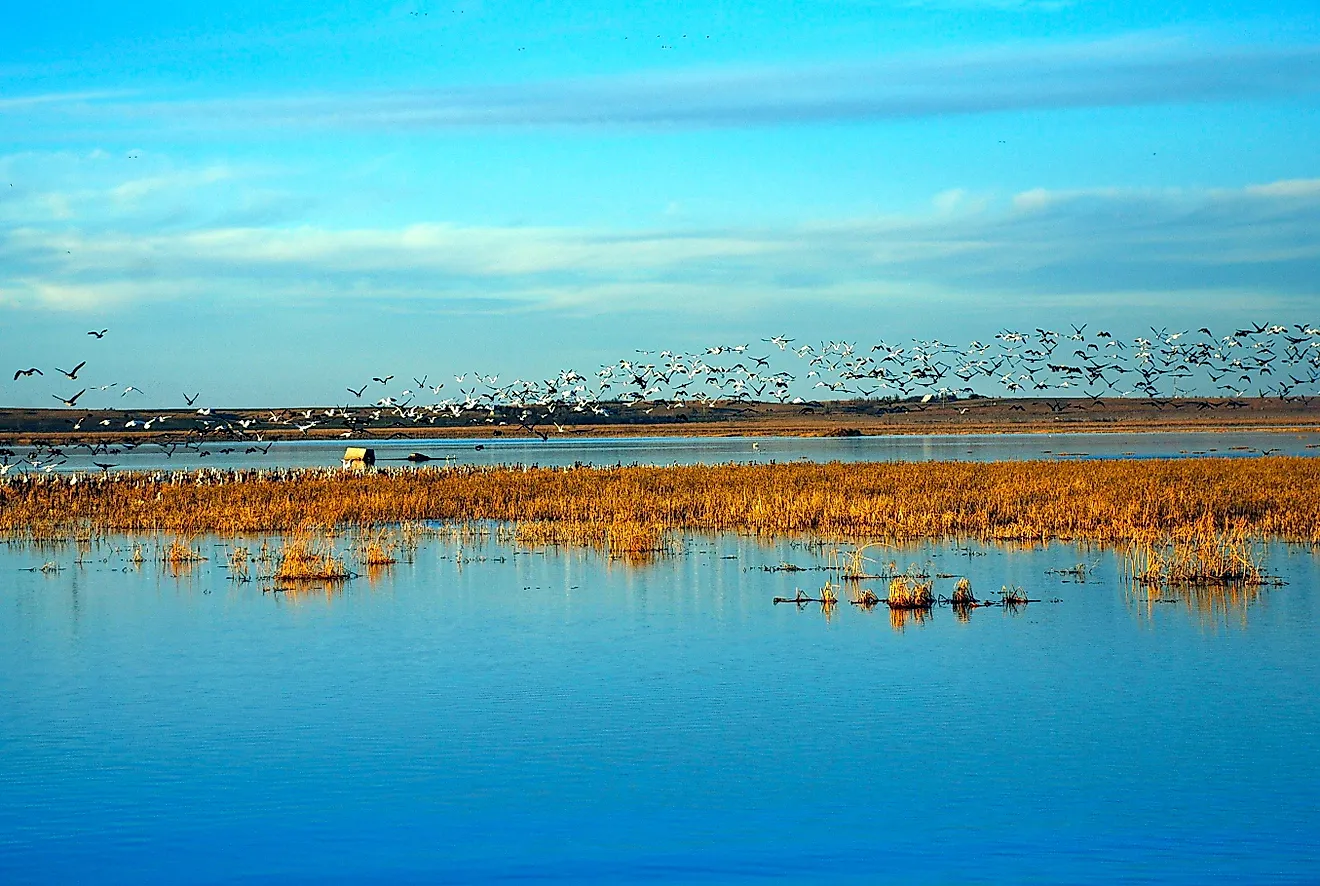
Eufaula is a rural Alabama town in the southeast corner of the state, in a landscape shaped by the Chattahoochee River and Lake Eufaula. The Eufaula National Wildlife Refuge encompasses 11,184 acres along both banks of the Chattahoochee River in southeast Alabama and southwest Georgia. Its wetlands, woodlands, and open water are home to nearly 300 species of birds and 40 species of mammals. Lakepoint State Park is on the banks of Lake Eufaula and hosts national bass fishing tournaments.
The connection to Lake Eufaula continues into local restaurants. The Water’s Edge Restaurant overlooks Lake Eufaula, serving Southern cuisine like seafood gumbo, breaded oysters, and fried catfish. But Eufaula is more than its natural surroundings. Fendall Hall was completed in 1860, making it one of the oldest homes in town. It is decorated with several paintings, artifacts, and family belongings from the 1880s.
Moundsville, West Virginia

Moundsville’s name was chosen to honor the burial mounds built by the Adena culture over 2,000 years ago. The Grave Creek Mound is the most prominent, standing at 62 feet high and 240 feet in diameter, making it the largest conical earthen mound in North America. It is estimated to contain 57,000 tons of earth, with archaeologists speculating that three million baskets of earth were used to construct it.
Moundsville has more than ancient history. It also has an homage to the oldest living religion on Earth. Prabhupada’s Palace of Gold is a Hindu temple in the Appalachian forests and hills outside of Moundsville. But as Moundsville is in the Appalachian Mountains, there are also recreational opportunities. Grand Vue Park is an outdoor adventure park with walking and biking trails, an aquatic center, and a 7,540-foot zip line.
Baker City, Oregon

Baker City sits in Baker Valley in the high desert corner of eastern Oregon. The Oregon Trail passed through northeast of where Baker City currently is. The trail’s route is near the National Historic Oregon Trail Interpretive Center preserves the story of pioneers who traveled west along the trail. It features hands-on exhibits, life-size displays, and a replica wagon camp. The Baker Heritage Museum picks up after the town’s settlement. It contains both permanent and rotating exhibits on mining, timber, ranching, agriculture, and early Baker City life.
Baker City’s history is visible outside of museums, even in the architecture around town. The Geiser Grand Hotel was built in 1889 and retains many of its original architectural elements, like a four-story clock tower, marble floors, and crystal chandeliers.
Small Towns, Big Stories
These nine towns highlight how some of America’s most distinctive places can be easily overlooked. Their stories vary between railroad and frontier history, Indigenous archaeology, pearl-button manufacturing, military history, and more. None of them has the profile of a major destination, but each retains a distinctive identity shaped by the people, industries, and events that defined it. Together, they create a broader picture of the United States beyond its most popular towns.