9 Best United States Towns For A Weekend Trip
Sometimes you get an unshakable itch for German pastries and sunrises over lighthouses instead of, you know, desk work. Good news: America is absolutely stuffed with places ready to scratch it. There are Spanish stone forts in Florida, cobblestoned wine country in California, and adobe pueblos that Coronado's expedition was already calling old when they showed up in 1540. No two-hour security lines. No color-coded itineraries required. Just real Main Streets, regional cooking worth the drive, and scenery that will have you fumbling for your camera. These nine little corners of the US are proof that the best trips don't always require a passport.
Fredericksburg, Texas

Fredericksburg sits in the Texas Hill Country halfway between San Antonio and Austin, founded in 1846 by German immigrants whose accent and architecture both stuck around. The Main Street commercial strip is still anchored by 19th-century limestone storefronts, and the local lager-and-sausage culture has been refilled in recent years by a wave of more than 100 wineries along Highway 290 that have turned the surrounding countryside into Texas wine country.
The Pioneer Museum on Main Street covers the original German settler era through preserved homesteads and a Sunday House (the small in-town houses farm families kept for weekend church visits, a uniquely Hill Country tradition). The National Museum of the Pacific War, also downtown, occupies six acres around the boyhood home of Admiral Chester Nimitz and is one of the most thorough World War II museums anywhere in the country. For the outdoor day, Enchanted Rock State Natural Area is 18 miles north, with a 425-foot pink granite dome that rises out of the surrounding scrub like something dropped from orbit. Fredericksburg Brewing Company on Main is the obvious dinner stop; Peach Tree Inn and Suites handles lodging close to downtown.
Beaufort, South Carolina

Beaufort, the second-oldest town in South Carolina (after Charleston) and a 70-mile drive from it, is a Lowcountry sea-island town wrapped around the tidal Beaufort River. The downtown is a National Historic Landmark District, with antebellum homes still occupied as residences and the Parish Church of St. Helena, founded in 1712, still holding services. The John Mark Verdier House Museum, an 1804 Federal-style merchant's home, is a window into the rice and cotton wealth that built the early town.
Henry C. Chambers Waterfront Park on the river is the social center of the town, with long benches under live oaks and a park swing that locals will line up for at sunset. Hunting Island State Park, 16 miles east, has the only public lighthouse in the state still climbable by visitors and four miles of mostly empty Atlantic beach. The dinner picks are Saltus River Grill for Lowcountry seafood and Old Bull Tavern for European-leaning small plates. The Cuthbert House Inn, a circa-1790 mansion right on the waterfront, is the splurge stay in town.
St. Augustine, Florida

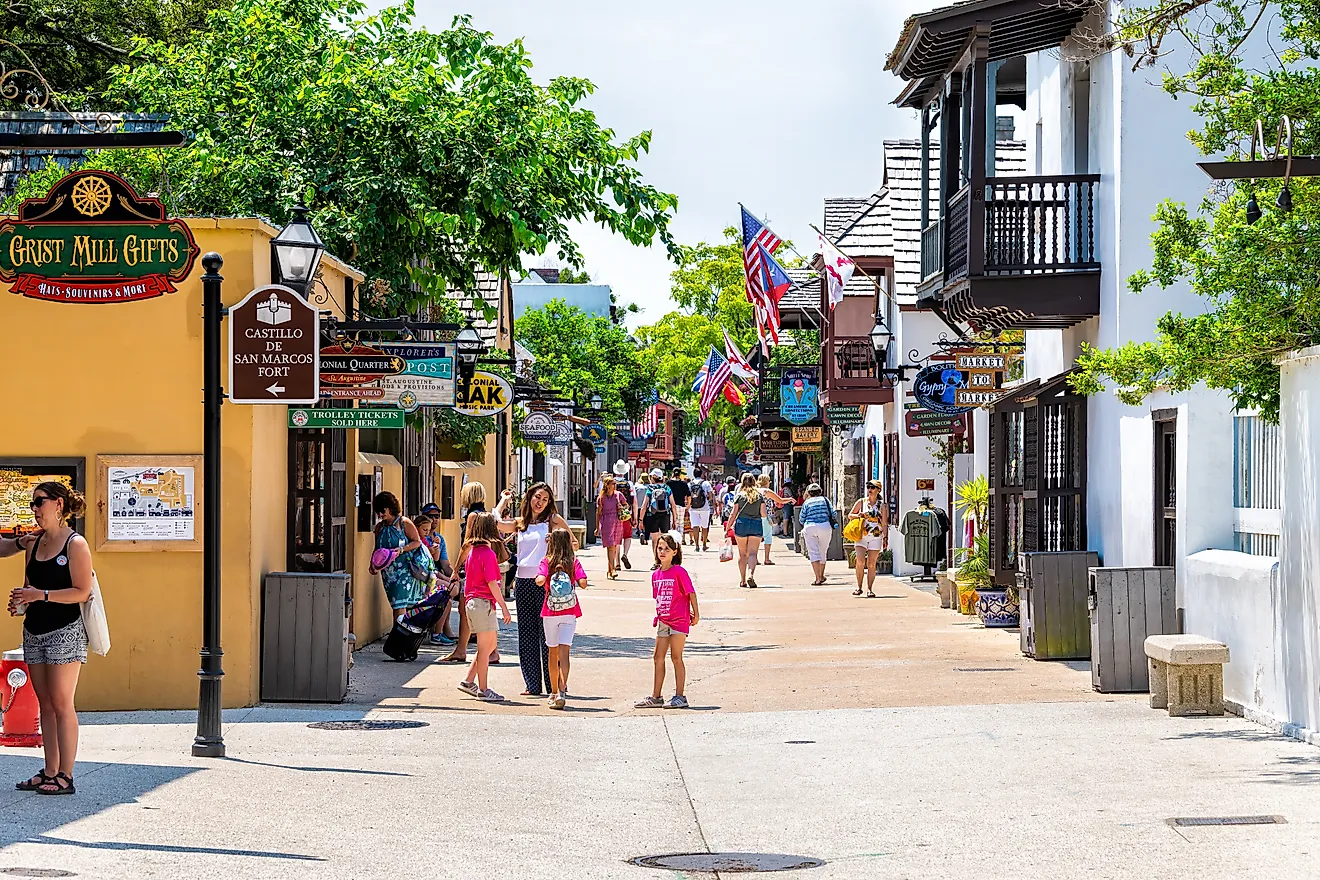
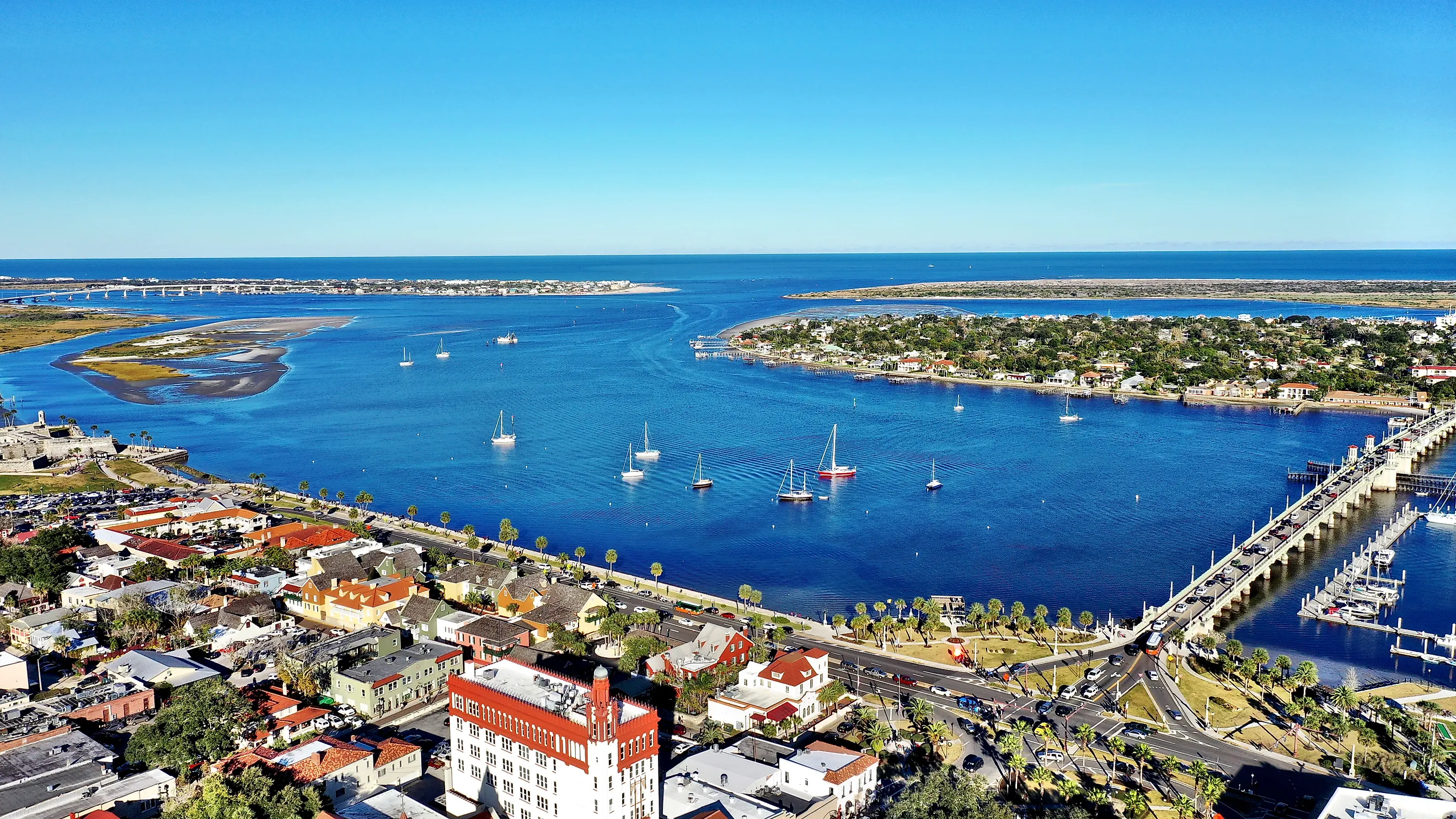
St. Augustine, founded by the Spanish in 1565, is the oldest continuously occupied European-established settlement in the contiguous United States. The Castillo de San Marcos, completed in 1695, is the oldest masonry fort in the country and the only surviving 17th-century military structure in the United States. Its walls are made from coquina (a porous shell-stone quarried locally that absorbs cannon fire instead of shattering), which is why the fort survived the British siege of 1702 with the surrounding city in ashes around it.
St. George Street is the pedestrian core of the colonial district, lined with restored Spanish-period buildings and the Lightner Museum across the plaza. The St. Augustine Lighthouse and Maritime Museum has 219 steps to the top of an 1874 black-and-white striped tower. Anastasia State Park, ten minutes away, has four miles of Atlantic shoreline. The Hilton St. Augustine Historic Bayfront sits in the historic district with views of the Castillo across the bay.
Healdsburg, California

Healdsburg sits at the meeting point of three of California's premier wine appellations: Dry Creek Valley, Alexander Valley, and Russian River Valley. The town is about 70 miles from San Francisco and 70 miles from Sacramento, which makes it a workable weekend trip from either city. The plaza in the center of town is lined with tasting rooms (more than 30 within walking distance), restaurants, and boutiques, and you can spend an entire day on wine without ever needing a designated driver.
Outside the plaza, Dry Creek Vineyard, Rodney Strong, and the legendary Ridge Vineyards Lytton Springs all run tasting rooms within a short drive. SingleThread, a three-Michelin-star restaurant on the plaza, is the splurge dining option in the country; reservations open months ahead. Valette is the easier-to-book locally-owned alternative. For active mornings, the Russian River Valley has bike routes through vineyard country, and the Healdsburg Ridge Open Space Preserve has a four-mile trail loop. Hotel Healdsburg right on the plaza is the most convenient stay.
Taos, New Mexico

Taos is a high-desert town at 7,000 feet, sitting on a plateau between the Sangre de Cristo Mountains and the Rio Grande Gorge. The headline attraction is Taos Pueblo, a multi-story adobe complex continuously inhabited for over 1,000 years and one of the few UNESCO World Heritage Sites in the United States that is still a working community. The Pueblo charges admission and runs guided tours, with the proceeds supporting the resident Tiwa-speaking community.
The town itself is a layered place. The plaza dates to the Spanish colonial era, and a 20th-century artist colony (Ansel Adams, Georgia O'Keeffe, and the Taos Society of Artists all worked here) left a still-active gallery scene. The Rio Grande Gorge Bridge, eleven miles west of town, is the seventh-highest bridge in the United States at 565 feet above the river. Taos Ski Valley adds a serious mountain to the offering in winter. Lambert's of Taos is the longstanding downtown dinner pick; Hotel La Fonda de Taos sits right on the plaza for easy walking access to the historic core.
Bar Harbor, Maine

Bar Harbor is the gateway town to Acadia National Park, the only national park in New England and one of the most-visited in the country. Set on the eastern shore of Mount Desert Island, the town puts almost everything Acadia is known for within a 15-minute drive: the Park Loop Road, the carriage roads built by John D. Rockefeller Jr., and Cadillac Mountain, where the summit is the first place in the United States to see the sunrise from October through early March.
The Shore Path, a free 0.7-mile gravel walk that starts behind the Bar Harbor Inn, runs along Frenchman Bay with views of the Porcupine Islands and the working lobster boats out in the bay. Whale-watching trips out of the harbor reliably spot finbacks and humpbacks in summer. The dinner economy is built on lobster (the West Street Hotel's restaurant and Stewman's Lobster Pound are the headline picks), with a local craft beer scene anchored by Atlantic Brewing Company. The Acadia Hotel and The Inn on Mount Desert sit in the walkable downtown for in-town stays.
Hood River, Oregon

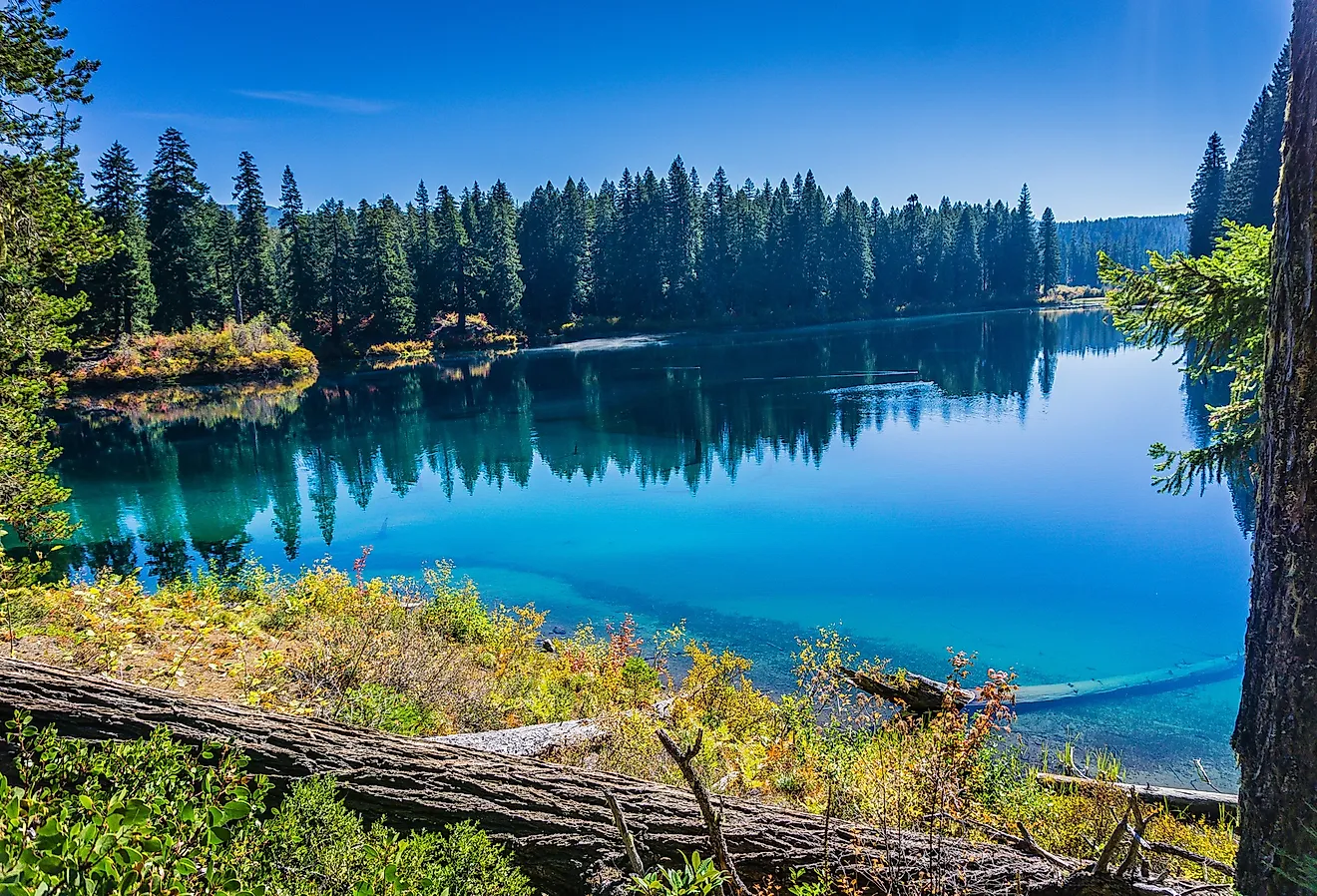
Hood River sits where the Columbia River cuts through the Cascade Range about an hour east of Portland, and the same wind that funnels through the gorge makes this one of the best windsurfing and kiteboarding spots in the world (the local cliché is that pros come here to train). The town's other side is agricultural: the Fruit Loop, a 35-mile drive looping through the Hood River Valley orchards, hits cherry and pear country in summer, apple country in fall, and stops at cideries, lavender farms, and roadside fruit stands all along the way.
For waterfall hikes, Multnomah Falls is 25 miles west on the Historic Columbia River Highway and Wahclella Falls is closer. South of town, Mount Hood rises 11,250 feet and is visible from almost anywhere in the valley on a clear day. The downtown brewery scene is dense for a town this size: Full Sail Brewing has been running since 1987, and Ferment Brewing Company is the newer entrant on the same waterfront. Hood River Hotel near downtown is the convenient stay.
Harbor Springs, Michigan

Harbor Springs sits on the deep, clear waters of Little Traverse Bay on the northern Michigan shoreline. The drive in via the Tunnel of Trees (M-119, a designated state heritage route) is one of the most scenic stretches of road in the Midwest, winding through hardwood forest with overlooks of Lake Michigan and roadside stands appearing at irregular intervals. The harbor itself is one of the deepest natural harbors on the Great Lakes, which is why summer sailing here goes back generations.
Downtown Harbor Springs has held its 19th- and early-20th-century commercial scale, with restaurants, boutiques, and the Harbor Springs History Museum in the old village hall. The Andrew J. Blackbird Museum, an Odawa cultural site at the original home of the local tribal leader and historian, is the most important cultural stop in town. Pond Hill Farm above the bay combines a market, café, winery, and seasonal events on a single property. The Colonial Inn handles in-town lodging; Otis Harbor Springs and The Highlands at Harbor Springs sit slightly outside town for resort-style stays.
Saratoga Springs, New York

Saratoga Springs sits in upstate New York about three hours north of New York City. Its modern reputation rests on three things: mineral springs, thoroughbred racing, and the summer arts season. The Saratoga Race Course, opened in 1863, is the oldest organized sporting venue of any kind in the United States, and the six-week summer meet from late July through Labor Day is one of the most prestigious events on the American horse-racing calendar.
Saratoga Spa State Park, a 2,500-acre property, holds 21 mineral springs (each one tasting different from the next, depending on which mineral predominates), the historic Roosevelt Baths, and Saratoga Performing Arts Center, which hosts the New York City Ballet's summer residence and the Philadelphia Orchestra's annual visit. The National Museum of Racing and Hall of Fame across from the track is the definitive American horse-racing collection. Broadway, the downtown commercial spine, has been preserved enough that some of the same hotels that hosted 19th-century guests still operate today. The Brunswick is the convenient downtown stay.
The Best Weekend Trip Is Probably Closer Than You Think
The nine towns above span every climate the country has, from Maine fog and Texas Hill Country sun to high-desert Taos and Pacific gorge wind. None of them require a flight from most parts of the country, and most of them can be reached in a long Friday-afternoon drive. The arguments for an international trip are real (different food, different signage, the romance of a passport stamp), but the argument for any of these nine is concrete: the next great weekend you take is probably already on the same map you're standing on.