7 Welcoming Towns to Retire in Southern California
Retirement in Southern California doesn't have to mean the coast, and for most budgets it can't. The stronger picks are the inland and mountain towns that pair lower home prices with real community infrastructure. Idyllwild sits at 5,400 feet in the San Jacintos with a working arts academy and four-season mountain weather. Borrego Springs puts you at the edge of Anza-Borrego Desert State Park, with scenic drives to Fonts Point and easy access to the trails. Yucca Valley has one of the region's highest 65-plus populations and sits next to Joshua Tree National Park. Here are seven Southern California towns where retirement looks comfortable and active.
Wrightwood

Wrightwood is a small mountain town in the San Gabriel Mountains, about 75 miles northeast of Los Angeles. At about 6,000 feet, it has a genuinely different climate from the valley floor: four seasons, regular winter snow, and cool summers. The population of roughly 4,500 gives it a real year-round community rather than a seasonal-cabin feel. Victorville, with the nearest hospital at Desert Valley, is about 30 minutes away.
Housing runs around a $495,000 median, which is competitive for mountain Southern California. The Wrightwood Arts Center runs exhibits and classes year-round, and Mountain High Resort, directly adjacent to town, is the closest ski area to LA and an anchor for off-season revenue as well as winter use. The Pacific Crest Trail crosses Wrightwood, giving retirees who want it a genuinely world-class trail at their doorstep.

For a town of its size, Wrightwood's infrastructure for retirees is stronger than the raw population suggests. Evergreen Café and Racoon Saloon have been downtown anchors for decades, and the Wrightwood Historical Society runs a small museum in the village center. The town's commercial strip along Park Drive and Highway 2 keeps daily errands inside the community, rather than requiring the drive down to Phelan or Wrightwood's larger neighbors.
Tehachapi

At just under 4,000 feet in the mountains of Kern County, Tehachapi is a small high-desert town known for its windmills and grape farms. The climate is cooler than the valley floor. For retirees, the median home price is around $470,000, and Adventist Health Tehachapi Valley Hospital handles emergency care, imaging, and outpatient treatments in town.
Community events include the annual Tehachapi Apple Festival, with music, food, and a strong local turnout. Landmarks include the Tehachapi Loop, the spiral of railroad track that climbs the Tehachapi Pass and loops over itself. Nearby, the Tehachapi Depot Railroad Museum has exhibits and vintage train models covering the town's railway history.
Fallbrook

Fallbrook sits in the rolling hills of northern San Diego County, about halfway between Los Angeles and San Diego on the inland side of Interstate 15. Known as the "Avocado Capital of the World," the town is surrounded by avocado and citrus groves, and the hillside setting gives it a milder climate than the coast or the low-desert towns nearby. Fallbrook has a well-established senior community, and the median age skews older than the California average.
A typical home in Fallbrook runs around $820,000, on the higher end of this list but consistent with other North County communities. Healthcare options include Fallbrook Regional Health District clinics in town and Palomar Medical Center Escondido about 25 minutes south. Retirees have easy access to the Temecula Valley wine country just over the Riverside County line, as well as beach day trips to Oceanside and Carlsbad. Downtown Fallbrook runs along Main Avenue and includes the Fallbrook School of the Arts, the Fallbrook Art Center, and a weekly farmers market. Los Jilgueros Preserve, a 46-acre nature preserve right in town, gives residents easy walking trails without driving anywhere.
Ridgecrest

Ridgecrest sits in the Indian Wells Valley in the northern Mojave Desert, about three hours from Los Angeles and closer to the Sierra Nevada than to the coast. The town of roughly 28,000 was built around the Naval Air Weapons Station China Lake, which still shapes its economy and demographics. Housing is genuinely affordable for the state, with a median home price around $270,000, one of the lowest on this list, and Ridgecrest Regional Hospital handles most in-town medical needs, including specialty care.
The surrounding desert is what keeps retirees here. The Maturango Museum organizes ranger-led tours into Little Petroglyph Canyon on the Navy base, which holds one of the largest concentrations of Native American rock art in the Americas (the tour is one of the only ways the public can access the site). Death Valley National Park and Sequoia National Forest are both within a few hours' drive, as are the eastern Sierra and the Alabama Hills near Lone Pine. For retirees who want desert weather without the coastal price tag, Ridgecrest is among the most defensible picks on the list.
Idyllwild

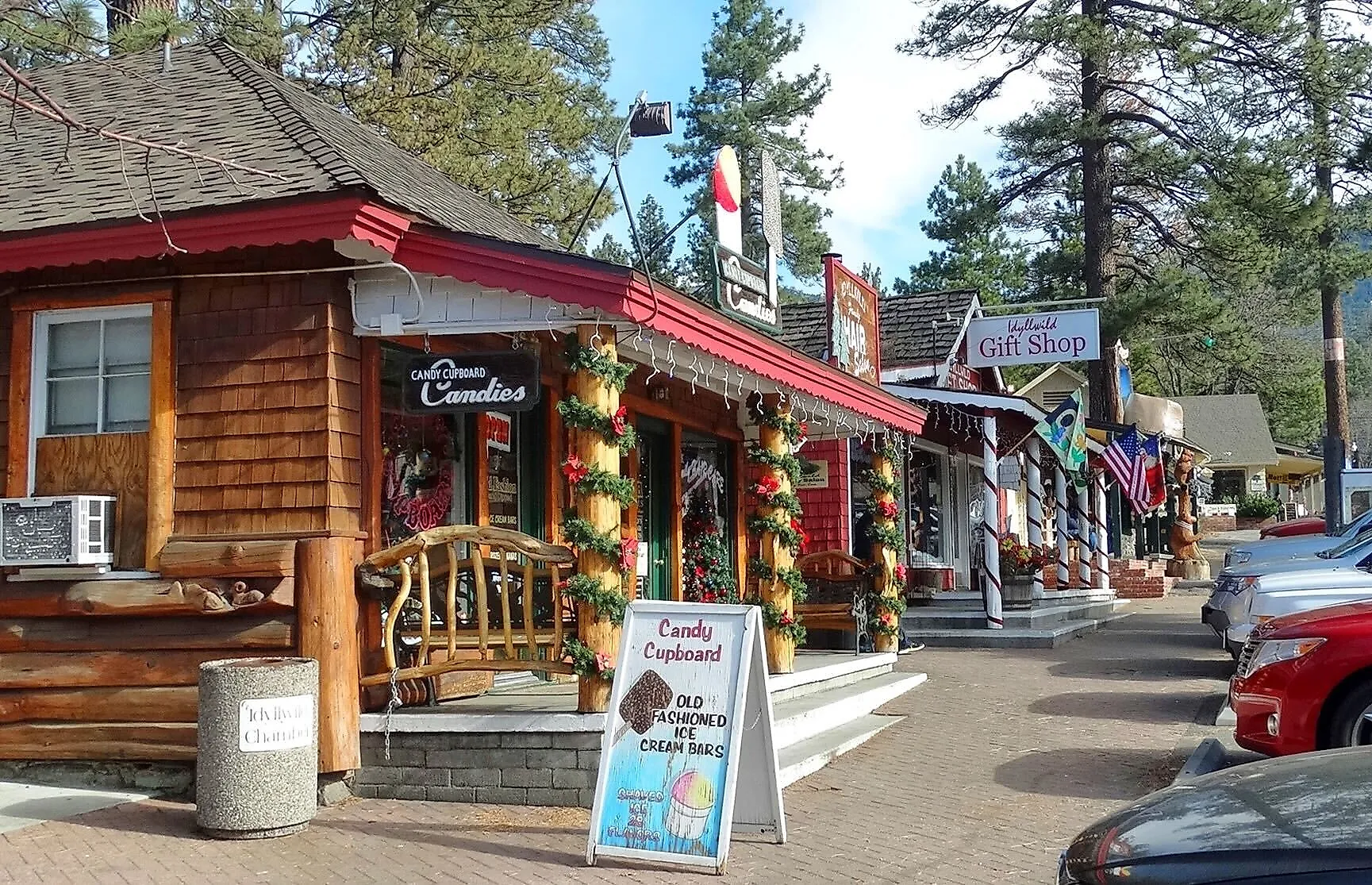
Idyllwild is a small mountain village in the San Jacinto Mountains of Riverside County, sitting at about 5,400 feet and surrounded by pine forest in the San Bernardino National Forest. At that elevation, the climate is cooler than the surrounding desert: four genuine seasons, light winter snow, and summer highs generally 15 to 20 degrees below what Palm Springs records. For retirees who want mountain air without leaving Southern California, Idyllwild is a rare fit. The village famously elects a golden retriever as honorary mayor, which speaks to its community culture.
A typical home in Idyllwild runs around $530,000. Healthcare in the immediate village is limited to a primary-care clinic, with Hemet Valley Medical Center about 40 minutes down the hill for hospital services. The town has one of the stronger arts communities of any small town in the region, anchored by the Idyllwild Arts Academy and the Idyllwild Arts Foundation, which bring year-round performances, student exhibitions, and concerts. Downtown North Circle and Village Center Drive are compact, walkable, and lined with cafés, galleries, and the longstanding Idyllwild Pizza Company. Hiking at Humber Park, Suicide Rock, and the Pacific Crest Trail sits right at the edge of town.
Borrego Springs

Borrego Springs, surrounded on three sides by the 600,000-acre Anza-Borrego Desert State Park, is the rare California town where the park is essentially the town's backyard. The town proper is small, with open sightlines, quiet nights, and one of the clearest dark skies in the region. The Borrego Springs Dark Sky Community designation from the International Dark-Sky Association protects the night sky from light pollution, which draws retirees who want active days and clear, cool evenings. The town's homes now typically list for about $396,500.
Healthcare is the practical constraint. The Borrego Medical Clinic handles routine care, Pioneers Memorial Hospital is about an hour away in Brawley, and Eisenhower Health in Rancho Mirage is roughly 90 minutes out for more serious care. Anyone considering Borrego Springs should think through the distances up front.
On the activity side, the trails in Anza-Borrego (Hellhole Canyon, the Slot, Palm Canyon) start minutes from downtown. Galleta Meadows, an open-air sculpture installation by artist Ricardo Breceda, displays 130-plus full-scale metal sculptures of extinct Ice Age animals scattered across the open desert. The Borrego Art Institute runs exhibits and classes, and the annual Borrego Days Desert Festival each October is the town's biggest community event.
Yucca Valley

Yucca Valley sits in the Morongo Basin at about 3,300 feet, roughly 30 miles north of Palm Springs and directly next to Joshua Tree National Park. Of the town's roughly 21,700 residents, about a quarter are 65 or older, one of the highest shares in the region. That means retiree infrastructure is well-developed: active senior services, a community center, and a 65-plus population that actually uses them.
Healthcare runs through Hi-Desert Medical Center and several affiliated clinics. The housing market is a clear draw: median home prices sit around $450,000, substantially below Palm Springs proper. For what to do once you're there, the Hi-Desert Nature Museum covers the Morongo Basin's wildlife, Native American history, and geology. Pioneertown, about 20 minutes up the hill, was built in 1946 as a functional Western movie set and has been continuously inhabited ever since; Pappy & Harriet's Pioneertown Palace brings national touring acts to a venue most people would not expect to find in a town of its size.
Seven SoCal Towns For The Next Chapter
Retirement in Southern California does not have to mean a coastal price tag. These seven towns, from mountain Wrightwood to desert Borrego Springs, all offer lower costs than the metro averages and access to real community life. Whether you want outdoor adventure, local arts, or just a slower pace, there is probably one here that fits.