8 Prettiest Main Streetscapes In The Adirondack Mountains
For a region best known for six million acres of forest, the Adirondacks concentrate a remarkable amount of their character onto a handful of short commercial streets. Adirondack Park contains around 105 towns and villages, and the handsomest of their main streets work much the same way, with galleries, theaters, and waterfront access compressed into a few walkable blocks under visible mountains. What makes them pretty is mostly what was never torn down. The mill and papermaking towns kept their 19th-century brick, the woodworking towns their hand-carved storefronts, and nearly all of them have a river, a pond, or a lakeshore a block off the pavement. Eight stand out, including one just beyond the park line that belongs on any list of Adirondack downtowns.
Saranac Lake

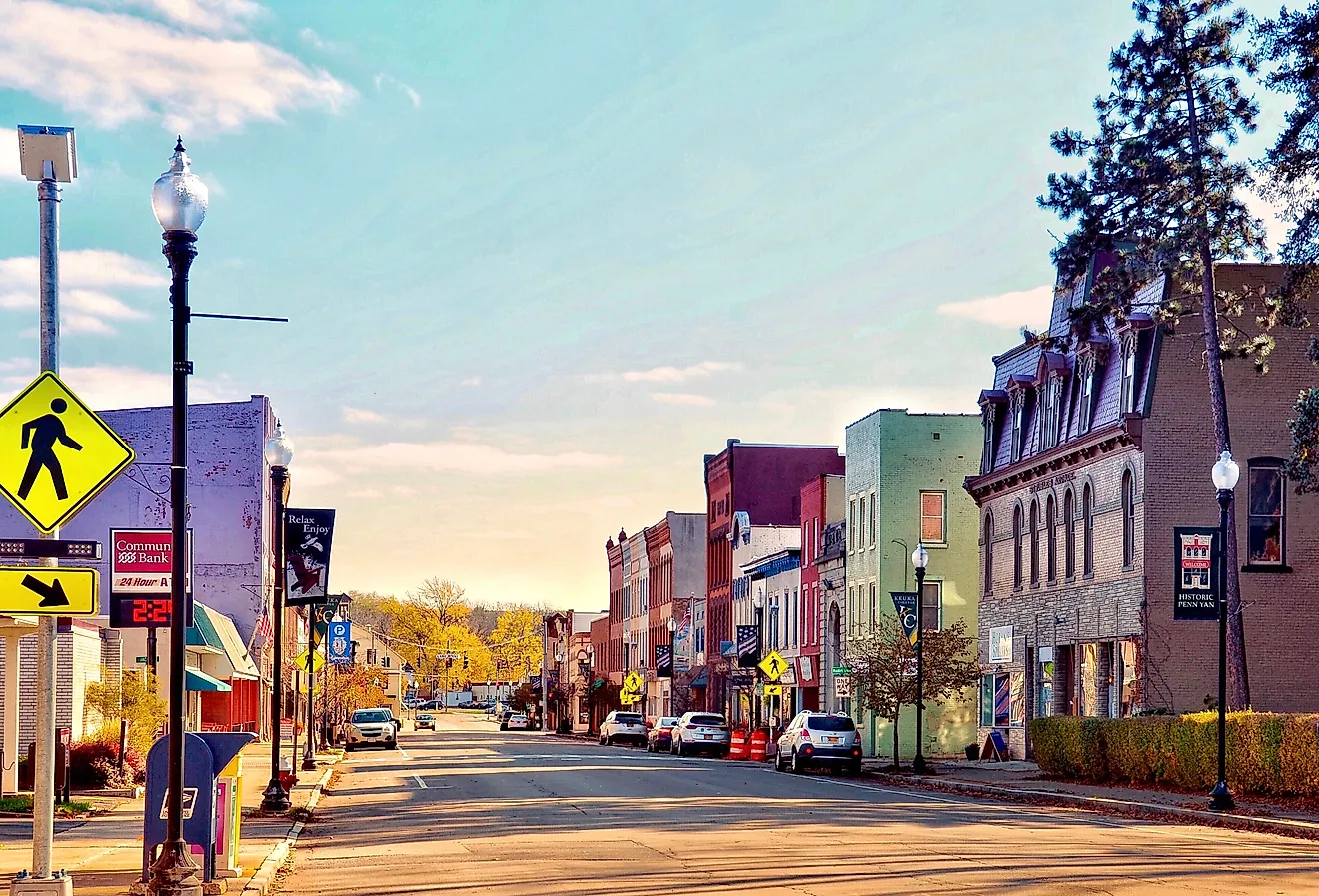
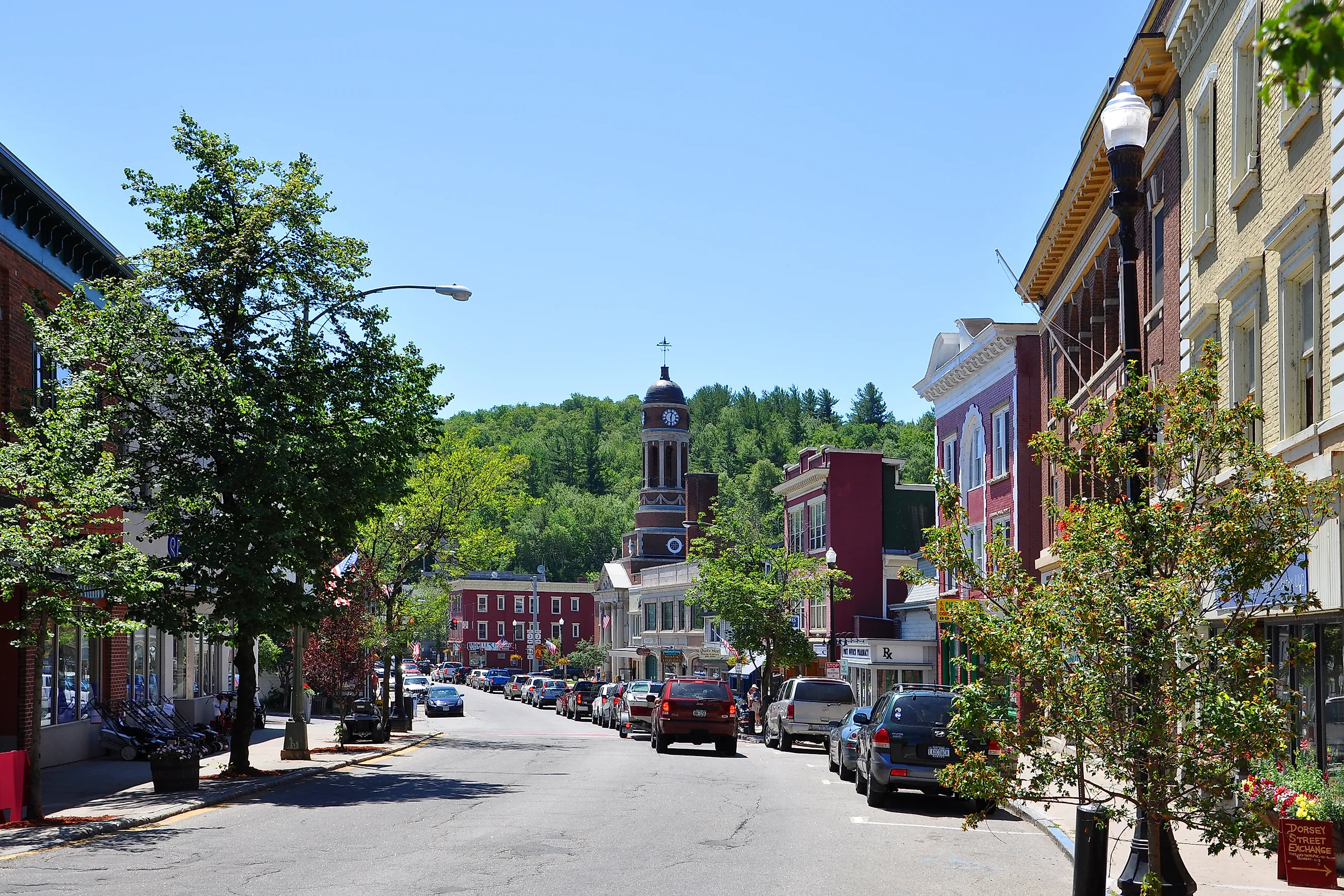
Main Street in Saranac Lake, New York.
The Main Street of Saranac Lake is centered on the arts, and its walkable downtown is known for historic brick architecture, shops, and galleries. Located near the busier resort town of Lake Placid, Saranac Lake has a more laid-back community spirit, with the 19th-century architecture giving it the authentic feel of a mountain village. Main Street runs parallel to the Saranac River. The town was a pioneer health resort, built around fresh-air tuberculosis treatment, and that inheritance shows in a place that still treats outdoor life and artistic life as the same thing.
Right on Main Street, the Adirondack Artists Guild Gallery is a cooperative selling fine art, photography, and pottery made by Adirondack residents. The Saranac Lake Riverwalk, accessible from Main Street at several points, is a paved path along the river that keeps the historic downtown on one side and the mountains on the other. The Historic Saranac Lake Walking Tour covers the village on foot, with architectural markers leading the way.
Lake Placid

For a town that has twice hosted the Winter Olympics, Lake Placid looks appropriately alpine. Its Main Street winds along the shoreline of Mirror Lake at the base of the Adirondack High Peaks, and the mountain views arrive right on the street, from the cafes and shops in the alpine-style storefronts. The busy small-town atmosphere sits oddly against the winter sports heritage all around it.
Of course, the Olympics are the big draw, and the Olympic Center & Museum is right on Main Street. Housed in the Herb Brooks Arena, this was the site of the Miracle on Ice, the 1980 hockey game that beat the Soviet Union. The Palace Theatre has been showing films since 1926, a family-operated movie palace that still runs a vintage Robert Morton pipe organ. Just off the Main Street corridor, Mirror Lake Public Beach adds parkland, beach access, and boat rentals in the warmer months.
Old Forge

A scene from Old Forge, New York. Editorial credit: KMarsh / Shutterstock.com.
Old Forge is a classic Adirondack mountain town, and its Main Street is lined with businesses specializing in artisan furniture and traditional Adirondack woodwork. Hand-carved wooden bears decorate many of the storefronts. The walkable downtown serves as a base for the mountains beyond it, and restaurants and cafes fill the rest of the street.
Main Street runs alongside Old Forge Pond, where a waterfront park has a public beach, a playground, and docks. The small lake is known for trout fishing, and its shoreline hosts summer concerts. The Goodsell Museum occupies an 1899 Victorian home on Main Street, with six rooms of historic mountain memorabilia. Known as the Adirondacks' Most General Store, Old Forge Hardware spreads camping gear, rustic lodge furniture, and housewares across several buildings.
Ticonderoga

Ticonderoga carries its 18th-century history in its architecture, and Montcalm Street is the main thoroughfare running through it. The downtown corridor sits between the northern tip of Lake George and the southern end of Lake Champlain, a walkable historic district along the La Chute River where independent shops and crafts share the street with an industrial past and a mid-century Americana atmosphere.
Housed in an 1888 brick office building on Montcalm Street, the Ticonderoga Heritage Museum sits at the edge of a downtown park and explores the town's years as a center for papermaking and graphite pencil manufacturing. The La Chute River Walk Trail follows the water past the downtown corridor, close enough to see the waterfalls that once powered the village mills.
Elizabethtown

This town, known as Pleasant Valley, stands apart from the commercial resort areas and works as a base for the mountains around it. That character shows most plainly on Court Street, the historic commercial thoroughfare running along the Boquet River, where 19th-century buildings house independent shops and restaurants. The town also holds uncrowded, professionally designed mountain bike trails and a good number of roadside waterfalls.
The original central school building now houses the Adirondack History Museum, which covers 200 years of Essex County culture, from early farming through frontier logging, alongside a colonial garden, art galleries, and a climbable fire tower. The Essex County Courthouse is the landmark on Court Street and the reason the town became the civic and judicial hub of the mountain region. Accessible from the downtown bridges, the Boquet River Trail reaches natural swimming holes right off the sidewalk.
Glens Falls

Located on the Hudson River just outside the southern park border, this small city belongs to the Adirondacks in every way except the boundary line. Its history is rooted in industrial papermaking, which declined through the 20th century and left behind the brick that the arts community now occupies. Glen Street is the historic commercial corridor, running just north of the river and acting as a gateway north.
The walkable downtown carries 19th-century brick, public squares, and alleyway markets. Glen Street holds the arts institutions, the independent bookstores, and much of the city's cooking. The Charles R. Wood Theater at 207 Glen Street is a 294-seat performing arts center running plays, concerts, and the Adirondack Theatre Festival through the year. Further up the corridor, the Chapman Museum occupies the 1867 DeLong House, where a hardware merchant's brick home now features local history exhibits and a deep photograph collection.
North Creek

Main Street in North Creek, New York. Editorial credit: Novis-M, Public Domain, via Wikimedia Commons
North Creek is a hub for outdoor activity on the upper Hudson River in the central Adirondacks. A historic rail town, it is known as the birthplace of the commercial New York ski industry and remains the gateway to Gore Mountain. Main Street is the commercial corridor and a walkable historic district, and for all the town's importance to rail and skiing it stays low-key, a quiet place to take in the scenery and plan an excursion. Outdoor outfitters and rustic diners share the street with a newly designated arts district.
The North Creek Mosaic Project is a 180-foot community art wall standing directly on Main Street, its 200,000 pieces of tile and glass illustrating the wildlife and outdoor recreation of the central Adirondacks. A few doors along, the Tannery Pond Community Center anchors the visual arts with galleries, performances, and workshops for regional craftspeople. The North Creek Depot Museum stands steps from the historic rail terminus, and its restored 1871 station covers the Snow Train of the 1930s and the night then-Vice President Theodore Roosevelt learned of his succession to the presidency in 1901.
Westport

Westport, New York, situated on the shore of Lake Champlain in New York. Editorial credit: EQRoy / Shutterstock.com
Westport, on the western shore of Lake Champlain, is known as the Cradle of the Adirondack Resort, a village that mixes harbor life with the backcountry behind it. Its claim to fame is as the birthplace of the iconic Adirondack Chair. Main Street is the historic commercial corridor, lined with preserved Victorian buildings housing independent shops and restaurants, and it runs toward the open water. Hikers use the village as a gateway, boaters use the lake, and the arts community works in the buildings between them.
The Depot Theatre occupies an 1876 Victorian train station and operates as a professional Actors' Equity summer theater, staging Broadway dramas alongside rails that are still in use. The Mill ADK fills a renovated flour mill with artisan workshops, a jazz lounge, and gallery exhibitions. Ballard Park anchors the downtown and slopes to the shoreline, where a performance pavilion hosts weekly sunset concerts through the summer.
Where The Pavement Came First
What these eight share is how much beauty they fit into a small space. Galleries, theaters, museums, historic facades, and waterfront access all sit within a few hundred yards because mountain towns had limited flat ground to build on and only so many practical routes through town. That compact layout is part of what makes their main streetscapes so striking, with architecture, water, and mountain views layered into the same walk.
The differences come from what each street grew around. Lake Placid follows the lakeshore and carries the imprint of two Olympics. Ticonderoga grew beside the river that powered its mills. Glens Falls kept the brick buildings from its papermaking years and filled them with theaters. North Creek held onto its depot, Westport faced the water, and Old Forge leaned into its woodworking tradition. The mountains frame the view, but the prettiest streetscapes come from how each town built its main street around what was already there.