The Most Populous County In America
Line up all fifty states by population and 40 of them still fall short of a single California county. That county is Los Angeles County, home to 9,694,934 residents according to the Census Bureau's 2025 estimate. The count sits ahead of New Jersey, only slightly behind Michigan, and about 1.1 million above the population of New York City. Los Angeles County is far more than an oversized version of the city that shares its name. Its 4,059 square miles hold 88 incorporated cities alongside mountains, national forest, and long stretches of high desert.
Nearly 10 Million People In One County

Los Angeles County is by far America's most populous county. Its nearly 9.7 million residents outnumber the populations of entire states such as New Jersey, Virginia, and Arizona. The City of Los Angeles itself accounts for only part of that total. Its estimated 2025 population of roughly 3.87 million represents about 40 percent of the county's residents. The rest are spread among 87 other incorporated cities and a large collection of unincorporated communities.
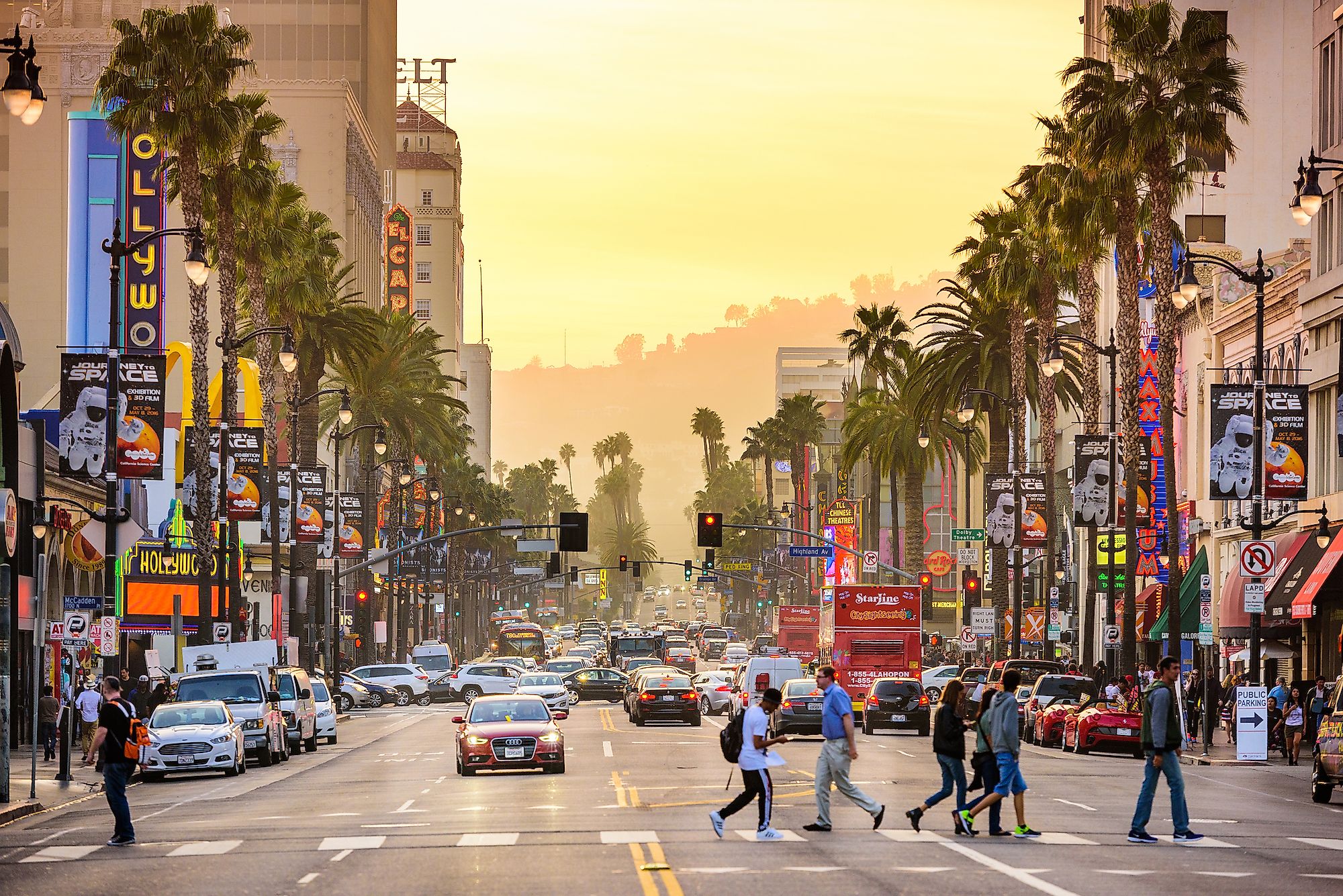
That makes Los Angeles County unusual among America's major population centers. Places including Long Beach, Pasadena, Glendale, and Santa Monica are separate cities, even though the wall-to-wall development often reads as one continuous urban area. About 1 million residents live outside any incorporated city at all. In those communities, the county government handles many of the municipal services a city would normally provide.
A Surprisingly Large Landscape

The county's population is enormous, but so is the territory containing it. Los Angeles County covers about 4,059 square miles of land, an area larger than Rhode Island and Delaware combined. Its geography is far more varied than the skylines and freeways usually associated with Los Angeles. The county reaches from the Pacific coast across mountain ranges and into the high desert. Much of its northern territory bears little resemblance to downtown Los Angeles or the densely developed communities closer to the coast.
More than 65 percent of Los Angeles County's land is unincorporated, totaling about 2,654 square miles. Much of that territory is mountains, desert, open space, and comparatively lightly populated communities. One otherwise surprising statistic follows from it. Los Angeles County averages roughly 2,400 people per square mile, high but not extraordinary for a major urban area. Cook County, Illinois, for example, has more than twice that density. The county's mountains and open land pull the average down, while the developed portions are packed far more tightly.
Los Angeles Is Only One Of 88 Cities

The difference between Los Angeles County and the City of Los Angeles is easy to overlook. Los Angeles is the county's largest city by a huge margin, but it occupies only part of the county. The remaining 87 cities include major population centers as well as much smaller municipalities. Long Beach is itself one of California's largest cities, while places such as Beverly Hills, West Hollywood, and Culver City keep separate governments despite being closely tied to the broader Los Angeles urban area.
Other cities sit considerable distances from central Los Angeles. Lancaster and Palmdale occupy the Antelope Valley in the county's northern high desert, separated from much of the Los Angeles Basin by the San Gabriel Mountains. As a result, the landscape can change dramatically within a relatively short drive. Dense urban neighborhoods give way to mountain roads, while communities along the Pacific bear little resemblance to those across the mountains in the Mojave Desert.
Still Number One Despite Losing Population

Los Angeles County's first-place ranking is especially notable because its population has actually declined in recent years. The 2020 Census counted 10,014,009 people in the county, making it one of the few counties in American history to surpass 10 million residents. The Census Bureau's 2025 estimate puts the county about 320,000 residents below that mark. Compared with the Census Bureau's April 2020 estimates base, the decline is approximately 3.2 percent.
Even after that loss, LA County's position at the top is not close to threatened. Cook County, Illinois, ranks second with about 5.19 million people, while Harris County, Texas, has about 5.05 million. Los Angeles County still holds roughly 4.5 million more residents than its nearest competitor. That gap is itself almost equal to the entire population of Maricopa County, Arizona, which ranks fourth nationally.
A Population Unlike Almost Anywhere Else

Sheer size is only part of the county's demographic story. Generations of immigration and migration have shaped Los Angeles County into one of the country's most varied populations. About one-third of county residents were born outside the United States, according to Census Bureau figures covering 2020 through 2024. More than half of residents age five and older speak a language other than English at home.
Hispanic or Latino residents make up just under half of the population, while Asian residents account for roughly one-sixth. Those broad figures cover communities with distinct histories and identities spread across dozens of cities and neighborhoods. In a county this large, no countywide average holds true from one neighborhood to the next. Two communities only a few miles apart may have very different histories, languages, and cultural institutions.
Bigger Than Most States
Perhaps the easiest way to understand Los Angeles County's scale is to remove California from the comparison entirely. If Los Angeles County were treated as a state, its 2025 population would place it 11th in the nation, just below Michigan and just above New Jersey. Forty states have fewer residents. It is also more populous than New York City, despite New York being the largest city in the United States. LA County exceeds New York City's estimated 2025 population by about 1.1 million people.
No other American county comes anywhere near this scale. Cook County and Harris County both hold populations above 5 million, yet neither is close to Los Angeles County. Even after several years of population decline, America's most populous county stands in a category of its own.