The Largest State Park Outside Alaska
Adirondack Park is the largest state park outside of Alaska. Covering around 6 million acres, it is entirely contained within the state of New York. The park protects the Adirondack Mountains. This mountain range is unusual, as it is not part of the Appalachian or Rocky Mountains. Instead, it arose through a complex series of geological events that remain debated among geologists.
Geology

The Adirondack Mountains themselves are relatively young geologically speaking, but some of its rocks are ancient. Its oldest rocks date back to 1.3 billion years ago. Around one billion years ago, these rocks would later be the building blocks of a mountain range that lasted for around 400 million years, before the formation of the Appalachian Mountains, before being gradually flattened.
Over time, the continent of North America would see multiple continental collisions and separations, such as the Alleghanian Orogeny between 330 and 250 million years ago, which created the Appalachian Mountains, and the breakup of the Pangea supercontinent around 220 million years ago.
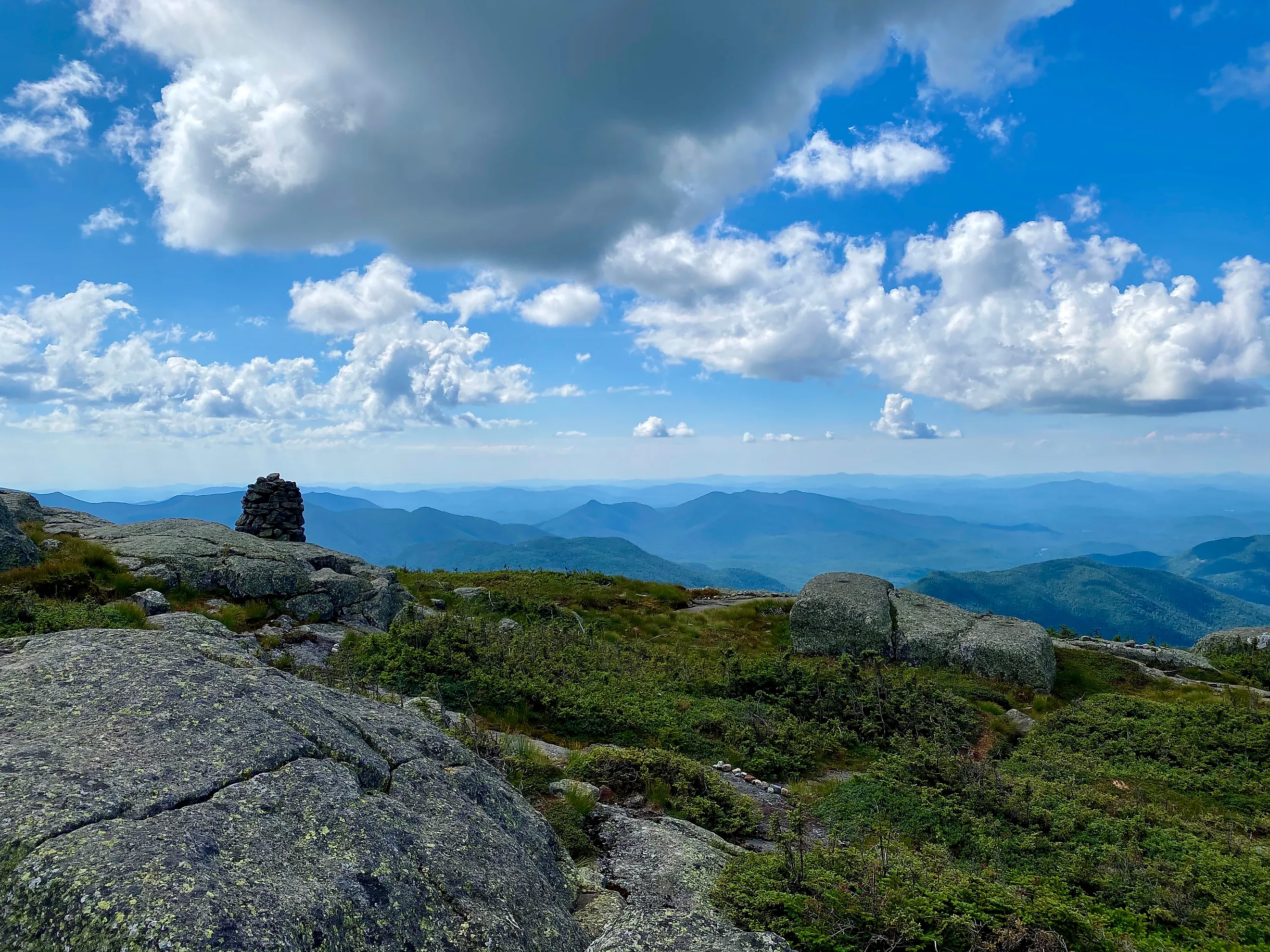
The Adirondack Mountains, meanwhile, only began to arise 20 million years ago, formed by a dome that is roughly 150 miles wide and 1 mile high. Erosive forces created several parallel valleys, which exposed the ancient rocks. Interestingly, the Adirondack Mountains are still continuing to grow at about a foot every 100 years. Geologists are uncertain as to the reason behind this uplift, although some believe it was caused by thermal activity deep below the earth, which is gradually uplifting the land.
Another major geological event was the Pleistocene Epoch, also known as the Ice Age. The continual formation and melting of glaciers shaped the mountain tops, leaving behind depressions, ponds, and dome shapes of the mountains. It also left behind glacial erratics, which are stones that were moved by the glaciers and left behind when the glacier melted. Geologists can identify them by how different the rocks are in structure than the other rocks in the region.
The Adirondack Mountains are not a connected range in the same way as other mountain ranges. Instead, they form a single broad dome studded with hundreds of peaks, including the 46 traditional High Peaks that are the range's tallest summits.
Wildlife

In the park, one can discover more than 50 species of mammals, 39 species of amphibians and reptiles, and many types of seasonal birds.
One mammal that will be familiar to those from the Appalachian Mountains is black bears. More than 50% of black bears in New York live in the Adirondack Park. They can weigh up to 300 pounds and are omnivores, meaning they can eat fruits, vegetables, meat, or food left behind by campers.
The largest mammal in the park is the moose. A male moose can grow up to 1,200 pounds and stand six feet tall. This creature is a rare sight in the park, as it stays hidden in wooded areas. Although bears and coyotes will target young moose, a full-grown adult moose has no natural predators due to its size and strength.
In terms of reptiles, the vast majority are nonvenomous, such as eastern ratsnakes, common gartersnakes, and the Dekay's brown snake. The only venomous snake native to the park is the timber rattlesnake. This snake prefers rockier outcrops at higher elevations, typically around the Lake George region. They are not known to be aggressive, and fatalities from timber rattlesnake bites are very rare. There were four recorded fatalities from venomous snake bites in the 1800s and only one in the 20th century in Rockland County.
Those who enjoy birdwatching can go searching for warblers in the Adirondacks. There are an estimated 29 species of warblers in the park, known for their bright colors and songs.
Communities in the park

The park isn't just a place to visit. There are 101 towns and villages completely contained within the borders of this 6 million-acre park. Those who come to the park have an opportunity not just to go out on hiking trails but also to visit cultural sites, such as the 1980 Winter Olympics site of Lake Placid.
Here, one can see where the Miracle on Ice took place, where the U.S. hockey team defeated the Soviet Union hockey team, along with visiting several Olympic sites at the Olympic Museum.
Another cultural hotspot is Ticonderoga, home to an 18th-century military installation called Fort Ticonderoga. During the early days of the American Revolutionary War, the Green Mountain Boys seized the fort from the British. The cannons they removed were later used by Henry Knox to drive the British out of Boston.
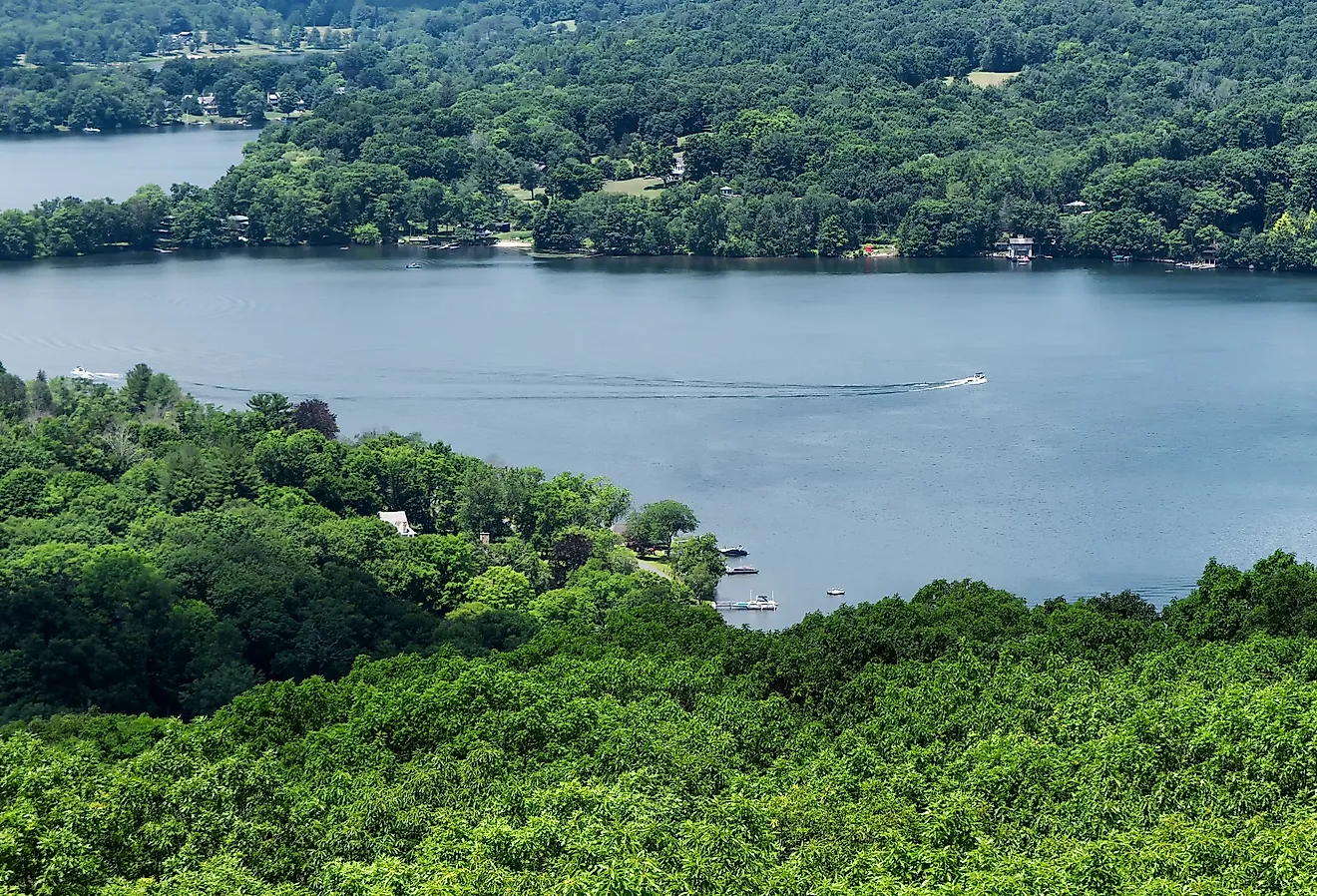
Lake George has been called the Birthplace of the American Vacation due to its namesake, the Queen of American Lakes. Visitors often book a riverboat tour via the Lake George Steamboat Company or go out to the Million Dollar Beach on Lake George Beach State Park.
Things to do

Due to the park's vast size, there's a large number of activities to choose from, ranging from wintertime skiing trails to hiking trails, paddling, fishing, or spending time in one of the park's 101 towns.
For example, those who enjoy seeing waterfalls can go out to the High Falls Gorge. This is an easy hike, which can be completed in 30 minutes, and provides views of four waterfalls that fall down into a crevice that dates back a billion years. Buck Mountain is another option, with an open summit that rewards hikers with views over Lake George.
For great views from a summit, there's the unusually named Poke-O-Moonshine Mountain, which offers views of the High Peaks, Green Mountains, and Lake Champlain from atop an exposed summit and a fire tower.
For paddling or fishing, there are more than 3,000 lakes and ponds in the park, ranging from Lake George itself to smaller ponds such as Osgood Pond with lily-pad channels.
Fishermen can track down many types of fish, especially rainbow, brook, brown, and lake trout. Visit Adirondacks recommends going out to Lost Pond in Ticonderoga or Lake Colby in Saranac Lake to find trout. Bass, meanwhile, are abundant on Lake Champlain. It is worth noting that all fishers need to obtain a New York Fishing License, which is available through an online form.
This park is a living community
What makes the park truly stand out is its mixture of both public and private lands. According to New York's official government website, around 123,000 people live within the boundaries of the park. Unlike other state parks, one will have to choose first which region to explore and what to do before visiting, whether that's spending time in an Adirondack Mountain town, paddling through Lake George, or going for a long hike through these young mountains made out of ancient rocks.