8 Playfully Peculiar Towns In Wisconsin
At first glance, Wisconsin feels worlds apart from Norway and Switzerland. But that is not quite the case. People from these cultures immigrated to the United States and founded towns in Wisconsin. Their cultural heritage can still be seen in towns where goats graze on the sod roof of Al Johnson's Swedish Restaurant and Butik in Sister Bay or in the chalet-style architecture of New Glarus. But these are not the only towns that are out of the ordinary. Baraboo was once a winter town for the Ringling Brothers' Circus, but the eccentricity of the circus is still seen in town today. These towns in Wisconsin are a little peculiar.
Mount Horeb

Mount Horeb is in the center of Wisconsin's Driftless Region: a land of ancient ridges and winding river valleys. Perhaps even more ancient-looking are the over 40 troll sculptures carved out of wood, lining Main Street, which has earned the nickname of the Trollway. Each troll showcases Mount Horeb's Norwegian heritage, like Jorgen the Giant, the tallest troll in town, standing at 16 feet tall. According to Scandinavian folklore, trolls tend to inhabit mounds or caves. The Mount Horeb area has both, although Cave of the Mounds is in nearby Blue Mounds rather than Mount Horeb.
The Cave of the Mounds is a network of chambers filled with different limestone formations. The caves even have their own local lore. According to local legend, when the earth opened up to reveal the Cave of the Mounds in 1939, trolls emerged from it. Mount Horeb's troll lore extends into local establishments, like the Grumpy Troll Brewpub, which serves ales and lagers brewed on-site.
New Glarus

New Glarus was settled by a group of 108 Swiss pioneers in 1845. Daily pioneer life has been immortalized at the Swiss Historical Village Museum. The village contains a mix of 14 structures, including an authentic settler's log home, a traditional Swiss bee house, a log church, and a Swiss cemetery. The Swiss heritage of New Glarus is not confined to the museum. The New Glarus Cow Parade comprises 14 cow statues imported from Switzerland, each painted with different designs by local artists. They are found in various locations throughout town.
Swiss cows are not the only thing all over town. Swiss architecture is. The Chalet of the Golden Fleece Museum is modeled after a Swiss Bernese chalet and contains historic artifacts not just from Switzerland, but all over the world. At Puempel's Olde Tavern, the old-world Swiss tradition that settlers and travelers have enjoyed since 1893 continues to this day.
Sister Bay

While New Glarus has the Swiss Historical Village Museum, Sister Bay has the Corner of the Past Historical Museum. The outdoor museum consists of 14 restored historic buildings, including a 1875 farmhouse, barn, granary, migrant workers' cabin, sawmill, and blacksmith shop. The restored buildings contain artifacts and stories about the people, farms, and businesses of Sister Bay.
Longstanding Swedish establishments still operate in town today, like Al Johnson's Swedish Restaurant and Butik. It serves traditional Swedish limpa bread, pancakes, and meatballs. The restaurant is fitted with a sod roof in which goats graze between May and October. The unusual sight is commemorated each year with the Annual Roofing of the Goats Celebration. As the goats make their way onto the roof, the town celebrates with a parade, food, music, and games.
Baraboo

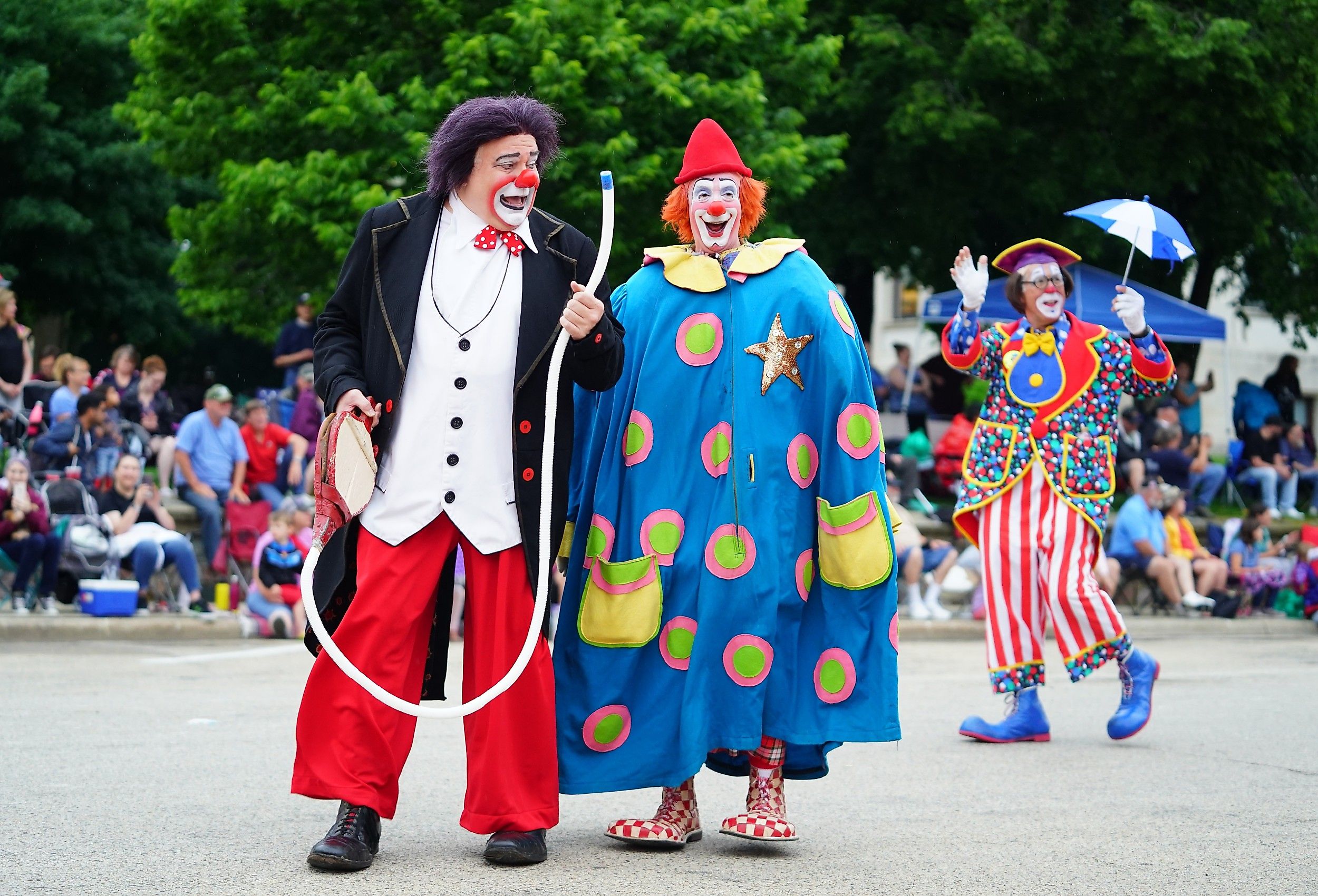
In Baraboo, the circus does not come to town; the circus is the town. The first performance of the Ringling Bros. Circus took place in Baraboo. Staff and performers spent the winters in town when they were not traveling or performing. This has been preserved at Circus World, which contains the original winter quarters, the world's largest collection of restored historic circus wagons, and other memorabilia, like posters, programs, and photographs.
Each summer, Circus World hosts the Big Top Circus, which features live performances of acrobats, aerialists, animals, and clowns. But the Big Top Circus is not the only remnant of live performances in town. The Al Ringling Theatre was built in 1915 by one of the Ringling brothers. It still hosts a variety of live performances, ranging from drama, opera, children's theatre, and Broadway productions.
Hayward

Hayward is surrounded by the forests and lakes of Wisconsin's Northwoods, where wilderness is never far from town. It is perhaps fitting that one of the town's most unusual landmarks is a fiberglass fish as long as a Boeing 757. The National Fresh Water Fishing Hall of Fame occupies a seven-acre museum complex whose centerpiece is a five-story building shaped like a giant musky. The museum contains exhibits on fishing history and large collections of reels, rods, lures, and even hundreds of mounted trophy fish.
But the museum is not the only place in town to see mounted trophy animals on the wall. The Moccasin Bar is both a bar and a small wildlife museum. Taxidermy fish and furry animals line the walls, while larger taxidermy animals are part of dioramas behind glass display cases. Celebrating the outdoors in Hayward is not limited to hunting. The town hosts the annual Lumberjack World Championships, which show lumberjacks and lumberjills compete in sawing, chopping, log rolling, axe throwing, and more.
Rhinelander

In 1893, local lumberjack and prankster Eugene Shepard claimed to have discovered a mythical creature: the Hodag. It was said to have spikes lining its back, large fangs, and four clawed feet. It was dismissed as a hoax, carved out of wood and dressed up with the hide and horns of an ox. The Hodag still captivates Rhinelander and is even a permanent resident in town. The World's Largest Hodag Statue stands outside the Rhinelander Area Chamber of Commerce.
The legacy of the Hodag is still celebrated today. Not only is the Hodag the high school mascot, but each year there is the Hodag Heritage Festival, which features a Hodag calling contest, Hodag historical city bus tour, and live music. East of Rhinelander near Monico, the Kovac Planetarium offers visitors a look at other worlds. It is the world's largest mechanical globe planetarium, featuring over 5,000 hand-painted stars making up different constellations.
Phillips

Not all lumberjacks are mischievous like Eugene Shepard. Fred Smith was a lifetime lumberjack who, at the age of 65, started creating concrete figures of mythical and real characters. The Wisconsin Concrete Park now houses over 230 of Fred's concrete sculptures, ranging from Paul Bunyan to Abraham Lincoln. Right next to the park, Rock Garden Tavern was owned by Fred. It is still in operation today, even serving Fred's favorite beer from Rhinelander.
Fred Smith's concrete characters are not the only signifier of Wisconsin's Northwoods in Phillips. North of Phillips in the community of Fifield, the Fifield Fire Tower was built in 1932 and now stands as a tribute to the lookouts who watched for wildfires.
Sparta

Sparta is home to the FAST Corporation, a manufacturer of fiberglass statues, roadside advertisements, and water park slides. They store many of their molds in the field behind their workshop, which has consequently created the FAST Fiberglass Mold Graveyard, a sculpture garden full of unpainted past molds. FAST even created the Ben Bikin' Sculpture, standing 32 feet high, riding an 1890s Penny Farthing bicycle.
Having what is considered the world's largest bicycle is not merely a roadside attraction. It is actually related to Sparta's title as the bicycling capital of America. This title is celebrated at the Deke Slayton Memorial Space and Bicycle Museum, a museum that is literally worlds apart. The museum partly honors Sparta native and astronaut Deke Slayton, while also displaying over 70 bicycles.
Wisconsin's Wild Side
Wisconsin's unusual towns reflect the people, cultures, and histories that shaped them. Swiss heritage still appears all over town in New Glarus. Baraboo continues the circus legacy. Rhinelander residents are still captivated by the mythical Hodag. These peculiarities are part of what makes Wisconsin's towns so playful.