The Largest Planetarium In The United States
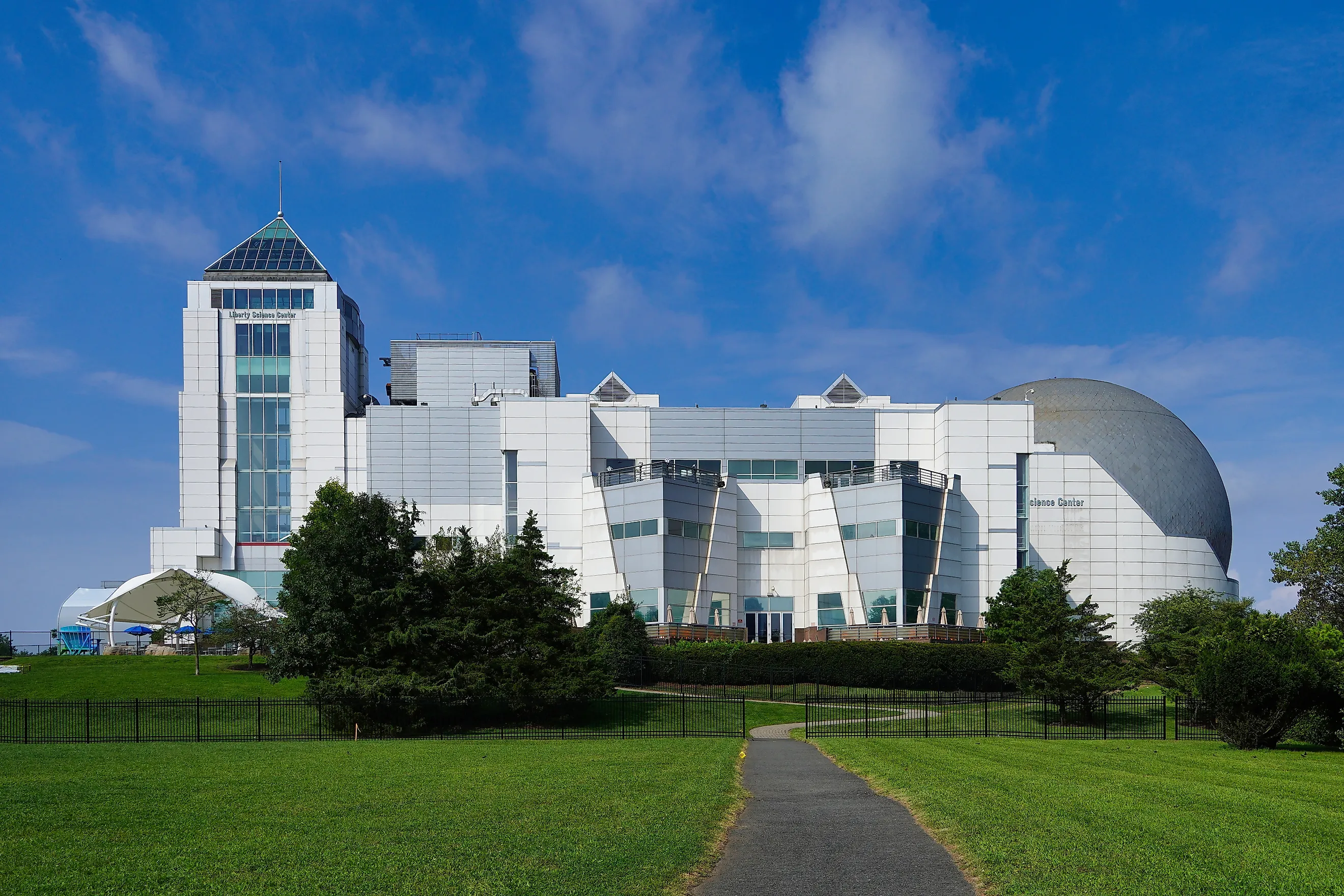
The Jennifer Chalsty Planetarium is the largest of its kind in the United States and also the entire Western Hemisphere. Globally, it is the fourth largest planetarium. Located in Liberty State Park at the Liberty Science Center in Jersey City, New Jersey, the planetarium offers a variety of shows thanks to an 89-foot (27.1-meter) dome that displays the galaxies and night sky with unexpected clarity and color. It opened on December 9, 2017, following a complete overhaul of the Liberty Science Center's original giant-screen dome theater.
The Dome Makes the Difference

At 89 feet across, the Jennifer Chalsty Planetarium has the widest projection dome in the United States. Its screen is larger than the domes at Chicago’s Adler Planetarium and the Hayden Planetarium at New York’s American Museum of Natural History. That distinction comes from the dome’s horizontal diameter rather than the overall size of the building. Museum square footage, complex size, and surrounding acreage are separate measurements. By focusing only on the width of the projection surface, the Jennifer Chalsty Planetarium earns the title of America’s largest planetarium dome.
Creating America's Largest Planetarium

America's largest planetarium is one part of the 300,000-square foot (27,870 square meter) Liberty Science Center. The center also features live animals, aquariums, hurricane simulators, and 12 museum exhibition halls. The center opened in 1993 as New Jersey's first large science museum and remains famous for the original Hoberman sphere. The building was upgraded in 2007, and the planetarium officially opened in 2017. Its 89-foot screen and 400 seats were made possible by LSC board member Jennifer Chalsty, who donated $5 million to the project.
The planetarium was originally an IMAX theater, and it was upgraded with new technology and the aforementioned screen. The renovation project also saw 10 projectors installed. The projected resolution is 88 million pixels, and the planetarium's lighting system can produce more than 281 trillion colors. The space also features speakers capable of producing digital sound up to 30,000 watts. When the planetarium opened, it featured a fly-through of the Orion Nebula, an experience created with images taken by the Hubble Space Telescope.
Visiting the Planetarium Today

Planetarium programming ranges from deep-space science to family-friendly astronomy. Dark Cosmos explores black holes, dark matter, and other mysteries of the universe. Summer Skies Live highlights seasonal sights such as the Milky Way, Scorpius, meteor showers, and the Ring Nebula.
Journey to the Planets travels through the solar system with stops at Mars, Venus, and other planets and moons. Space Trip looks farther into deep space, with Mars and Saturn among its featured destinations. Younger audiences have One World, One Sky: Big Bird's Adventure, where Elmo, Big Bird, and Hu Hu Zhu introduce the Sun, Moon, North Star, and Big Dipper. Stadium-style reclining seats angle upward toward the dome, keeping the projection in full view throughout each show.
Other Planetariums That Deserve Accolades

Several other planetariums deserve a title too, under different criteria. For instance, the Adler Planetarium in Chicago opened in 1930 and is the oldest planetarium in America. It is part of Chicago's Museum Campus along Lake Michigan, and its total building footprint far exceeds that of the Jennifer Chalsty planetarium structure, at more than 60,000 square feet. But its main show space, the Grainger Sky Theater, features a 70-foot (21.3-meter) projection dome, which is substantially smaller than the Jennifer Chalsty screen.
The Hayden Planetarium at the Rose Center for Earth and Space in New York opened in 1935 and was completely rebuilt in 2000 as part of the American Museum of Natural History. The planetarium's Hayden Space Theater sits inside an 87-foot (26.5-meter) glass sphere, which is nearly the same size as the Jennifer Chalsty screen. But its convex screen is only 68 feet (20.7 meters) in diameter.
Illinois's Peoria Riverfront Museum Dome Theater is often cited for its 70-foot (21.3-meter) dome screen. Some laud it for having one of the largest full-dome projection surfaces in America. However, while it offers astronomical programming, it is also a cinematic auditorium and does not only focus on sky theater shows.
Colorado's Fiske Planetarium at the University of Colorado is touted as the largest planetarium on a US campus. It opened in 1975 and features a 65-foot (19.8-meter) dome screen. The dome is mainly used as an astrophysics teaching tool and is out of the running for the title of largest planetarium in the US based on the size of its screen. But at the same time, it is the largest planetarium between Chicago and Los Angeles.
America's Largest Sky Theater is Truly Amazing

Despite some competition, the Jennifer Chalsty Planetarium is an experience that cannot be replicated. It is also not anywhere near the same as watching a space film on a flat screen. The curved screen extends past the peripheral vision, allowing the projected sky to fill the entire field of view. This makes you feel as though you are floating through space.
The 10K projection system does the heavy lifting during live astronomy shows, creating a high-altitude view of the Earth and distant galaxies using real NASA mission data. When combined with a directional sound system, this visual setup amazes 400 people every time.
Planetariums Will Never Go Out Of Style
Phones, tablets, and home entertainment centers make it easy to explore the concept of space. At the same time, the demand for astronomical theaters has never waned. Planetariums use the best of what technology offers to create an unmatched space experience. Moreover, these facilities allow communities and schools to observe astronomical events as they occur and provide space for research and study to improve knowledge of space and related subjects.