13 Cutest Small Towns In Florida
Some of Florida's cutest places are small towns, far from the theme parks and beachfront high-rises. Pastel Victorian houses and six-toed cats line the lanes of Key West. Up in the Panhandle, Seaside arranged clapboard cottages and picket fences around a walkable square. Moss-draped oaks shade the antique shops on Micanopy's main street. Each winter, manatees crowd the springs at Crystal River. Each one is small, walkable, and cute enough to slow down for.
Key West

Key West lies at the southern end of the Florida Keys, the southernmost city in the continental United States, lined with pastel buildings above turquoise water. Its public beaches include Smathers Beach and Higgs Beach.
The Ernest Hemingway Home, a Victorian-era house museum, is home to a colony of six-toed cats descended from the writer's own polydactyl pet. Duval Street carries more Victorian architecture, including the Fogarty Mansion, now a restaurant serving cocktails and seafood.
Seaside

On the Emerald Coast of the Panhandle, Seaside is the town that launched New Urbanism, the walkable planning movement built on short blocks and front porches. It stood in for the model community in the 1998 film The Truman Show. Its pastel cottages and beach pavilions still attract architects and planners.
The planning shows in the walkability, with shops and landmarks a short stroll apart. Sundog Books is a fixture on the town square. The open-air Seaside Chapel stands nearby. Public walkovers lead to the beach.
Crystal River

Crystal River, on Kings Bay north of Tampa, calls itself the Manatee Capital of the World. Fed by warm springs, the bay attracts hundreds of manatees each winter. Crystal River is one of the few places where people can legally swim near them in the wild.
Three Sisters Springs, part of a national wildlife refuge, offers boardwalk views of the animals gathered in the clear spring water. Local outfitters lead guided snorkel tours into the bay through the colder months.
Tarpon Springs

Tarpon Springs, on the Gulf Coast north of Dunedin, built its identity on sponge diving. Greek divers settled here more than a century ago, and the town still calls itself the Sponge Capital of the World. The Historic Sponge Docks line the Anclote River with seafood restaurants and marine-themed shops.
A sponge craft festival brings crowds to the docks each spring. Manatees move through the area between November and March. Dolphin-spotting cruises leave from the docks year-round.
Cedar Key

Cedar Key lies about four miles out into the Gulf of Mexico on Way Key, with fewer than a thousand residents. The remote setting leaves it quiet and its surrounding waters relatively undeveloped, a working piece of Florida's Nature Coast.
The Cedar Keys National Wildlife Refuge, just offshore, brings birders to its rookeries. In town, Cedar Key has a walkable grid of old wood-frame buildings with deep porches, home to the Cedar Keyhole artists co-op and Main Street Mercantile.
Dunedin

Dunedin, just north of Tampa on the Gulf Coast, serves as the gateway to two barrier-island parks. Honeymoon Island and Caladesi Island were a single island until a 1921 hurricane cut a channel between them. The Dunedin Causeway connects the town to Honeymoon Island.
Honeymoon Island State Park is open year-round, with a pine-flatwoods trail and roughly four miles of beach. Ferry service to Caladesi Island resumed in 2025 after hurricane repairs. The island is open for day trips again, with only a few marina services still limited.
St. Augustine

St. Augustine, founded by the Spanish in 1565, is the oldest continuously occupied European settlement in the United States. Its pedestrian-only St. George Street leads past centuries-old buildings, including the Oldest Wooden School House, along with courtyards and coffee shops.
The Lightner Museum occupies the 1888 former Hotel Alcazar, a Spanish Renaissance Revival building. Inside is a collection of Gilded Age antiques. Narrated cruises leave the bayfront for tours across Matanzas Bay.
Micanopy

Micanopy, in north-central Florida, is the oldest inland town in the state, settled in the 1820s. Fewer than a thousand people live here. Its nickname, the town that time forgot, fits the slow pace and the old storefronts.
Cholokka Boulevard, the main street, passes beneath moss-draped live oaks and historic storefronts. The Micanopy Historical Society museum and the Old Florida Cafe stand along it, together with antique shops like Bond's Vintage Vault and Lost Ark Antiques.
Winter Park

Winter Park lies just north of Orlando, close to the theme parks but set at a calmer pace. The town is known for its art museums, including the Albin Polasek Museum and Sculpture Gardens and the Charles Hosmer Morse Museum of American Art, which owns a major collection of Tiffany glass.
Water matters here as much as art. Scenic Boat Tours crosses the Winter Park Chain of Lakes. Kraft Azalea Garden, a five-acre park under old cypress trees, looks out onto Lake Maitland.
Mount Dora

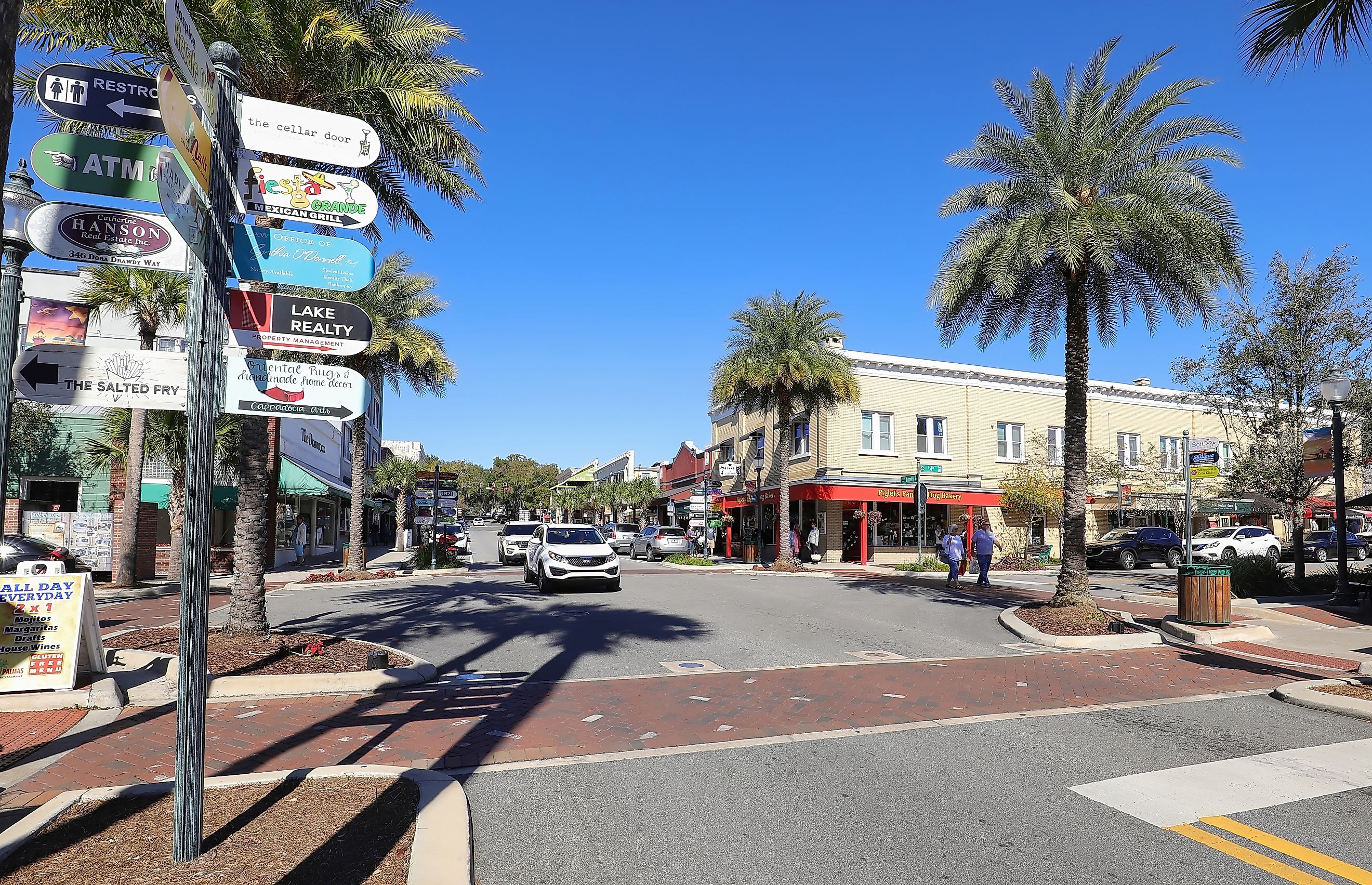
Mount Dora, near Orlando, calls itself the Festival City for its packed events calendar. An annual craft fair takes over the streets each fall. Renninger's stages a large antique extravaganza in the same season. A plant and garden fair follows in late fall.
Outside festival season, the town centers on Lake Dora, where Lighthouse Park marks the shore with the small Mount Dora Lighthouse, one of the few freshwater lighthouses in Florida.
Anna Maria

Anna Maria stands at the north end of Anna Maria Island, a seven-mile barrier island on the Gulf Coast where winter highs average the mid-70s. Its beaches have an old-Florida feel, low-rise and unhurried.
Bean Point, at the island's tip, is quiet and undeveloped. Bayfront Park, geared to families, adds picnic tables and a playground. The Anna Maria City Pier reaches into Tampa Bay, with a bait shop and a seasonal seafood restaurant at its end.
Fernandina Beach

Fernandina Beach occupies Amelia Island on Florida's northeast Atlantic coast, the southernmost of the sea islands that stretch along the Georgia and Carolina coast. Its historic downtown sets Victorian storefronts beside a working shrimp harbor.
Main Beach Park and Peters Point Beachfront Park spread along the shore, family beaches with easy access. At the island's north tip, Fort Clinch State Park surrounds a Civil War-era brick fort with 1,500 acres of maritime forest, a six-mile trail, and about three miles of beach.
Apalachicola

Apalachicola lies on the Gulf at the mouth of the Apalachicola River, a town built on the seafood trade. Its bay once produced most of Florida's oysters and earned the nickname Oystertown. Overharvesting and drought collapsed the fishery. Wild harvesting remained closed for years before a limited reopening began in 2026.
The town still leans on the water. Raw bars like Up the Creek and Half Shell Dockside serve local seafood. An annual seafood festival, billed as Florida's oldest maritime event, brings crowds each fall. Riverfront Park lines the river with walking paths.
More Than the Parks and Beaches
Florida's small towns cover more ground than its coastline suggests. Cedar Key guards a fishing-village quiet a few miles out in the Gulf. St. Augustine layers four centuries of Spanish and American history into a few walkable blocks. Apalachicola carries the weight of a collapsed oyster fishery and a slow recovery. Each one grew from something specific and built a downtown small enough to cross on foot. That is what sets them apart from the resorts.