8 Best Places To Live In Croatia In 2026
Alfred Hitchcock watched the sun drop into the Adriatic from a hotel room in Croatia and decided it was the best sunset on earth. That was Zadar in 1964. The country he visited has only gotten easier to live in since. Rents stay low. The streets feel safe at night. The coast and the inland river towns each make their own case. What follows are eight places worth a serious look.
Zadar

Walk down to the harbor at dusk and you will hear the city before you understand it. The Sea Organ is a flight of stone steps with pipes built underneath, and the waves push air through them to make a low, shifting chord that changes with the tide. Locals turn up for it every evening, which tells you something: this is a working city of about 71,000 people, not a postcard that empties out in October. The old town fills a narrow peninsula, and you can walk from the Roman Forum past Venetian churches to a waterfront cafe in about ten minutes. Housing costs less than it does in Split or Dubrovnik, and families who want a yard and a pool tend to settle just outside the center, where the money goes further. Zadar sits roughly halfway up the Dalmatian coast between Split and Rijeka, with mild winters and dry summers, and it stays small enough to feel like yours.
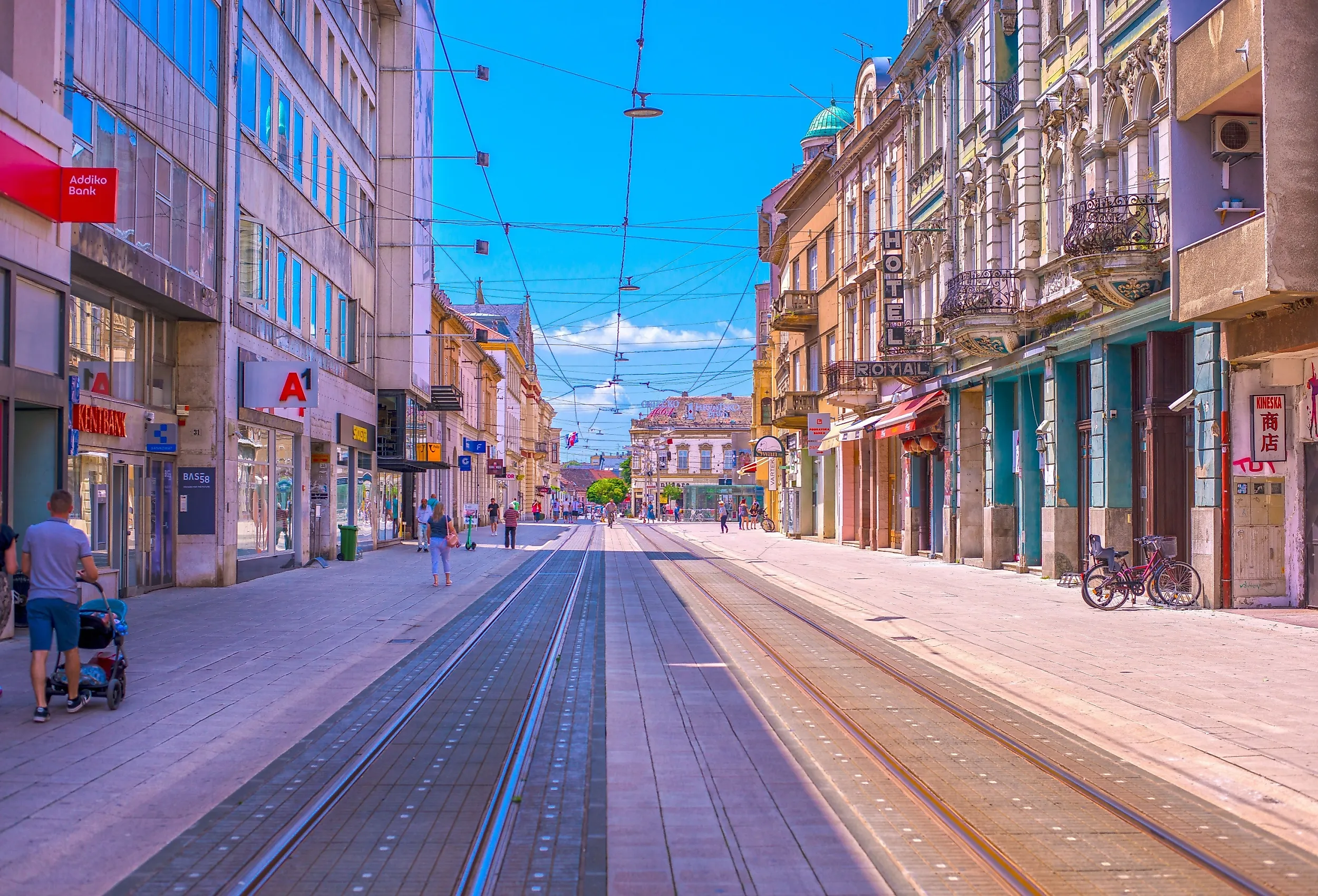
Zagreb

A two-bedroom in the heart of the capital runs roughly $900 to $1,000 a month. For a European capital with this much going on, that is the headline. Zagreb is home to about 770,000 people, and it splits cleanly in two: the medieval Upper Town with its cobbles and the twin Gothic spires of the cathedral, and the Lower Town below, all wide avenues, museums, and cafe terraces that stay full past midnight. Unemployment is low and the job market has real depth, with a tech sector that pulls in Croatian professionals and remote workers chasing the country's digital nomad visa. Maksimir Park, one of the oldest public parks in Southeast Europe, gives you walking paths, ponds, and a small zoo a few tram stops from downtown. St. Mark's Church and its tiled roof anchor the Upper Town. Between the transit that actually runs, the hospitals, and a growing international crowd, Zagreb is the most practical address in the country.
Split

People in Split live inside a Roman palace, and they have for seventeen centuries. Diocletian's Palace went up in the 4th century as a retirement home for the emperor, and today its walls and columns hold apartments, bars, and produce stalls. This is the largest city on the Croatian coast, around 161,000 people, and it runs at a Mediterranean pace despite the size. Marjan Park covers a forested peninsula about the size of Central Park, with hiking trails and small beaches a short walk from downtown. The waterfront promenade called the Riva is where the city gathers, and the cafes there stay busy long into the evening. Split is also one of Croatia's strongest tech hubs and has drawn a big remote-work community, helped by good flights across Europe. Crime is low, mostly petty theft in the tourist crush of high summer, and the coastal air and sunshine beat what you get inland.
Rovinj

Rovinj is the town that makes people rethink the whole plan. It sits on the western edge of the Istrian peninsula, a former fishing village of about 12,000 that is officially bilingual in Croatian and Italian, a holdover from centuries of Venetian rule that still shapes the food and the streets. The old town crowds onto a small peninsula under the Baroque bell tower of the Church of St. Euphemia, with pastel houses spilling down to the harbor. The food is the surprise: Rovinj is home to three Michelin-starred restaurants: the two-starred Agli Amici, along with the one-starred Monte—the first restaurant in Croatia to earn a Michelin star and Cap Aureo. Plenty of plainer konobas serve the same fresh seafood and local olive oil for a fraction of the price. The Golden Cape Forest Park just south of town has pine-shaded trails and some of the cleanest swimming water on the Adriatic. Property costs more here than in Pula or Zadar, because retirees and second-home buyers across Europe figured this out a while ago.
Pula

The skyline at the southern tip of Istria is a 2,000-year-old Roman amphitheater, and people still fill it. The Pula Arena hosted gladiator fights once and now runs concerts and a film festival every summer, making it one of the best-preserved amphitheaters anywhere. The city of about 52,000 is big enough for real infrastructure, with an international airport and a growing private healthcare sector, yet it costs noticeably less than Rovinj or Split. Rent here lands among the lowest of any coastal city in the country, and a two-bedroom goes for well under what Zagreb or Split would charge. Families come for the mix of decent schools, beaches, and an unhurried pace that still includes city amenities. Past the arena, the old town's lanes and Venetian buildings reward an afternoon of wandering, and the Istrian countryside of truffles, olive oil, and wine starts a short drive out in any direction.
Varaždin

For nine years in the 1700s, Varaždin was the capital of Croatia, until a fire in 1776 sent the government back to Zagreb for good. What the capital years left behind is a downtown of Baroque palaces so well preserved that the whole core reads like a film set, flat and laid out for bicycles. The town of about 44,000 sits roughly 50 miles north of Zagreb, and its economy has moved from old textile mills to engineering and tech, helped along by a University of Zagreb informatics faculty right in the center.
The money math is the draw. Rent and groceries run something like 20% to 30% below Zagreb prices, and the neighborhoods are safe, quiet, and built for families with good public schools. Every August the town hands its streets over to Špancirfest, a ten-day festival that brings in artists and performers from around Europe. The Drava River nearby gives you cycling, walking, and fishing within easy reach. For anyone who would rather have continental quiet than a coastline full of tourists, Varaždin makes a strong case.
Osijek

You can rent a comfortable two-bedroom in Osijek for less than $400 a month, which is the kind of number that makes people pull up a map of eastern Croatia. This is the country's fourth-largest city, around 97,000 people, and the most affordable major urban center in it. Osijek sits on the Drava River and splits into the Upper Town, the Lower Town, and Tvrđa, an 18th-century Habsburg star fort that does double duty as the city's nightlife and cultural quarter. The old farming economy has given way to software, and the place now calls itself "Osijek Software City" for its cluster of tech startups and remote-work setups.
The value holds up past rent. Purchase prices are among the lowest of any major Croatian city, and Osijek carries more green space and parkland than anywhere else in the country, stitched together by trams and bike paths. Kopački Rit Nature Park, one of Europe's largest wetlands, sits a few miles outside the city limits. With Josip Juraj Strossmayer University and a major clinical hospital center in town, you get the institutions of a capital at a steep discount on the cost of living.
Opatija

Habsburg emperors and European royalty built their seaside villas in Opatija in the 19th century, which is how a town of about 10,000 came to be called the "Nice of the Adriatic." Those Belle Époque estates are luxury hotels and high-end apartments now. The centerpiece is the Lungomare, a seaside promenade that runs roughly 7.5 miles along the rocky shore, linking the village of Volosko with Lovran and branching off to manicured pebble beaches along the way. The town sits on the Kvarner Gulf a few miles from the port city of Rijeka.
Opatija draws retirees, expats, and professionals who want a calm, well-kept base and can still reach Rijeka's hospitals, universities, and shopping in about fifteen minutes by car. Učka Mountain shields the town from the harsh northern winds, so the climate stays mild. Property and dining prices here rank among the highest in Croatia, in Dubrovnik and Rovinj territory, but the trade is immaculate parks, top-tier healthcare nearby, a strong restaurant scene, and a settled, old-world feel that money has been buying here for over a century.
Finding Your Corner Of Croatia
The split that matters most is coast versus interior. The Adriatic towns sell you the stone old towns and the water, and you pay for it in Rovinj and Opatija prices. The continental cities like Osijek and Varaždin hand back that money in rent and quiet, with rivers instead of a sea. Zagreb sits in the middle as the practical choice, the one place with everything running at once. Match the trade-off to your budget and your daily life, and one of these eight will fit.