The Most Charming River Towns In Mississippi
Some of Mississippi's best days out sit right on the water. Mississippi grew its river towns where cotton and blues once moved downstream. Travelers now walk the same banks for museums and live music. Vicksburg keeps Civil War history a short stroll from the Mississippi. Clarksdale puts blues clubs steps from the Sunflower. Eight towns each hand visitors their own reason to head to the bank.
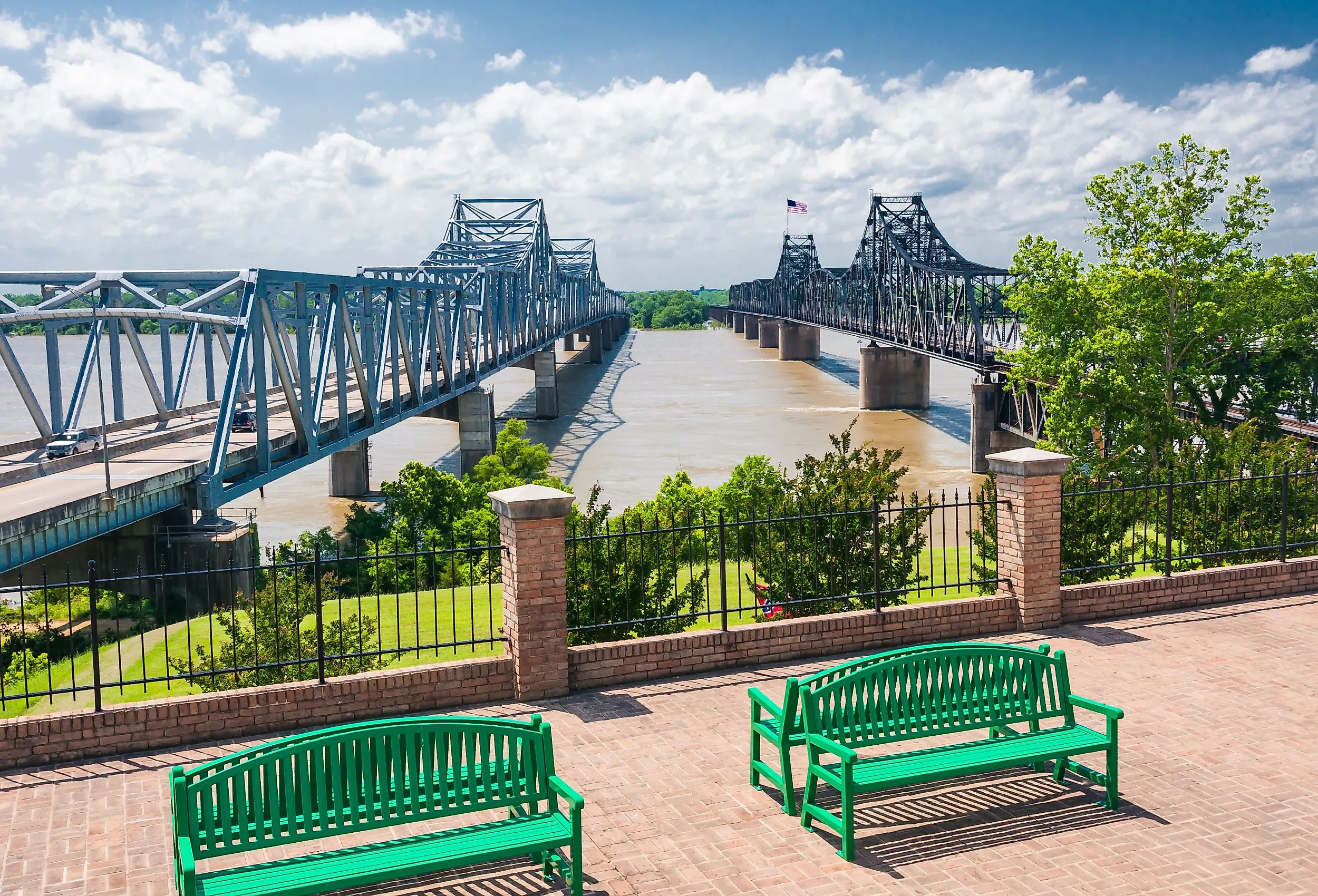
Vicksburg

The 1927 flood anchors the story at the Jesse Brent Lower Mississippi River Museum, where Vicksburg lays out how families, farmers, and the US Army Corps of Engineers lived with the Mississippi River. Interactive exhibits track those relationships across different eras. A 1,515-gallon aquarium holds fish pulled from the river itself. Visitors can also board the M/V Mississippi IV for a self-guided walk through the vessel.
Vicksburg National Military Park covers the other half of the town's identity. A 16-mile Tour Road connects sites tied to Port Gibson, Raymond, Jackson, Big Black River Bridge, and the 1863 Siege of Vicksburg. The USS Cairo Gunboat and Museum sits inside the park. The Cairo was one of seven City Class ironclad gunboats that patrolled the Mississippi and its shallow tributaries, pressuring Confederate supply lines and shore batteries until a mine sank her in 1862.
Natchez

Sitting on bluffs roughly 200 feet above the water, Natchez dates to a French fort built in 1716 and counts as one of the oldest European settlements on the Mississippi River. Stanton Hall makes a good first stop. Cotton merchant Frederick Stanton finished the Greek Revival mansion in 1857, and it is known for its scale, marble mantels, and oversized wharf mirrors. Tours pass through period antiques, the Stanton family china and crystal, and the family Bible.
Longwood tells a shorter story. Work began in 1860 and stopped when the Civil War scattered the northern craftsmen, leaving the octagonal mansion finished only on its lower floor. It remains the largest octagonal house in the United States, and tours still pass the tools the builders set down and never picked up. The Grand Village of the Natchez Indians fills in the older layer of the region's past. Its 128-acre park preserves three ceremonial mounds and a nature trail, and archaeologists have rebuilt the Great Sun's Mound and the Temple Mound to their original dimensions.
Greenville

Greenville runs the oldest continuously operating blues festival in the country. The Mississippi Delta Blues and Heritage Festival started in 1978 and returns to town each September, drawing fans well beyond the Delta. The Greenville History Museum keeps the rest of the town's record in memorabilia, artifacts, photographs, and news clippings, covering local life from the late 1800s through the 1970s, the 1927 flood included. For something quieter, the Greenville Cypress Preserve protects 16 acres of marshland with a self-guided trail. An audio guide walks visitors through the wetland habitat, the garden plantings, the resident wildlife, and the invasive species crews work to control.
Columbia

Columbia Water Park puts travelers right on the Pearl River, with 71 acres set up for camping, boating, and fishing. Visitors can pitch a tent, launch a boat, or just spend an afternoon on the bank. The Southern Museum of Natural History covers the area's wildlife instead, with a mural of Mississippi woodland animals across its exterior wall. Inside are fossils, animal skulls, petrified wood, dinosaur tracks, and oversized ammonites, plus a taxidermy hall that shows local species at full size and a short nature walk out back. A few miles on, Red Bluff opens onto colorful clay cliffs that erosion keeps reshaping. Its steep drops, exposed soil, and wide overlooks make it a memorable outdoor stop near town.
Hattiesburg

The University of Southern Mississippi's All-American Rose Garden grows more than 35 rose varieties and hundreds of other plants along the Leaf River town's cultural stretch. Hattiesburg also keeps two offbeat museums. The Hattiesburg Pocket Museum fills a retired newspaper stand with miniature versions of everyday objects, and visitors can add a piece, take a piece, and scan a QR code that lets the museum track where the pieces travel. Smith Drug Co. runs on older history. E. Hammond Smith opened the store in 1925 on Mobile Street, where it sold medicine, everyday goods, gum, candy, and sodas that drew Eureka High School students to its fountain. The restored building now works as a museum, soda fountain included.
Greenwood

Greenwood sits where the Tallahatchie and Yalobusha join to form the Yazoo River. Cotton once shipped out from these banks, and today the same stretch carries paddlers and walkers instead. The Yazoo River Trail and Arboretum runs 45 acres of forest, meadow, and riverside path, with a new bridge and boardwalk among its recent additions.
The Museum of the Mississippi Delta collects and interprets the region's art, history, and natural history, with exhibits on military history, the Delta's past, and a hands-on discovery room. A heavier chapter stands in Rail Spike Park, where a 9-foot statue of Emmett Till shows the 14-year-old touching the brim of his hat in a dress shirt, slacks, and necktie. Unveiled in 2022, it is the only standalone statue of Till in the United States.
Clarksdale

Clarksdale earned its reputation on the banks of the Sunflower River, where Delta blues took hold early. Locals and historians call it the "Birthplace of the Blues," and it remains one of the most significant blues towns anywhere. The Delta Blues Museum makes the case directly, with an exhibit built around Muddy Waters that includes the surviving timbers of his cabin home.
Ground Zero Blues Club puts live music on the schedule four nights a week and adds a weekly jam night open to local players. Cat Head Delta Blues & Folk Art works as the town's other hub, part record store and part meeting place, with current listings on local events and walls covered in blues portraits and paintings. Bins of records and CDs fill the aisles, and the folk-art side doubles as a souvenir shop and cultural stop.
Where The Rivers Still Set The Pace
These eight towns each read their river differently. Greenville and Clarksdale turned Delta waterways into a living blues tradition, while Vicksburg and Natchez built museums and preserved mansions on the same banks that once moved cotton and troops. Columbia, Hattiesburg, and Greenwood offer Pearl River campsites, Leaf River gardens, and Yazoo River trails to anyone willing to follow the water. Taken together, they show how much of Mississippi's history still runs alongside its rivers.