12 Offbeat Michigan Towns To Visit In 2026
Michigan has no shortage of offbeat towns. A good handful stand apart due to roadside attractions, waterfront landmarks, and traditions tied closely to local history. Copper Harbor marks the end of US 41 beside Fort Wilkins State Park. Hell leans into its devil-themed reputation through Screams Souvenirs and Hell's Mini Golf. Frankenmuth carries Bavarian architecture and the Holz Brücke Covered Bridge while St. Ignace piques visitor curiosity with the gravity-defying Mystery Spot. The twelve Michigan towns ahead stand out in 2026 for their unusual attractions and memorable landmarks.
Copper Harbor

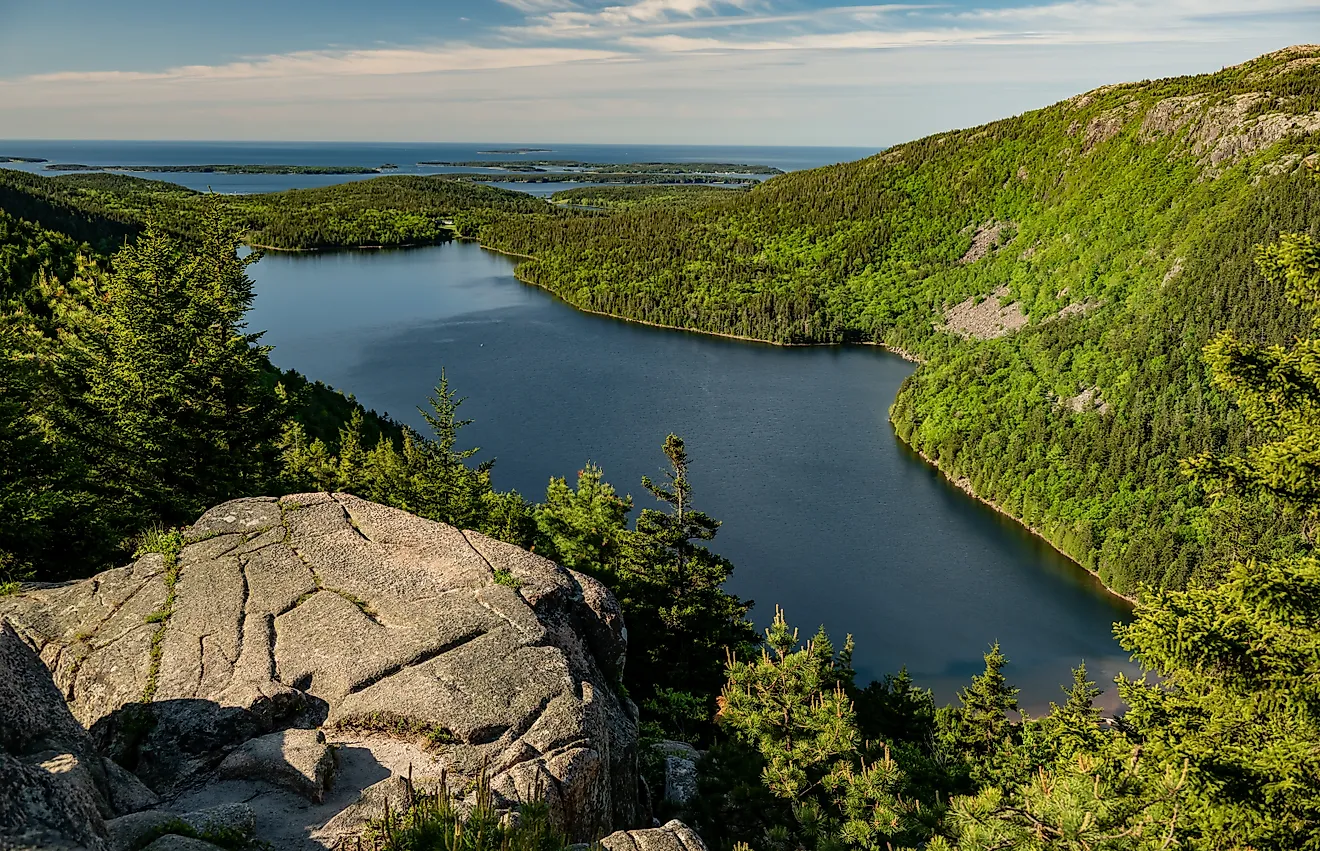
Copper Harbor, Michigan, feels separated from the rest of the state due to its geography and concentration of Keweenaw Peninsula landmarks. US 41 ends here near Fort Wilkins Historic State Park, an 1844 military outpost built during the copper rush. Restored barracks, officers' quarters, and interpretive museum exhibits document how the town developed and evolved during the mining boom and military history. A few miles uphill, Brockway Mountain Drive climbs more than 1,300 feet above sea level and gives panoramic views across Copper Harbor, Lake Superior, and the forested spine of the peninsula.
Just outside of downtown, Manganese Falls drops through a narrow volcanic gorge lined with cedar and pine. A short wooded trail follows the creek directly to the falls. Ending at the waterfront, the Isle Royale Queen IV ferry connects travelers to Isle Royale National Park.
Hell

Hell has turned its name into a full roadside attraction built around devil-themed humor and novelty tourism. Roadside signs, themed photo spots, and local businesses encourage visitors to "go to Hell" with complete sincerity. Screams Souvenirs is at the center of this town, selling Hell-branded shirts, mugs, postcards, and mail stamped with the town's famous postmark. Nearby, Hell Hole Diner & Creamatory is a worthy spot to stop for road-trippers who want ice cream and photos beneath the restaurant's oversized signs and playful roadside props.
Hell's Mini Golf is where uneven obstacles and tongue-in-cheek decorations match the community's personality. Outside town, Pinckney Recreation Area allows visitors to take on rocky wooded trails, inland lakes, and stretches of forested paths. Kayak launches and shoreline trails along Silver Lake and Crooked Lake allow the area to capture visitors' attention with not only its roadside humor but also its outdoor scenery.
Gibraltar

Gibraltar stands apart from other Downriver communities because water is almost everywhere you look in this town. Residential canals run through neighborhoods near the Detroit River, while marshland preserves much of the city near the Gibraltar Bay Unit of the Detroit River International Wildlife Refuge. Shoreline trails and observation areas attract bird-watchers hoping to spot herons, egrets, migratory waterfowl, and bald eagles along the western edge of Lake Erie.
Waterfront recreation remains a major part of daily activity in Gibraltar. Hawthorne Ridge Park includes riverfront trails, fishing access, picnic shelters, and boardwalk overlooks facing nearby wetlands and canals. A short drive south, Lake Erie Metropark adds kayak launches, marsh overlooks, a golf course, and a three-mile shoreline trail along Lake Erie's western basin. Canal-lined stretches near Stoeflet Street, Woodruff Road, and areas near Horse Island Canal give several neighborhoods the feel of a smaller marina community along the Detroit River corridor.
Wyandotte

Wyandotte pairs Detroit River waterfront scenery with murals, metal sculptures, and public art scattered throughout downtown. Downtown streets bring historic storefronts, waterfront parks, and locally owned arts spaces near the riverfront district. The Wyandotte Museum Campus preserves several of the city's oldest buildings, including the 1870s Marx House and the Ford-MacNichol House. Exhibits inside of these historical structures cover Wyandotte's shipbuilding industry, immigrant communities, and industrial growth along the Detroit River.
Riverfront parks continue that connection to the Detroit River. Bishop Park stretches along the shoreline with paved riverfront trails, fishing areas, and open views toward Grosse Ile. Its amphitheater also hosts seasonal festivals and summer concerts throughout the warmer months. South of downtown, Wyandotte Shores Golf Course gives golfers an 18-hole layout bordered by tall trees and nearby river channels. Public sculptures and murals readily appear throughout the downtown district, including the well-known Copper Bull sculpture near the riverfront.
Frankenmuth

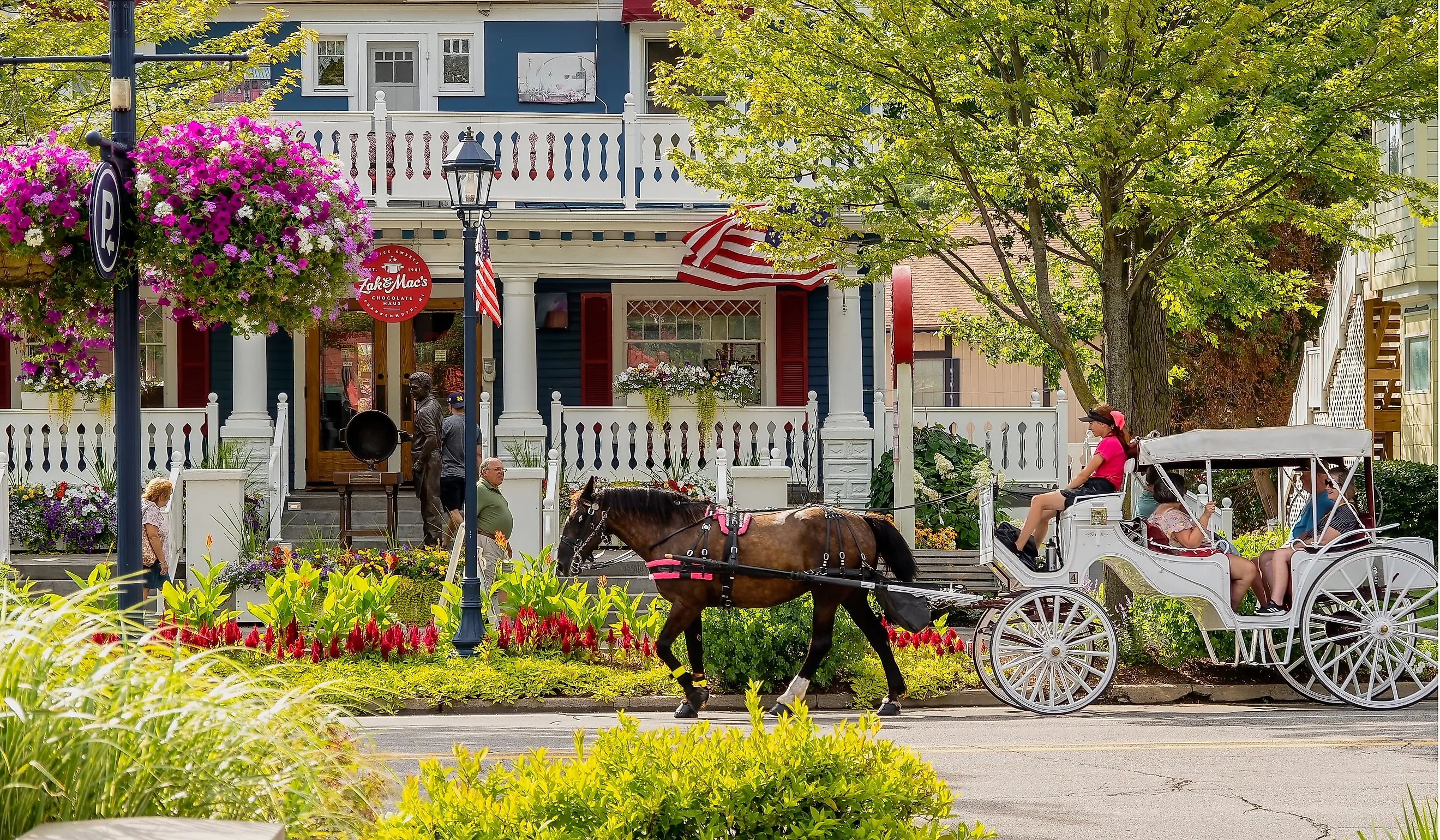
Frankenmuth centers around German heritage, Bavarian-style architecture, and traditions dating back to the town's 1845 settlement by Franconian Lutheran missionaries. Half-timbered buildings line Main Street while the Cass River runs beside shops, restaurants, and several of the town's best-known landmarks. Bronner's Christmas Wonderland draws visitors from across the Midwest with hundreds of decorated trees, themed ornament collections, and large outdoor displays during the holiday season. A few blocks away, Frankenmuth River Place Shops continues the Bavarian theme with Alpine-style storefronts, covered walkways, and retailers selling German imports, handmade fudge, and Michigan souvenirs.
Several of the most major landmarks sit directly along the Cass River corridor. Zehnder's Wooden Bridge (Holz Brücke) connects the shopping district to nearby riverfront areas through a Bavarian-inspired timber-frame design that regularly appears in travel photography of the town. The Frankenmuth Historical Museum documents Lutheran settlement, German-language traditions, and early farming life in the region. Longstanding restaurants such as Zehnder's of Frankenmuth and Bavarian Inn Restaurant continue the town's well-known family-style chicken dinner tradition.
Ludington

Ludington stands along Lake Michigan with dunes, inland lakes, and historic lighthouses tied closely to the city's maritime history. Big Sable Point Lighthouse rises above the shoreline inside Ludington State Park, where dunes, marshlands, and boardwalk trails connect the shoreline to inland lakes. Builders completed the 112-foot lighthouse in 1867 to guide ships through one of Lake Michigan's busiest shipping corridors. A 1.8-mile walking trail leads visitors through those same dunes and wooded terrain to the tower. Nearby, Historic White Pine Village preserves lumber-era history through restored buildings that include a schoolhouse, blacksmith shop, and general store.
East of the dunes, Hamlin Lake draws anglers and kayakers through narrow channels, wetland habitat, and calm stretches of shoreline often covered in early morning fog. Its sheltered shoreline sits only minutes from Ludington's Lake Michigan beaches. Trails throughout Ludington State Park connect the lighthouse, inland lakes, wooded dunes, and shoreline overlooks across the park.
Caseville

Caseville draws summer crowds to Michigan's thumb through beaches, festival grounds, and open stretches of shoreline along Saginaw Bay. Caseville County Park Beach features a broad, shallow shoreline that stays calm through much of the summer, making it popular for swimming, picnics, and shoreline walks. Each August, the Cheeseburger Festival Grounds fill with live music, themed events, and food vendors during Caseville's well-known Cheeseburger Festival.
Outside the festival corridor lie additional natural attractions. Port Crescent State Park adds a darker, more open stretch of coastline along Lake Huron, making it a popular spot for stargazing and low-light evenings by the water. Closer to downtown, the Caseville Breakwall provides a walking route along the harbor where boats pass through Saginaw Bay beside the stone shoreline barrier.
Hamtramck

Hamtramck packs Polish bakeries, Yemeni restaurants, public folk art, and tightly built neighborhoods into just two square miles. Public art installations and longtime community institutions show off the city's layered immigrant history, with Hamtramck Disneyland standing out among the most unusual sites. Artist Dmytro Szylak built the installation over several decades using painted panels, spinning metal sculptures, handmade signs, and found materials spread across a residential backyard.
Several local institutions continue that immigrant story across the city. The Polish Art Center highlights traditional crafts, imported goods, and exhibits connected to Hamtramck's Polish community. Nearby, the Hamtramck Historical Museum documents the city's Polish, Bangladeshi, Yemeni, and other immigrant communities through photographs, archival materials, and rotating exhibits. Joseph Campau Street serves as the city's main commercial corridor, lined with bakeries, cafes, butcher shops, and grocery stores tied to several immigrant communities.
Ypsilanti

Ypsilanti combines railroad-era architecture, student activity tied to Eastern Michigan University, and riverfront parks along the Huron River. The Ypsilanti Water Tower rises above the city as a late 19th-century limestone landmark visible from much of downtown and the surrounding neighborhoods. In Depot Town, preserved railroad-era buildings surround the Freighthouse, where restaurants and small shops now occupy former industrial spaces. The Michigan Firehouse Museum operates inside a restored 1898 firehouse, showing early horse-drawn engines and other firefighting equipment used across Michigan communities.
Along the Huron River, Riverside Park connects directly to Frog Island Park, forming a continuous greenway near downtown. Riverfront trails, open lawns, and event spaces link the waterfront to Depot Town's historic streets and seasonal festivals.
Rockwood

Rockwood sits near the southern edge of Downriver Michigan, surrounded by marshland corridors, Huron River access points, and open rural farmland. Mercure Park includes wooded trails, a shaded picnic area, and open recreational fields near the center of town. South and east of town, Rockwood Marsh spreads across protected wetlands filled with shallow water channels, tall grass, and seasonal bird activity.
Several informal Huron River Access Points allow paddling and shoreline fishing in shallow sections away from the heavier boat traffic. Also, seasonal farmers' markets frequently run on the rural outskirts, selling local produce tied to nearby farmland and greenhouse businesses.
Trenton

Trenton stretches along the Detroit River beside shoreline parks, wetland habitat, and remnants of the region's industrial past. Elizabeth Park occupies a riverfront island connected by bridges and paved trails, with shaded green space and wide views of freighters moving along the Detroit River. Nearby access points connect to the Detroit River International Wildlife Refuge and allow views of the wetlands, interpretive exhibits, and viewing areas focused on migratory bird habitats.
Smaller riverfront spaces round out the corridor. Monguagon Park provides shoreline access for anglers and walkers with open lawns and unobstructed views across the river toward neighboring Downriver communities. From several points along the waterfront, the remains of the historic Trenton Channel Power Plant still rise above the shoreline as a reminder of the city's manufacturing era.
St. Ignace

St. Ignace overlooks the Straits of Mackinac, with waterfront boardwalks, roadside attractions, and sites tied to Anishinaabe history across the region. The Museum of Ojibwa Culture shows off that heritage with exhibits on Anishinaabe traditions, regional history, and the community's long-standing connections to the Straits corridor. Nearby shoreline trails and limestone formations continue that connection between local history and the surrounding landscape.
Several of the town's best-known attractions sit near elevated lookouts and the waterfront district. The Mystery Spot attracts visitors through its gravity-defying cabin and optical-illusion demonstrations set within a wooded roadside attraction just outside town. Castle Rock rises as a limestone stack above the surrounding forest, with a steep staircase leading to a lookout over Lake Huron and the Straits of Mackinac. Along the shoreline, the St. Ignace Boardwalk follows the water's edge with continuous views of passing ferries bound for Mackinac Island and open stretches of the Straits framed by limestone bluffs.
Twelve Towns, Twelve Versions of Offbeat
Gravity-defying cabins in St. Ignace, canal-lined neighborhoods in Gibraltar, and the Bavarian storefront of Frankenmuth show just how varied Michigan's smaller towns can feel from one region to the next. Other places, including Hell, Hamtramck, and Copper Harbor, lean into roadside attractions, immigrant histories, or remote Lake Superior scenery in ways that feel difficult to replicate elsewhere in the state. Together, these communities give travelers a wider look at Michigan beyond its larger cities and busiest tourist corridors.