11 Best Places To Live In Portugal In 2026
Portugal is having a bit of a moment right now, and for very good reason. As a tourist destination, it offers historic cities, long beaches, volcanic islands, and established wine regions. The same can be said for its appeal as a place to put down roots. Compared to Spain and other European neighbours like France and Italy, Portugal offers a lower cost of living, excellent healthcare, and a high quality of life. Lisbon is perhaps an obvious choice with its thriving tech sector and broad career opportunities, as one might expect from a metropolitan capital city. Faro offers more than 300 days of sunshine each year and easy access to the Algarve's coastline. Living in Funchal means a subtropical island climate and some of Europe's most dramatic hiking trails, and Aveiro offers a distinctive canal-side lifestyle shaped by innovation, waterfront living, and easy access to the Atlantic coast. With busy cities and welcoming smaller communities, these are some of the top spots to live in Portugal in 2026.
Lisbon

Portugal's capital and largest city combines career opportunities, cultural depth, and coastal living in a way few European cities can. As the country's economic center, Lisbon hosts the headquarters of major companies, including Galp, EDP, and Jerónimo Martins, while its growing tech sector attracts startups and international talent through hubs such as Unicorn Factory Lisboa and Web Summit. The city is also home to leading institutions, including the country's largest university, the University of Lisbon, and NOVA University Lisbon, which is highly rated for business and economics. Healthcare is another strength, thanks to major facilities such as Hospital de Santa Maria, Portugal's largest public hospital, and the renowned Champalimaud Foundation, a leader in cancer and neuroscience research.
Life in Lisbon balances urban energy with outdoor living. Residents can explore the historic streets of Alfama, dine in Chiado, shop in Príncipe Real, or spend weekends at nearby beaches in Cascais and Costa da Caparica. Extensive metro, tram, ferry, and commuter rail networks make it easy to navigate the city and the surrounding region. Although housing costs are among the highest in Portugal, Lisbon's strong job market, excellent amenities, mild climate, and international outlook continue to make it one of the country's most desirable places to live.
Porto

Portugal's second-largest city offers an equally compelling blend of economic opportunity, cultural heritage, and everyday livability. Set along the Douro River, Porto is known for its historic architecture and riverside setting, but it is also a major business center with strengths in technology, manufacturing, logistics, finance, and creative industries. Companies such as Sonae, one of Portugal's largest corporations, are headquartered in the metropolitan area, while the city's growing startup ecosystem continues to attract entrepreneurs and remote workers.
Education and healthcare are among Porto's standout advantages. The University of Porto is consistently ranked among Portugal's top universities and is particularly respected for engineering, science, medicine, and business programs. Residents also benefit from access to leading healthcare facilities, including São João University Hospital, one of the country's largest and most advanced medical centers. Compared to Lisbon, Porto generally offers a lower cost of living while still providing excellent amenities, making it especially attractive to young professionals and families. The city combines a strong food and wine scene with renowned cultural institutions such as the Serralves Museum of Contemporary Art and Casa da Música concert hall. Efficient metro, rail, and bus networks connect neighborhoods across the region, while Porto Airport offers convenient links to destinations throughout Europe.
Braga

With lower living costs than Lisbon and Porto but strong economic prospects and excellent quality of life, Braga has become one of Portugal's most attractive places to call home. Braga's economy is supported by a growing technology sector, advanced manufacturing, and research institutions. The city is home to the University of Minho, one of Portugal's most respected post-secondary institutions, particularly known for engineering, technology, and scientific research. The university plays a key role in attracting startups, skilled professionals, and international students, helping fuel the region's reputation as an innovation center.
For families, Braga stands out for its comparatively affordable housing, high-quality schools, and access to healthcare through facilities such as Braga Hospital, one of northern Portugal's leading public medical centers. The city is also known for its safety, walkability, and welcoming atmosphere, making it popular with both young professionals and retirees. Residents enjoy a rich cultural scene centered around sites such as Braga Cathedral and the Bom Jesus do Monte sanctuary, while nearby Peneda-Gerês National Park, the country's only national park, offers some of Portugal's best hiking, cycling, and outdoor recreation.
Coimbra

Situated along the Mondego River between Lisbon and Porto, Coimbra is best known as the home of one of Europe's oldest universities and a UNESCO World Heritage Site. Founded in 1290, the University of Coimbra continues to attract students, researchers, and academics from around the world. This academic influence gives Coimbra a distinctive atmosphere that sets it apart from Lisbon's corporate energy, Porto's commercial dynamism, and Braga's technology-driven growth. The local economy is closely tied to higher education, healthcare, and research, with institutions such as the Pedro Nunes Institute helping foster innovation and entrepreneurship. Coimbra is also home to Coimbra University Hospital Centre (CHUC), one of Portugal's largest and most respected healthcare networks, providing advanced medical care and specialist services.
Residents benefit from a lower cost of living than in Lisbon and Porto, particularly when it comes to housing, while still enjoying a cultural scene fueled by student traditions, historic architecture, and the city's famous Fado de Coimbra musical heritage. With its walkable center, riverside setting, intellectual character, and strong sense of history, Coimbra appeals to those seeking a culturally rich lifestyle built around learning, community, and quality of life rather than big-city ambition.
Faro

As the capital of the popular Algarve region, Faro offers a lifestyle that revolves around sunshine, outdoor living, and easy access to some of Portugal's best-known coastal landscapes. While many visitors know it as the region's gateway city, residents appreciate Faro for its year-round livability, combining urban amenities with a more relaxed pace than Lisbon or Porto. Tourism remains a major economic driver, but Faro's economy is also supported by healthcare, education, public administration, and professional services. The city is home to the University of Algarve, which attracts students and researchers from across Portugal and abroad, helping create a youthful and international atmosphere. Residents also benefit from access to Algarve University Hospital, one of the region's principal healthcare facilities.
Perhaps Faro's greatest advantage is its location. The city sits beside the Ria Formosa Natural Park, a protected lagoon system known for its birdlife, walking trails, and island beaches. Locals can easily reach destinations such as Ilha de Faro, Praia de Faro, and the wider Algarve coastline, making beach days and outdoor recreation part of everyday routines. Despite its popularity, Faro generally remains more affordable than many of the Algarve's resort towns. Combined with Faro Airport's extensive European connections, a walkable historic center, and more than 300 days of sunshine annually, the city appeals to retirees, remote workers, and anyone seeking a laid-back coastal lifestyle without sacrificing essential services.
Cascais

Just 30 kilometers west of Lisbon, Cascais offers one of Portugal's most desirable combinations of coastal scenery, high-quality amenities, and easy access to the capital. Once a summer retreat for Portuguese royalty, the town has evolved into an affluent seaside community that attracts professionals, families, retirees, and international residents seeking a more relaxed lifestyle without giving up urban conveniences. Many residents commute to Lisbon via the scenic Cascais Line railway, while others work remotely or in sectors such as tourism, hospitality, technology, and professional services. The area is particularly popular among expatriates thanks to its international outlook and access to highly regarded schools, including nearby St. Julian's and Carlucci American International School of Lisbon, both among Portugal's leading international education options.
Beyond practical considerations, Cascais stands out for its quality of life. Residents enjoy beaches such as Praia da Rainha and Guincho Beach, championship golf courses, extensive cycling paths, and easy access to Sintra-Cascais Natural Park. While housing prices rank among the highest in Portugal, many consider the investment worthwhile for the town's safety, walkability, oceanfront setting, and year-round outdoor lifestyle.
Évora

Compared to Lisbon, Porto, and Cascais, Évora offers significantly more affordable housing and a lower overall cost of living. Residents also benefit from access to healthcare through Espírito Santo Hospital, the region's principal medical center. The surrounding Alentejo countryside is renowned for its vineyards, olive groves, and rolling landscapes, providing abundant opportunities for hiking, cycling, and wine tourism.
As a UNESCO World Heritage Site, Évora is known for its remarkably preserved historic center, where Roman ruins, medieval streets, and whitewashed buildings create a setting unlike anywhere else in Portugal. Yet the city is more than an open-air museum. The University of Évora, founded in 1559, helps sustain an active academic community and supports local research, education, and cultural initiatives. While Évora lacks the fast-paced economy of Portugal's larger cities, its strong sense of community, manageable size, excellent quality of life, and rich cultural heritage make it an appealing choice for those who value space, tranquility, and authentic Portuguese living.
Aveiro

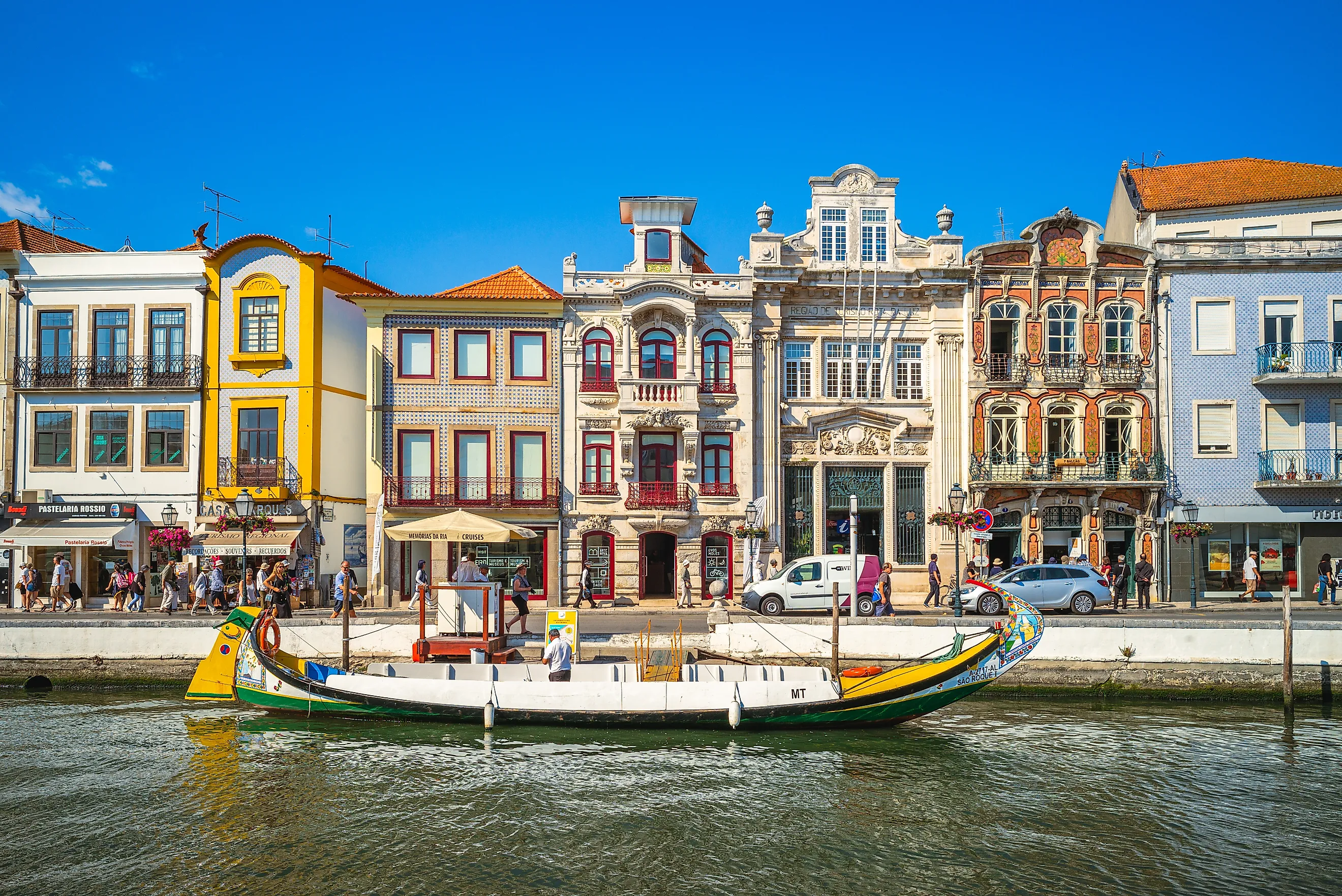
Known for its network of canals and colorful moliceiro boats, Aveiro is built around the Ria de Aveiro lagoon, blending maritime heritage with modern innovation. The result is a setting where waterfront promenades, Art Nouveau architecture, and research campuses coexist within a compact and highly walkable urban area. The University of Aveiro has been instrumental in transforming the city into one of Portugal's leading centers for science, technology, and engineering. Its close ties to industry have helped attract research institutes, technology companies, and skilled professionals, contributing to an economy that extends well beyond tourism. This emphasis on innovation gives Aveiro a younger, more forward-looking character than many similarly sized Portuguese cities.
Water is central to life here. Residents cycle along canal-side paths, enjoy fresh seafood from the lagoon, and spend weekends exploring nearby Costa Nova, known for its striped beach houses and broad Atlantic shoreline. The surrounding wetlands also support birdwatching, kayaking, and nature tourism throughout the year. With excellent rail connections to both Porto and Coimbra, a strong university presence, and a distinctive identity shaped by the lagoon, Aveiro appeals to those seeking a smaller city with intellectual energy, scenic surroundings, and an inextricable connection to the water.
Setúbal

Setúbal is one of Portugal's most underrated places to live. Located just south of Lisbon on the Sado Estuary, the city provides easy access to the capital while maintaining a more relaxed atmosphere and lower housing costs than many communities within the Lisbon metropolitan area. Historically known for its fishing and maritime industries, Setúbal's economy has diversified to include manufacturing, logistics, tourism, and services. The nearby Autoeuropa plant in Palmela is one of Portugal's largest industrial employers and supports thousands of jobs in the region, while many residents also commute to Lisbon via rail, ferry, or highway connections.
One of Setúbal's greatest assets, however, is its natural environment. The city sits between the Sado Estuary Natural Reserve and Arrábida Natural Park, an area renowned for its limestone mountains, hiking trails, secluded beaches, and clear waters. Beaches such as Praia da Figueirinha and Galápinhos, frequently ranked among Portugal's most beautiful, are just minutes from the city center. São Bernardo Hospital is the region's principal public hospital, and the city is also home to a growing range of local amenities, restaurants, and cultural venues, including Fórum Luísa Todi, one of the region's leading performing arts centers, as well as a revitalized waterfront lined with cafes, seafood restaurants, and public gathering spaces.
Guimarães

Often called the birthplace of Portugal, Guimarães combines historic character with a modern, highly livable environment. Located in the Minho region about 25 minutes from Braga and less than an hour from Porto, the city offers residents a strong sense of community, excellent quality of life, and lower living costs than Portugal's larger urban centers. While best known for its medieval heritage, including Guimarães Castle and a UNESCO-listed historic center, the city also supports a diverse economy built around manufacturing, textiles, technology, education, and services. Its strategic location within northern Portugal's economic corridor allows residents to access employment opportunities across the wider Braga-Porto region while enjoying a quieter and more affordable place to live.
Guimarães is particularly appealing to families thanks to its safe neighborhoods, walkable city center, and access to quality healthcare and education. The nearby University of Minho, with campuses in both Guimarães and Braga, contributes to the area's skilled workforce and cultural life. Residents also enjoy a calendar of festivals, concerts, and community events, such as the Nicolinas, a centuries-old student festival held over late November and early December that fills the city with parades, music, and traditions unique to Guimarães. Surrounded by green hills and natural landscapes, Guimarães offers easy access to hiking, cycling, and outdoor recreation on nearby Penha Mountain, while efficient rail and road connections link it to Porto Airport and other major destinations.
Funchal

Perched between the Atlantic Ocean and Madeira's steep volcanic mountains, Funchal feels distinctly different from mainland Portugal. As the capital of Madeira, it combines the amenities of a regional capital with the atmosphere of a subtropical island, attracting retirees, entrepreneurs, remote workers, and families drawn to its year-round mild climate and relaxed pace.
Unlike many coastal destinations that rely solely on tourism, Funchal functions as Madeira's economic, cultural, and administrative center. Residents benefit from access to major employers, government services, higher education institutions, and healthcare facilities, including Hospital Dr. Nélio Mendonça, the region's principal public hospital. The city also serves as the island's transportation hub, with Cristiano Ronaldo International Airport providing connections to mainland Portugal and destinations across Europe.
What truly sets Funchal apart, however, is its lifestyle. Residents can start the day overlooking the ocean, spend the afternoon hiking one of Madeira's famous levada trails, and finish the evening in the Old Town, with local specialties such as espada com banana or Madeira wine. The city comes alive during events like the Madeira Flower Festival and New Year's Eve celebrations, whose fireworks were recognized by Guinness World Records in 2006 as the largest display in the world and remain among the most renowned anywhere. For those seeking a safe, scenic, and community-oriented place to live, Funchal offers an island lifestyle unlike anywhere else in Portugal.
Finding Your Place in Portugal
Choosing the best place to live in Portugal depends on what kind of life you want to build. Lisbon and Porto offer strong job markets and big-city amenities, while Braga, Coimbra, and Aveiro pair education and innovation with a more manageable cost of living. Coastal communities such as Cascais, Faro, Setúbal, and Funchal trade some of that affordability for beaches, protected nature, and a year-round outdoor pace. Career growth, lower costs, cultural depth, and a slower rhythm rarely come in equal measure in any one city, and the right fit depends on which of those a household is willing to prioritize.