8 Most Breathtaking Towns In British Columbia
In these towns, every café and storefront feels like the front row to a spectacular landscape. Whistler hangs the Peak 2 Peak Gondola between mountains while Squamish rises beneath the Stawamus Chief. Tofino faces the surf at Long Beach, and Penticton rests between Okanagan and Skaha lakes. Nelson's Baker Street is close to Kootenay Lake, while Fernie looks up at the Rockies. Gibsons overlooks Howe Sound and Revelstoke climbs toward Meadows in the Sky. These breathtaking British Columbia towns put the landscape first.
Whistler

Whistler gets filed away as a winter destination by people who have only visited in February, which means they have missed most of what it does best. The Peak 2 Peak Gondola crosses between Whistler and Blackcomb over a 3.024-kilometre unsupported span and operates for summer sightseeing, but it lost the world-longest-span record in 2017. The ride sits 436 metres above the valley floor, and glass-bottomed cars run on rotation for anyone who wants to look straight down. At the top, the Skybridge leads out to a viewing platform, and over 50 km of hiking trails link the two mountains.
Riders more interested in going down come for the Whistler Mountain Bike Park, known for downhill trails that wind through forest over catwalks, rocks, and ladders. The park fills up for Crankworx, a ten-day mountain bike festival that lands in midsummer. The opposite experience is Scandinave Spa Whistler, a series of Nordic-style outdoor hot and cold pools and waterfalls connected by landscaped paths, with saunas and steam rooms set between them. It's a quiet escape where silence is enforced, and phones are not allowed.
For something free and genuinely odd, walk the Train Wreck Trail. Seven boxcars derailed here in the 1950s and were shoved into the forest to clear the tracks quickly. They are still there, now covered in graffiti and murals, and the route to them crosses a suspension bridge over the Cheakamus River.
Nelson

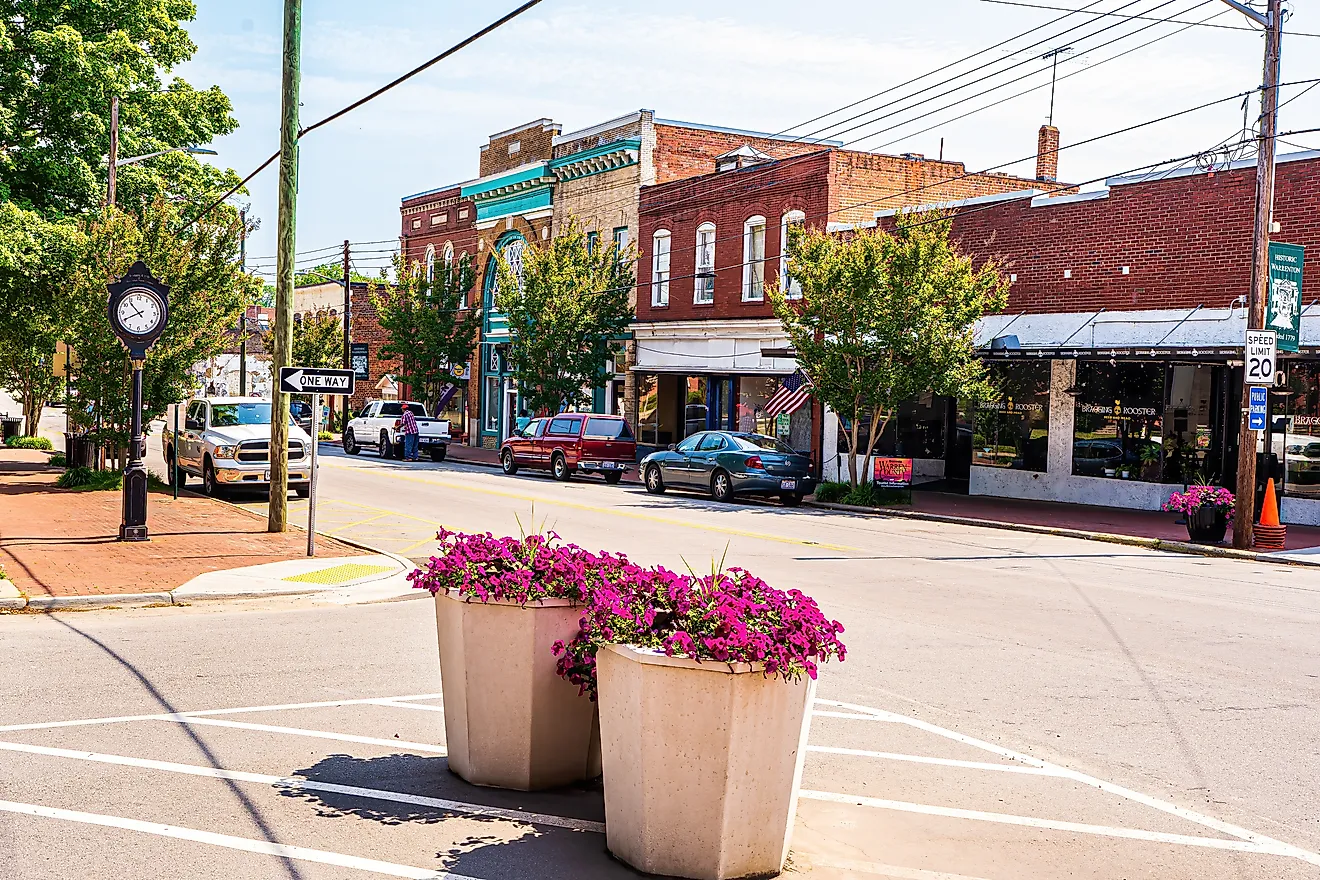
Nelson sits on the West Arm of Kootenay Lake with heritage architecture that survived largely intact, which is rarer in BC than it should be. Baker Street is the centre of it, lined with locally owned shops, patios, breweries, and cafes. Sculptures and murals run along the street and into the alleys behind it. Give it an afternoon rather than an hour.
About 20 minutes up the mountain, Whitewater Mountain Resort averages more than 12 metres of snow a year, which explains why the town fills with skiers who came for a season and stayed for a decade. In town, the restored Capitol Theatre pulls in performers that larger cities do not always get. If you have an hour to spare, Streetcar 23 is a working streetcar from the early 20th century that runs a scenic route along the waterfront and includes a small museum.
Fernie

Fernie is an old coal town in the Elk Valley, ringed so closely by Rocky Mountain peaks that the light changes three or four times a day. The historic downtown is full of century-old brick and stone architecture, and it centres on 2nd Avenue between 4th and 9th Street.
Island Lake Lodge sits about 10 km out of town and is the reason a lot of people come. In winter, it is a renowned cat skiing hub with waitlists for its multi-day tours. In summer, it flips completely: canoe rentals, a floating dock to swim to, and a walk around the lake under the peaks of the Lizard Range.
At the Fernie Museum, the ground floor tracks more than a century of local life, including the 1908 fire whose soot you can still see on old downtown brick. One-hour guided heritage tours run throughout the summer and cost $15, with museum admission included, though they must be booked in advance. Finish at the Fernie Brewing Company taproom, two minutes from downtown, or head up to Fernie Alpine Resort for the steep, deep tree skiing the town built its reputation on.
Tofino

Tofino is at the end of a long, winding highway on the west coast of Vancouver Island, and it does not reward people in a hurry. Long Beach borders an old-growth forest inside Pacific Rim National Park Reserve and runs about 16 kilometres, the longest beach in the reserve. Surfers, beachcombers, and people who just want to walk until their legs give out all end up here.
Between November and March, the town's whole personality shifts. Storm watching draws people to the coast in fall and winter, where rock outcrops like Incinerator Rock and Lovekin Rock become spectacular in heavy swell, and a viewing deck at the Kwisitis Visitor Centre stays accessible even at high tide. Chesterman Beach and Cox Bay are the classic vantage points, and most oceanfront lodges have a room where you can watch the whole thing with a hot drink.
The trip most people remember is Hot Springs Cove, northwest of Tofino in Nism̓aakqin Park, renamed from Maquinna Marine Park in 2025. It is reachable only by boat or floatplane, roughly ninety minutes each way by water. A two-kilometre boardwalk through old-growth rainforest leads to geothermal pools set into the rocks at the ocean's edge. A waterfall drops into a chain of rocky pools, each one cooler than the last, and at high tide, the ocean pushes in and cools them further. Closer to town, the Meares Island Big Tree Trail is a 2.4-kilometre out-and-back boardwalk to the Hanging Garden, reached by water taxi or kayak.
Gibsons

Gibsons sits on a hillside on the western shore of Howe Sound, where the sound opens into the Strait of Georgia. The ferry out of Horseshoe Bay reaches Langdale, a few minutes up the road, in about 40 minutes. Soames Hill Park, just outside the town boundary, is a worthwhile first stop. The trail network runs about 5 km through second-growth forest, with 250 metres of elevation gain and over 400 steep steps to the summit. The view from the top takes in Gibsons Harbour, Howe Sound, and the surrounding islands.
Down at the water, Molly's Reach by Black Bean serves breakfast, lunch, and locally roasted coffee at 647 School Road in Lower Gibsons. The building stood in for the restaurant of the same name in The Beachcombers, and the tugboat Persephone from the show now sits beside it as a restored landmark. Gibsons Public Market is a short walk from there, along with the Sunshine Coast Museum and Archives.
Penticton

Penticton sits between two lakes in the South Okanagan. The city has 80-plus wineries within a 20-minute drive, and the Naramata Bench is where most visitors spend a day working through them.
The local rite of passage costs almost nothing. Floating the Channel means drifting the 7 km waterway that links Okanagan Lake to Skaha Lake, and Coyote Cruises rents floaties to anyone who did not bring their own. The channel has rest and picnic areas and runs alongside a bike path and jogging trail.
For something with more adrenaline, Skaha Bluffs Provincial Park is one of Canada's top rock climbing destinations, with more than a thousand routes spread across some 50 crags and views down over Skaha Lake. Local outfits like Skaha Rock Adventures run lessons for first-timers. On the flat, the Kettle Valley Rail Trail is an easy hike or ride with long lake views. The SS Sicamous sits on the beach as a museum, the largest surviving sternwheeler of its kind in Canada.
Revelstoke

Revelstoke is wedged between the Selkirk and Monashee ranges, with a national park starting at the edge of town. The Meadows in the Sky Parkway climbs 1,365 metres over 26 km of switchbacks to Balsam Lake. In summer, the roadsides and the summit area fill with wildflowers, best around mid-August. From the top, you can take a free shuttle to the summit or hike the 1 km Upper Summit Trail to several viewpoints and a historic fire lookout. One of the first stops on the way up is the Nels Nelsen ski jump, the first permanent ski jump built in Canada, where five world distance records were set before 1933. Lower down, the park protects a rare inland temperate rainforest of western red cedar and hemlock, a forest type found almost nowhere else on earth.
At Revelstoke Mountain Resort, the Pipe Mountain Coaster runs up to 42 km/h on 1.4 km of monorail track that twists through that same rainforest, with a hand brake so you control the pace. The Revelation Gondola climbs to the Skywalk, opened in 2025, where a 300-metre cliff trail leads to a suspension bridge and a viewing platform cantilevered out more than 1,600 metres above sea level.
Squamish

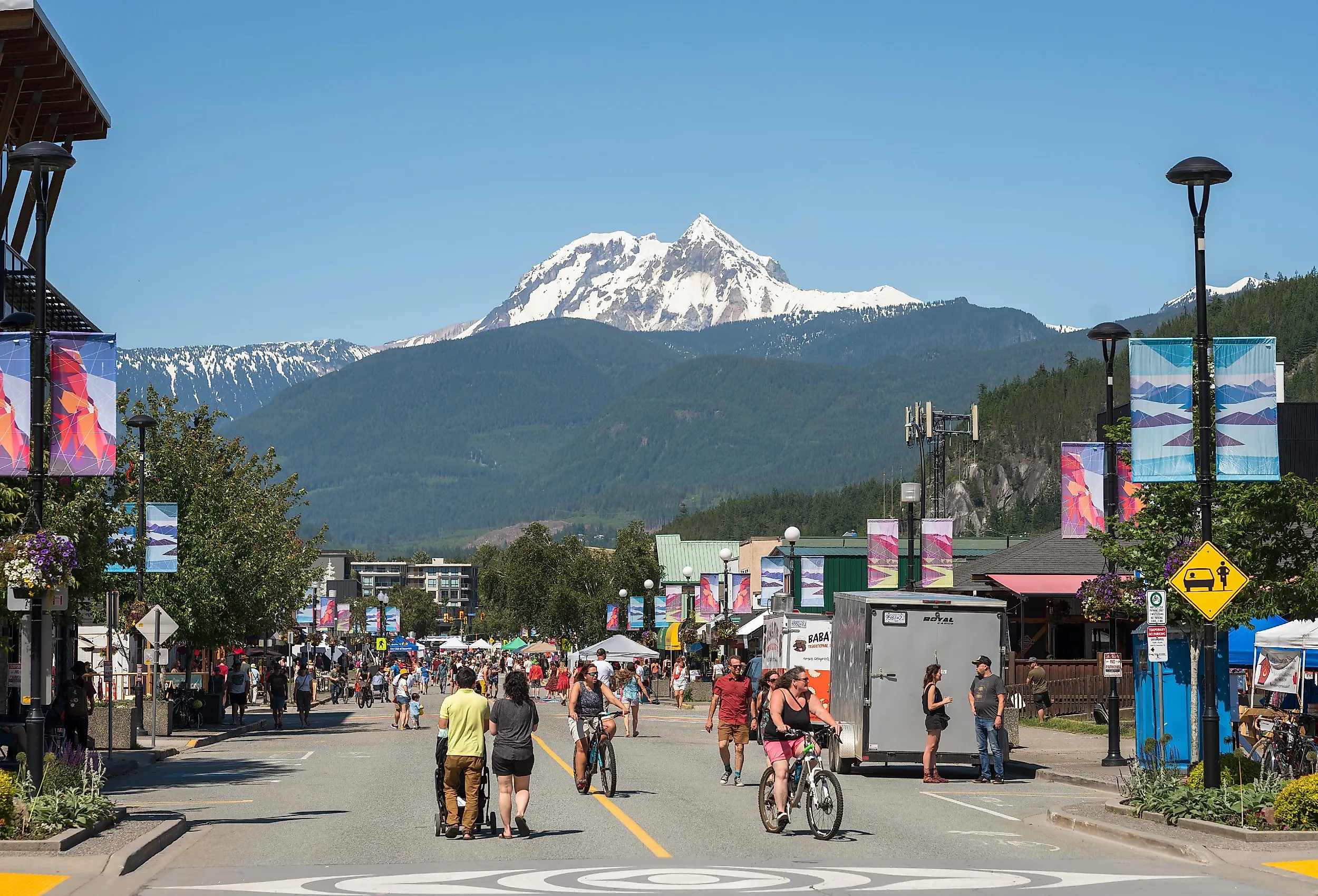
Squamish now stands proudly as a destination in its own right rather than simply a stop on the road to Whistler. Stawamus Chief Park protects a granite dome rising 700 metres above the valley, with trails to three separate summits and rock climbing routes of international standing. The Chief, Murrin Park, and the Smoke Bluffs together hold more than 1,500 routes, with more sport crags scattered up the highway toward Whistler.
Two minutes down the highway, Shannon Falls drops 335 metres over granite, reached by a short walk from the parking lot. The Sea to Sky Gondola runs a 10-minute ride to a summit lodge at 885 metres, opening onto viewpoints, hiking trails, and a suspension bridge.
Come in winter for something different. Brackendale Eagles Park protects critical wintering habitat along the Squamish River, where bald eagles gather from November through February. Viewing is usually best in November and December. The 1994 count recorded 3,769 birds, still the world record for the species, and the Eagle Run viewing area on the dyke in Brackendale is the best place to watch from.
Choosing Between Them
Eight towns, and no two of them run on the same clock. Tofino peaks in January storms, while Penticton belongs to August. Fernie shuts its shops at six, and Whistler barely sleeps. What they have in common is proximity to something worth crossing a province for, close enough that you can walk out of a coffee shop and be standing under a granite wall or beside a glacier-fed lake ten minutes later. Pick two or three, give each of them more days than you think they need, and let the highway between them do the rest.