Every National Park In The Pacific Northwest
Crater Lake sits nearly 2,000 feet deep in the caldera of a volcano that collapsed 7,700 years ago, and it is only one of four National Parks that anchor the Pacific Northwest. Two of the four rank among the oldest parks in the country. Mount Rainier holds the most glaciated peak in the lower forty-eight, while the temperate rainforests along the Pacific Coast shelter some of the largest trees on Earth. Heavy rainfall and four active mountain ranges account for much of that variety, from deep old-growth forest to alpine glacier. These four parks make the best starting points for anyone exploring the region's most remote natural scenery.
Crater Lake National Park

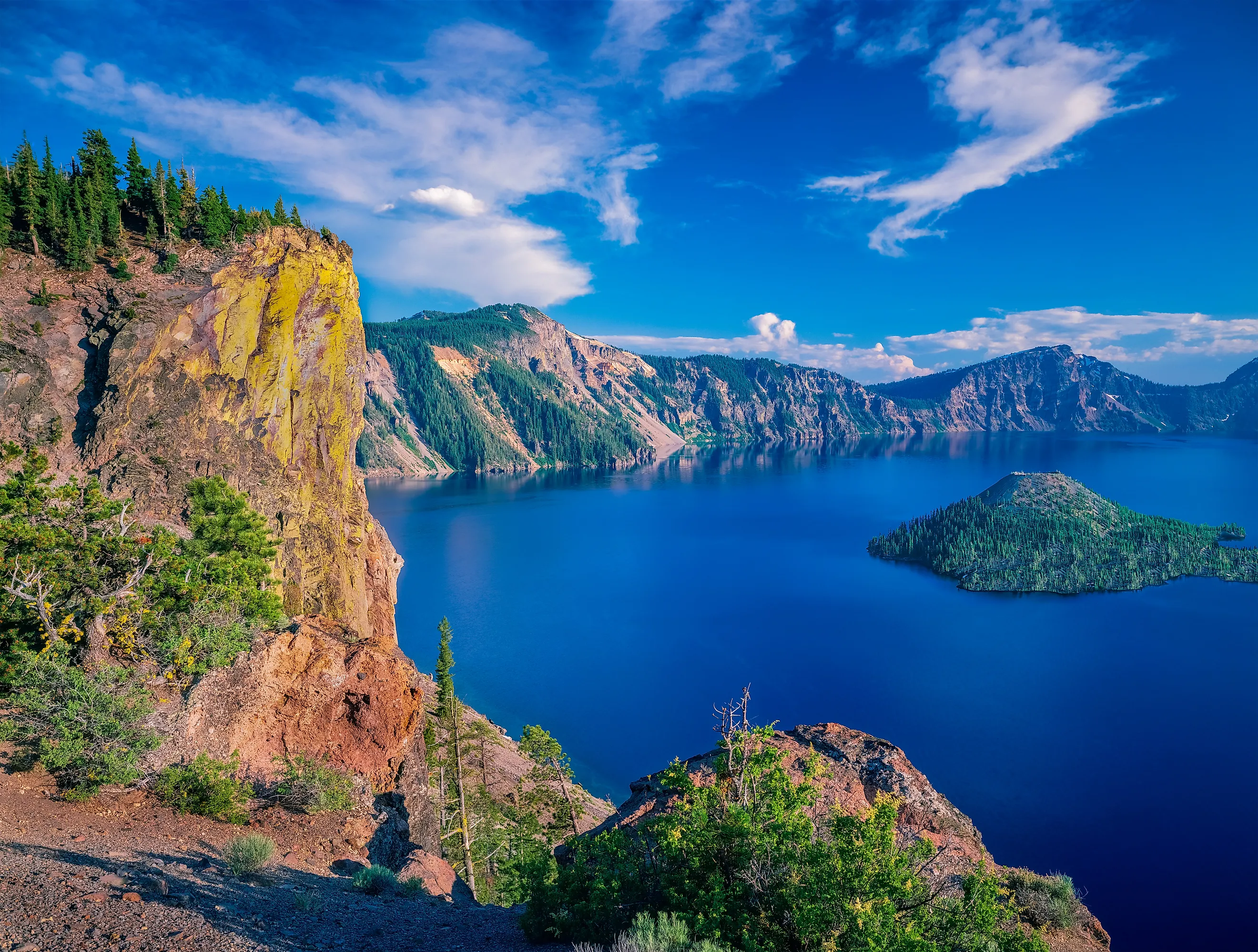
Crater Lake National Park is the fifth oldest National Park in the country and the only one in the state of Oregon. Set atop the Cascade Range near the city of Medford, the park encompasses 183,224 acres of old-growth forest, unique geologic formations, and the deepest lake in the United States.
The park's primary attraction is the eponymous Crater Lake, which was formed around 7,700 years ago following the eruption and collapse of the volcano Mount Mazama. Over time, the resulting caldera filled with rain and snowmelt, resulting in an exceptionally clear natural lake that reaches a maximum depth of nearly 2,000 feet. Swimming is typically permitted at Cleetwood Cove, but the trail down to the shore will be undergoing a rehabilitation project until 2028. For hikes around the rim, the Sun Notch Trail is a short trek to a beautiful viewpoint where you get great views of the Phantom Ship Island. If you're up for a more challenging hike, Mount Scott is a more grueling climb up to the park's highest point, where you'll be rewarded with panoramic views of the Klamath Basin and several prominent High Cascades peaks.

To enjoy the views of the lake without taxing your legs, visitors can circumnavigate the caldera on the scenic Rim Drive. The road runs around the entirety of Crater Lake and has thirty scenic overlooks to pull over and admire the views. If you arrive at the park early enough, consider taking a short hike up to the Watchman Overlook and watching the sun rise over the eastern rim of the caldera. This overlook is a very popular attraction and affords one of the best views of Wizard Island, a cinder cone volcano that is the lake's largest island.
Mount Rainier National Park

Founded just three years before Crater Lake, Washington's first National Park contains the entirety of Mount Rainier, a 14,410-foot-tall stratovolcano and the highest point in the Cascade Range. The towering mountain is the most glaciated peak in the lower forty-eight states. Snowmelt from the slopes of Mount Rainier forms five major rivers, and the lower slopes and surrounding area are covered in alpine and subalpine forest, wildflower meadows, and cascading waterfalls.

In the aptly named Paradise area, visitors can take in beautiful views of Mount Rainier's southern aspect and fields of multicolored lilies in full bloom during the summer season. Several great day hikes begin near the Henry M. Jackson Visitor Center, including the Skyline Loop Trail, which features some of the best places to see the glaciers on the southern slopes. The area is also a great spot for waterfalls. You'll pass a great viewpoint for Myrtle Falls on the Skyline Loop, with Mount Rainier rising in the background. On the road up from Longmire, Narada Falls, one of the park's most popular cascades, is right along the road, with a short, steep trail leading down to the base where you can bask in the refreshing mists from the Paradise River. Hikers looking for a longer backcountry adventure can get permits from the National Park Service to hike a portion, or the entirety, of the Wonderland Trail, a strenuous, ninety-three mile trail that circles the entirety of Mount Rainier. Those with mountaineering experience can attempt to reach the summit with a climbing permit, or join a guided group offered by an authorized concessionaire. Snap a great picture of Mount Rainier reflected in the surface of Reflection Lake during the summer months by driving down Stevens Canyon Road. While you cannot reach the summit in a vehicle, you can drive to 6,400 feet in the Sunrise Area on the park's northeast side. The area has excellent high-altitude views of the surrounding areas, as well as the Emmons Glacier, the largest glacier by surface area in the contiguous United States.
Olympic National Park

In 2025, more than 3.5 million visitors explored this nearly one-million-acre expanse of wilderness on the Olympic Peninsula in northwestern Washington. Olympic National Park encompasses three distinct ecosystems, and the park's uniqueness and biodiversity have earned it both a UNESCO World Heritage Site and International Biosphere Reserve Designation.
Within the park's boundaries, you'll find glaciated alpine terrain, temperate rainforest, and rugged Pacific coastline, more than 95 percent of which is designated wilderness. Most of the park's most popular destinations can be easily reached on U.S. Highway 101 which loops around the peninsula and makes it possible to experience all of the park's ecosystems relatively easily. From the park's main visitor center in Port Angeles, the closest area is Hurricane Ridge, the most easily accessible mountain area in the park. The fully paved Hurricane Hill trail provides an easy day hike for the whole family, affording great views of the Bailey Range of the Olympic Mountains on a clear day. A network of trails branches off this popular hiking destination, making it a great place to begin longer treks in the Elwha River Valley or Whiskey Bend Road. From Hurricane Ridge, driving west towards the Pacific Ocean takes you along the shores of Lake Crescent, a clear glacial lake in the park's northern foothills. The lake is a great spot for canoeing and kayaking and has some of the park's most beautiful hikes. Marymere Falls is a quick trip from the Storm King Ranger Station, perfect for families, while hikers in search of a challenge might opt to tackle the strenuous trek to the summit of Mount Storm King.

If you want a break from mountain scenery, the Pacific shoreline provides landscapes that look like they belong in a completely different park. The rocky shorelines of Ruby Beach and Shi Shi Beach are lined with dramatic geologic formations and, at low tide, dotted with tidal pools teeming with marine life. Visitors can spot whales off the coast and, occasionally, Pacific harbor seals resting on the shore. The park's most distinctive area is the Hoh Rainforest along the banks of the Hoh River, which flows down from Mount Olympus. The region receives an average of 140 inches of rain each year, which supports a dense green blanket of trees, mosses, and ferns. The Hall of Mosses Trail, which begins at the Hoh River Visitor Center, is an easy, short hike through this ecosystem, perfect for families visiting with kids. The park provides plenty of informative signage along the way, and you may be able to spot banana slugs and Roosevelt elk amongst the greenery on this short loop through the forest.
North Cascades National Park

Despite being less than three hours away from Seattle, North Cascades National Park is one of the more remote National Parks in continental United States. This rugged alpine landscape contains more glaciers than anywhere else in the country outside of Alaska, among the highest plant biodiversity of any US National Park, and more than 400 miles of hiking trails. Despite this, the park was one of the least visited National Parks in 2025, making it a great place for hikers that want to escape the crowds and truly immerse themselves in the wilderness.
One of the reasons for the park's remoteness is the challenging terrain of the northern ranges of the Cascade Mountains. The scenic North Cascades Highway provides access to some beautiful overlooks at Diablo Lake and Ross Lake but, for the most part, the jagged peaks and brilliant blue alpine lakes are only accessible by foot. Shorter day hikes like Thunder Knob and Blue Lake have trailheads right along SR-20, making them great options for visitors who are short on time, but if you want to spend more time on the trail, the park has plenty of incredible backpacking and longer day-hiking options to choose from. One of the most popular hikes in the park is the gorgeous, but challenging Cascade Pass Trail, which climbs about 4,000 vertical feet through wildflower meadows and granite outcroppings to the base of the Sahale Glacier. The views along the way are incredible. The mountain views and a look down at Doubtful Lake alone are enough to make this hike worth checking out, but this area of the park is also great for wildlife spotting. Mountain goats, marmots, and black bears all frequent these slopes, so be sure to keep your eyes peeled as you climb.

The Ross Lake Resort provides motorboat and canoe rentals for exploring the network of trails around Ross Lake. Desolation Peak and its historic fire lookout cabin as well as the Hozomeen Lake Trail, usually multi-day adventures, can be done as day hikes by utilizing the resort's water taxi service to drop you at the trailhead. Beyond the hiking, North Cascades is a boating paradise. Whitewater rafting opportunities are plentiful on the Skagit and Stehekin Rivers, while Gorge Lake and Diablo Lake are great choices for a more relaxed canoeing or kayaking outing. The park itself does not provide equipment rentals, but some outfitters can be found in the nearby town of Rockport.
Some of the oldest and most beautiful National Parks
The Pacific Northwest has long been prized for its natural areas. Mount Rainier has been a National Park since 1899, preserving the most glaciated peak outside of Alaska, while a volcanic collapse at Crater Lake left the country's deepest lake, fed entirely by rain and snowmelt. Olympic protects three distinct ecosystems within a single boundary, one of the few parks in the world to do so, and North Cascades trades easy access for solitude and more glaciers than anywhere in the country outside Alaska. Together the four parks preserve some of the region's most remarkable landscapes for generations to come.