11 Best Cities To Retire In Croatia
In Croatia's cities, retirement might look like daily strolls along the Sava River or meeting friends for coffee in the shadow of a medieval fortress. Along the Adriatic coast, historic cities like Split combine waterfront promenades with centuries-old architecture, while inland destinations such as the capital, Zagreb, provide parks, markets, cultural festivals, and unique museums. Dubrovnik's famous City Walls give way to the tranquil landscapes of nearby Lokrum Island. In Karlovac, four rivers create abundant opportunities for outdoor recreation, while the historic Star district preserves the city's unique Habsburg-era design. Read on to discover more about Croatia's best cities for a rich and rewarding next chapter.
Split

Split combines the atmosphere of a Mediterranean port with the conveniences of Croatia's second-largest city. The city's centerpiece remains Diocletian's Palace, a Roman complex built more than 1,700 years ago that still plays a role in common, everyday life. Apartments, bakeries, cafés, and small shops occupy its stone streets and courtyards, allowing residents to run ordinary errands in the midst of a UNESCO World Heritage Site.
Marjan Forest Park is home to pine-covered trails that rise above the city and provide sweeping views across the Adriatic. Along the waterfront, the Riva Promenade serves as Split's social heart, lined with cafés where residents gather throughout the day. When a change of scenery is needed, ferries departing from the harbor provide easy access to the island of Brač, whose beaches, fishing villages, and coastal walking routes can all be explored on a day trip.
Zagreb

Zagreb offers retirees the broadest range of year-round activities in Croatia, with museums, parks, markets, and cultural venues concentrated in a highly walkable center. At Dolac Market, vendors have sold fresh produce, flowers, meats, and regional cheeses beneath the market's distinctive red umbrellas for generations. A short walk away, the Green Horseshoe links a series of landscaped parks and squares through the heart of the city, creating one of Croatia's most pleasant urban walking environments.
The Museum of Broken Relationships has become one of Zagreb's most unusual attractions, displaying personal objects donated from failed relationships alongside the stories attached to them. In the evening, the Croatian National Theatre hosts opera, ballet, and plays in one of Zagreb's most recognizable historic buildings.
Rijeka

Rijeka appeals to retirees who prefer a working port city with a strong cultural scene rather than a resort atmosphere. Korzo is a pedestrian promenade lined with historic buildings, cafés, and shops, making it one of Croatia's most active public spaces. Above the city, Trsat Castle occupies a hilltop overlooking Kvarner Bay. The medieval fortress offers panoramic views of the harbor and surrounding coastline, while nearby walking paths connect to one of Croatia's most important pilgrimage sites.
History enthusiasts will enjoy regular visits to the Maritime and History Museum of the Croatian Coast, which explores Rijeka's role as one of the Adriatic's most significant ports. During winter, Rijeka Carnival transforms the city through elaborate parades, costumes, concerts, and public celebrations, providing one of the largest cultural events in the country.
Osijek

Located along the Drava River, Osijek boasts one of Croatia's most relaxed urban environments, where you can spend time on the city's riverside promenade, which follows the water for miles and serves as a popular route for walking and cycling. The historic district of Tvrđa forms the city's cultural heart. Built as an 18th-century Habsburg fortress, it now contains museums, cafés, galleries, and restored Baroque buildings.
Nature lovers often use Osijek as a gateway to Kopački Rit Nature Park, one of Europe's largest wetland reserves. Boat excursions pass through marshes and waterways populated by herons, eagles, deer, and wild boar. The city's artistic side is showcased at the Museum of Fine Arts, which contains one of eastern Croatia's most important collections of paintings and sculpture. Nearby Sakuntala Park provides another attractive green space within walking distance of the center.
Zadar

Few retirement routines are as memorable as an evening walk along Zadar's waterfront. The city's most famous attraction is the Sea Organ, an architectural installation that uses waves and underwater pipes to create constantly changing musical tones. Nearby, the Greeting to the Sun collects solar energy throughout the day before illuminating the waterfront after dark with colorful light displays.
The compact historic center encourages exploration on foot. The circular Church of St. Donatus, built during the 9th century, remains one of Croatia's most recognizable medieval monuments. Nearby, the Roman Forum preserves the remains of ancient public buildings that once formed the center of Roman Zadar.
Pula

Pula's defining landmark is the Pula Arena, one of the world's best-preserved Roman amphitheaters. Unlike many ancient monuments, it remains an active local gathering place as it hosts concerts, film screenings, and cultural events throughout the year. A short walk from the arena stands the Temple of Augustus, a remarkably preserved Roman temple dedicated to the first Roman emperor. For retirees who enjoy spending time outdoors, Verudela Peninsula offers beaches, canyons, coastal walking paths, and waterfront cafés overlooking the Adriatic. There's also Brijuni National Park, an island archipelago known for archaeological sites, landscaped gardens, Roman ruins, and wildlife.
Dubrovnik

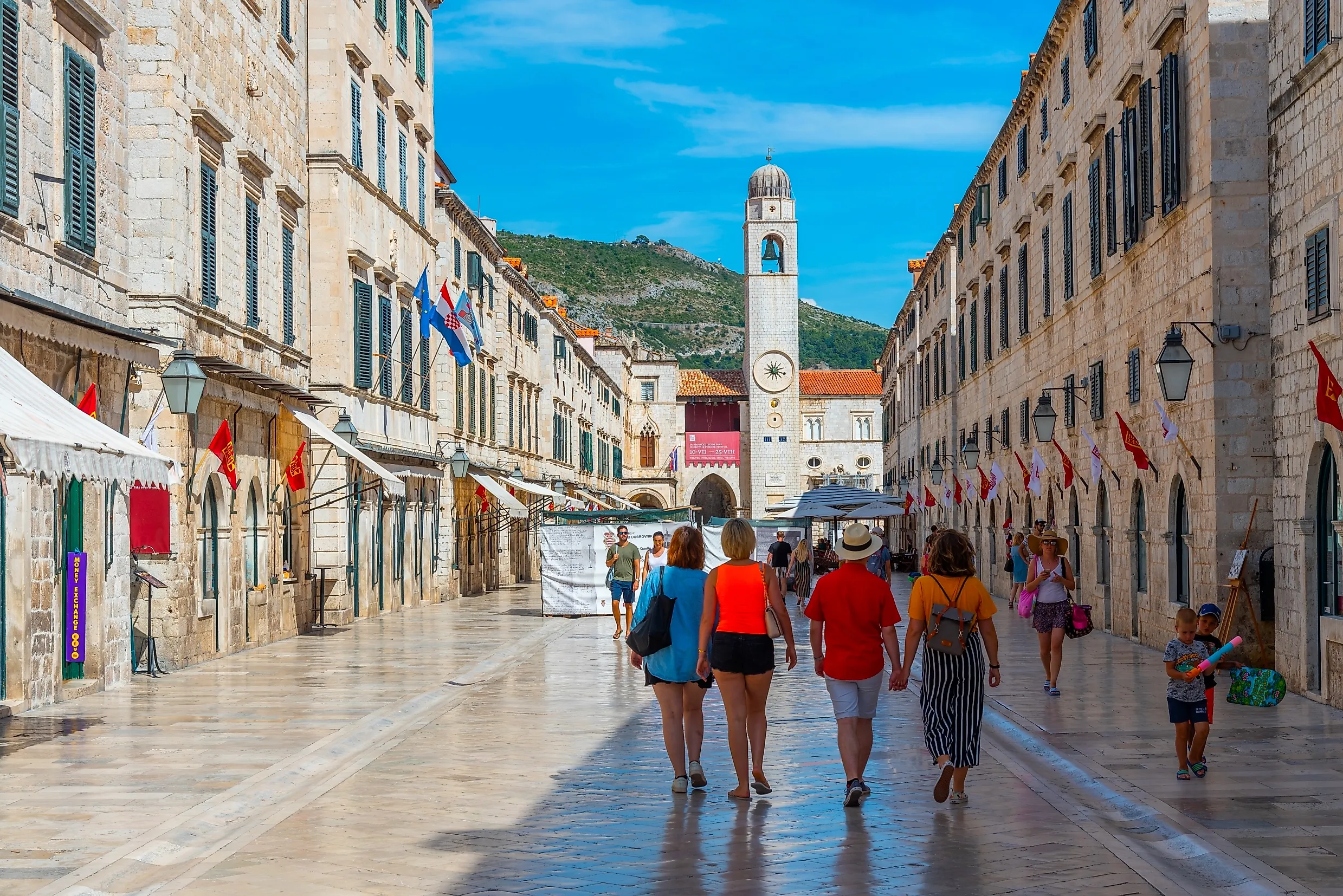
Dubrovnik remains one of the most visually striking cities in Europe, but retirees who settle here often discover that daily life extends well beyond the postcard views. The city's best-known attraction is the City Walls, a nearly continuous stone fortification system that circles the historic center while providing views of the Adriatic, terracotta rooftops, and centuries-old churches. Walking the walls early in the morning promises to be a much quieter experience than during peak tourist hours.
Just offshore, Lokrum Island provides a peaceful retreat of pine forests, botanical gardens, rocky swimming areas, and walking trails. Within the Old Town, Rector's Palace preserves the history of the former Republic of Ragusa through period furnishings, portraits, and historical collections. In July and August, the Dubrovnik Summer Festival transforms courtyards, squares, and historic buildings into performance venues for theater, music, and dance.
Šibenik

Šibenik offers many of the advantages of Croatia's coastal cities while maintaining a quieter atmosphere than Split or Dubrovnik. The city's most famous landmark is the Cathedral of St. James, a UNESCO World Heritage Site constructed entirely from stone. Its intricate carvings, decorative friezes, and Renaissance architecture deserve routine visits.
Above the old town, St. Michael's Fortress overlooks the Adriatic and hosts open-air concerts throughout the summer. Another hilltop landmark, Barone Fortress, combines historical exhibits with panoramic views of the city and surrounding islands. Šibenik also enjoys proximity to Krka National Park, where wooden walkways pass beside waterfalls, rivers, and forested landscapes.
Varaždin

Varaždin has long been considered one of Croatia's most elegant inland cities. Its historic center is filled with Baroque architecture, colorful façades, landscaped squares, and pedestrian-friendly streets that encourage leisurely exploration. The city's focal point is Stari Grad Castle, a well-preserved medieval fortress surrounded by gardens and a moat. Today, the castle houses the Varaždin City Museum, which explores local history through art, archaeology, and cultural exhibits.
Nearby, King Tomislav Square serves as a gathering place lined with cafés and historic buildings. During late summer, Špancirfest transforms the city into one of Croatia's largest street festivals, featuring musicians, artists, performers, and food vendors from across the region. Art lovers can tour the Gallery of Old and Contemporary Masters, which contains works spanning several centuries. These attractions help make Varaždin one of the country's strongest retirement destinations for those who enjoy stunning architecture and a rich cultural life.
Karlovac

Known as the city of four rivers, Karlovac offers a retirement lifestyle closely connected to water and outdoor recreation. The Kupa, Korana, Mrežnica, and Dobra rivers all flow through or near the city, creating opportunities for walking, cycling, fishing, kayaking, and swimming. The city's most unusual attraction is Aquatika Freshwater Aquarium, Croatia's only freshwater aquarium, which showcases fish species and ecosystems found throughout the country's rivers and lakes.
Dubovac Castle is a fortress overlooking the Kupa River from a wooded hilltop and one of the best-preserved and most beautiful monuments of medieval architecture in Croatia. Within the city center, the Star (Zvijezda) preserves the distinctive six-pointed star layout established during the Habsburg period. The historic district offers pleasant streets for walking, cafés and restaurants, churches, small shops, cultural events, and public squares, making it both a historic landmark and an active part of everyday life in Karlovac. During warmer months, Foginovo Beach becomes a popular gathering place where locals swim, relax, and enjoy the riverfront environment.
Slavonski Brod

Slavonski Brod offers a slower pace than Croatia's larger cities while still providing plenty of opportunities for recreation and cultural engagement. The city's most prominent landmark is Brod Fortress, one of the largest preserved Habsburg fortification complexes in southeastern Europe. Built during the 18th century, the fortress now hosts exhibitions, cultural programs, and community events throughout the year.
Evenings along the Sava River Promenade include strolling along the Kej beside the river with views toward neighboring Bosnia and Herzegovina. Ivana Brlić-Mažuranić Square, named after one of Croatia's most celebrated children's authors, serves as the social heart of the city, where residents gather at cafés, attend cultural events, browse seasonal markets, and enjoy the relaxed atmosphere of the pedestrian-friendly center. Meanwhile, the Brod Posavina Museum boasts collections ranging from archaeology and ethnography to fine arts.
Why Croatia Appeals To Retirees
Croatia's retirement appeal extends far beyond its famous beaches. Cities such as Zagreb, Varaždin, and Osijek offer walkable centers, museums, markets, and cultural institutions, while Split, Zadar, Dubrovnik, and Pula combine historic settings with easy access to the Adriatic. Elsewhere, places such as Karlovac and Slavonski Brod demonstrate that rivers, parks, and local traditions can be just as rewarding as coastal scenery.