The State Parks With Natural Hot Springs
A limited selection of state parks across the United States protect natural hot springs where geothermally heated water emerges from the earth. Unlike heated pools or man-made spas, these features rely on deep-circulation hydrology where groundwater descends miles into the crust, absorbs heat from magmatic or volcanic sources, and rises rapidly to the surface through fault lines. The thermal consistency of these springs, often maintaining temperatures between 95 and 148 degrees Fahrenheit year-round, creates unique ecological niches and recreational opportunities independent of seasonal air temperatures. Across the coastal ranges of California and the fault-block mountains of the Southwest, four state parks preserve these thermal vents, offering public access to waters that have circulated through the Earth's interior for thousands of years.
Hot Springs State Park, Wyoming

Within Thermopolis, Wyoming are a series of thermal springs discharging at a constant temperature of around 135 degrees Fahrenheit. The water originates from precipitation falling in the Bighorn Mountains, traveling downward through limestone aquifers where geothermal gradients heat it before forcing it back to the surface along a fault line.
In Hot Springs State Park, a free public bathhouse channels a portion of this flow into concrete soaking pools maintained at 104 degrees Fahrenheit. The remaining water flows into the Bighorn River, creating a thermal plume that keeps a section of the river ice-free even during Wyoming winters. Visitors access the soaking pools through the bathhouse, which operates on a first-come, first-served basis without reservation requirements.
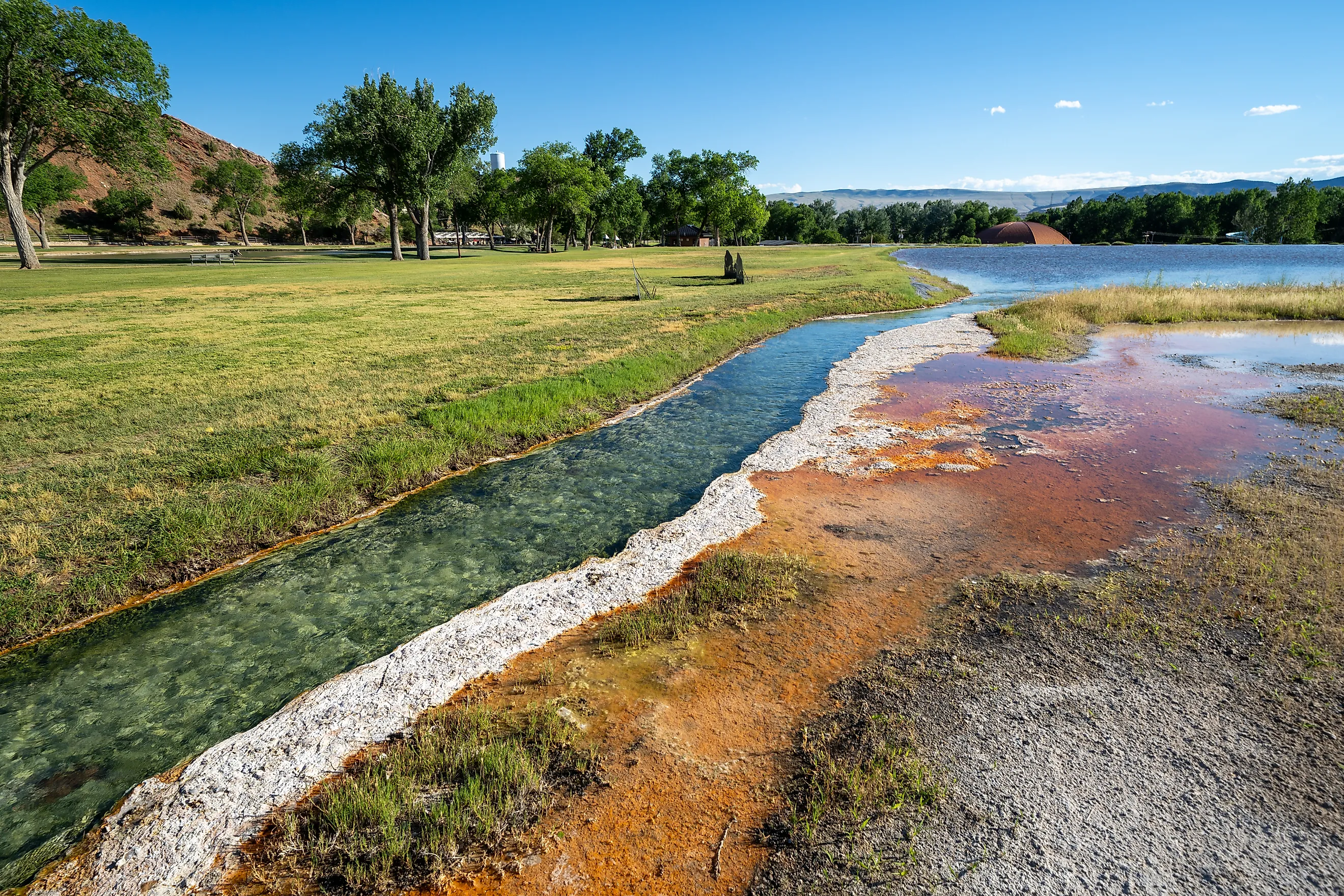
The park features hiking trails that climb the terraced limestone deposits left by centuries of mineral precipitation. These travertine formations create a stepped landscape where thermophilic bacteria paint the runoff channels in vibrant shades of orange, green, and yellow. The bacterial mats thrive only in specific temperature ranges, serving as biological indicators of the water's cooling progress as it moves away from the source.
Grover Hot Springs State Park, California

Within the Sierra Nevada foothills near Markleeville, Grover Hot Springs features two mineral pools fed by vents that discharge water at 148 degrees Fahrenheit before cooling. The park manages these flows to maintain the soaking pools at about 102 to 104 degrees. The water originates from deep circulation through fractured granite, absorbing heat from deep within the Earth's crust.
Fed by six natural mineral springs, the park hosts two soaking pools, a large, hot mineral soaking pool and a smaller, mineral wading pool that offers a cooler alternative. Both pools receive a continuous flow of fresh thermal water, ensuring constant turnover and hygiene without the need for chemical treatment. The mineral content includes calcium carbonate and magnesium, giving the water a clear, slightly milky appearance. Surrounding the pools, meadows of wildflowers bloom in late spring.
The springs sit at an elevation of about 5,800 feet, making it a year-round destination, though winter snow often blankets the surrounding landscape while the pools remain open and steaming. Reservation systems manage capacity during peak summer months and holiday weekends, as the limited number of pools cannot accommodate large crowds simultaneously. The bathhouse facility provides changing rooms and showers, utilizing the thermal water for heating purposes in a closed-loop system.
Roper Lake State Park, Arizona

In the arid landscape of southeastern Arizona, Roper Lake State Park features a unique geothermal amenity directly on its grounds, a rock-lined hot spring tub fed by a natural thermal vent. The spring water emerges at approximately 98 to 100 degrees Fahrenheit, providing a consistent soaking temperature.
The tub is constructed from local stone and concrete, designed to capture the steady flow of the thermal water while allowing it to overflow back into the landscape. The water contains dissolved minerals typical of the region's geothermal aquifers, including sulfur, which gives it a faint, earthy odor. Soakers in the tub enjoy a direct view of the Pinaleno Mountains rising dramatically from the desert floor, creating a stark visual contrast between the lush, steam-filled immediate area and the dry Chihuahuan Desert scrub surrounding the park.
The park infrastructure includes campsites and day-use areas that make the hot spring accessible without a strenuous hike. Visitors can transition directly from swimming in the cool lake water to soaking in the warm spring, a rare combination in state park management. The surrounding vegetation consists of mesquite, ocotillo, and creosote bush, all typical of the Chihuahuan Desert. Winter visits offer a different appeal, as the thermal water provides warmth against the cool desert nights.
Gaviota State Park, California

In the coastal mountains of Santa Barbara County, Gaviota State Park protects a secluded hot spring located approximately three-quarters of a mile inland from the Pacific Ocean. Accessible via a steep hiking trail off Highway 101, the spring emerges from the sandstone cliffs of the Transverse Ranges, discharging water at temperatures ranging from 95 to 105 degrees Fahrenheit. The site features a small, rustic concrete tub built to capture the flow, situated in a narrow canyon shaded by live oak and sycamore trees.
The water flows from a fissure in the rock face into a creek bed, where it is diverted into the soaking pool before continuing downstream. The mineral content includes silica and sulfur, giving the water a distinct scent and a smooth feel. The canyon setting creates a microclimate that traps the heat and steam, offering a secluded soaking experience surrounded by the sounds of the creek and wind in the chaparral.
Reaching the spring requires a moderate hike of 0.5 miles over steep terrain that descends into the canyon, filtering out casual beachgoers and preserving the site's tranquility. The trail passes through dense coastal sage scrub and offers glimpses of the ocean from higher elevations before plunging into the shaded creek bottom. The pool itself is small, accommodating only a few people at a time.
The Natural Hot Springs of US State Parks
The existence of these four thermal sites within the state park system highlights a fragile balance between public access and geological preservation. Unlike federal systems that often prioritize strict conservation over recreation, or private resorts that offer a heavily developed and commodified experience, state parks occupy a middle ground where infrastructure is often minimal and the raw nature of the spring takes precedence. The difference between the free, high-volume flow in Thermopolis and the secluded, hike-in tub in Gaviota illustrates the range of management philosophies employed to keep these features open.
The continued operation of the hot springs depends on state agencies maintaining this delicate equilibrium, ensuring that these thermal waters remain a public resource.