The National Parks With Tide Pools
Across the United States National Park system, the intertidal zone offers a rare opportunity to witness a marine ecosystem that is alternately submerged and exposed by the rhythmic pulse of the ocean. These tide pools, depressions in the rocky shore or sheltered pockets among boulders, trap seawater as the tide recedes, creating temporary habitats for a diverse array of marine life. Unlike aquarium exhibits, these pools are dynamic environments where survival depends on adaptation to fluctuating temperatures, salinity, and oxygen levels. Five National Park Service units protect some of the most accessible and biologically rich tide pool communities on the continent, each requiring specific timing and trip planning to view safely.
Olympic National Park, Washington

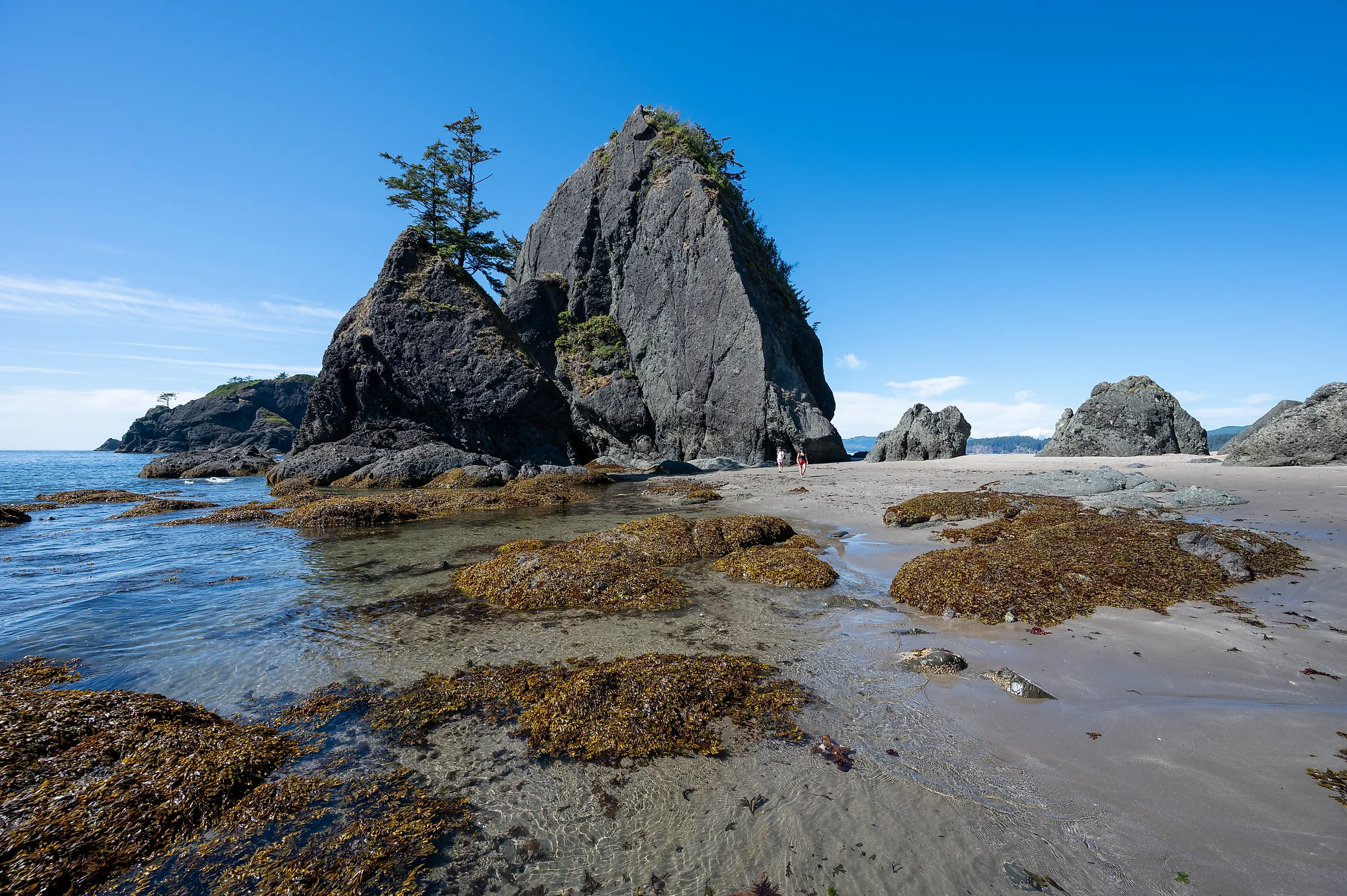
The Pacific coastline of Olympic National Park contains some of the most productive tide pools in the United States, situated along the rugged outer Pacific coast of the Olympic Peninsula.
At Kalaloch Beach 4, a short trail descends from the parking area through a wooded bluff to a wide sandy beach dotted with rocky outcrops. During negative low tides, which often occur in the early morning or late evening, the receding water reveals vibrant aggregations of ochre sea stars, purple sea urchins, and giant green anemones. Visitors frequently spot tidepool sculpins darting between algae-covered rocks and hermit crabs scavenging in shallow depressions. The trail to Beach 4 is a maintained path of approximately 0.2 miles from the parking lot.
Rialto Beach, accessed via the Mora Road, offers a different experience centered around the famous "Hole in the Wall" arch. Reaching the prime tide pooling areas here requires a 1.6-mile walk north along the sand from the Rialto Beach parking lot. The pools near the arch and the surrounding sea stacks harbor black oystercatchers foraging for mussels and limpets, while deeper pools hold moon snails and kelp crabs.
Ruby Beach, located about an hour's drive further south, requires a descent of about 0.4 miles down a steep but well-defined trail through temperate rainforest. The beach is characterized by massive driftwood logs and sea stacks that create sheltered pockets where tide pools form. The park advises visiting during spring and summer low tides, as winter storms often render the beaches inaccessible due to high surf and unstable bluffs.
Acadia National Park, Maine

The granite coastline of Acadia National Park provides a starkly different tide pooling experience, where the cold waters of the Gulf of Maine support a community adapted to rigorous thermal shifts. The most reliable tide pools are located along the Wonderland Trail and the Ship Harbor Trail on the western side of Mount Desert Island, as well as at Bar Island during low tide windows. The optimal season for tide pooling in Acadia runs from late May through September, when extreme low tides coincide with daylight hours and water temperatures are less prohibitive.
The Wonderland Trail is a flat, 1.4-mile round-trip path that leads through a spruce forest to a wide granite shelf exposed at low tide. The pools here are shallow but teeming with life, including common periwinkles, blue mussels, and the distinctive red dulse seaweed. Children often find rock crabs and small fish trapped in the crevices. The Ship Harbor Trail, a 1.3-mile loop, offers similar access with the added benefit of interpretive signage explaining the intertidal zonation.
Bar Island, accessible from Bar Harbor only during low tide via a gravel sandway, presents a unique opportunity to walk across the ocean floor. The 0.9-mile round-trip crossing must be timed precisely, as the water rises rapidly to cover the path. The pools on either side of the causeway host barnacles, sea stars, and occasionally harbor seals resting on the exposed rocks. Visitors must consult tide charts daily, as the window for safe crossing can be as narrow as three hours.
Channel Islands National Park, California

The remote islands of Channel Islands National Park, often called the "Galapagos of North America," protect tide pools that are isolated from mainland pollution and human impact. The most accessible tide pooling sites are at Frenchy's Cove on Anacapa Island, Smuggler's Cove on Santa Cruz Island, and Becher's Bay on Santa Rosa Island. Access to these pools requires a boat trip from Ventura or Oxnard, with Island Packers Cruises providing regular service. The best time to visit is during the spring and summer months, when ocean conditions are calmer and low tides often occur in the morning.
At Frenchy's Cove on Anacapa, a short trail from the landing dock leads to rocky shelves where tide pools harbor marine species common to the Southern California Bight, including brightly colored abalone and striped shore crabs. Smuggler's Cove on Santa Cruz Island requires a strenuous 7.5-mile round-trip hike from Scorpion Anchorage, traversing a steep ridge with wide views before descending to a sheltered cove. The pools here are known for their density of sea stars, including ochre stars, and large aggregations of black turban snails. Occasionally, during extreme low tide, visitors can also catch glimpses of the California two-spot octopus within crevices and rocky overhangs of the tide pools.
Becher's Bay on Santa Rosa Island offers tide pools near the pier, accessible via a short walk from the campground. The isolation of this island means that marine life here is often larger and more abundant than on the mainland. Giant green anemones and purple urchins dominate the lower intertidal zone, while upper pools host periwinkles and isopods. Visitors must bring their own water and supplies, as no services exist on the islands, and must strictly adhere to Leave No Trace principles to protect the fragile ecosystem.
Glacier Bay National Park and Preserve, Alaska

The intertidal zones of Glacier Bay National Park and Preserve offer a unique sub-Arctic tide pooling experience within the sheltered waters of the lower bay. Here, the marine environment is influenced by the cold, nutrient-rich waters of the fjord, resulting in temperatures that rarely exceed 45 degrees Fahrenheit even in summer. The most accessible tide pools are found in the Bartlett Cove area and along the shores of the Beardslee Islands, a cluster of small islands and tidal flats located just south of the main visitor hub. The optimal window for visiting is strictly limited to the summer months of June, July, and August, when extreme low tides coincide with the nearly 18 hours of daylight.
Access to the primary tide pooling areas in Bartlett Cove requires only a short walk from the Glacier Bay Lodge or the visitor center. The 0.5-mile Tlingit Trail leads to the rocky shores of the inlet, where visitors can examine pools teeming with cold-water species. Unlike the colorful anemones of California, these pools are dominated by hardy organisms adapted to glacial silt and cold, including blue mussels, barnacles, and various species of sea stars such as the red Henricia and, where populations persist, the large sunflower star. Visitors often find hermit crabs, sculpins, and the occasional juvenile Dungeness crab hiding in the crevices.
For a more remote experience, the Beardslee Islands offer tide pools on their exposed rocky benches and gravel flats. These islands are located within a wilderness area closed to motorized vessels. Access is achieved exclusively by sea kayak paddled from Bartlett Cove or by foot across exposed tidal flats during extreme low tides. There are no established hiking trails on these islands, and the terrain consists of marine islands and mudflats rather than forested paths.
Redwood National and State Parks, California

Redwood National and State Parks, a complex of four protected areas managed cooperatively, protects over 40 miles of rugged Pacific coastline where ancient redwood forests meet the sea. The tide pools here sit among the rocky headlands and sea stacks that punctuate the sandy beaches, creating sheltered microhabitats for a rich array of marine life. The best time to explore these pools is from late spring through early fall, roughly May to September, when the fog often lifts in the afternoon to reveal extreme low tides. Key locations for tide pooling include Enderts Beach and False Klamath Cove.
Enderts Beach, accessible via a one-mile round-trip hike from the Enderts Beach Trailhead off Highway 101, offers a secluded tide pooling experience. The trail descends through coastal prairie and forest before reaching a wide, rocky shoreline. At low tide, the pools here reveal a classic Pacific Northwest assemblage of ochre sea stars, giant green anemones, and purple sea urchins. The pools are often deeper than those in southern parks, hosting species like the black oystercatcher, which nests on the nearby cliffs, and the agile shore crab. The water is cold and clear, allowing for excellent visibility of the underwater topography.
False Klamath Cove, located a few miles north, provides another excellent site with rocky outcrops that trap water as the tide recedes. This area is particularly known for its diversity of algae, including bull kelp and various red algae species that form dense underwater forests in the deeper pools. Visitors can also spot nudibranchs, sea slugs with bold patterns, clinging to the rocks.
Exploring the Tide Pools of the National Parks
These five protected areas demonstrate that the intertidal zone is a window into the complexity of marine ecosystems, accessible to the public with proper planning and respect. The timing of visits is critical, as the visibility of tide pools depends entirely on arriving during low or even negative tide.
Marine life in these pools includes the hardy barnacles of Maine and the giant green anemones of the Pacific coast, each adapted to the harsh conditions of the intertidal environment. Trails to these sites include paved paths, rugged descents, sea kayaking, and long coastal hikes, but all require careful navigation to avoid injury and ecological damage. By adhering to park guidelines and tide schedules, visitors can witness the dynamic beauty of these submerged worlds without compromising their integrity.