The Quietest State Parks For A Weekday Getaway
The quietest state parks are rarely the easiest to reach. Some require a boat, a gravel road, or several hours of driving beyond the nearest major city. Others stay peaceful because their campgrounds are small and their trails reward slow exploration. These ten parks suit weekday trips especially well, when already-light visitation falls even further. Each has enough hiking, paddling, wildlife watching, geology, or history to justify more than a quick stop.
Kachemak Bay State Park, Alaska

Across the water from Homer, a wall of glacier-laced mountains rises straight from the sea, and that view is the whole introduction to Kachemak Bay State Park. No road reaches Alaska's first state park, so visitors cross by water taxi, private boat, or floatplane from the Homer Spit, a ride of roughly half an hour. The park covers about 400,000 acres of roadless coast, with some 80 miles of trails climbing from tidewater into alpine ridges. The most popular walk is the Grewingk Glacier Lake Trail, an easy 3.2-mile route that ends at a lake dotted with icebergs calved from the glacier above. Sea otters, harbor seals, porpoises, and whales move through the bay, and black bears range the forest behind the beaches. Public-use cabins and a handful of primitive campsites make an overnight possible, and a weekday crossing usually means sharing the trailhead with almost no one.
Ahjumawi Lava Springs State Park, California

The trip into Ahjumawi begins on the water. No public road reaches this northeastern California park, so visitors launch a canoe, kayak, or motorboat at Big Lake and cross toward its primitive shoreline campsites. Once ashore, the landscape shifts between clear springs, marshes, juniper woodland, and rough black lava. Recent basalt flows, three to five thousand years old, cover more than two-thirds of the park. Tule River waters and underground springs feed an unusually rich wetland where bald eagles, osprey, pelicans, and waterfowl are commonly seen. Short trails cross the lava country, although the sharp rock rewards sturdy footwear. A weekday stay is best spent paddling at dawn, exploring the flows before the afternoon heat, and returning to camp as evening light spreads across Mount Shasta and Lassen Peak.
Beaver Dam State Park, Nevada

Southern Nevada is better known for crowded red-rock overlooks, yet Beaver Dam sits far from that traffic in a wooded canyon near the Utah line. Volcanic cliffs rise above Beaver Dam Wash, where beavers, mule deer, wild turkeys, and porcupines occupy a landscape that feels more like a mountain retreat than a desert preserve. The Waterfall Trail follows the creek to cascades and pools, while the Overlook Trail climbs above the canyon for broad views across the surrounding high country. Rainbow trout are stocked seasonally when water conditions allow. Campsites remain primitive, with no electrical hookups or showers to draw large resort-style crowds. The long rural drive discourages quick visits, too. By midweek, campers may have entire sections of trail to themselves, particularly in spring and fall when temperatures favor longer hikes.
Sinkyone Wilderness State Park, California

At Sinkyone, California's coastline still feels difficult to enter. The park protects a steep section of the Lost Coast where forested ridges plunge toward narrow beaches and offshore rocks. Hikers on the Lost Coast Trail cross grassy headlands with views of Roosevelt elk, which frequently graze near the shoreline. Harbor seals rest below the cliffs, and gray whales may be visible during migration seasons. Reaching Usal Beach requires a rough, narrow road that can become impassable after heavy rain. Other campsites are reached on foot. That limited access turns away most casual beach traffic. A weekday getaway can center on hiking between remote coves, watching fog move through the redwoods, and exploring tide pools when conditions are safe. Visitors should arrive prepared for mud, steep grades, changing weather, and minimal facilities.
Medicine Rocks State Park, Montana

Medicine Rocks does not need mountains or a large lake to hold attention. The main draw is a field of sandstone pillars shaped into arches, holes, ledges, and isolated towers by millions of years of erosion. Some formations rise about 80 feet above the southeastern Montana prairie. Indigenous peoples used the area for ceremonies and considered the stone figures spiritually powerful. Later travelers carved names and dates into parts of the rock, leaving a visible record of ranching and settlement history. Trails weave directly among the formations, and up close visitors can notice layers, textures, and nesting cavities that disappear from a distance. The campground holds only a handful of sites, and the surrounding country has little development. After sunset, the prairie horizon opens into a dark sky with few nearby lights to dull the stars.
Moran State Park, Washington

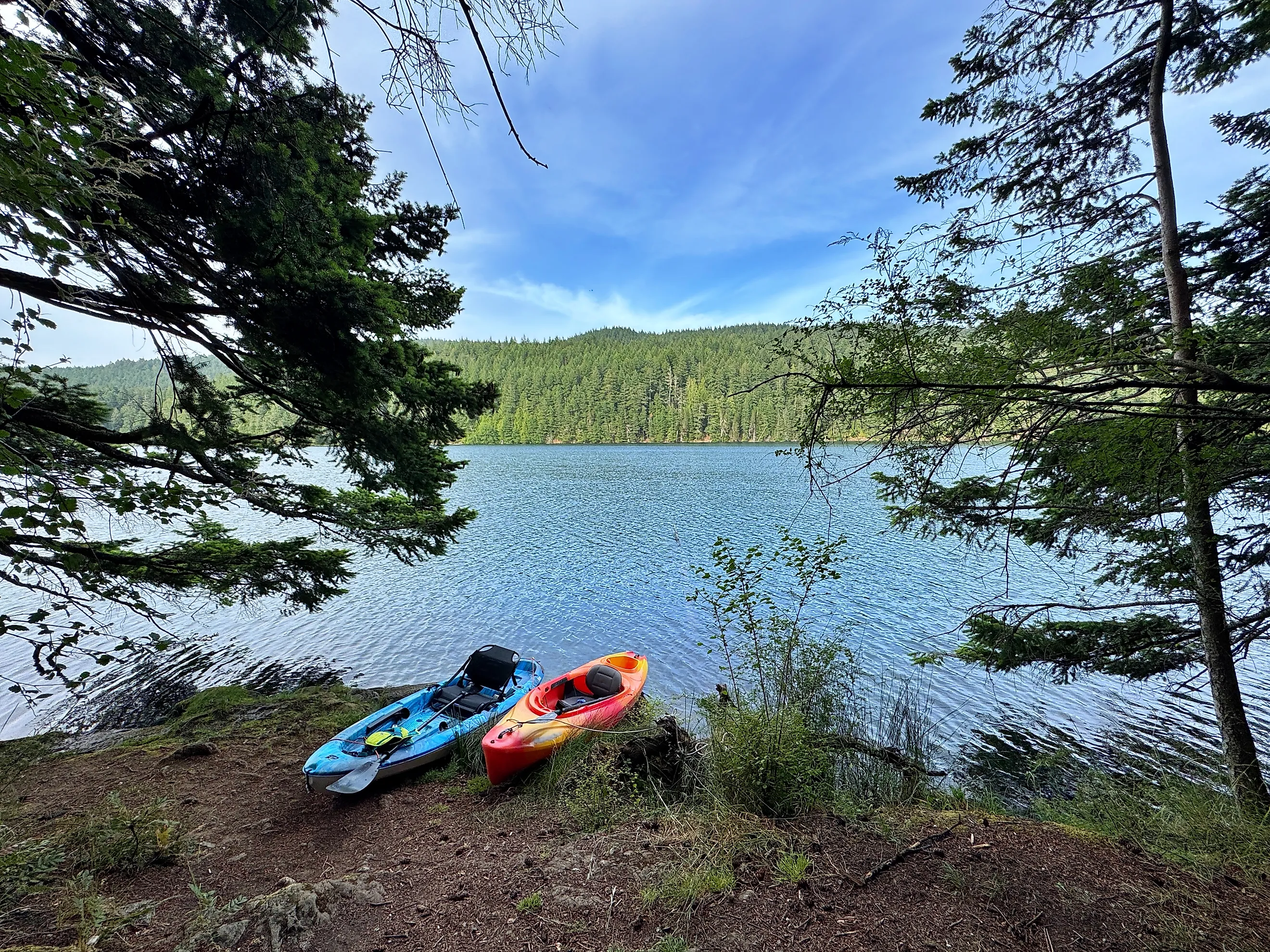
Moran anchors the eastern half of Orcas Island, the largest of the San Juans, and reaching it takes a Washington State Ferry across the Salish Sea before any hiking begins. That water barrier is what keeps the park quiet on a weekday, once the summer camper rush thins out. At its center stands Mount Constitution, the highest point in the San Juans at 2,409 feet, topped by a stone observation tower the Civilian Conservation Corps built in 1936. From the tower, the view reaches across the islands to the Cascades, and on a clear morning to Mount Baker and Mount Rainier. Five freshwater lakes sit within the park's 5,424 acres, and about 38 miles of trails link them to Cascade Falls and the forested ridgelines. Cascade and Mountain lakes both allow swimming and non-motorized boating. A midweek visit in spring or fall trades the summer crowds for quiet water and empty overlooks.
Lake Owyhee State Park, Oregon

The road to Lake Owyhee crosses some of Oregon's emptiest ranch country before descending into a canyon of broken volcanic rock. At the bottom, a narrow reservoir winds for dozens of miles between cliffs that rise directly from the water. Boating is the park's strongest draw. Anglers search for bass, crappie, and catfish in coves that cannot be reached from shore, while kayakers can paddle beneath formations hidden from the campground. The light changes the canyon through the day. Morning brings out rust-colored walls and pale desert slopes; every shadow deepens by evening. Wildlife sightings may include bighorn sheep, golden eagles, and coyotes. The remote setting keeps weekday traffic low, but visitors should arrive with fuel, food, drinking water, and supplies because stores and reliable phone service are far away.
Berlin-Ichthyosaur State Park, Nevada

Two very different histories meet at Berlin-Ichthyosaur State Park. On one side, the preserved mining town of Berlin holds weathered buildings, machinery, cabins, and the remains of a mill from Nevada's turn-of-the-century silver boom. On the other, a fossil shelter protects the remains of enormous marine reptiles that swam here when the region lay beneath an ocean more than 200 million years ago. Guided tours explain both the ghost town and the ichthyosaur beds, including specimens far larger than most modern dolphins. Once the daytime tours end, the setting becomes exceptionally still. The small campground sits among pinyon pine and juniper, miles from the nearest active town. Weekday visitors can examine Berlin's buildings without a crowd, walk the nearby trails, and spend the evening under one of central Nevada's dark, unobstructed skies.
Black Mesa State Park, Oklahoma

Black Mesa State Park occupies a corner of Oklahoma that feels detached from the rest of the state. The campground surrounds Lake Carl Etling in the far western Panhandle, where cottonwoods shade portions of the shoreline and rocky mesas rise across the dry plains. Fishing, paddling, and birdwatching fill the slower hours. Golden eagles, scaled quail, mule deer, and pronghorn live in the surrounding country. The park also makes a practical base for visiting Black Mesa Nature Preserve, about 15 miles away. Its trail climbs to Oklahoma's highest point at 4,973 feet and passes dark volcanic rock left by ancient lava flows. Because the nearest large cities are hours away, weekday mornings can be remarkably empty. At night, the open landscape opens onto broad views of the Milky Way and summer meteor showers.
Copper Breaks State Park, Texas

Copper Breaks preserves a rugged patch of red badlands, grassland, and juniper-covered hills in north Texas ranch country. Gullies cut the landscape, and exposed layers of clay catch the strongest colors shortly after sunrise. Trails range from short nature walks to longer routes used by hikers, mountain bikers, and horseback riders. Lake Copper Breaks holds fishing and paddling when water levels permit, and the park's designated longhorn herd carries the area's ranching history. Darkness is the main event after sunset. Copper Breaks is an International Dark Sky Park with scheduled astronomy programs and unobstructed views far beyond the campground. Visiting midweek improves the experience further, since fewer headlights and campfires interfere with night vision. A clear moonless evening can reveal the Milky Way stretching across nearly the entire sky.
Planning A Quiet Weekday Escape
What ties these ten parks together is the effort it takes to reach them, and that effort is the point. The water-taxi ride into Kachemak Bay, the ferry to Moran, the boat crossing at Ahjumawi, and the long ranch-country drive to Lake Owyhee all filter out the casual traffic that fills better-known parks. A weekday amplifies the payoff: fewer neighbors at the campground, more elk and eagles at close range, and night skies dark enough to show the Milky Way at Medicine Rocks, Black Mesa, Berlin-Ichthyosaur, and Copper Breaks. Pack for self-sufficiency, since most of these parks have primitive sites, limited water, and little or no phone service, and the solitude that makes them worth the trip is the same thing that leaves you on your own.