10 Best Towns In Croatia For A Two-Day Recharge
In Croatia, walkable historic centers, local maritime delicacies, and seaside promenades create rewarding weekends without added fluff. Travelers seeking some of Europe's most rewarding two-day recharges can explore the historic center of Rovinj, home to multicolored houses on a hill that was once an island, or enjoy cream cake beneath a ruined castle at Samobor. Each of these 10 communities offers a full getaway in just 48 hours, with inns and guesthouses that keep visitors central to all the must-see attractions.
Rovinj

On the Istrian peninsula is a hill that was once an island, and now holds the town of Rovinj, filled with multicolored houses. The Church of St. Euphemia crowns the summit with a 60-meter tower, the tallest campanile in Istria, visible from miles away across the Adriatic Sea. The old town, connected to the mainland by a narrow isthmus, packs cobbled streets and Venetian-era architecture into a dense knot that visitors can walk in an afternoon.
Scattered small islands lie offshore, accessible by boat for swimming and picnics. The harbor at Tito Square fills with fishing boats and outdoor cafes that serve local truffles and Istrian wine. Grand Park Hotel Rovinj sits near Golden Cape Forest Park and offers views of the Adriatic, and is a five-minute walk from the old town and the marina.
Trogir

The historic center of Trogir sits on a tiny islet and is connected to the mainland and the island of Čiovo by four bridges. The Cathedral of St. Lawrence sits in the center with Radovan's Portal, a 13th-century masterpiece of medieval sculpture that frames the entrance with lions, Adam and Eve, and the calendar months. The Kamerlengo Castle, a 15th-century Venetian fortress, guards the waterfront with towers and battlements open to the public.
The UNESCO World Heritage designation covers the entire old town, recognizing it as the best-preserved Romanesque-Gothic complex in Central Europe. Čiovo Island, across the bridge, provides beaches and the Okrug Gornji resort. Heritage Hotel Pasike occupies a historic stone house inside the old town walls. In a few minutes' walk, the cathedral, the castle, and the waterfront are all accesible.
Opatija

The Lungomare promenade stretches 12 kilometers along the Kvarner Gulf at Opatija, passing Habsburg-era villas and gardens that date to the town's founding as a resort destination in the 19th century. The Maiden with the Seagull, a statue on a rock in the water, has symbolized the town since 1956 and appears on postcards and guidebook covers. Angiolina Park, a 19th-century garden with exotic plants, surrounds the Villa Angiolina. This historic villa helped establish Opatija as a resort destination and currently houses the Croatian Museum of Tourism.
Juraj Sporer Art Pavilion, a historic pavilion on the waterfront, hosts rotating exhibitions of Croatian and international art. The promenade connects to neighboring Lovran and Volosko, making it possible to walk for hours along the coast without leaving the shade of the palm trees. Hotel Ambasador, a five-star Liburnia hotel, sits on the waterfront with wellness centers and seawater pools.
Samobor

Beneath a ruined 13th-century castle, the Baroque-style King Tomislav Square of Samobor holds the 18th-century Church of St. Anastasia, surrounded by many craft shops and cafes. One of its most popular cafes, Slastičarnica U Prolazu, serves the town's famous cream cake (kremšnita) from a traditional recipe that the owner keeps secret. The cream cake is a vanilla custard slice between layers of puff pastry, and has been the town's signature dessert since the 1920s.
Grgos Cave, a karst formation with stalactites and underground chambers, lies a short hike from the town center through beech forest. The cave opens for guided tours that trace the limestone geology of the region. Hotel Livadić, a historic property on King Tomislav Square, occupies a 19th-century building with rooms overlooking the Baroque fountain and the craft market. Guests step from the lobby directly onto the square, where the castle trailhead, the cream cake terrace, and the cave path all begin.
Poreč

In Poreč, you will find Byzantine gold leaf covering the apse of the Euphrasian Basilica, a 6th-century UNESCO church on the Istrian coast. The mosaics depict biblical scenes and saints in a style that reflects the Byzantine presence on the Adriatic. The town retains its Roman street layout, with the Cardo Maximus and Decumanus still forming the main axes of the old center.
Marafor Square preserves the remains of a Roman temple and forum, with fragments of columns and foundations visible among the outdoor cafes. Sveti Nikola Island, a small forested island nearby, protects the harbor and offers beaches accessible by boat. Hotel Parentium sits near the waterfront in Zelena Laguna, providing a base for visiting the basilica, the Roman ruins, and the harbor promenade.
Korčula

Korčula completely encloses its herringbone streets with stone walls designed to block the Adriatic wind. The Marco Polo House, claimed as the birthplace of the 13th-century explorer, now operates as a museum with exhibits on his travels and the maritime history of the island of Korčula. The All Saints Tower and the Revelin Tower, both 14th- and 15th-century defensive structures, rise from the walls with views of the Pelješac Channel.
The town sits on a small peninsula, and the waterfront promenade circles the walls with konobas, traditional family-run taverns that serve grilled fish and local wine. Konoba Marco Polo, tucked into a 500-year-old building in the old town, grills sea bream and squid over charcoal and pairs the catch with Pošip, the crisp white wine grown in Korčula's vineyards. Korčula Heritage Hotel occupies a waterfront terrace inside the old town walls.
Varaždin

The Varaždin Castle, a 12th-century castle with a moat, is found in the Baroque center of Varaždin in northern Croatia. The castle houses the Varaždin City Museum, showcasing Baroque furniture, weaponry, and local history. The Baroque town center surrounds the castle with 18th-century architecture, ornate facades, and the Cathedral of the Assumption, a 17th-century church with an elaborate interior.
Each August, Špancirfest transforms the old town into a street festival with music, theater, crafts, and food stalls, crowding the town's squares for ten days. Being only 80 kilometers north of the capital of Zagreb, the town's festival and history function as a cultural counterweight. Near the castle museum, the cathedral, and the festival grounds is Hotel Turist, offering a low-key hotel near all the action.
Novigrad

Fewer than 4,000 residents live on the medieval peninsula of Novigrad, encircled by intact walls and two round towers. The Church of St. Pelagius, a 15th- and 16th- century basilica built on 8th-century foundations, contains a Romanesque crypt beneath the main altar. Venetian Gothic houses line the narrow lanes, and the town loggia preserves the civic architecture of the Republic of Venice era.
The waterfront here moves at a slower pace than Rovinj or Poreč, with local fishing boats unloading catch for restaurants along the harbor, like the Konoba kod Kristijana, a family-run tavern serving grilled sea bream and squid paired with Istrian olive oil and Malvasia wine. Hotel Nautica also sits on the waterfront, providing a quiet base for the peninsula walls, the crypt, and the Istrian wine bars that line the inner streets.
Cavtat

The Adriatic coast south of Dubrovnik curves around Cavtat, and its waterfront is dominated by the Račić Family Mausoleum designed by Ivan Meštrović. The white stone monument rises above the harbor with sculptures and a domed interior, marking the skyline of the town. The House of Vlaho Bukovac, birthplace of Croatia's most prominent 19th-century painter, now operates as a museum with his portraits and landscapes on display.
The palm-lined seaside promenade circles the harbor with fishing boats and waterfront cafes, including Restaurant Leut, where the Bobić family has served seafood platters and fish baked in salt since 1971. Hotel Croatia Cavtat, a five-star beachfront property, sits on a peninsula with Adriatic views and a pool complex, while Hotel Supetar occupies 21 rooms in the heart of the old town, giving you the choice between resort style stay or a room in the historic core.
Slunj

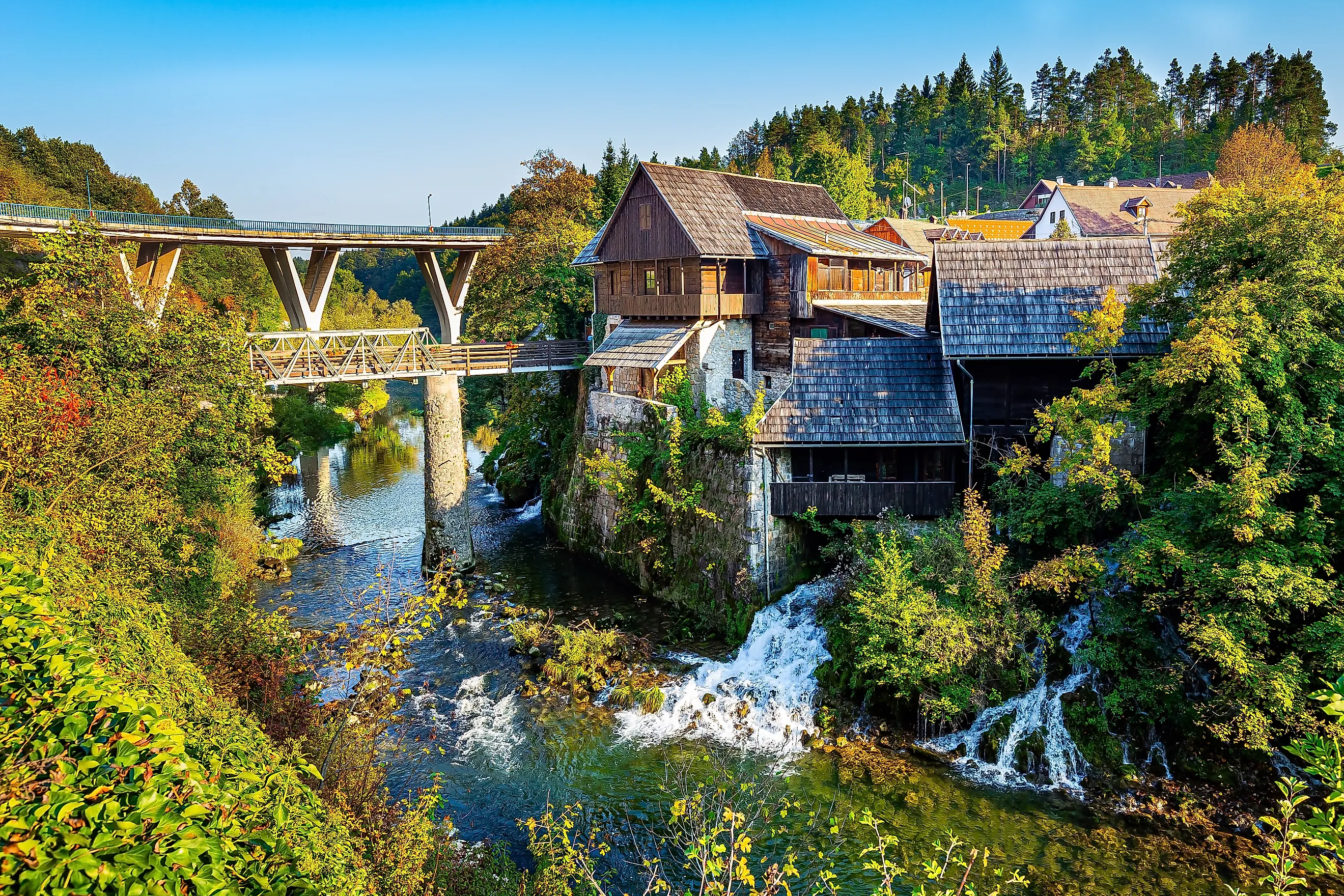
Two rivers meet at Slunj, where the historic village of Rastoke sends waterfalls through 19th-century wooden houses at the confluence of the Slunjčica and Korana. Its restored watermills preserve the milling traditions that once supported the surrounding region. The Slunjčica River drops over small cascades and swimming holes, creating a landscape where the buildings appear to float on the water.
The town sits 30 kilometers south of Plitvice Lakes National Park, making it a practical base for the waterfalls and forests of the park. Hotel Rastoke overlooks the cascades, with rooms that face the river and the wooden houses that define the village. Whether you're walking to the watermills or driving to the national park, neither is far from the hotel.
Recharging In Croatia
Two days in Croatia do not require a ferry to an island or a flight to Dubrovnik. The towns above prove that the country's character lives at a smaller, walkable scale. A hill town fits inside an afternoon. A Romanesque islet is connected by footbridges. A castle ruin and a cream cake shop fill a morning. Each destination delivers a complete experience without the logistics of a bigger city. The only decision is which coast, which century, and which dessert.