This Is The Friendliest Small Town in Croatia
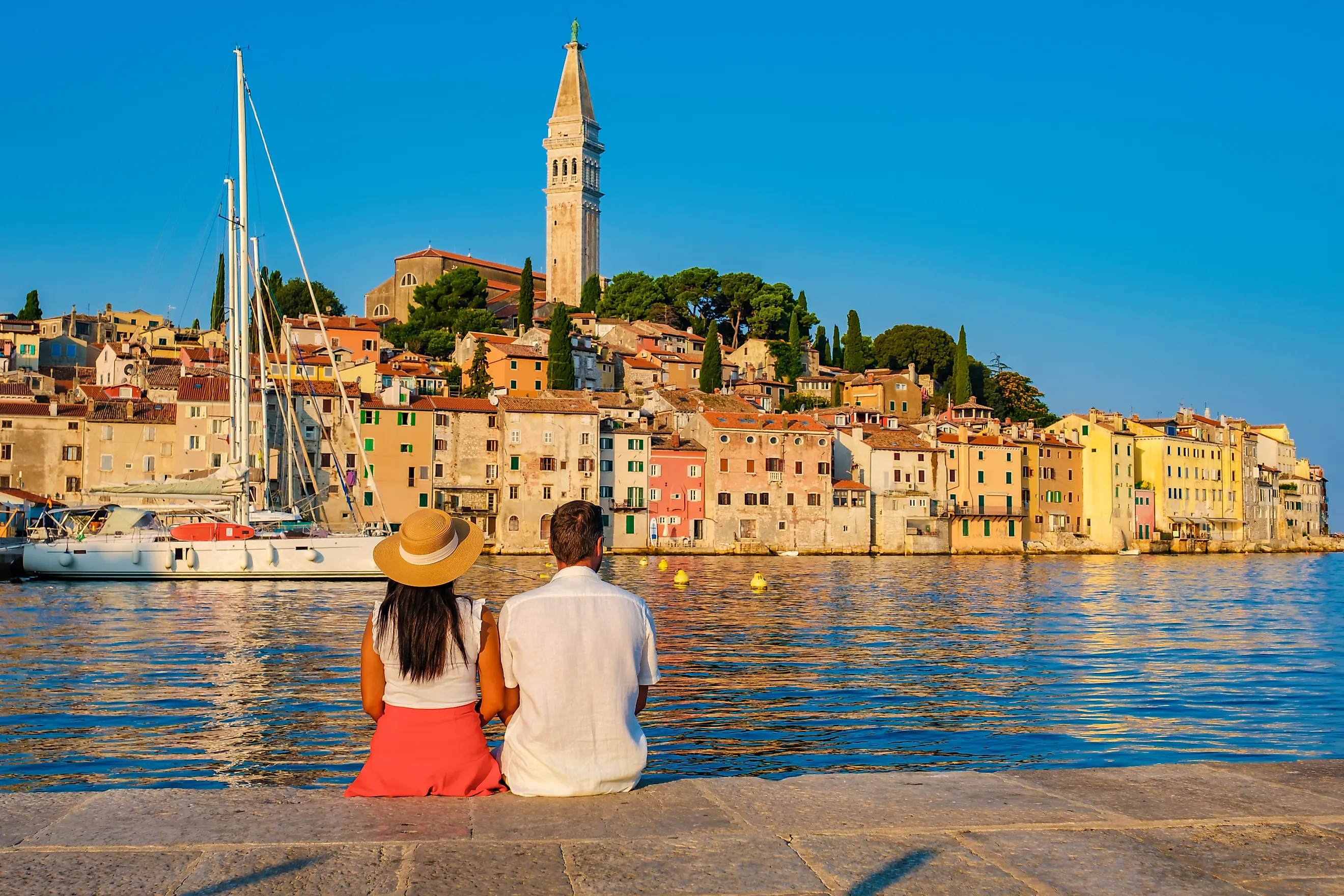
Rovinj is one of the few Croatian towns where the official charter is bilingual. The Istrian fishing port operates in both Croatian and Italian, with street signs and public documents in each. Locals also built the Batana Eco-Museum to preserve their traditional boat-building, earning UNESCO recognition in 2016 for the grassroots heritage model. Rovinj Night is a 55-year-old summer celebration that draws locals and visitors together every August. Together these touches build the case for Rovinj being the friendliest small town in Croatia.
The Boat That Built a Community

While the Batana Eco-Museum can’t singlehandedly claim responsibility for Rovinj’s friendly reputation, it has certainly played a part. Established to preserve local boat-building skills and traditions, it focuses on the batana, a flat-bottomed wooden fishing boat unique to this stretch of the Istrian coast. Built for centuries by local families using the same trusted techniques, by the early 2000s industrial fiberglass models had nearly ended the tradition.
Then, in 2004, a group of locals stepped in and created the Batana Eco-Museum (Casa della Batana) to save it. The forward-thinking attraction operates out of three spaces in Rovinj Old Town. The House of Batana on the harbor holds the permanent exhibition. Mali Škver is a working shipyard where master builders demonstrate batana construction. Spacio Matika is a traditional konoba (tavern) featuring live performances of bitinada, the region’s traditional fishermen’s songs.
The strategy has paid off. Today, the town’s harbormaster’s office has some 241 active batana boats on its register. Enjoying a batana ride at sunset, with the boat’s lights (known locally as sviće) lit up and a Rovinj boatman at the oars, is now one of the most popular and authentic experiences available in town. Visit during the Regatta of Lugsails in early June for the chance to see many of these classic vessels on the water along with other historic sailing vessels from across the northern Adriatic Sea.
Saint Euphemia’s Hill
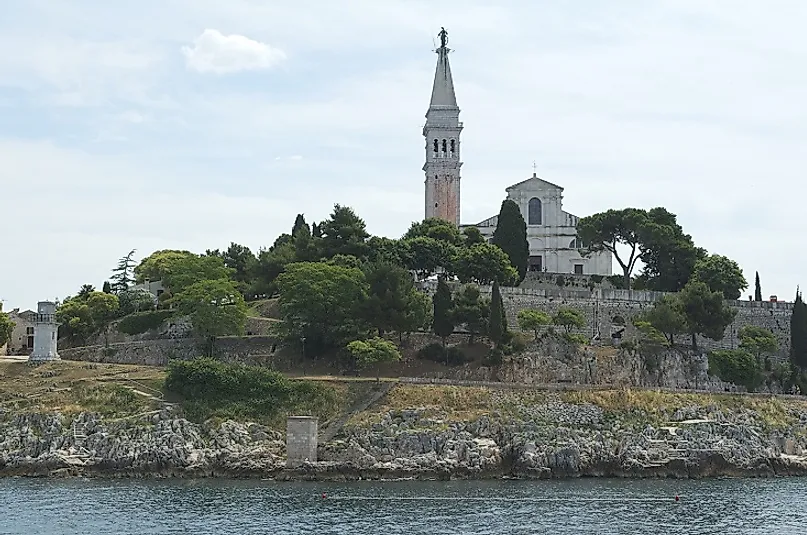
Rovinj is also known for its impressive bell tower. Positioned on the highest point of the Old Town, the 200-foot-tall tower of the Church of St. Euphemia (Sveta Eufemija) is modeled after the St. Mark’s Campanile (Campanile di San Marco) in Venice. Topped with a 13-foot copper statue of the town’s patron saint that turns with the wind, the tower and the Baroque church were completed in 1736.
While climbing the 192 wooden steps to the top can be tiring, the views over the Adriatic, the surrounding archipelago, and the red-tiled roofs of the old town below make the effort worthwhile.
The church interior is no less impressive. Highlights include the preserved remains of Saint Euphemia in a 6th-century Roman sarcophagus that has been the subject of local legend for well over a thousand years. Said to have been found by Rovinj fishermen floating in the bay after a storm, legend has it that only a young boy with two cows could move the large marble coffin up the hill to its current resting place. References to this event are numerous around town and in several 19th-century paintings inside the church. The legend has also become the most important date in the community calendar, with St. Euphemia’s Day on September 16 set aside as a day of celebration.
Rovinj Night

Rovinj’s busiest community gathering, however, is Rovinjska Noć (Rovinj Night). The town’s official tourist festival, it has been pulling crowds for its two evenings of late August fun for more than 55 years.
Along with traditional Istrian food served from stalls run by locals connected to the Batana Eco-Museum, it also features demonstrations of fishing-net weaving by local fishermen. The festivities wind down after a midnight fireworks display over the harbor.
May’s Rovinj Photodays festival has also become a staple of the town’s social calendar. Now one of southeastern Europe’s largest photography events, it highlights exhibits by some of the world’s leading photographers, along with workshops and lectures. The Rovinj Spring Jazz Festival is another popular excuse for visitors to mix and mingle with friendly locals.
Wandering the Old Town

Having a wander around Rovinj Old Town is a must-do here. Once an island until the strait separating it from the mainland was filled in during the 18th century, the peninsula today is a tightly packed grid of cobblestoned lanes, Italianate squares, and Venetian-Gothic houses, some of them just feet from the water.
The town’s longest thoroughfare, Grisia Street, climbs from the harbor all the way up to the church. Closed to traffic, it’s a nice route for a wander, especially during the Grisia Art Show. Held the second Sunday in August since 1967, it quite literally transforms the street into one long open-air gallery and attracts artists and audiences from across Europe.
The Old Town has also become a foodie destination. For a meal or a snack, the harbor-front terraces along Riva A. Rismondo serve fresh seafood, Istrian malvasia, and local Teran wines. Puntalina, a family-run restaurant on the rocks at the southern tip of the peninsula, is well-known for its fresh seafood. For dishes such as Bakalar (salted cod) and homemade pasta with local truffles, head to Restoran Veli Jože.
Rovinj is Croatia’s Friendliest Town
There’s no denying that Rovinj’s friendly nature is baked into the very fabric of the community. Successfully lobbying UNESCO to recognize its grassroots heritage project and ensuring that its two languages are included on all street signs are both matters of civic pride. Whether it’s climbing the bell tower or rowing a batana at sunset, this corner of the Istrian coast is undoubtedly the friendliest place in Croatia.