10 of the Oldest Incorporated Towns in California's Sierra Nevada
Sonora incorporated on May 1, 1851, just a year after California became a state. The Gold Rush had filled the Sierra Nevada with mining camps almost overnight, but only a handful grew into official towns with mayors, councils, and city charters. Others followed as mining camps turned into county seats, supply centers, and railroad stops. Many of them still have the brick storefronts, courthouses, and hotels their founders built. Here are 10 of the oldest incorporated towns in California's Sierra Nevada, listed in the order they incorporated.
Sonora (1851)

According to the city's historian, only ten California cities have been incorporated longer than Sonora. Founded by miners from Sonora, Mexico, it grew into the "Queen of the Southern Mines" and has been the seat of Tuolumne County from the start. It remains the only incorporated city in the county.
Gold Rush-era buildings line Washington Street, anchored by the bright red St. James Episcopal Church from 1860. The Tuolumne County Museum is housed in the old 1857 county jail, with displays of gold, firearms, and pioneer life. Columbia State Historic Park is a short drive north.
Placerville (1854)

Placerville was known as "Hangtown" until May 13, 1854, when it was incorporated under its current name, taken from the placer gold in nearby streams. At the time, it was the third-largest town in California. After a fire nearly destroyed the town in 1856, residents rebuilt in brick and stone, and many of those buildings still line Main Street.
The Fountain and Tallman Museum, in a stone soda works from 1852, is the oldest building on Main Street. Gold Bug Park, just north of downtown, lets visitors walk into a real gold mine, and the historic Bell Tower stands at the center of town.
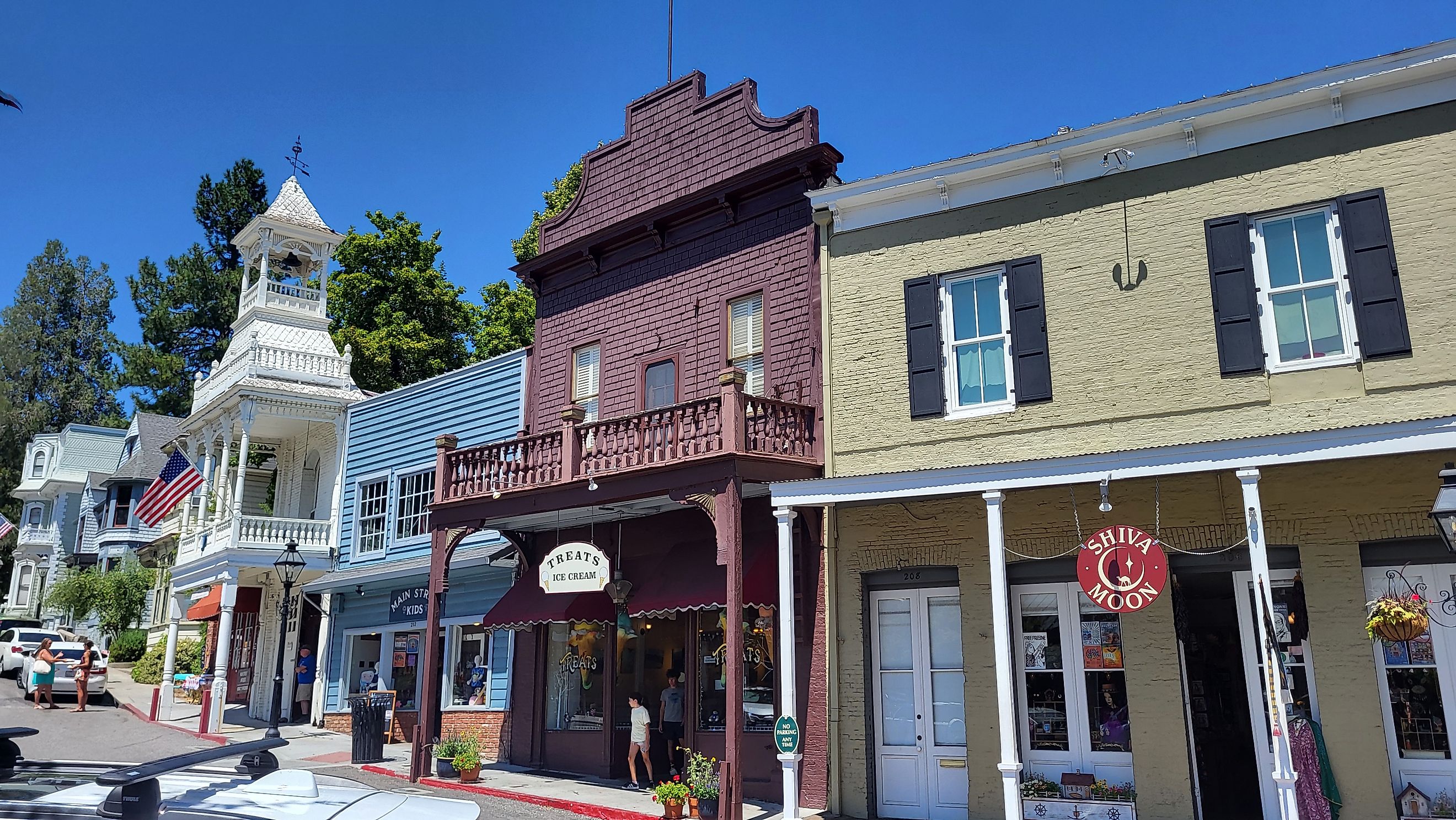
Nevada City (1856)

When the state of Nevada was created next door, the town of Nevada added "City" to its name in 1864 to avoid confusion. It had incorporated on April 19, 1856, under the shorter name, which it took from the snowy mountains nearby. In the early 1850s, it was one of the most important mining towns in the state.
Broad Street is lined with Gold Rush buildings, gas lamps, and the National Exchange Hotel, which opened in 1856. The Nevada Theatre, built in 1865, is one of the oldest theater buildings in California still used for its original purpose. The Firehouse No. 1 Museum displays artifacts from the town's mining and Chinese American history.
Auburn (1888)

Miners from Auburn, New York, gave this Placer County town its name in 1849, and it became the county seat in 1851. Even so, Auburn did not formally incorporate as a city until May 2, 1888. Its Old Town district, set on a hillside below the newer downtown, is a California Historical Landmark.
The domed Placer County Courthouse, completed in 1898, towers over Old Town and houses a local history museum. A tall, striped firehouse tower and a large statue of Claude Chana, the miner who found gold here in 1848, are favorite photo stops. The American River canyon offers trails just outside town.
Grass Valley (1893)

Grass Valley grew up around some of the richest hard-rock gold mines in California. It had a town government in its early years, but its current incorporation dates to March 13, 1893. Cornish miners brought deep-mining skills here, and their influence is still felt in local traditions and the town's famous pasties.
Empire Mine State Historic Park preserves one of the oldest, deepest, and richest gold mines in the state, along with the mine owner's stone cottage and gardens. The North Star Mining Museum displays a giant Pelton water wheel, and downtown's Holbrooke Hotel has welcomed guests since the 1860s.
Loyalton (1901)

Residents' loyalty to the Union during the Civil War is said to have given Loyalton its name. The town in the wide Sierra Valley incorporated in 1901 and remains the only incorporated city in Sierra County. It grew as a ranching and lumber center rather than a mining camp.
The Loyalton Museum shares the history of the valley's ranching and logging families. The surrounding Sierra Valley ranks among the largest high mountain valleys in the range. It is a haven for birds, cattle, and quiet country drives.
Bishop (1903)

Ranching and farming built Bishop, on the eastern side of the Sierra in the Owens Valley, and the town takes its name from a nearby creek and an early cattleman. It incorporated in 1903 and remains the only incorporated city in Inyo County.
The Laws Railroad Museum, just north of town, preserves a historic depot and railroad village from the narrow-gauge line that once served the valley. Each Memorial Day weekend, Mule Days brings parades and rodeo events to town, celebrating the pack animals that still carry supplies into the mountains.
Jackson (1905)

Jackson began as a Gold Rush camp in 1848 and later became the seat of Amador County, yet it did not incorporate until 1905. Its Main Street, with iron balconies and brick storefronts, follows old Highway 49 through a narrow hollow.
The Kennedy Gold Mine, one of the deepest gold mines in North America, offers tours of its surface buildings. The giant wooden wheels at Kennedy Tailing Wheels Park once carried mine waste over the hills. The National Hotel has welcomed guests since the Gold Rush, and St. Sava Serbian Orthodox Church is one of the oldest Serbian churches in the country.
Colfax (1910)

The railroad built Colfax, and it still runs right through downtown. During the Gold Rush it was Illinoistown, a supply stop for nearby diggings. The town later took the name of Vice President Schuyler Colfax, a backer of the transcontinental railroad, and it incorporated on February 23, 1910.
A bronze statue of Schuyler Colfax stands downtown, one of only two known statues of him in the country. Amtrak's California Zephyr still stops at the depot on its run over the Sierra. The historic Stevens Trail begins at the edge of town and drops toward the North Fork of the American River, and nearby Cape Horn shows where railroad crews carved a ledge into a sheer canyon wall in the 1860s.
Angels Camp (1912)

Mark Twain made Angels Camp famous with his story of the jumping frog of Calaveras County. The mining camp dates to 1848, but it did not incorporate until January 24, 1912, under the name "Angels." It is the only incorporated city in Calaveras County.
Bronze frog plaques line Main Street, honoring past winners of the Jumping Frog Jubilee held each May. The Angels Camp Museum displays mining equipment and carriages, and nearby caverns offer underground tours.
Towns That Stayed
County government explains much of this list. Sonora, Placerville, Auburn, and Jackson all became county seats early. Loyalton, Bishop, and Angels Camp each remain the only incorporated city in their counties. The first three towns incorporated in the 1850s, at the height of the Gold Rush, and more than three decades passed before Auburn followed in 1888.