The State Parks Where The First Snow Falls Earliest
Some state parks across the United States see snow when the rest of the country is still in summer or early fall. Snow can fall in Alaska's high mountains during August, and snowflakes can land on open summits in September or October. Latitude and altitude are the main factors behind that timing. Northern areas are often colder, and temperatures usually fall as altitude increases.
The National Oceanic and Atmospheric Administration (NOAA) tracks the timing with its first snow map, built on data between 1981 and 2010. The map shows the date when an area reaches a 50% chance of accumulating at least 0.1 inch of snow, not when the first snowflakes fell. The parks here have records of early snowfall, measured in different ways, so the dates are not directly comparable.
Chugach State Park, Alaska

The Chugach Mountains experience freezing temperatures and snowfall for up to 10 months a year. Chugach State Park reaches peaks above 8,000 feet, with its lowest ground at sea level, with elevation differences exceeding 5,000 feet in some areas. Snow can fall high in the mountains as early as August and stay on the ground through May.
Snowfall varies considerably across Chugach State Park. According to Alaska's 2016 Chugach State Park Management Plan, sheltered areas near sea level receive an average of 50 to 70 inches of snow each year, compared with 150 to 200 inches in areas facing the ocean. On windward slopes between 2,500 and 3,500 feet, snowfall can reach 600 to 700 inches annually. Moisture from the ocean and the higher altitude bring much heavier snow to the mountains. Snow can fall on the high peaks as early as August, even when rain is falling in the warmer valleys below.
Mount Washington State Park, New Hampshire

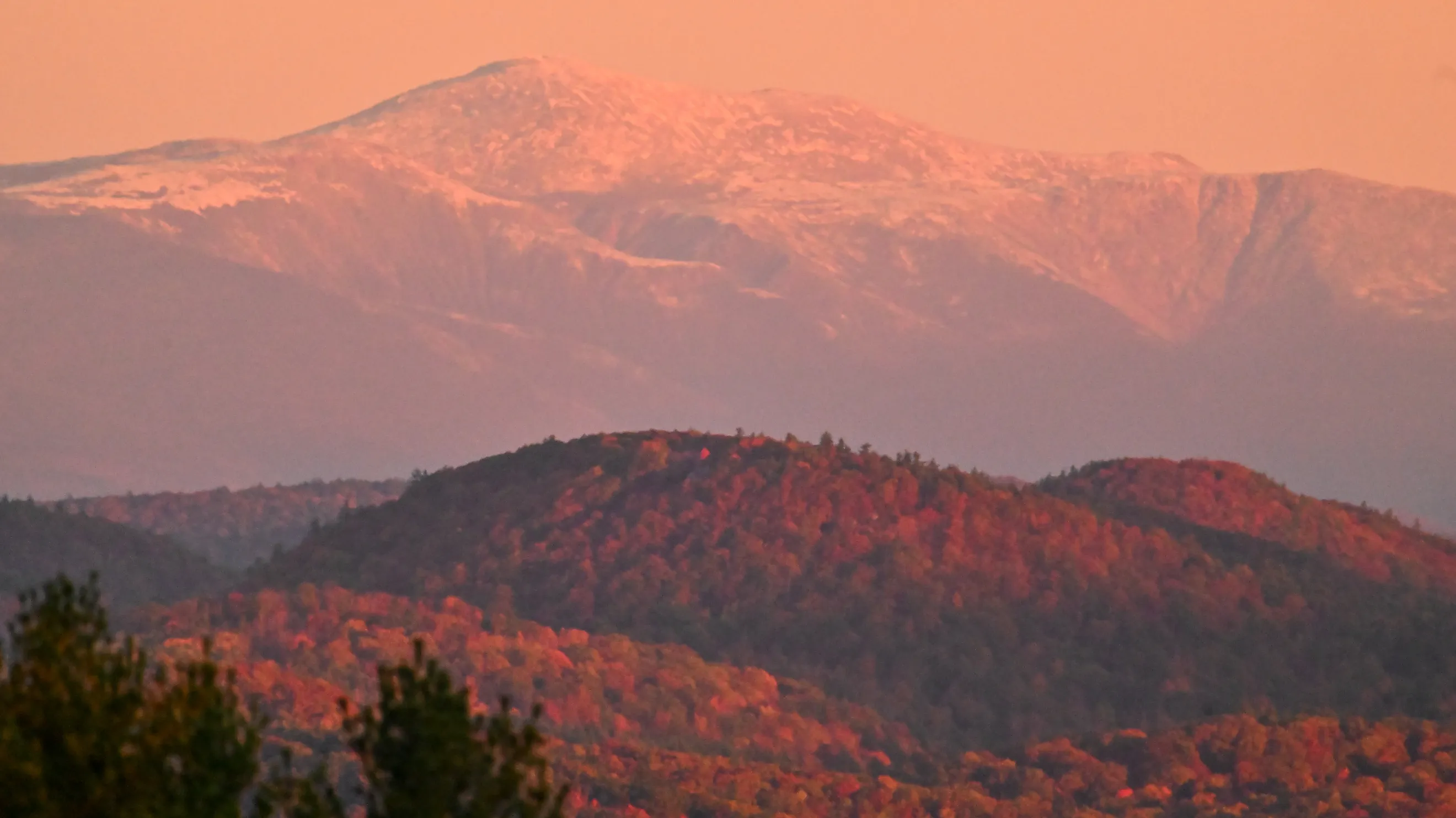
Mount Washington State Park covers the open summit of Mount Washington. The Mount Washington Observatory has studied its historical data on first snowfalls. The average first snowfall date was September 5 between 1988 and 2018, and across the entire record, the average was August 31. Observers recorded snow showers on August 31, 2017.
These dates track when snow started to fall, not when any measurable snow accumulated. The high, open summit is exposed to cold air and extreme conditions, and that exposure lets snow arrive early.
Bodie State Historic Park, California

Snow showers can fall at Bodie as early as September. These early showers melt quickly, and larger snowfalls typically start in November and continue into May, according to California State Parks. During a normal winter, snow can reach depths of 3 to 6 feet on flat ground, with drifts as high as 20 feet.
Bodie lies at 8,375 feet in California's high desert, where temperatures can drop sharply as the seasons change. Winter nights can reach 25°F below zero, and snow can make roads impassable for months. The high altitude allows snow to arrive as early as September.
Mount San Jacinto State Park, California

Mount San Jacinto State Park contains San Jacinto Peak, the highest summit in California's state park system at 10,834 feet. Snow can fall on the highest points during October. A storm on October 11, 2021, brought snow above 8,500 feet and left about 0.25 inch of graupel, the earliest measurable fall snowfall the observer had seen. It beat a small amount that fell on October 12, 2018, according to the San Jacinto Trail Report.
Another early snowfall arrived on October 12, 2026, leaving a thin layer above 9,900 feet, according to the same report. The mountain's height lets snow fall on its upper slopes as the lower areas get rain. Snow does not fall every early October, and small amounts can melt quickly.
Mount Spokane State Park, Washington

Mount Spokane State Park lies in the Selkirk Mountains of Washington, with a summit at 5,883 feet. The Mount Spokane Ski and Snowboard Park reported on October 11, 2025, that the first snowflakes of the season had fallen at the top of the mountain, and it reported its first snow of the 2026 to 2027 season on October 11, 2026.
Those reports show snow falling well before winter begins, but they do not establish an average date. The mountain's altitude and its northeastern Washington location are what bring the October snow. Summit Road is usually open July 1 through October 15, depending on weather, according to Washington State Parks.
Grayson Highlands State Park, Virginia

The first snow can fall before November at Grayson Highlands State Park in southwest Virginia. A report posted on October 23, 2011, noted that the first snow had fallen at the park as other parts of Virginia still showed fall colors, according to the Virginia Department of Conservation and Recreation.
The mountainous terrain lets snow arrive early. Altitudes in the park run between about 3,698 feet at the entrance and 5,089 feet at Little Pinnacle, according to Virginia State Parks, so it gets colder sooner than most of the state. The 2011 snowfall was an early one, and it shows how the high terrain of southwest Virginia can catch winter weather first.
Mount Mitchell State Park, North Carolina

Mount Mitchell State Park protects the highest summit in the eastern United States, at 6,684 feet. Mount Mitchell received its first snow of fall 2025 on October 30, according to the North Carolina State Climate Office.
The average date of the first measurable snowfall at Mount Mitchell has been November 12 since 1980. That average tracks measurable snow, not the first snowflakes. The summit's height lets snow form as lower parts of North Carolina stay warmer, so the high peaks can see winter's first signs before December.
Why Some State Parks See Earlier Snowfall
Latitude and altitude play a major role in when snow first falls. High mountains in Alaska can receive snow as early as August, and exposed summits farther south may see their first flakes in September or October. At these elevations, temperatures can fall below freezing even when nearby valleys are still getting rain.
Early snowfall does not always signal the start of winter. A few flakes may fall without accumulating, and a thin layer of snow can melt as temperatures rise. The first flakes in a single park may arrive weeks before snow begins to accumulate.