Why So Many Lakes Are Lowered Every Winter
Right now, lakes across much of the country are being drained on purpose. Week by week the water drops, until boat ramps end in mud and docks sit on dry lakebed. On the biggest reservoirs, the drop by midwinter is taller than a three-story house. Tennessee's Norris Lake ends up about 29 feet below where it sat in summer, and Kentucky's Lake Cumberland falls even farther.
This drop is planned, and it follows a schedule set for each lake. Every lake has its own reason for it, and some of those reasons involve places far downstream. In Oregon, one winter drawdown was fought so hard that it ended up before a federal judge this month.
Lakes Need Room to Catch Winter Floodwater

Norris Lake, north of Knoxville, has 1,113,000 acre-feet of flood-storage capacity, and the Tennessee Valley Authority lowers it each fall so that room is open before the winter storms arrive. TVA's records show that floods in the Tennessee Valley are most likely in winter and early spring, so its tributary storage reservoirs, Norris among them, are brought down to winter flood-guide levels by January 1, with releases picking up after Labor Day weekend. On Boone Lake, near Johnson City, the operating guide sets the pace at three to four feet a month at first and four to five feet a month later in the fall, until the lake reaches its winter pool of 1,362 feet around mid-December.
The Water Let Out Keeps Barges Moving Downstream

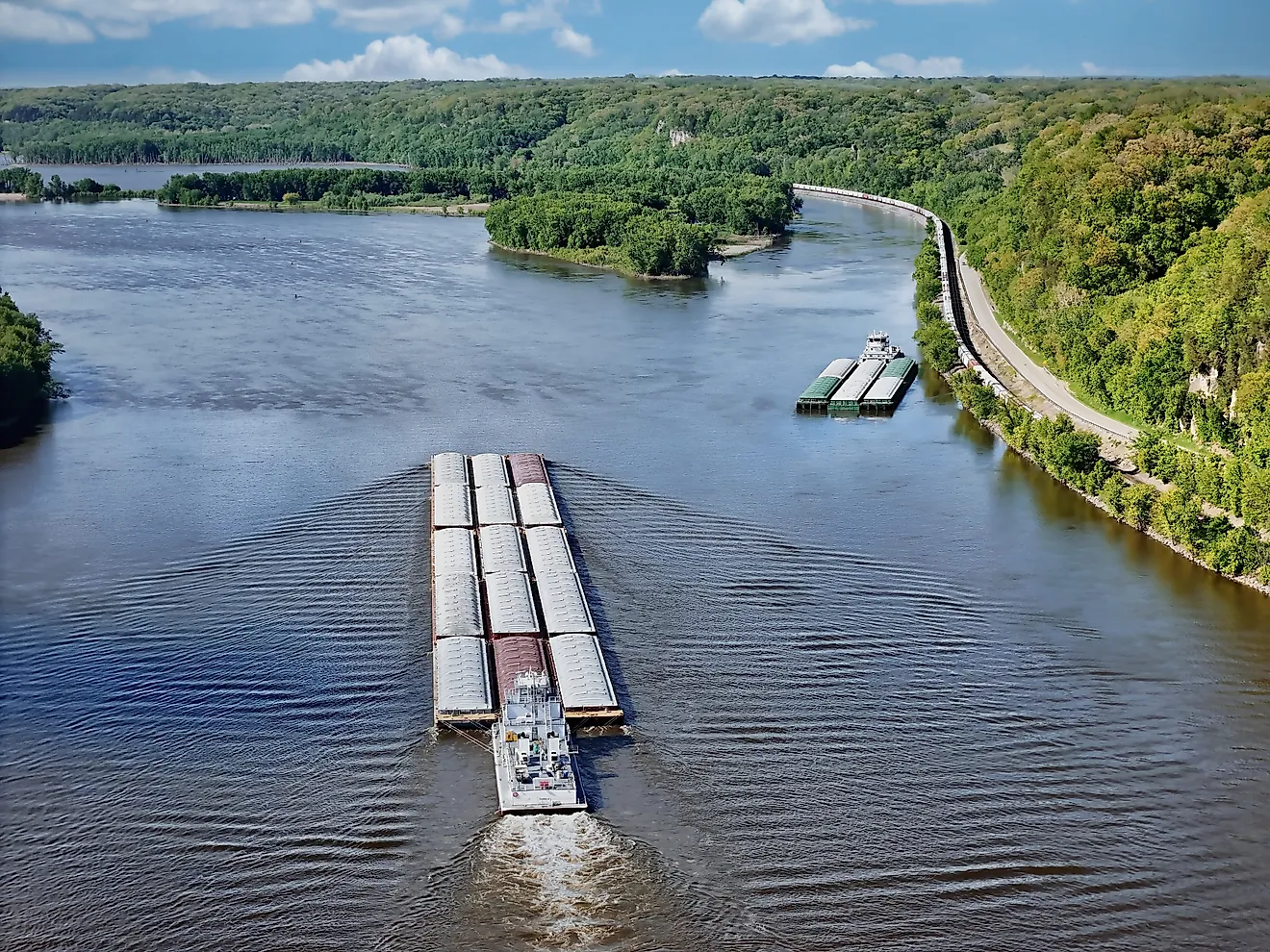
Farther west, in the Cumberland River system, the Army Corps of Engineers draws down Dale Hollow and Center Hill lakes each fall, sending that stored water downstream. The Corps' Nashville District has said that without the water held in those lakes, the Cumberland River would be near dry and commercial navigation would stop.
TVA has to manage its reservoirs so the riverbeds below its dams do not dry out. The big lakes on the Tennessee River itself hold a marked channel for barges drawing nine feet, and they rise and fall far less than the mountain reservoirs because of their design and those navigation needs. Water released from the tributary lakes in the fall helps keep the Tennessee navigable for barge traffic. Below Boone Dam, Eastman Chemical Company and TVA's nuclear plants farther down the river rely on minimum flows to operate.
Lower Water Keeps Winter Ice Away From Docks and Walls

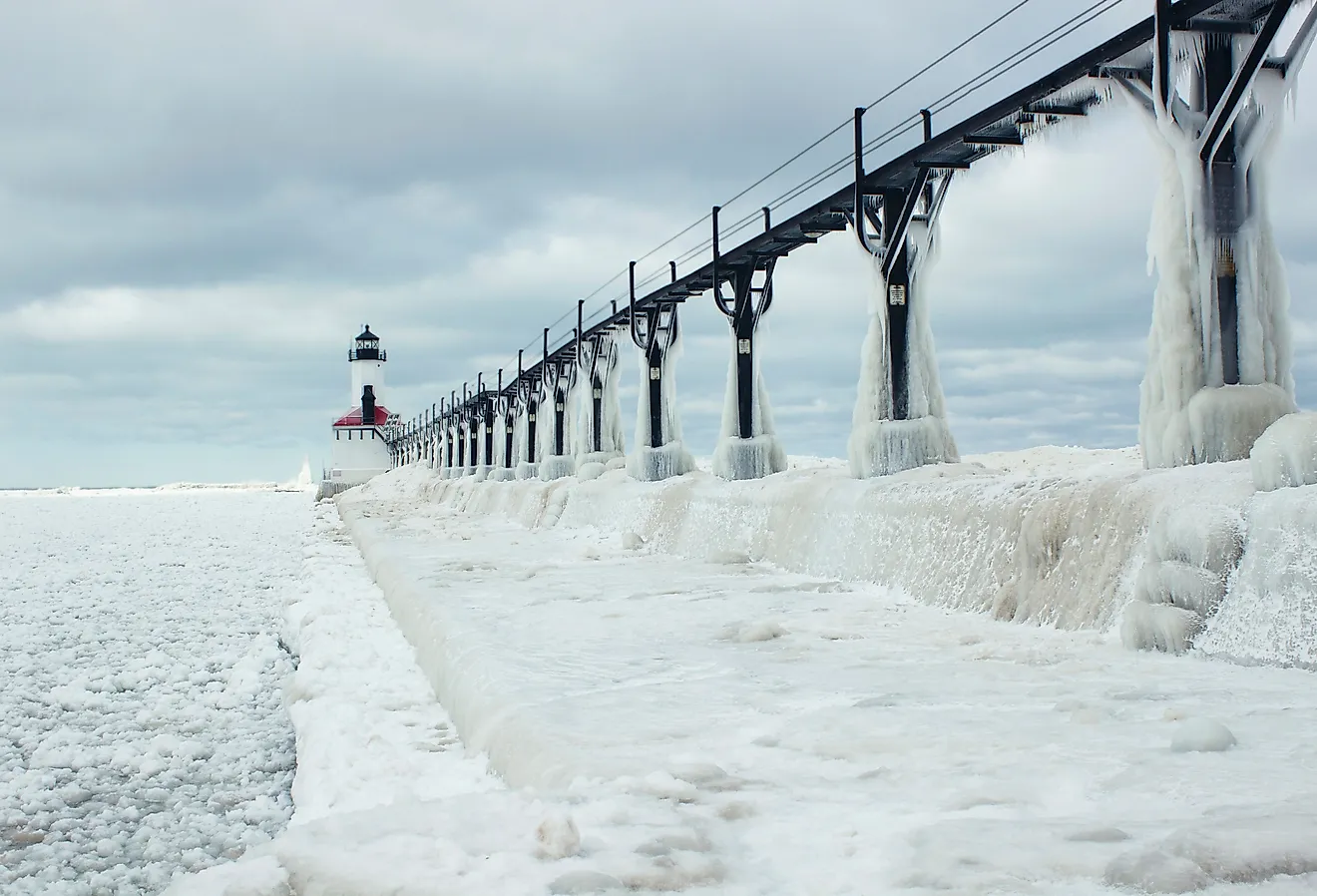
When the ice on a frozen lake breaks up, wind can drive large sheets of it into whatever is built along the shore. Minnesota's Department of Natural Resources warns that ridges of ice shoved up onto the bank can damage retaining walls and boat lifts, and sometimes the cabin itself.
New Hampshire's Department of Environmental Services lowers several lakes each fall to reduce winter ice damage to shoreline property and spring flooding. In 2024, Newfound Lake in Bristol and Squam Lake near Ashland each began dropping on October 14 and went down two and a half feet, and Webster Lake in Franklin went down two. On Wisconsin's Chippewa Flowage, docks stay high and dry and suffer little damage when the water is low as the lake freezes.
Crews Need Dry Ground to Fix Dams and Docks

In 2023, New Hampshire's environmental agency planned to hold Sunset Lake seven feet down, its usual fall drawdown, through all of 2024 instead of refilling it in the spring, so crews could make major repairs to the dam.
Alabama Power calls its drawdowns at Lake Martin a great chance for property owners to repair docks and ramps and finish other permitted projects. The reservoir on the Tallapoosa River drops about seven feet each fall under the company's hydropower license, reaching 484 feet by mid-November and returning to full pool around the end of April. Every sixth year the license calls for a 10-foot drawdown, and the next one is due in 2027. Before the last one, in the winter of 2021 and 2022, Alabama Power urged owners to contact its shoreline permitting offices early. The lake was scheduled to sit near 481 feet between New Year's Eve and February 17.
Freezing the Lake Bottom Kills Some Invasive Weeds

Lake Murray, outside Columbia, South Carolina, has been dropping since September, when Dominion Energy started lowering it toward about 350 feet, the same level the company last took it to in January 2023. The goal is to leave underwater vegetation on the exposed bottom open to dry air and freezing temperatures, and state officials paired the drop with 2,650 grass carp stocked in the lake this year. Lake Murray should be back at its normal summer level of 358 feet by late spring 2027.
Massachusetts uses winter drawdowns against Eurasian watermilfoil and fanwort, plants that reproduce mostly by vegetative growth, so drying and freezing their stems and roots can knock them back. Hydrilla, the weed grass carp were stocked in Lake Murray to control, survives drawdowns in underground tubers. On Wisconsin's Little Muskego Lake, a six-foot drawdown that began in August 2017 cut back Eurasian watermilfoil, and starry stonewort, an invasive alga, increased by more than 50%.
Lower Water Helps Young Salmon Get Past Oregon's Dams

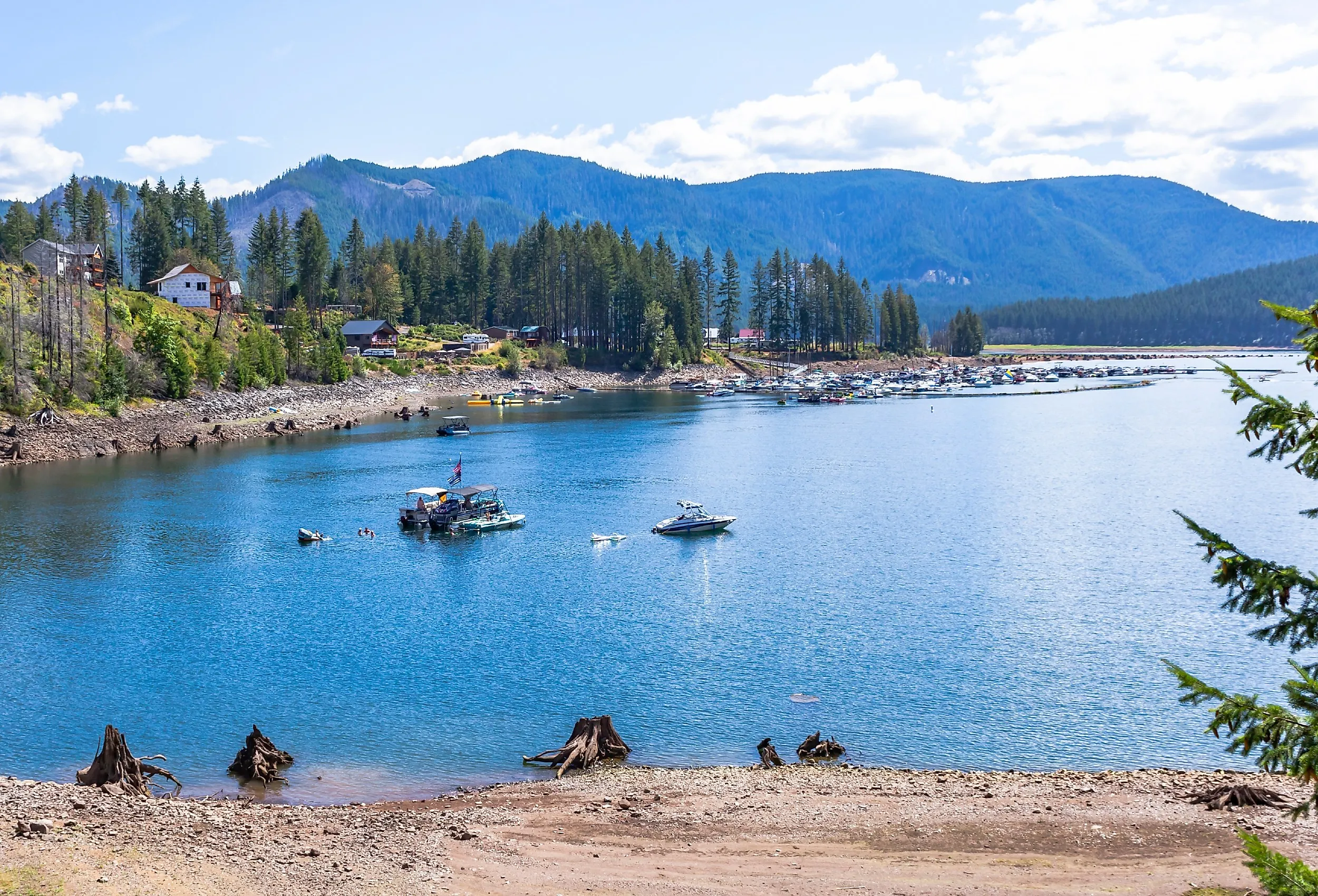
Under a 2021 federal court injunction, the Army Corps of Engineers expanded its deep fall drawdowns in Oregon's Willamette Valley to help juvenile spring Chinook and steelhead get past its dams on the way to the Pacific. Salmon are surface-oriented fish, and the Corps hoped a lower reservoir would steer them toward the dam outlets. In 2023, Green Peter Reservoir went down to 780 feet, about 120 feet below any drawdown since the dam was built, and Lookout Point dropped to 750 feet, 80 feet below its deepest earlier drawdown.
Detroit Lake, about 45 miles east of Salem, is the latest target. A federal fisheries opinion issued in December 2024 called for a deep fall drawdown there, and the Corps' long-range plan would take the lake 55 feet below its usual winter minimum, lower than it has ever been. This year's step is smaller, about 25 feet below the usual level for the season, held for roughly two weeks. Marion County sued to stop it, a federal judge denied the county's request on November 4, and the county appealed to the Ninth Circuit within a day. The Corps said the drawdown could begin as early as November 21.
Deep drawdowns send sediment downstream. During Green Peter's 2024 deep drawdown, cloudy water put heavy strain on the water treatment plants in Lebanon, Sweet Home, and Albany. Salem draws its drinking water from the North Santiam River below Detroit Dam, and its plant serves about 200,000 people. The city declared an emergency in July 2025, warning that muddy water from the drawdown threatens the slow sand filters that clean it.
Most of these lakes are expected back near full by early summer, and getting there depends on the weather. TVA starts refilling its tributary lakes hard in mid-March, once the odds of flood-producing storms begin to drop, and aims to have them at summer levels by June 1. A dry spring can leave a lake short, as in 2023, when Lake Cumberland stood at 714.9 feet on June 5, still below its usual mid-May target. Along the shallow edges, the exposed lakebed dries out and freezes every winter. In Massachusetts lakes drawn down every year, some mussel species living about a foot and a half deep were far scarcer than in lakes kept full, and their numbers were still low the next fall after four to five months back underwater.