How Great Slave Lake Is Deeper Than Any Great Lake
Ask anyone to name North America's deepest lake and they will probably guess one of the mighty Great Lakes. They would be wrong, and not by a little. The real champion is a remote, half-frozen giant in Canada's Northwest Territories that most people have never even heard of: Great Slave Lake. It plunges far deeper than Lake Superior, deeper than any Great Lake at all, and it does so while sitting quietly in the subarctic where almost nobody can see it. Here is how this underrated lake out-deeps every single one of them.
Meet North America's Deepest Lake

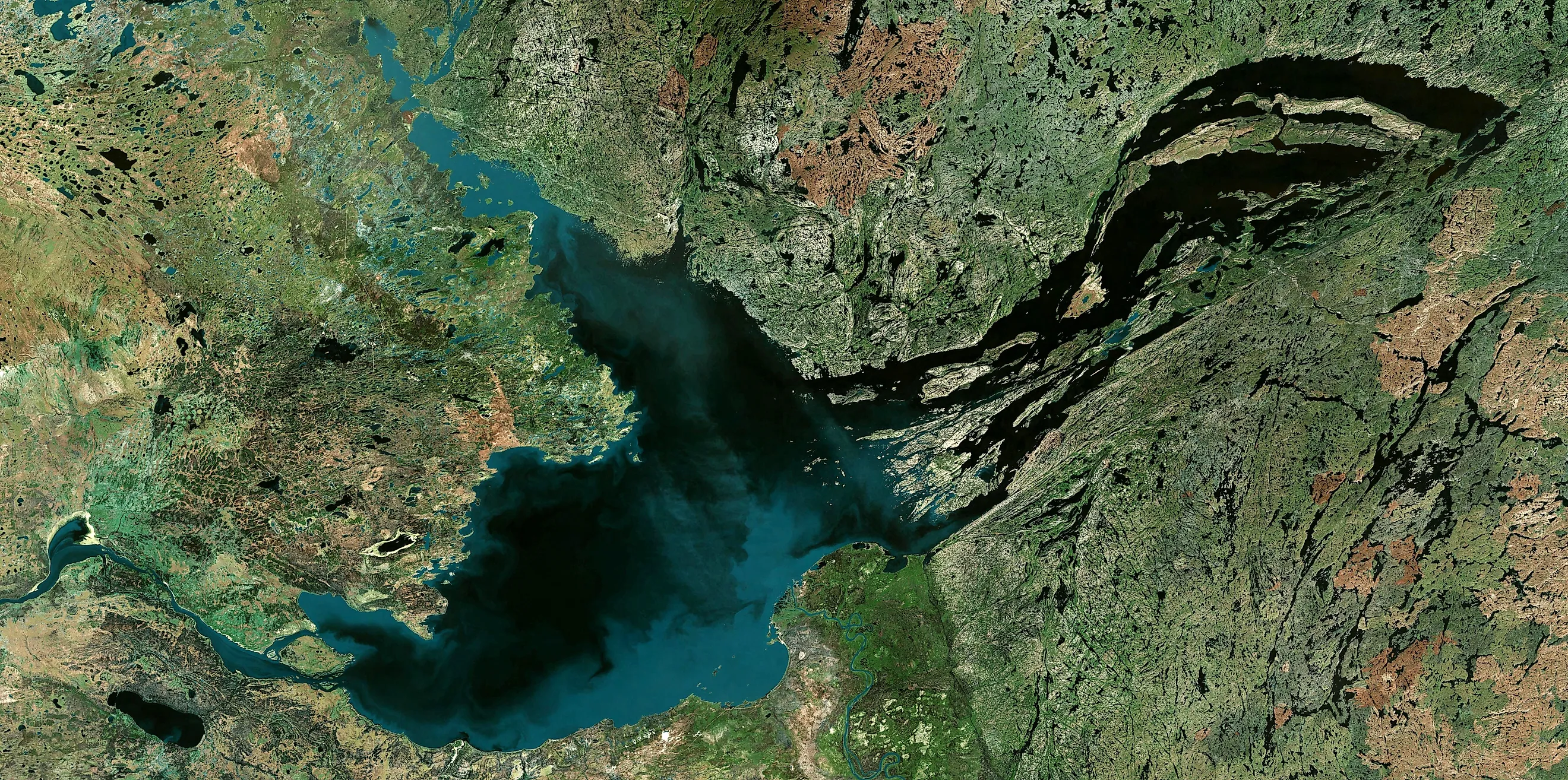
Great Slave Lake sprawls across the southern Northwest Territories, a vast sheet of water roughly the size of Belgium. It is the second-largest lake entirely inside Canada, the fifth-largest in North America, and the tenth-largest on Earth, so it is hardly a minor pond. But its real claim to fame points straight down: it is the deepest lake on the entire continent. For a lake that rarely makes anyone's bucket list, that is a genuinely heavyweight title.
614 Meters Straight Down

The number that matters is 614 meters, or about 2,014 feet, measured in Christie Bay at the lake's eastern end. That is deep enough to swallow a skyscraper whole; the lake's maximum depth comes within roughly 60 feet of the height of the Shanghai Tower, the second-tallest building in the world. Drop that tower into Christie Bay and the entire thing would vanish, with water to spare. For a flat-looking northern lake, it hides an astonishing amount of vertical drop.
Deeper Than Superior by 680 Feet

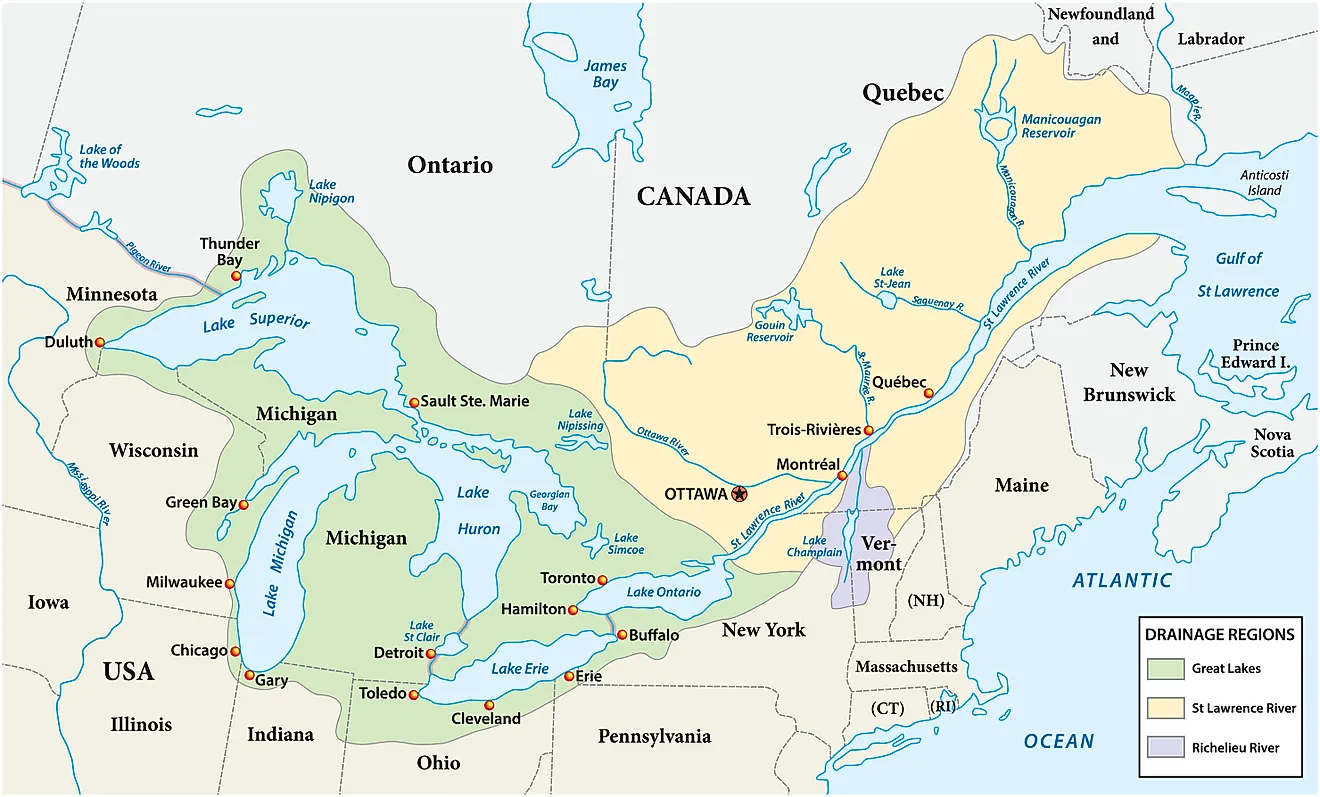
Now for the comparison that gives this article its name. The deepest of the Great Lakes is Lake Superior, and it bottoms out at 406 meters, or 1,333 feet, which is genuinely impressive, until you set it beside Great Slave. The Canadian lake goes 208 meters, nearly 680 feet, deeper still. In other words, you could sink Lake Superior's deepest point to the floor of Great Slave Lake and still have the height of a 60-story building in water stacked on top. The famous Great Lake does not just lose this contest; it loses it by a landslide.
Below the Bottom of Every Great Lake

It is not only Superior that comes up short. Great Slave Lake's floor lies deeper than the bottom of every single one of the Great Lakes. The shallowest of them, Lake Erie, maxes out at a mere 64 meters, which next to Great Slave is practically a wading pool. If you lined all five Great Lakes up by depth, not one of them would reach even halfway down to the Canadian challenger's deepest point. The lowest spot in the entire Great Lakes system still sits well above Great Slave's muddy floor.
The East Arm Does All the Work

Here is the funny twist: most of Great Slave Lake is not deep at all. Its broad western half is surprisingly shallow, averaging only around 40 meters, more puddle than abyss. Nearly all of that record-breaking depth is crammed into the East Arm, a fjord-like maze of rocky bays and islands where the lake bottom suddenly plunges off a cliff. So the lake essentially earns its deepest-in-North-America title on the strength of one dramatic corner, while the rest of it loafs near the surface.
It Even Beats Crater Lake

Americans often assume that Oregon's famously deep Crater Lake is the deepest around, and within the United States, it is. But Crater Lake tops out near 594 meters, which means Great Slave edges it out by about 20 meters to claim the continental crown. Great Slave is also deeper than any other glacial lake in all of North America or Europe, a category that includes some very famous water indeed. The unassuming northern giant quietly outranks the postcard star down south.
Carved by Ice and the Shield

All this depth is a parting gift from the Ice Age. Great Slave Lake is a leftover of an enormous glacial lake that drained away roughly 10,000 years ago, and its deep East Arm sits right on the edge of the Canadian Shield, where glaciers gouged into ancient, rock-hard Precambrian bedrock. That combination of grinding ice and extremely tough stone carved out the steep, profound basin we see today. The western half, resting on softer ground, simply never got the same dramatic treatment.
The Lake Almost Nobody Has Heard Of

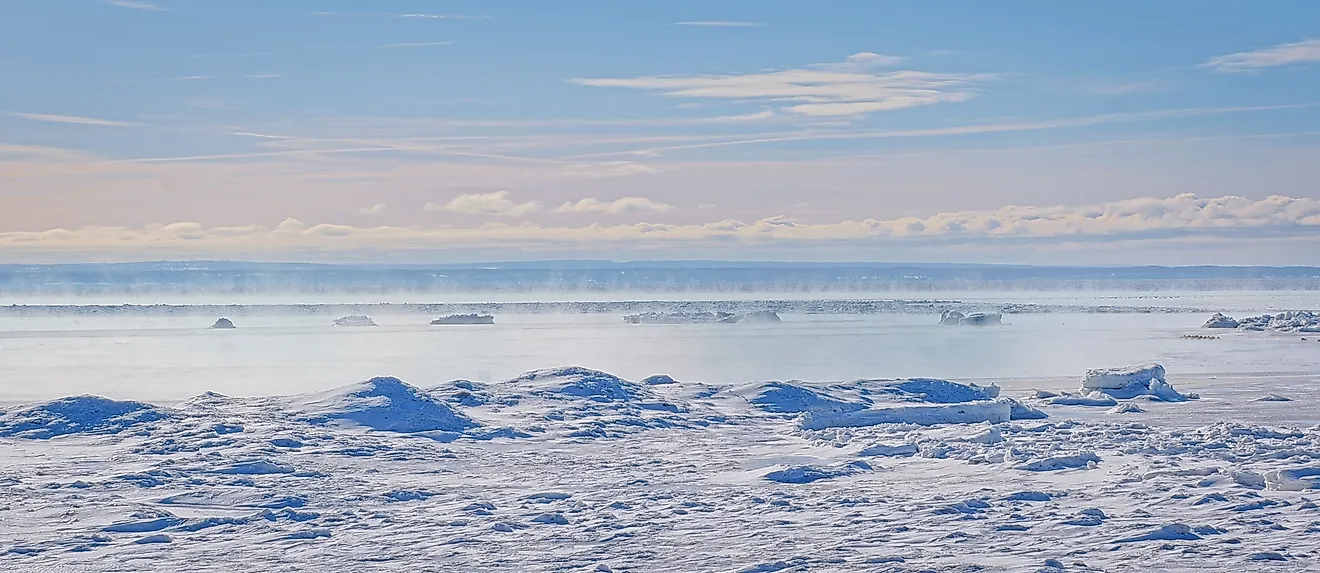
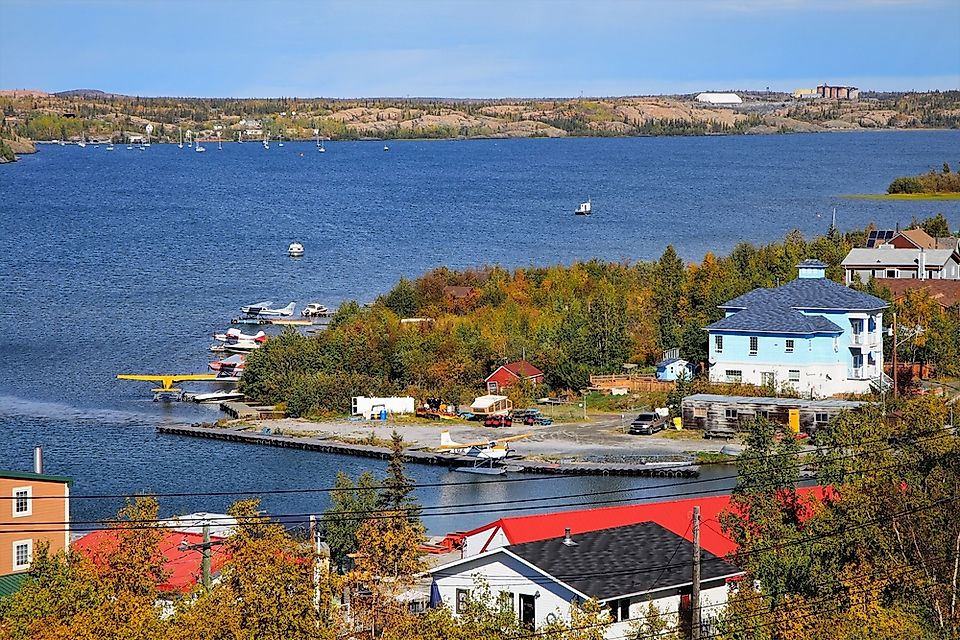
Part of why Great Slave stays off the radar is that hardly anyone lives near it. Its biggest settlement is Yellowknife, the small capital of the Northwest Territories, and beyond that its shores are mostly empty boreal forest and tundra. The lake freezes solid from November into June, cold enough that an ice road for trucks is built straight across it every single winter. It is magnificent, record-setting, and almost completely overlooked, all at the same time.
It Has Even Bigger Neighbors

Great Slave is not even the biggest lake in its own territory. That honor goes to nearby Great Bear Lake, which beats it on surface area while falling short on depth. The far north of Canada is simply lake country, studded with huge, cold, glacier-carved basins that dwarf most lakes found elsewhere. Great Slave just happens to be the one that dug the deepest, which is the only superlative it really needs.
So Why Isn't It Famous
In the end, Great Slave Lake is proof that being the best at something is no guarantee of fame. It out-deeps every Great Lake, beats Crater Lake, and ranks among the deepest glacial lakes on the planet, yet it remains a quiet name even to many Canadians. You can blame the remote location, the brutal cold, and the sheer emptiness of the surrounding north. The deepest lake in North America, it turns out, would honestly just rather keep to itself.