The US Cities With The Worst Tap Water
Most of us don't think twice about the water coming out of our taps, some of us even drink tap water. However, PFAS contamination is a real concern, and questions have been raised about just how safe it is. These "forever chemicals" can build up in our bodies, animals, and the environment for years. Even the water that does meet current federal standards could have levels that concern health officials. The Environmental Protection Agency (EPA) limit for PFOS, one type of forever chemical, is 4 parts per trillion (ppt), but some water systems have been flagged for levels well above that.
To find the cities with the highest PFOS readings, we looked at results from EPA tests from between 2023 and 2025, and compared average readings at individual testing sites within each water system. We included systems that had at least one location where the average PFOS level exceeded the federal limit of 4 ppt. Samples were collected where treated water comes into the distribution system, not directly from taps.
Nashville, North Carolina

In the EPA's nationwide water tests, Nashville has some of the highest PFOS levels. In September 2024, a water sample from one of the city's groundwater sources measured 490 parts per trillion (ppt), which is more than 122 times the EPA limit of 4 ppt. In March 2025, a follow-up test reported 200 ppt, an improvement but still 50 times higher than the federal limit.
There is good news in that these high readings came from just one groundwater source, not the water supply for the entire city. According to public records, Nashville has not added treatment to remove PFAS, and the most recent federal test results still show PFOS levels quite above the federal limit. Nash County Public Utilities states on their website that the water is currently safe to drink.
Tempe, Arizona

In 2024 and 2025, the EPA tested water in Tempe at the highest-reading location and found an average PFOS level of 55.2 ppt, almost 14 times the federal limit. This same spot also had an average PFOA level of 37.9 ppt. PFOA is another type of forever chemical, and its level here was more than nine times the EPA limit of 4 ppt. These test results do not represent the average water coming out of every tap in Tempe, but they are concerning.
When Tempe conducted its own testing, their water report did not show any noticeable average levels of either PFOS or PFOA in the water sources the city used that year. However, there were some individual samples that still had as much as 33 ppt of PFOS and 9.9 ppt of PFOA. These two reports analyzed different water samples, so it's difficult to tell whether PFAS levels really improved. Tempe says it is continuing to test the water and is working on PFAS treatment options that will align with the federal limits. For now, the city says the water is safe to drink.
Oxford, Mississippi

The water quality in Oxford can be different depending on where it comes from. The biggest water concern was found at the Anderson Road treatment plant. An EPA test in March 2025 found 72.2 ppt of PFOS. That's more than 18 times the EPA limit of 4 ppt. Later on in September, the reading had decreased to 33.7 ppt. While this was a significant improvement, it was still more than eight times the limit. Other treatment plants in Oxford had readings that were way lower, and several of them didn't have any noticeable PFOS.
Oxford is an interesting example of poor tap water because the high reading wasn't spread across the city evenly; only one plant stood out and the rest had better results. After learning of the test results, instead of installing a water treatment system to filter out PFAS, Oxford Utilities shut down that specific well. Currently, there is no documentation showing that the plant has added PFAS filtration, and the city says the water is safe to drink.
Key West, Florida

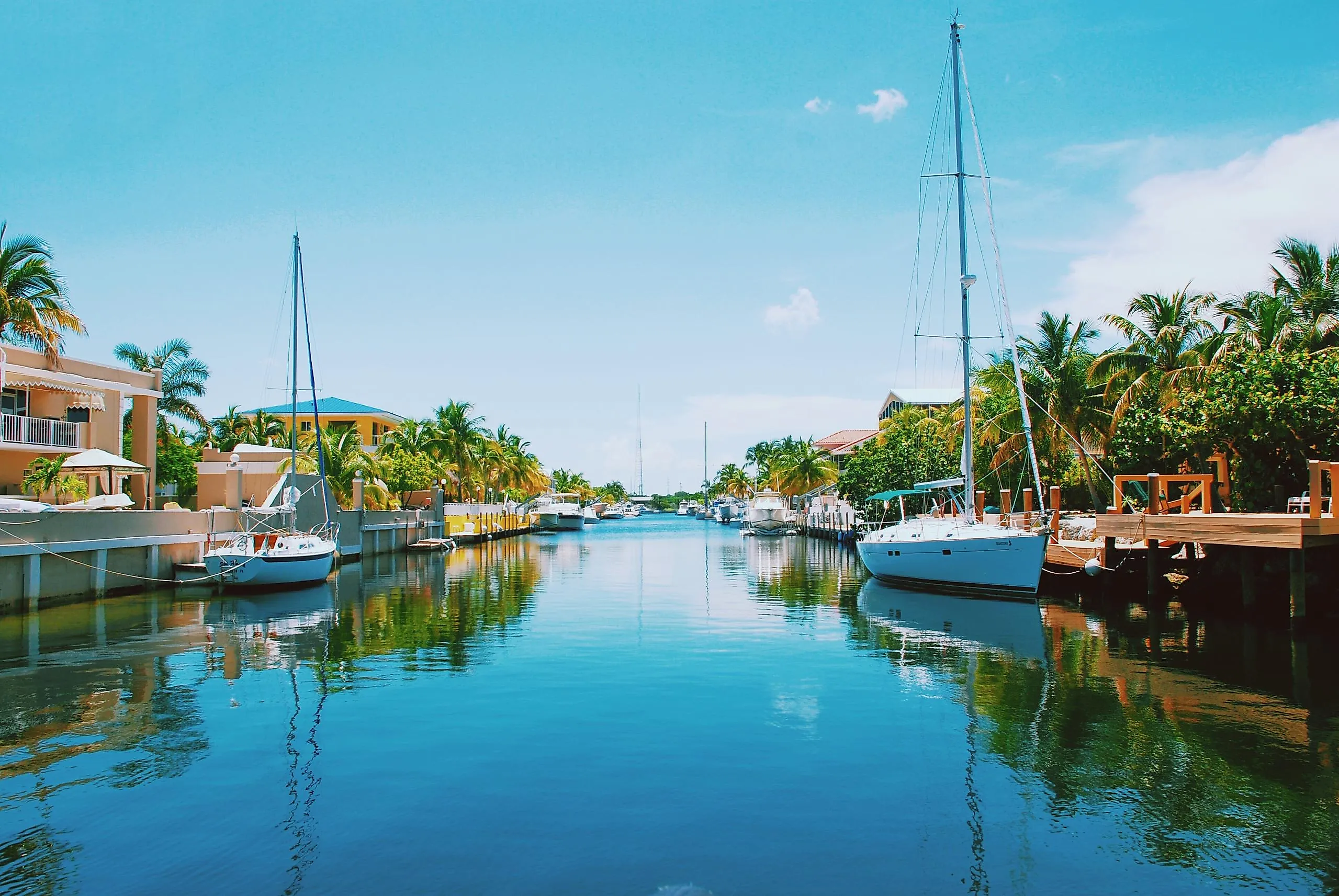
Despite living on a beautiful island, it comes with a few challenges, and getting drinking water is one of them. The Florida Keys Aqueduct Authority (FKAA) provides water for the chain of islands in Key West, and its water system has also had trouble with PFAS. Tests from 2023 and 2024 showed that, at the J. Robert Dean Water Treatment Plant, the average PFOS level was 46.15 ppt, more than 11 times the EPA limit. The average PFOA level was 9.1 ppt, more than twice its limit.
If there are updated testing results, the FKAA has not reported them, but according to their website, they have dedicated funding for treatment upgrades, and have planned a PFAS removal project to be completed by their compliance deadline in 2029. While the tap water in Key West is safe to drink, the FKAA has said that higher PFAS levels can affect individual tastes, leading some people to filter it.
North Miami, Florida

The drinking water in North Miami comes from two sources, and neither of them have been cleared of high PFAS levels. The most recent EPA monitoring results for the Winson Water Treatment Plant are from July 2023 and January 2024, showing 44 ppt of PFOS. Both were roughly 11 times the EPA limit. In both tests, the PFOA levels were 12 ppt, three times its limit. The city also purchases water from Miami-Dade County, and a report from its Water and Sewer Department in 2025 showed 33 ppt of PFOS, and 13 ppt of PFOA. This year, they noted that PFAS levels are heavily influenced by firefighting foam near airports and firefighting training sites, as well as landfills and wastewater.
Ultimately, both of these places have levels that are above the federal limits. The city of North Miami says they currently meet drinking water requirements and have completed a PFAS Pilot Testing project to form a PFAS management plan and test treatment options.
Augusta, Georgia

Augusta has a similar PFAS situation to North Miami. The main surface-water plants in the city did not pick up PFOS or PFOA in EPA tests, but the Bush Field groundwater plant was a different story. A March 2026 report showed an average PFOA level of 26.6 ppt and a PFOS average at 43.6 ppt, both well above the EPA limit of 4 ppt. After the reports, a local news station spoke with the Savannah Riverkeeper, who said the high levels were likely related to an herbicide used in the area.
According to the city's official website, the water provided by the Augusta Utilities Department "has met or exceeded all US EPA and Georgia Environmental Protection Division water standards." The city also received a grant this year to focus on PFAS treatment technology and upgrades.
Sacramento, California

Depending on where the water came from, PFAS results in Sacramento, California were pretty varied. EPA tests done in 2023 and 2024 identified the biggest concern at Well 133, a groundwater source that showed PFOS levels at an average of 38.85 ppt, almost 10 times the federal limit. At this same location, PFAS levels were more than four times its limit, with an average of 16.45 ppt.
Interestingly, at two surface-water treatment plants in Sacramento, EPA tests did not find PFOS, and other groundwater sources had lower readings. According to the city's official website, if a water source exceeds PFAS limits, it is removed from the distribution system. The most recent water quality report from 2025 concluded that Sacramento's drinking water met both federal and state standards, and that the city is continuing to monitor and manage PFAS.
Why Tap Water Quality Matters

These are just a few cities that show why the quality of our tap water needs a closer look. Some cities had PFOS levels considerably higher than the EPA limit, and other cities had issues linked to only one well or treatment plant. The EPA submitted a proposal in May, 2026 to allow water providers to request an extension through 2031 to meet current PFOS and PFOA limits, but for now, they need to follow the current standards and deadlines. Future test results will show us which cities are progressing and which still have some work to do.