The Largest Beaver Dam In The United States
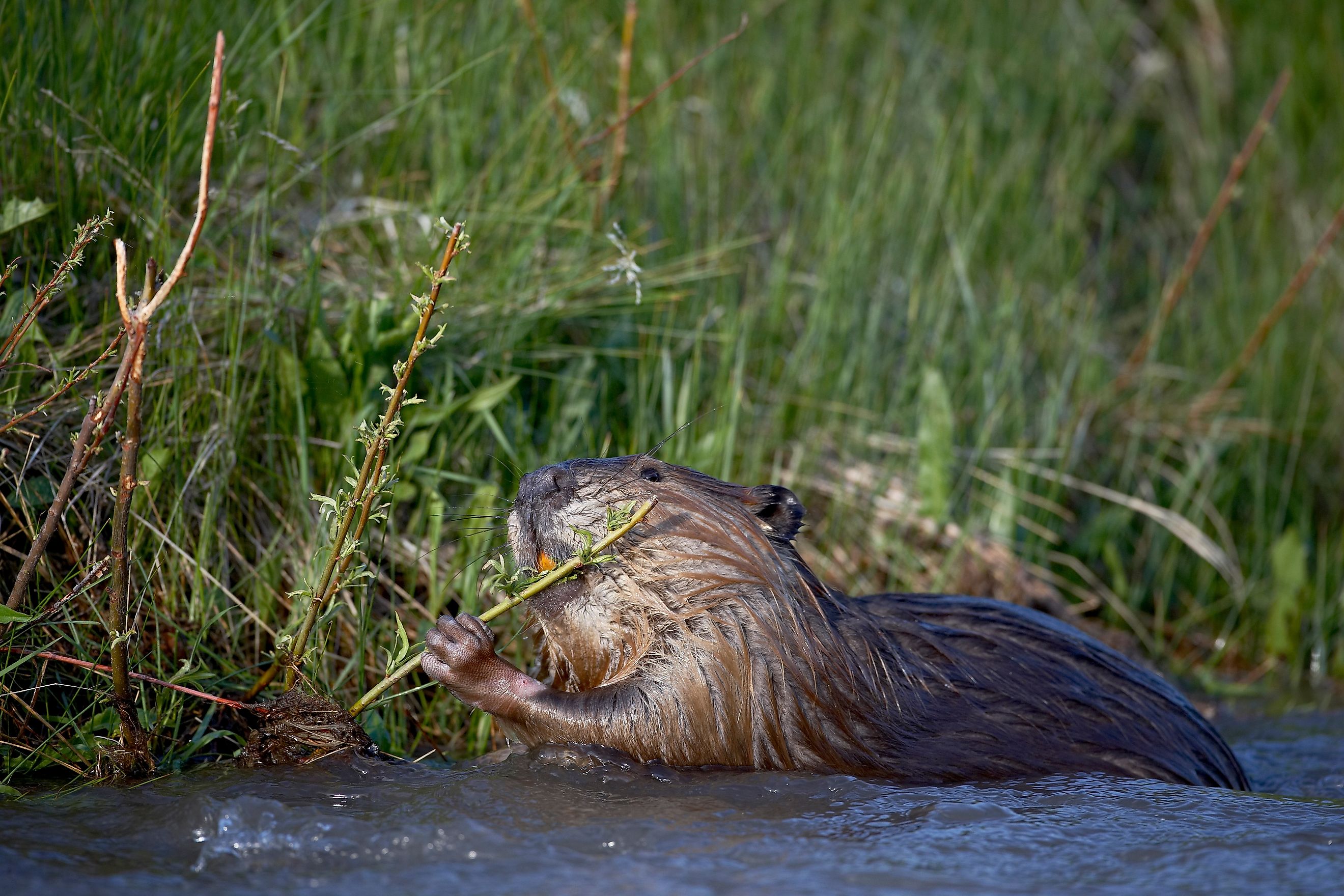
The longest beaver dam on record in the United States was reported near Three Forks, Montana, at about 2,140 feet. That is roughly seven football fields, end zones left out, and it was built from wood and mud by animals that average around 40 pounds. For a time it was cited as the longest beaver dam anywhere on Earth.
Most beaver dams in the US run less than 50 feet, so the Montana dam was more than 40 times the usual length. It also proved hard to find again. Jean Thie, the Canadian ecologist who later spotted the world's longest beaver dam on satellite images, wrote that his team could not locate the Montana dam on Google Earth.
Montana's Record Dam Stood 14 Feet High

The Three Forks dam was also unusually tall. Reports put it at 14 feet at its tallest point, roughly four times the 3 to 4 feet of a typical dam described by Maine's wildlife agency. At the base, its wood and mud were packed 23 feet thick.
Three Forks sits close to where three rivers join to form the Missouri River, and Lewis and Clark found the area thick with beaver. William Clark's advance party reached the forks on July 25, 1805, and the expedition's journals soon recorded an "emence qty of Beaver" and "pleanty of those animels along the Islands and Shores." In 2010, news coverage of a record dam found in Canada still named a Three Forks dam as the previous record holder.
The World Record Sits In A Canadian Park
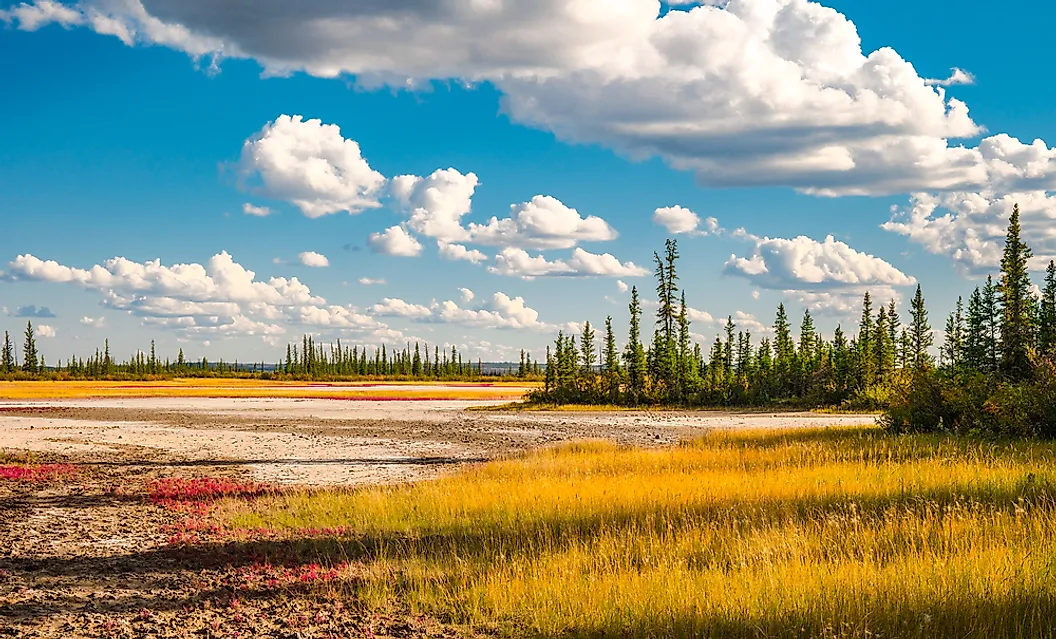
The dam that replaced Montana's in the record books turned up on a computer screen. On October 5, 2007, Thie posted a satellite photo of a beaver dam in Wood Buffalo National Park, in northern Alberta, on the Google Earth Community Forum. Parks Canada rangers confirmed it from a helicopter in May 2010. Guinness World Records lists it at about 2,788 feet, roughly 650 feet longer than the Montana figure, and Parks Canada says it is visible from space in satellite images.
Behind it sits a pond of about 17 acres. Explorer Rob Mark trekked in on foot in July 2014, the first known visit, and Parks Canada says there is no land route to the dam and helicopter landings are not permitted.
Beavers Build Long When The Land Is Flat

Beavers stack a dam to get deep water around their lodge, which they enter through one or more underwater openings, and the pond also gives them safe access to food plants. The dam can't raise the water higher than the family's living quarters, or the den floods.
On flat ground, beavers have to build long instead of high to hold back water, which is why the Wood Buffalo dam runs across flat wetland. Several generations of beavers have probably worked that site since the mid-1970s, each family adding to what the last one left.
Wood, stones, mud, and plant stems go into the structure, and the feel and sound of flowing water set beavers to work. Maine's wildlife agency tells landowners they can confirm a dam is active by opening a small leak and checking the next day whether it has been patched.
A Big Dam Holds Water Into The Dry Months

In Denali National Park, Alaska, one beaver dam built at the outlet of Wonder Lake in 1960 raised the lake's level by more than 2 feet. Naturalist Adolph Murie, whose account the Park Service quotes, wrote that it held back well over 100 million cubic feet of water. Farther south, a National Park Service study in Colorado found that beaver dams raise the water table during both high and low river flows and slow its drop during dry months.
On Bridge Creek in Oregon, researchers in a seven-year experiment pounded wooden posts into the streambed and wove willow branches between them, and beavers quickly took the structures over. Across the roughly 20-mile study area, more juvenile steelhead survived, and their numbers rose.
Beaver Ponds Stay Green When Wildfire Burns

Beaver ponds also change how a valley burns. Ecohydrologist Emily Fairfax and colleague Andrew Whittle studied five western wildfires that burned between 2000 and 2018, across areas holding a total of 1,500 beaver dams. On average, plant greenness fell 3.05 times as much in burned areas without beavers as in areas with them, though plants in both rebounded the following year. Utah State University geomorphologist Joe Wheaton saw the pattern on the ground after the Sharps Fire burned 65,000 acres in Idaho in 2018, when he came across a green beaver wetland inside the burn zone. "Beaver-dammed areas are green and happy and healthy-looking," Fairfax told National Geographic.
When A Beaver Dam Breaks

A dam a small fraction of Montana's size can still do serious damage when it fails. Early on May 23, 2001, an 80-foot beaver dam in Orrington, Maine, south of Bangor, let go and washed out a half-mile stretch of Swetts Pond Road, and floodwater closed Route 15 for several hours. The Bangor Daily News put total damage at an estimated $1.2 million, and the town's road repairs alone cost about $250,000.
The same site failed again on March 23, 2012. That breach temporarily wiped out Swetts Pond Road and part of the nearby railroad tracks. Route 15 flooded and was closed that evening, and at least five households had to evacuate. By that May, 11 beavers from the colony had been trapped.
A Voyageurs Dam Rivals Montana's Record In Height

By one estimate, a beaver dam in northern Minnesota stands taller than the Montana record. Along Namakan Lake in Voyageurs National Park, one dam has been estimated at more than 15 feet tall and about 200 feet long. Voyageurs is often described as having the densest beaver population in the United States, and park researchers have digitized more than 7,000 beaver ponds and dams in and around the park and mapped nearly 4,000 lodges. Farther east, the Park Service says beaver dams and lodges are regularly seen in Maine's Acadia National Park.
Beavers were once far more common across North America than they are today. Naturalist Ernest Thompson Seton estimated in 1929 that 60 to 400 million lived on the continent before European settlement, a rough figure later revised to 50 to 90 million, and trappers had largely wiped beavers out of the eastern United States before 1900. In 1948, Idaho Fish and Game moved beavers from the McCall and Payette Lake area into the backcountry of the Chamberlain Basin by parachuting them from an airplane, 76 animals in all, and all but one survived the drop. North America now holds an estimated 10 to 15 million beavers. In Montana, a 2026 Montana Outdoors story on Arctic grayling reported a count of more than 50 beaver dams in the lower 11 miles of a single stream, more than four to the mile, each one a small fraction of the 2,140 feet once reported near Three Forks.