Differences Between Sea And Lake
Title: Differences Between Sea And Lake
Meta description: Discover the real differences between a sea and a lake, from salinity and size to how they form, the life they hold, and the famous "seas" that are actually lakes.
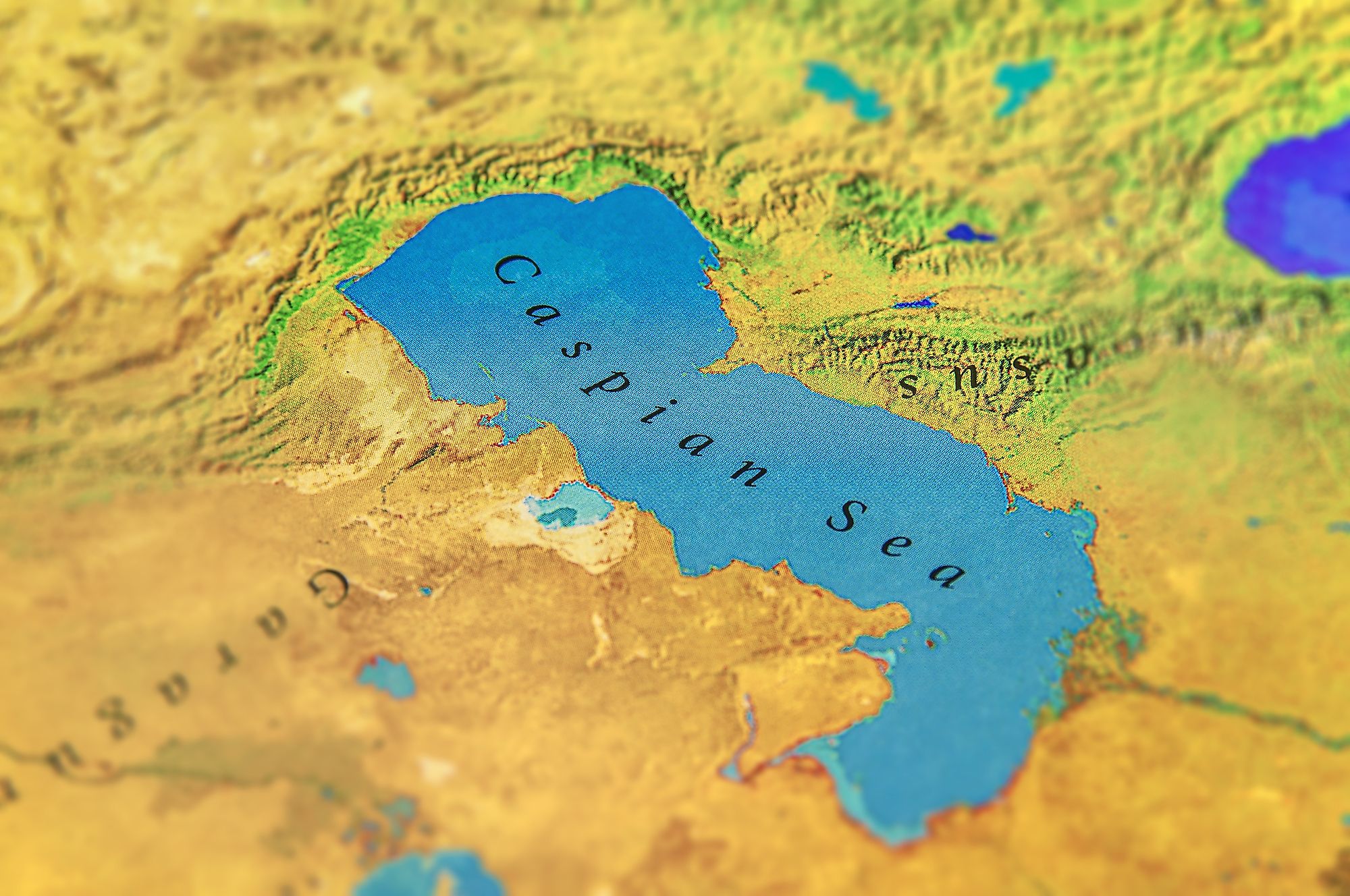
Many of the most famous "seas" on Earth are not seas at all. The Caspian Sea, ringed by land from Russia to Iran, is the largest lake in the world. The Dead Sea, famous for floating swimmers on its mineral-heavy water, is a salt lake. The Aral Sea, once the fourth-largest lake on the planet, has nearly dried to dust. The words "sea" and "lake" get traded loosely in everyday speech and on centuries-old maps, yet they describe genuinely different bodies of water, separated by a short list of physical traits. The clearest of those traits has nothing to do with size or saltiness and everything to do with whether the water finds its way to the ocean. Here is a closer look at what really separates a lake from a sea.
| Lake | Sea |
|---|---|
| Enclosed by land, with no connection to the ocean | Connected to the ocean, directly or through a strait |
| Usually smaller, though some are vast | Larger and deeper on average |
| Natural or artificial | Forms naturally |
| Usually freshwater, sometimes saline | Almost always saltwater |
The Real Test Is The Ocean

One difference outranks all the others. A sea is part of the global ocean, joined to it either directly or through a narrow strait, so its water mixes with the planet's single connected body of saltwater. A lake is inland. It is fed by rivers, rain, snowmelt, and springs, and it is walled off from the ocean on every side, either draining toward the sea through a river or holding its water in a closed basin with no outlet at all.
That test clears up the naming confusion immediately. The Mediterranean Sea looks landlocked on a map, almost completely ringed by Europe, Africa, and Asia, but it opens to the Atlantic through the Strait of Gibraltar, which makes it a true sea. The Black Sea connects onward through the Bosphorus and the Dardanelles. The Caspian, the Aral, and the Dead Sea have no such link to the ocean, so despite their names, every one of them is a lake.
Size And Depth
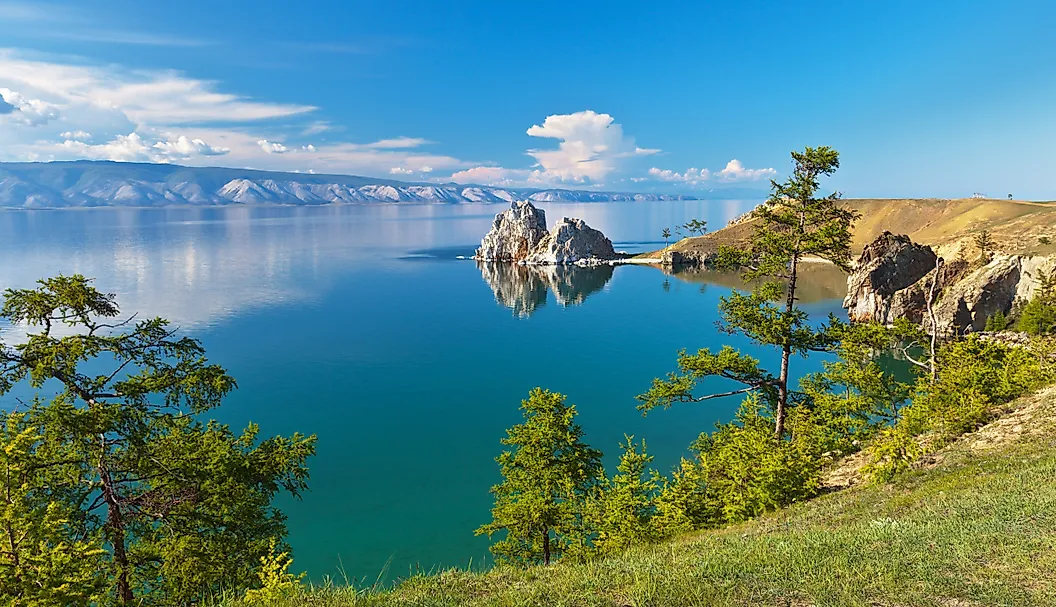
On average, seas dwarf lakes. The Philippine Sea, one of the largest, spans roughly 2 million square miles, and the Mediterranean covers close to 1 million. Most lakes, by contrast, are modest and shallow, with surface areas under 100 square miles, and many are shallow enough to freeze solid or dry out in a hard season.
The averages hide a lot of overlap, though, because a handful of lakes are staggering. The Caspian Sea covers about 143,000 square miles, larger than Germany. Lake Superior is the largest freshwater lake in the world by surface area at roughly 31,700 square miles. Lake Baikal in Siberia plunges about 5,387 feet down, the deepest lake on Earth, and holds close to one-fifth of all the planet's unfrozen fresh water on its own. A large lake easily dwarfs a small sea, which is exactly why size alone never settles the question. One other contrast holds, however: because lakes are not resupplied by the ocean, they can shrink, split, or vanish, while a sea almost never does.
Salt, Fresh, And In Between

Seas are saltwater, with an average salinity of about 35 grams of salt per kilogram of water, close to the ocean's own. Lakes are a different story. Most are freshwater, because rivers flow in and back out of them, carrying dissolved minerals away before they can build up. That constant flushing is why the sea is salty and most lakes are not: the ocean has nowhere to drain, so its salt accumulates over geologic time, while a through-flowing lake keeps rinsing itself.

When a lake has no outlet, the opposite happens. Rivers still deliver salts and minerals, but the only way out is evaporation, which leaves the salt behind and concentrates it year after year. These closed-basin lakes can turn intensely saline, like the Great Salt Lake and the Dead Sea, whose water runs about 34 percent salt, roughly ten times that of the ocean. The Dead Sea is often called the saltiest lake on Earth, but that is a myth: the title belongs to tiny Gaet'ale Pond in Ethiopia and Don Juan Pond in Antarctica, and the Dead Sea is only one of the saltiest. It is, however, the lowest exposed point on the planet's surface.
How They Form
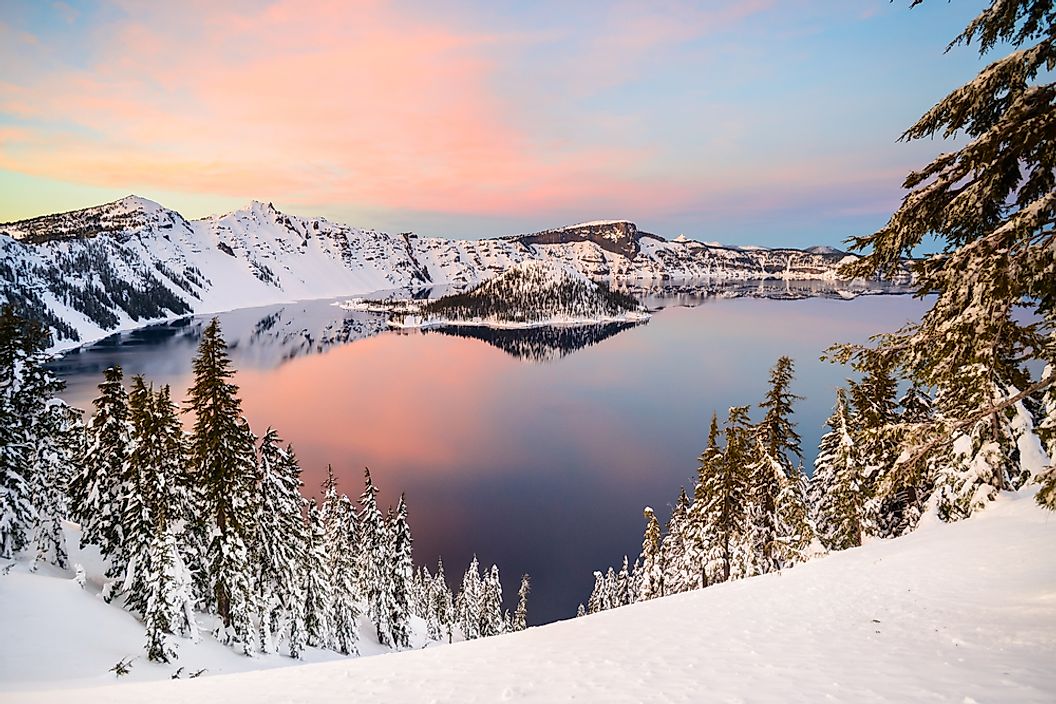
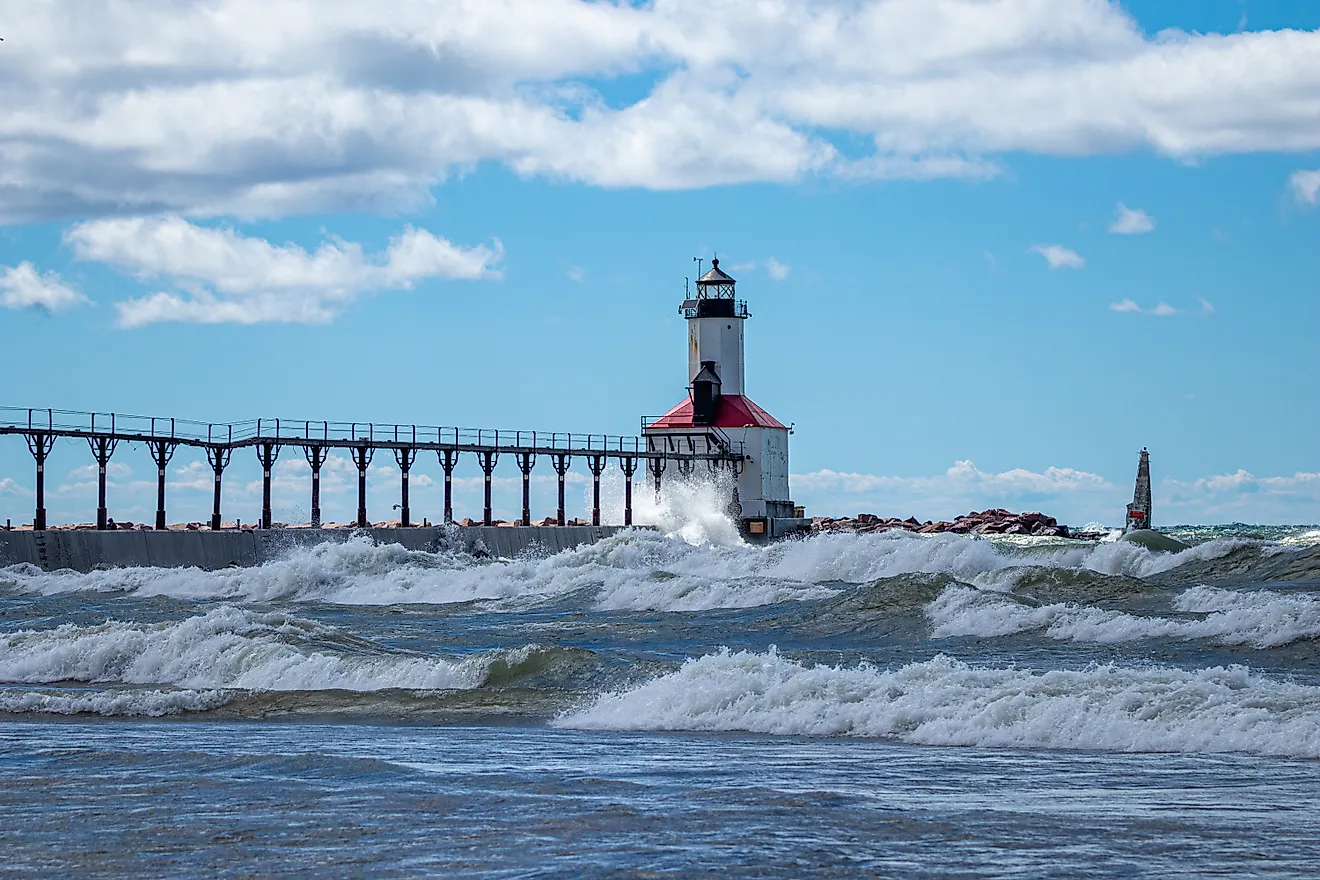
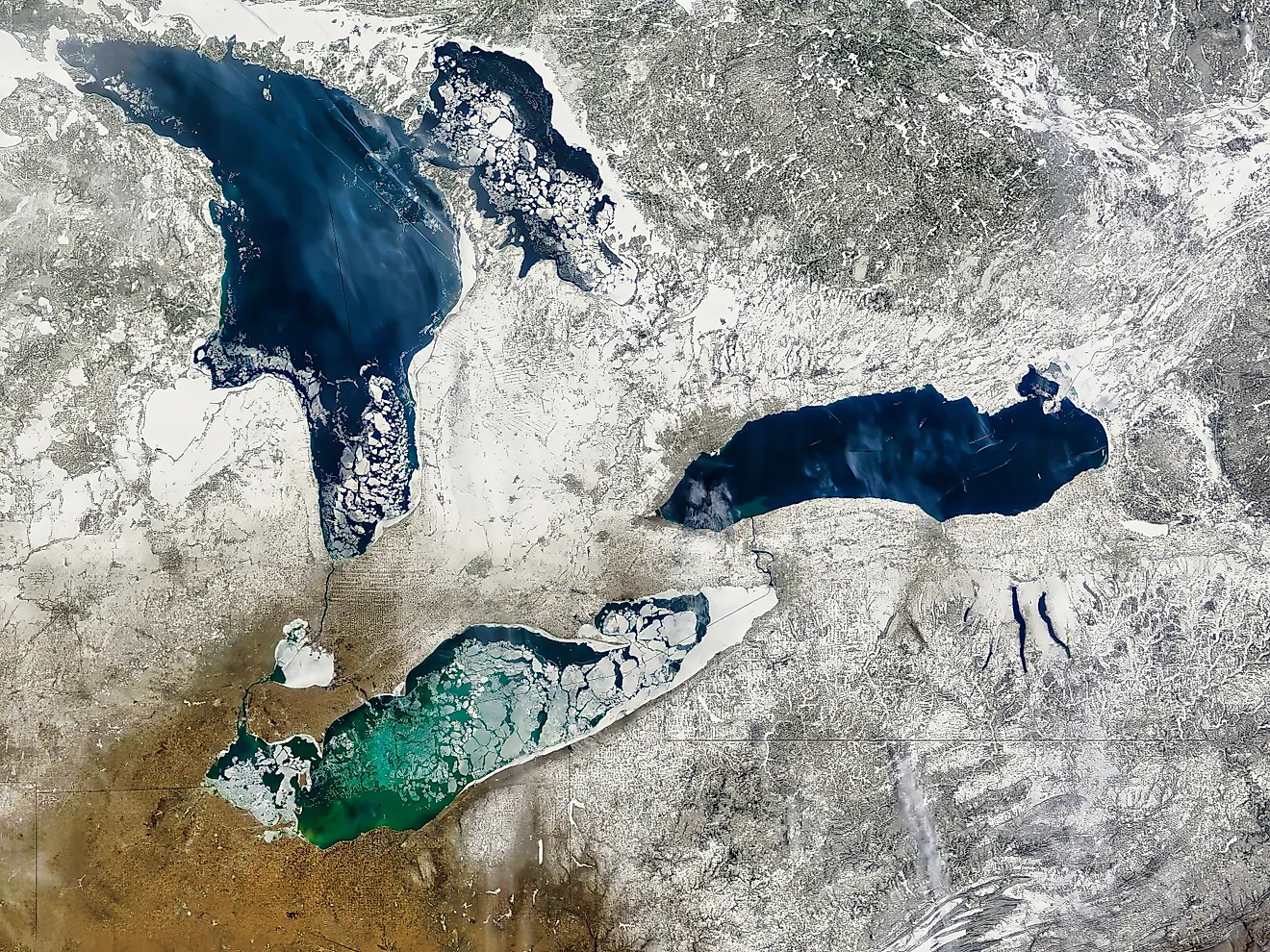
Lakes are born in many different ways, and the variety is part of what sets them apart. Some fill tectonic rifts where the crust pulls apart, which is how both Lake Baikal and Africa's deep rift lakes formed. Others sit in basins scraped out by ancient ice sheets, the origin of the Great Lakes of North America. Crater Lake in Oregon fills a volcanic caldera left when a mountain collapsed roughly 7,700 years ago, and oxbow lakes form when a looping river bend gets cut off from the main channel.
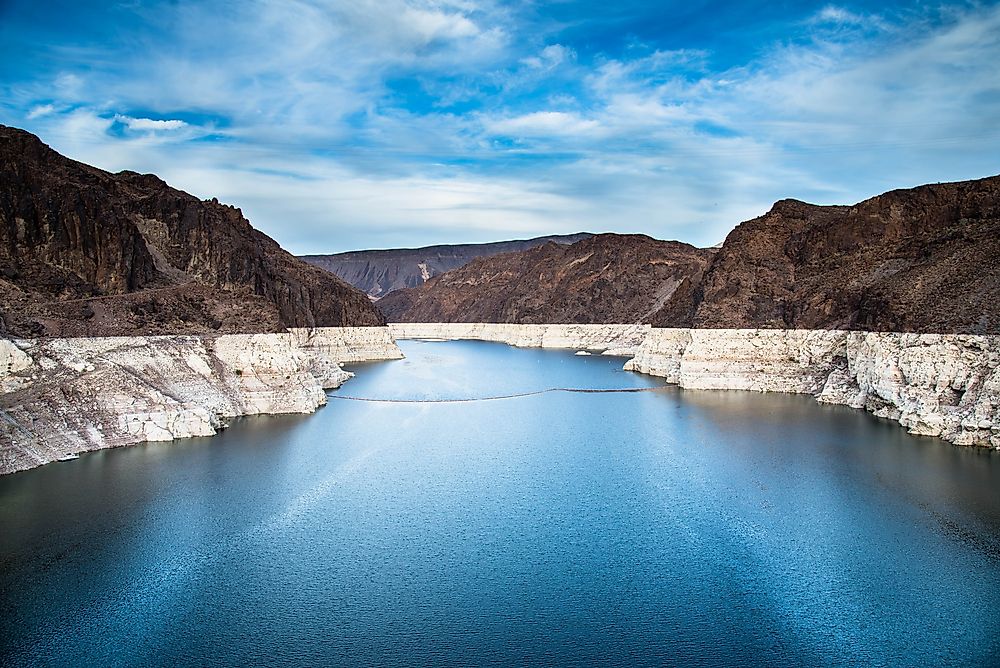
Lakes are also the only major bodies of water that people build on purpose. Dam a river valley and the reservoir that pools behind it is, for all practical purposes, an artificial lake. Seas allow no such thing. A sea is a piece of an ocean basin, shaped over millions of years by shifting tectonic plates and rising and falling sea levels, and it is always a work of nature rather than engineering.
Enclosed By Land

Land wraps a lake completely. Stand anywhere on its shore and you can, in principle, walk all the way around it without crossing another body of water. A sea is only partly framed by land. Marginal seas such as the Caribbean and the Arabian Sea sit along the edge of an ocean, bounded on some sides by coastlines or chains of islands while staying wide open to the deep water beyond. Nearly enclosed seas like the Mediterranean come closest to looking like lakes, yet the thread of a strait always keeps them tied to the ocean. That difference in enclosure is closely related to the ocean-connection test, and together the two settle almost every case, including trickier neighbors like a gulf and a bay.
The Life Within

Because a sea is part of the ocean, its life is part of the ocean's too. Coral reefs, kelp beds, and vast schools of saltwater fish fill its shallows, and wide-ranging animals such as whales, sharks, and tuna pass freely between a sea and the open water it joins. The organisms are built for salt water and for a world that connects to the rest of the marine system.

A lake is an island of water, and isolation makes its life unusual. Cut off for thousands or millions of years, lakes tend to evolve species found nowhere else. Lake Baikal shelters the world's only freshwater seal along with hundreds of endemic creatures, and Lake Tanganyika and its African rift neighbors have produced hundreds of cichlid fish species that exist only in those waters. Where a sea's wildlife blends into the global ocean, a lake's often belongs to that lake alone.
Famous Names That Fool Everyone

History, not geography, is why so many lakes carry the word "sea." The Caspian earned its name from the Romans, who called it a sea because its water was salty and never realized it was fully landlocked. The Dead Sea is a salt lake sunk more than 1,400 feet below sea level. The Aral Sea, straddling Kazakhstan and Uzbekistan, was the fourth-largest lake on Earth until Soviet-era irrigation diverted the rivers that fed it, leaving fishing boats stranded on dry seabed far from any shore.

North America has its own example in California's Salton Sea, a saline lake created by accident in 1905 when the Colorado River broke through a canal and flooded a desert basin. The Sea of Galilee, where boats have sailed for millennia, is really the freshwater Lake Kinneret. In every case the "sea" label is a leftover of size, saltiness, or old habit, never a sign that the water reaches the ocean.
One Question Settles It
Strip away the names, the salt readings, and the surface areas, and one question decides what you are looking at: does the water connect to the ocean? If it does, even through a single narrow strait, it is a sea. If the land closes around it completely, it is a lake, no matter how large, how salty, or how grand its title. Size and salinity are useful clues, but they are only clues. A lake can be enormous and briny, a sea can be small and pressed against a coast, and the Caspian will go on being called a sea while remaining, in every way that counts, the largest lake on Earth.