7 Snake Infested State Parks In Arkansas
Arkansas is a diamond in the rough for travellers who crave outdoor thrills. The state's passion for outdoor adventure goes back to the founding of Hot Springs National Park, which was officially recognized as a national park in 1921. Hot Springs National Park was the first federally protected natural area reserved for public use, as President Andrew Jackson designated the area the Hot Springs Reservation in 1832. Arkansas also carries the impressive distinction of being home to Crater of Diamonds State Park, the only place in the world where people can search for authentic diamonds in their original volcanic source. These natural areas have many wild inhabitants, like the famous razorback feral pigs, nine-banded armadillos, and ruby-throated hummingbirds. Arkansas also has 39 species of snakes, of which only six are venomous. If you're itching to see the natural beauty of Arkansas for yourself, here are seven of the most snake-infested state parks you can add (or delete) to your itinerary.
Petit Jean State Park

Petit Jean State Park feels built for vertical movement. Trails drop sharply into ravines, rise again to bluff-top overlooks, and thread through boulder-strewn terrain where snakes thrive. Copperheads are particularly well suited to the park’s broken rock and leaf litter, where their coloring disappears against the ground. Rat snakes and racers move confidently through wooded slopes and cliff edges, often visible to hikers scanning the terrain below. The park rewards curiosity, descending staircases into canyons, edging along stone paths, but that same curiosity brings visitors into environments where snakes rely on stillness and camouflage. Petit Jean’s physicality makes every step intentional, and wildlife encounters feel like part of the challenge rather than a surprise.
Devil’s Den State Park

At Devil’s Den, the adventure unfolds in tight quarters. Trails wind through narrow valleys where sandstone walls rise close on either side, and light filters unevenly through the canopy. These shaded, rocky corridors create reliable shelter for snakes, particularly copperheads that favor cool stone and fallen debris. Timber rattlesnakes may occupy more isolated ridges beyond the main trail system, while kingsnakes and rat snakes patrol crevices and stream edges. Visibility can change quickly here, especially where paths curve around rock formations. Devil’s Den demands slower movement and sharper observation, making the presence of snakes feel integrated into the experience of navigating confined, rugged terrain.
Lake Ouachita State Park

Lake Ouachita State Park expands outward rather than upward. With miles of undeveloped shoreline, forested peninsulas, and open water stretching in every direction, the park invites exploration by boat, kayak, or foot. Snakes are part of that scale. Water snakes are frequently seen cutting across coves or resting on sun-warmed rocks, while copperheads and timber rattlesnakes inhabit wooded slopes just beyond the shoreline. Unlike parks defined by tight trails, Lake Ouachita welcomes venturing away from crowds, where fallen trees and quiet inlets become staging grounds for wildlife. Here, snake encounters feel tied to distance, how far you paddle, how remote the campsite, and how long you stay off the main routes.
Mount Magazine State Park

Mount Magazine State Park introduces altitude into the equation. Trails climb steeply across exposed rock and forested ridges, where temperature, wind, and terrain shift quickly. Copperheads take advantage of thick leaf cover along slopes, while timber rattlesnakes may be found near sunlit rock faces and less-traveled areas. Rat snakes are also common, sometimes appearing unexpectedly along trails or in trees. Hiking here is demanding, with elevation changes that force regular pauses, and scanning the ground becomes second nature. Mount Magazine’s height and isolation give it a commanding presence, and snakes occupy it with the same confidence as climbers pushing toward the summit.
Pinnacle Mountain State Park

Pinnacle Mountain State Park compresses challenge into a small footprint. The summit trail is steep, rocky, and unforgiving, requiring hands-on climbing in places. Copperheads favor these rock-strewn environments, especially along forest edges and shaded slopes, while racers and garter snakes move quickly through lower elevations. With high foot traffic, snakes tend to remain near less-used routes or natural rock piles just beyond the main climb. The park’s proximity to Little Rock adds an edge to the experience, as urban life drops away quickly as terrain takes over. Pinnacle Mountain delivers intensity rather than distance, and snake sightings reinforce how quickly wild conditions can assert themselves.
Village Creek State Park

Village Creek State Park operates at ground level, where water defines movement. Trails trace the creek’s path, canoe routes slip through narrow channels, and wetlands shape every step. Cottonmouths are strongly associated with these waterways, often seen near submerged logs or thick vegetation along the banks. Non-venomous water snakes and garter snakes are active throughout the park, especially during warm, humid conditions. Unlike upland parks, Village Creek keeps visitors close to the water for extended periods, increasing the likelihood of snake encounters. Exploration here feels fluid rather than vertical, guided by current and contour rather than elevation.
Withrow Springs State Park

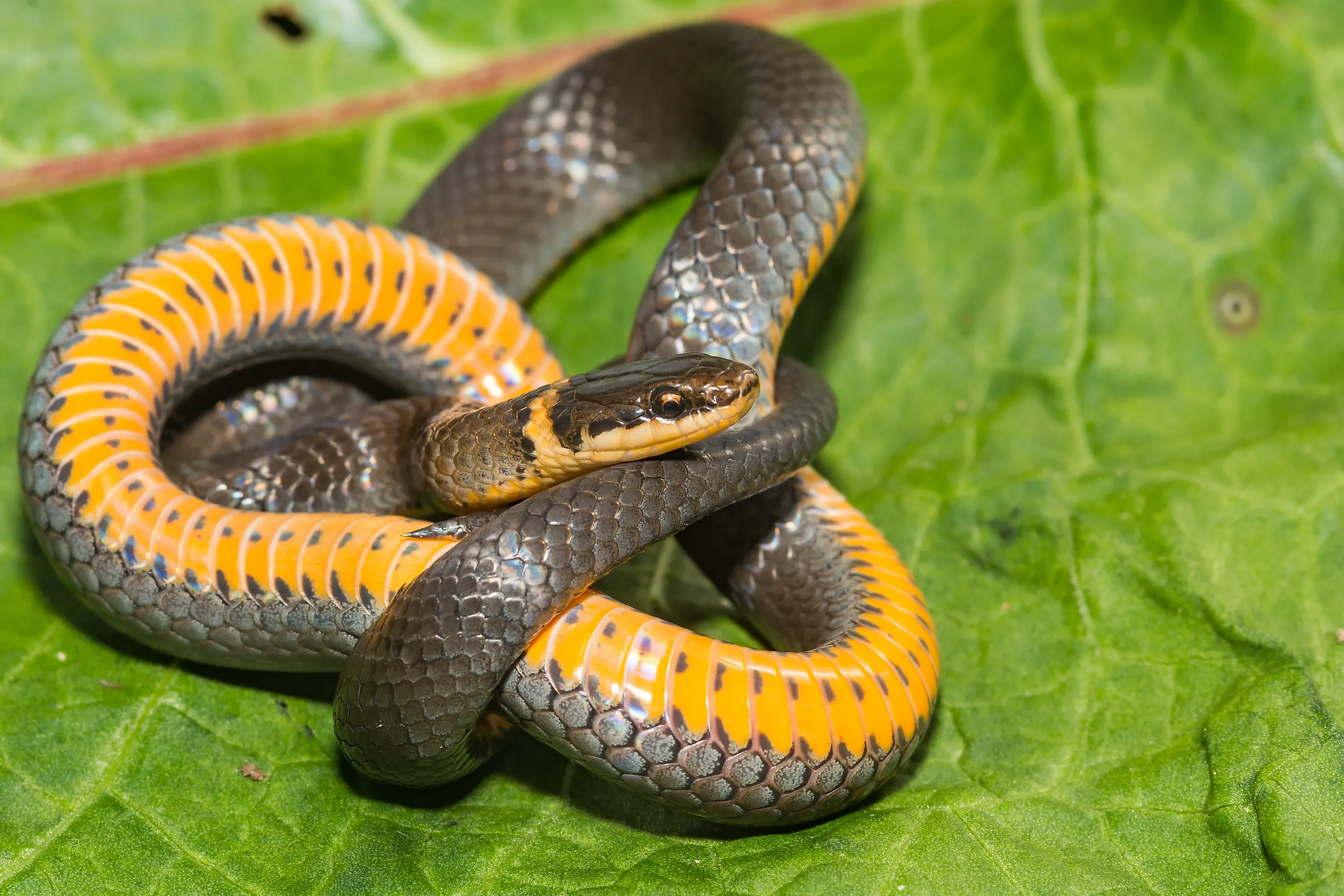
Withrow Springs State Park offers a hands-on outdoors experience shaped by forest shade and cold spring water. The terrain rolls gently, but the ground is layered with leaf litter, roots, and stone, perfect cover for copperheads that rely on stillness rather than speed. Rat snakes and smaller species such as ring-necked snakes also inhabit the area, often appearing along lightly traveled paths. Trails feel informal and organic, following the land instead of cutting through it. Withrow Springs calls for attentiveness rather than endurance, and snake encounters often occur quietly, discovered only when movement breaks the stillness of the forest floor.
Arkansas: Where Being in Nature Is as Easy as a Trip to Walmart
Arkansas is more than the birthplace of Johnny Cash, President Bill Clinton, and Walmart; it is a place where the American hunger for adventure and exploration is welcomed and satisfied with numerous mountain ranges, rivers, and hiking trails. Visitors can satisfy their physical appetites with distinct foods like fried pickles, cheese dip, and possum pie (no, it's not made with possums). But, when you find yourself trekking through the forests of Lake Ouachita or pressing on to the peak of Pinnacle Mountain, remember that you share the land with wild residents. Wildlife encounters offer some of the most memorable outdoor experiences when experienced from a safe distance, and that is especially true for snakes. So, look, behold, and quietly keep moving as you take in everything wild Arkansas has to offer.