5 Most Snake-Filled Bodies Of Water In Maine
Maine is one of the few states in the U.S. that has no venomous snakes, with the timber rattlesnake once living in the southern region but driven to local extinction centuries ago. Many nonvenomous snakes still call Maine's waters and wetlands home, including the common watersnake and the eastern garter snake. The ribbon snake and DeKay's brown snake also live in wetland and woodland habitats across the state. At times these snakes are mistaken for venomous species like cottonmouths, but their bites contain no venom and pose no real risk. Wildlife watchers should keep their eyes peeled for snakes in these five snake-filled bodies of water in Maine.
Union River

The Union River is a small river at 21.9 miles long that runs through Hancock County in the eastern part of the state. It forms from Graham Lake before flowing south, where it flows through multiple lakes formed by dams. The river has been dammed multiple times, including in the colonial era, as a way to generate power. This damming has impacted wildlife, including fish, but the undammed West Branch of Union River is home to several rare species, including the ribbon snake.

This semi-aquatic snake prefers the free-flowing water and surrounding bogs, swamps, meadows, wetlands, and other wet environments that are bountiful in this branch of the Union River. This snake is considered of Special Concern in Maine as its preferred marshy habitat is vulnerable to human development, especially in the wetland-upland region of the Union River.
Moosehead Lake

Moosehead Lake is the largest lake entirely within Maine, with a catchment area of 1,268 square miles and a surface area of 74,890 acres. It sits at 1,029 feet in elevation in the Longfellow Mountains. It gets its name from the number of moose that live in the woods surrounding it, and it contains more than 80 islands. Due to its forested environment, it is home to several of Maine's quieter snakes, such as DeKay's brown snake. These snakes live in woodlands and are identifiable by their brown color and dots near their eyes.

Residents have also reported seeing the red-bellied snake, named after their red-orange colored bellies, and the colorful ring-necked snake, which has yellow and orange rings around its entire body. In the lake itself, common watersnakes can be found swimming or basking by the shore. Another snake one might encounter is the smooth green snake, which prefers wet marshes or grasslands. It's most identifiable by its lime green body. None of these snakes poses any risk to humans.
Saint John River

The Saint John River is the longest river that flows through both Maine and eastern Canada, running for 418 miles from its headwaters in the Notre Dame Mountains into northern Maine and then down south into New Brunswick. Despite its northerly location, it's home to several rare insects, including the pygmy snaketail dragonfly, as well as several varieties of nonvenomous snakes.

Garter snakes are known to frequent the wooded areas around the river, and they can also be found swimming in the river's waters. These common snakes can be found swimming in the water in an S-shaped formation similar to how they slither on land. Their diet includes insects, leeches, and worms that may be found along the river's edge.
Sebago Lake

Sebago Lake is the deepest lake in Maine, with a maximum depth of 316 feet and an average depth of 101 feet. This lake doesn't consistently freeze in the winter, largely because the windy conditions here keep the water moving. There are many secrets in the deep waters of this lake, such as two British training aircraft that crashed into each other and fell into the lake during World War II. Another secret is the many snakes that swim through these waters or live in the surrounding wetlands.

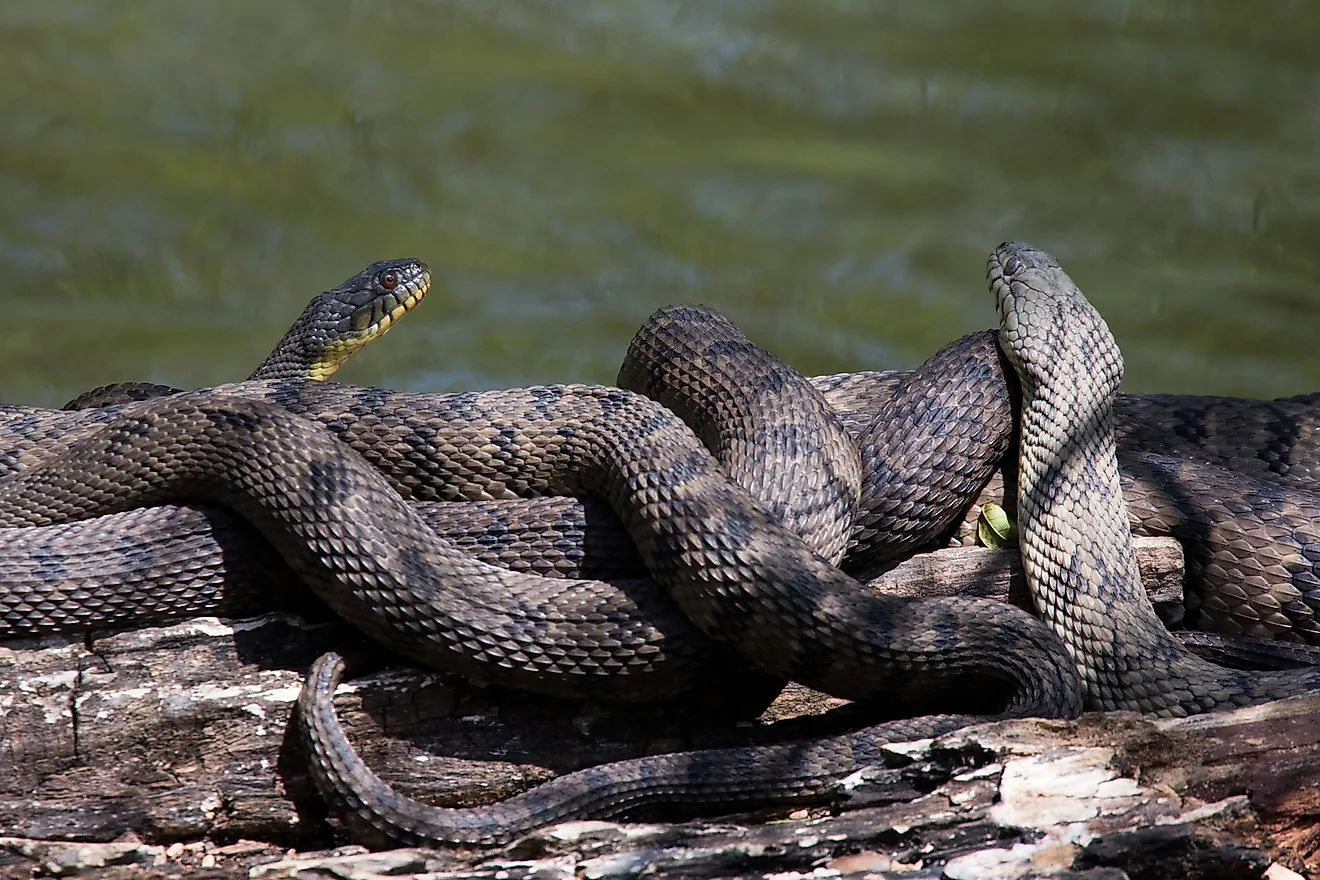
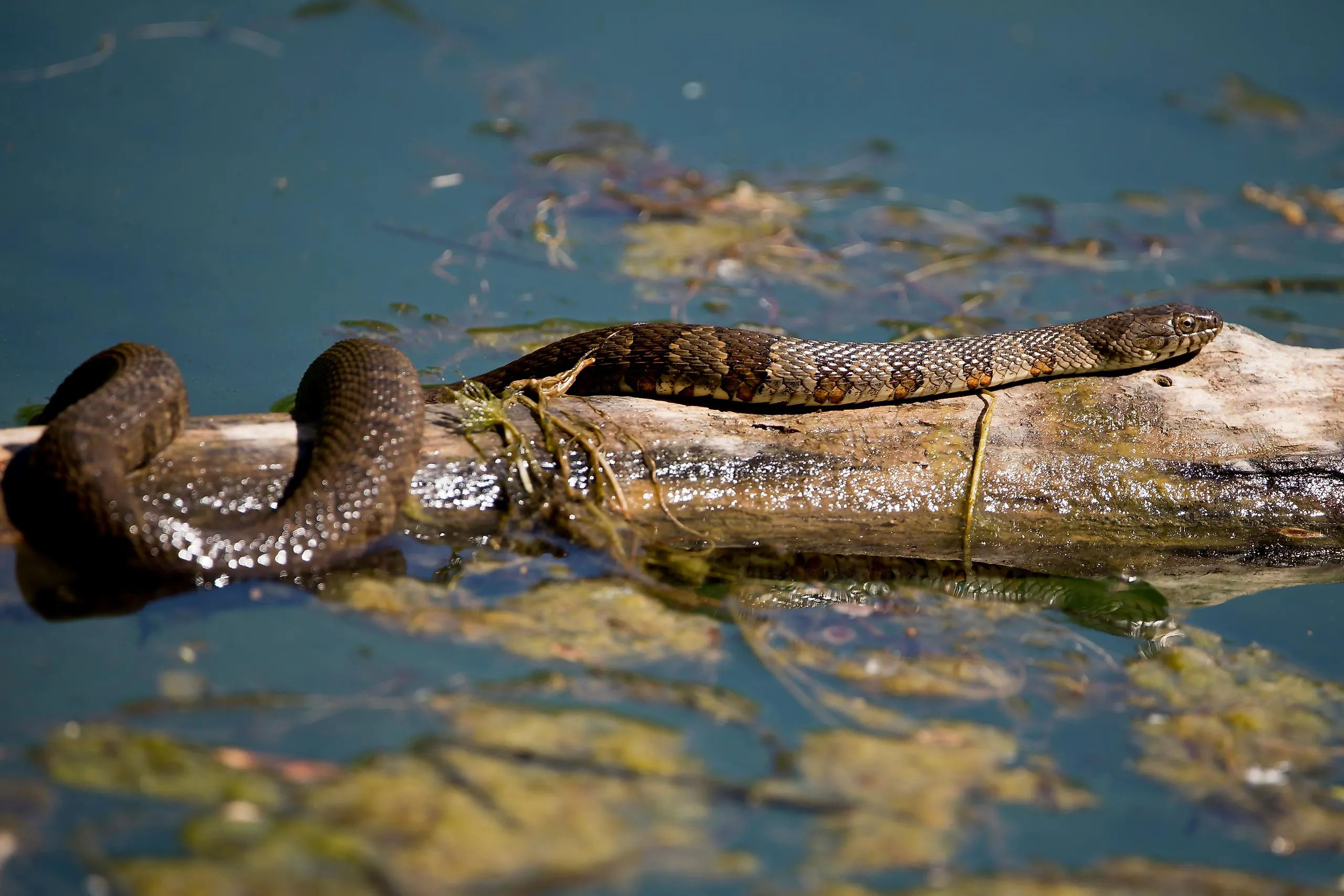
The northern watersnake is one of the most common snakes one can find in the lake itself. It's sometimes referred to as a common watersnake. Although not particularly aggressive, if threatened, it will lower its body to the ground and may bite. Citizens have reported seeing these watersnakes out on islands in Sebago Lake, which showcases the snake's strong swimming ability.
Other common snakes that live here are the eastern garter snake, a harmless snake that can live in walls, shrub fields, and many other environments. The wetlands environment around Sebago Lake provides a habitat for ribbon snakes, which are known to release a foul-smelling odor when threatened by humans or other predators.
Androscoggin Lake

Androscoggin Lake is large but shallow at 3,856 acres with a maximum depth of 38 feet. Within its waters are four islands, including Androscoggin Island, Lothrop Island, Blodgett Island, and Norris Island. Due to its shallow depth, the water here is warm. These warmer waters are great swimming spots for the northern watersnake.
These aquatic snakes can grow to be between 2 and 4.5 feet long with bodies ranging in color across gray, tan, and brown. They also have dark bands on their bodies. This feature, combined with their aquatic tendencies, means the snake is often confused for the venomous cottonmouth. However, as mentioned above, there are no venomous snakes in Maine.

The lake contains an outwash plain pondshore, with a variety of shrubs such as highbush blueberry and leatherleaf, which are helpful for the foraging ribbon snake. This nonvenomous snake grows to be around 16 to 35 inches and is most identifiable by its bright ribbon down its back.
There's no need to fear these snakes
Although many people are naturally afraid of snakes, there's no reason to fear any of these nonvenomous snakes one might encounter in Maine. While some might flee from humans, others, like DeKay's brown snake, are less easily spooked and will simply observe humans. For wildlife documenters, it's a good idea to snap a picture of these snakes for identification. This information can help local wildlife authorities identify species and catalog those under threat, such as the ribbon snake. Visitors to these lakes and rivers can also calm the nerves of anyone who sees a watersnake and believes it is a venomous cottonmouth.