The Great Lakes Ranked By Summer Water Temperature
Hot tub or cold plunge, the Great Lakes offer a wide range of summer water temperatures to fit any floating preference. Sometimes you will find that range within a single lake. Summer surface temperature is shaped mainly by a lake's average depth and its latitude. The amount of shallow, sun-warmed shoreline matters too. Some of these five inland seas stay swimmable well into September. Others rarely climb out of the 60s Fahrenheit even in August.
The Great Lakes cover a combined 94,250 square miles across the U.S.-Canada border. Every summer they host millions of swimmers, boaters, and anglers. Surface temperatures here also shape lake-effect weather and drive algae blooms and fish behavior. This ranking uses typical late-summer surface data from NOAA's Great Lakes Environmental Research Laboratory. The figures come from satellite imagery and buoy observations. The list below runs warmest to coldest.
1. Lake Erie

Lake Erie is the warmest of the Great Lakes in summer by a wide margin. It always comes down to depth: Erie has an average depth of just 62 feet (19 meters) and a maximum depth of only 210 feet (64 meters), making it by far the shallowest of the five lakes. That shallow basin heats up quickly under the summer sun, and by late July and August, surface temperatures in the lake's warmer western basin regularly reach the upper 70s Fahrenheit (mid-20s Celsius), with some shallow bays and harbors pushing into the low 80s°F (upper 20s°C) during heat waves.
Erie's warm front makes it the first Great Lake to become swim-friendly each year, often by late May or early June along its southern shore. The tradeoff is that this same shallowness makes Erie prone to sudden temperature swings, algae blooms, and the choppy, fast-building waves that come with a shallow lake basin. Even so, for anyone wanting to toe-dip in the warmest possible Great Lake, Erie is the clear winner.
2. Lake Ontario

Lake Ontario is the smallest Great Lake by surface area, but it is relatively deep for its size, with an average depth of 283 feet (86 meters) and a maximum depth of 802 feet (244 meters). Despite that depth, Ontario still ranks as the second-warmest Great Lake in summer, due to its comparatively southern, sheltered position and the warm water it receives from Lake Erie via the Niagara River. By late summer, surface temperatures at Ontario's warmest points, generally its western end near Toronto and Hamilton, can reach the mid-to-upper 70s°F (mid-20s°C), though the lake's open, deeper waters tend to run several degrees cooler than Erie's shallow basin.
Lake Ontario's depth also means it holds onto heat longer into the fall than the shallower lakes, and it almost never freezes over completely in winter as a result. For summer travelers, that translates into a comfortably warm, swimmable lake that stays mild later into September than Erie's more shallow-basin extremes.
3. Lake Michigan

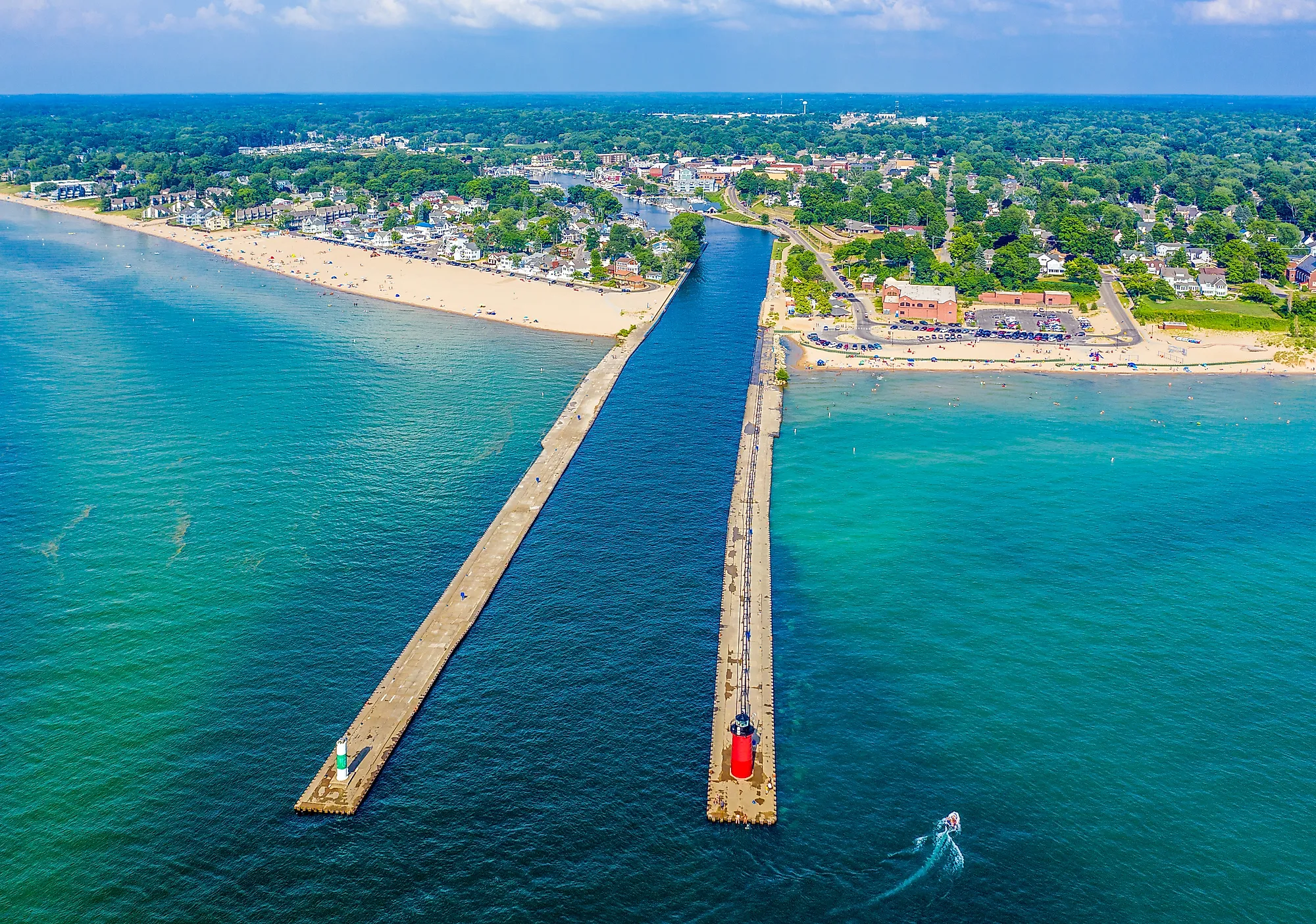
Lake Michigan is the only Great Lake located entirely within the United States, and its summer surface temperatures typically land in the upper 60s to low 70s°F (about 20-22°C) by August. The lake's southern basin, along the Illinois, Indiana, and southwest Michigan shorelines, warms fastest and often reaches the low-to-mid 70s°F (low 20s°C) during peak summer, while the deeper northern basin near the Upper Peninsula stays noticeably cooler.
With an average depth of 279 feet (85 meters) and a maximum depth of 923 feet (281 meters), Lake Michigan is deep enough to resist the rapid warming seen on Erie, but its long north-south orientation means conditions vary widely depending on where along its 1,640 miles (2,640 kilometers) of shoreline a swimmer heads in. Popular beach towns near Chicago and along Michigan's western coast tend to offer the most reliably warm water on the lake each summer.
4. Lake Huron

Lake Huron runs close behind Lake Michigan in summer surface temperature, generally reaching the upper 60s°F (about 19-20°C) across its main basin by August, with considerable local variation. Huron's Saginaw Bay, a broad, shallow inlet on the lake's Michigan side, warms dramatically faster than the rest of the lake and can reach the mid-70s°F (mid-20s°C) in peak summer, making it one of the warmest swimming spots anywhere on the upper Great Lakes.
Away from Saginaw Bay, Huron's open water and Georgian Bay tend to run several degrees cooler, since the lake has an average depth of 195 feet (59 meters) and a maximum depth of 750 feet (229 meters) spread across a very large surface area. That combination of a huge, moderately deep lake with one standout warm bay is what gives Huron its wide range of summer swimming conditions, with bathtub-warm shallows giving way to noticeably brisker open water just a few miles out.
5. Lake Superior

Lake Superior is by far the coldest Great Lake in summer. As the largest, deepest, and most northern of the five lakes, with an average depth of 483 feet (147 meters) and a maximum depth of 1,332 feet (406 meters), Superior holds an enormous volume of cold water that summer sun simply cannot warm. Even at the height of summer, much of the lake's open water stays below 60°F (16°C), and only its shallowest bays, such as Chequamegon Bay near Ashland, Wisconsin, or Agawa Bay in Ontario, reach the upper 60s°F (around 20°C) by August.
Superior's cold water is part of what keeps the lake so clear and its ecosystem so pristine, but it also means swimming here is a very different experience from a dip in Lake Erie. Visitors who want to test the water on Superior are better off sticking to its warmer, protected bays rather than its vast open expanse, where hypothermia risk remains real even in midsummer.
How Are Great Lakes Water Temperatures Measured?
Great Lakes surface water temperatures are tracked daily by NOAA's Great Lakes Environmental Research Laboratory (GLERL) through its CoastWatch program. The program combines satellite imagery from instruments like VIIRS and AVHRR with in-situ readings from moored buoys operated by the National Data Buoy Center. This satellite-and-buoy approach, known as the Great Lakes Surface Environmental Analysis (GLSEA), produces a daily lakewide temperature map for each of the five lakes and forms the basis of NOAA's long-term climatological averages. Because surface temperatures can vary significantly between a lake's shallow bays and its open water, the figures above reflect typical whole-lake and near-shore patterns rather than a single fixed number for each lake.
Water For All On The Great Lakes
Lake Erie's fast-warming shallows and Lake Superior's frigid depths mark the two extremes, and the five Great Lakes offer a surprisingly wide range of summer swimming conditions within a single freshwater system. Depth is the single biggest factor at play, but shoreline geography, latitude, and protected bays all shape where the warmest water turns up each summer. Whether the goal is a warm-water beach day on Erie or a bracing swim in Superior's clear, cold water, knowing how these five lakes compare makes it easier to plan a perfect Great Lakes summer.