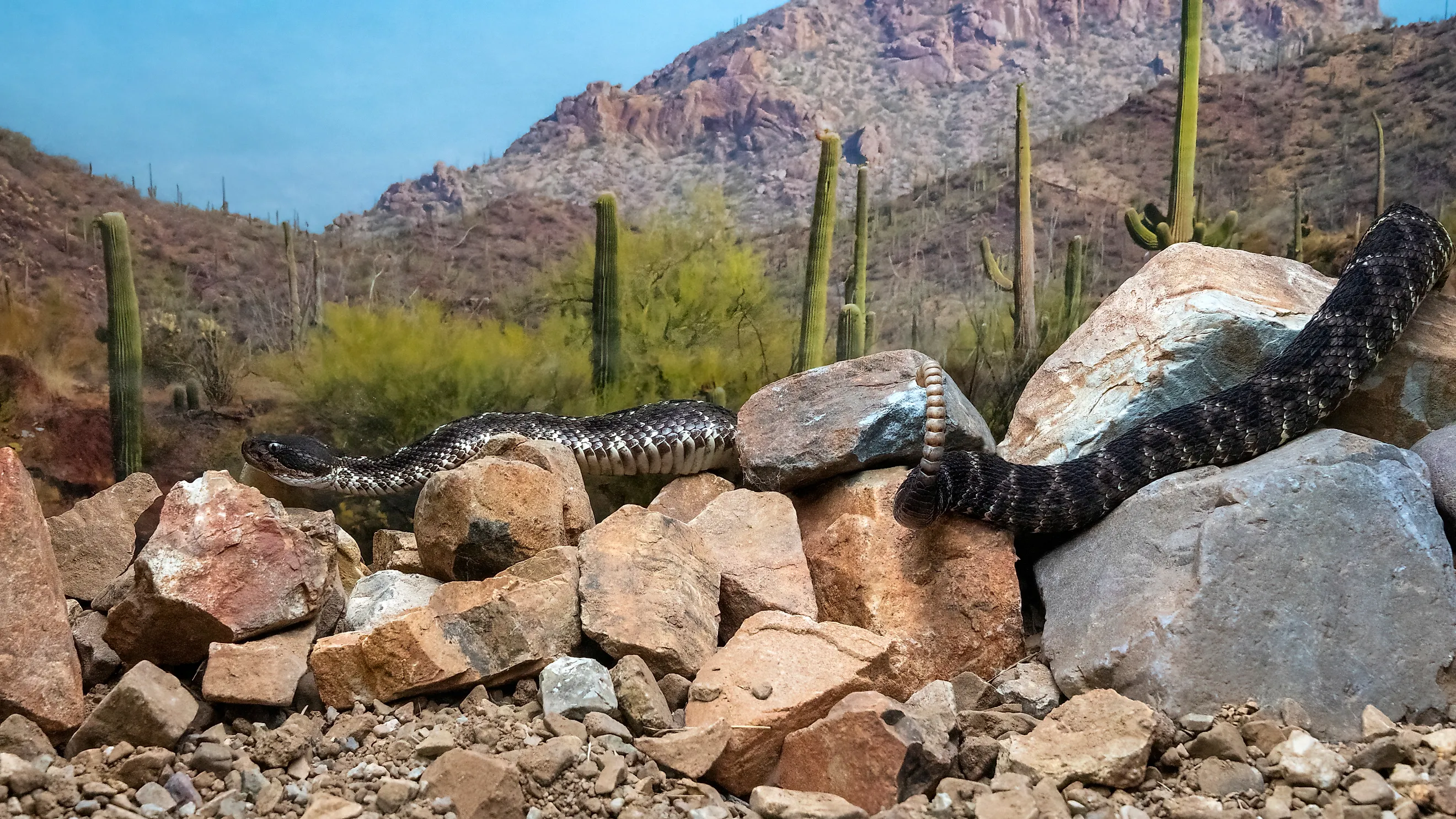
Which State Has More Venomous Snakes: Texas Or Arizona?
Many different snakes live in the United States. What's incredible about snakes is that every species is so unique. Some snakes spend most of their time underground and are rarely seen. Others are comfortable living close to humans. Some snakes constrict their prey to death; others are venomous. Also, not every state has the same types of snakes, and hence, the type of snakes you see in the United States will depend on where you are. In the south, the warm climate is better suited to snakes, so southern states typically have more snakes. Two southern states with a plethora of snakes are Arizona and Texas. These states both have more than 40 unique kinds of snakes. Some of them are even venomous. The venomous snakes are the ones you want to be aware of. While Arizona and Texas are both snake-filled states, there is one state that has more venomous snakes. Here, we explore the venomous snakes in each state and uncover which state has more venomous ones.
Texas Snakes

Texas has around 96 different species of snakes. The warm climate makes Texas the perfect home for snakes. Rare snake species include the Mojave rattlesnake and the desert massasauga. Only 14 of these snakes are venomous. Snakes in Texas are found everywhere, from rural areas to brush piles near people's homes. Most of the venomous snakes in Texas are pit vipers in the Viperidae family. These snakes have an opening on each side of the head between the eye and the nostril, called the pit. In Texas, there are three groups of pit vipers, including Copperheads, Cottonmouths, and Rattlesnakes. The Coral Snake is the only snake in the Elapidae family.
Rattlesnakes

Of the 14 poisonous snakes in Texas, 9 are rattlesnakes. These include the Mottled Rock, Banded Rock, Blacktail, Mojave, Prairie, Desert massasauga, Western massasauga, Western diamond-backed, and Timber rattlesnakes. Some rattlesnakes look very similar. For example, the Mojave rattlesnake resembles the Western diamond-backed snake but is more slender. The Western diamond-backed rattlesnake is one of the most common snakes in Texas. It is gray with a diamond-shaped pattern along the back. Each diamond has a yellow or white outline. Western diamond-backed rattlesnakes live in canyons and on rocky cliffs. They are found throughout Texas except in the state's easternmost part.
The Timber rattlesnake is a type of rattlesnake found almost exclusively in eastern Texas. The Timber rattlesnake is a brown snake with dark bands and a black tail. It ranges in size from 36 to 60 inches and has large fangs that deliver a high yield of venom, making it one of the most dangerous snakes in the United States. The diet of Timber rattlesnakes consists of small mammals, birds, frogs, and other snakes. Specifically, these snakes prefer garter snakes.
Rattlesnakes found in western Texas include the Mottled Rock rattlesnake, which inhabits mountainous areas; the Mojave rattlesnake; and the Banded Rock rattlesnake, which is found only at the far western tip of the state. The rattlesnakes found in the center of the state include the Blacktail rattlesnake and the Western massasauga. The Desert massasauga lives in the Trans-Pecos, western Panhandle, and the lower Rio Grande Valley.
Copperheads

In Texas, there are three subspecies of Copperheads, the Southern copperhead, the Broadbanded copperhead, and the Trans-Pecos copperhead. Copperheads are beautifully colored snakes with chestnut crossbands and a lighter-colored body. These snakes tend to dwell in rocky, dry areas and wooded bottomlands. Copperheads don't like water. You typically won't find them next to a river or lake.
Cottonmouths

In Texas, the only recognized subspecies of cottonmouth is Agkistrodon piscivorous. Also known as water moccasins, these snakes are easily identifiable by their distinctive coloration, which can range from olive-brown and olive-green to solid black. The name 'cottonmouth' arises from the white tissue inside their mouths, which they expose when feeling threatened. Unlike copperheads, cottonmouths are aquatic and prefer habitats such as swamps, slow-moving waterways, rivers, ponds, and coastal waters.
Coral Snakes
Coral snakes are the only members of the Elapidae snake family in Texas. They prefer to live in sandy soil with open ground in ecosystems. Coral snakes are commonly found in pine flatwoods and longleaf pine savannas. The snakes have a brightly colored pattern with a broad black ring, a narrow yellow ring, and a broad red ring. The red rings border the yellow rings. There are other snakes in Texas with similar markings. However, what makes the Coral snakes unique is that the red and yellow stripes are touching. If you see a snake with this exact pattern, make sure to keep your distance. Although it's unlikely you'll run into one, coral snakes are the most venomous snakes in the region.
Arizona

Arizona hosts a variety of snakes. Due to its dry, hot climate, water snakes are absent. Instead, the state is known for its rattlesnakes, with 13 different species. Other venomous snakes include the Arizona Coral snake, the Mexican Vine Snake, and the Lyre snake, bringing the total venomous snake count to 21. While most of these snakes reside in desert regions, some can be found near golf courses, so golfers should stay alert.
Arizona Snakes
Arizona has the most venomous snakes out of any state in the United States. The most venomous snakes in Arizona are rattlesnakes. Usually, if you are close to a rattlesnake, you will hear the rattle before you see the snake. If you hear a rattle, you should slowly start backing away the way that you came.
Rattlesnakes
Arizona is home to 13 rattlesnakes. Most of the rattlesnakes in Arizona are desert colors, with a mixture of tans, browns, and blacks. Considering how many types there are, it is not uncommon to see a rattlesnake, particularly if you are a hiker enjoying one of the state parks. The types of Rattlesnakes found in Arizona include sidewinder, Arizona black, Great Basin, hopi, Mojave, tiger, ridge-nosed, northern blacktail, speckled, prairie, Western diamondback, twin-spotted, and Grand Canyon rattlesnakes.
Among these snakes, the prairie rattlesnake is one of the most well-recognized pit vipers. Typically, these snakes avoid contact with humans and prefer arid, grassy environments. However, they are extremely venomous, and if you see one, you should keep your distance.
Coral Snake

One of Arizona's most dangerous types of snakes is the coral snake. There is a nonvenomous snake in Arizona called the Milk snake that looks similar to the coral snake. There is a slight difference in coloring between the milk snake and the coral snake. The coral snake has a yellow next to the red stripe, whereas the milk snake has a black strip next to the red stripe. If you can't tell the difference between the milk and coral snakes, it is better just to walk away.
Mexican Vine Snake

Mexican vine snakes are slender snakes with a brown color on their upper side and a yellow underbelly. They can grow anywhere from 3 to 6 feet long. The vine snake has a distinct pointed snout and is one of the sneakiest snakes. Masters at camouflage, the snake hunts lizards, frogs, and birds from trees. The venom from the snake isn't enough to kill a human; however, it will cause an extreme itching reaction.
Lyre Snake
Lyre snakes are light brown or tan in color with dark brown blotches on their bodies. They have a distinctive 'V' shaped marking on their heads. Similar to the vine snake, the Lyre snake is poisonous, but their venom is not deadly. Lyre snakes enjoy being amongst the rocks. You will find them in Arizona's rocky areas and mountains.
Texas vs Arizona Showdown
While Texas, the Lone Star state, is often recognized for its snakes, Arizona's snakes are less in discussion. However, Arizona shouldn't be the state to forget when it comes to snakes. The state has an abundance of snakes. Arizona even has more venomous snakes than Texas, at 21 total. Arizona is also a hugely popular tourist destination where people come to the state from all over to see natural wonders such as the Grand Canyon. Considering the snakes present in the state, it's helpful for people to be aware of what snakes are venomous and how to be safe around snakes.
Snake Safety

Learning about the venomous snakes in Arizona and Texas is more than fascinating. Knowing about these snakes is an important safety skill for travelers or residents of these states. Many encounters with snakes happen around the home. This is because snakes lose their habitat and are forced to move closer to homes for food and shelter.
Usually, snakes find places around people's homes with good hiding places for shelter. This includes wood piles, trash, overturned boats, tarps, livestock pens, etc. To coexist peacefully with snakes, whether in Arizona or Texas, you should follow some snake safety tips. These include making sure to trim the lawn around your home low. You should also remove any brush, wood, rock, or debris piles from around the residence. Always wear shoes while going outside, and never put your hands in places you cannot see. Also, keep in mind that snakes can go through tiny openings. Be cautious when entering a crawl space, basement, or garage.
While it's essential to be cautious, remember that according to the National Safety Council, a person is five times more likely to die from lightning than by a snake. If you practice a bit of snake safety, you shouldn't have to worry about your snake encounters.