The World's Most Isolated Animal Populations
For most animal species, casting a wide net is a reliable way to survive: when adaptable to new habitats and not confined to a small niche, animals are more readily able to adapt and relocate if necessary. But there are some populations of wider-ranging species that eschew this logic. Whether due to habitat fragmentation, geographic separation, or the adoption of a unique niche in response to competition, these populations have distinguished themselves from others of their species by their isolated habitats and unusual ways of living.
Peek below and you’ll meet oddities like cave-dwelling African dwarf crocodiles that swim in bat guano and orange-tinged skin, and the sea wolves of the Pacific Northwest that hunt salmon and swim between islands. Each is a surprising example of how isolation rewrites a species’ playbook.
Cave-Dwelling African Dwarf Crocodiles in Gabon

Nobody knows exactly why there is a remnant population of African dwarf crocodiles (Osteolaemus tetraspis) living in Gabon’s Abana Caves. Researchers don’t know how a species with a range spanning much of West Africa’s inland shoreline came to set up shop in such an obscure locale, nor how many there are, when they arrived there, or what would compel them to do it.
Indeed, it’s hard for scientists to imagine why a semi-aquatic surface species would choose to eat bats, eschew the sunlight their crocodilian peers are known to love, and swim in liquid guano (bat feces) for long enough to start turning orange. Nevertheless, the African dwarf crocodiles of the Abana Caves are doing just that.

Physiologically, the species largely resembles its above-ground cousin. Though the smallest of all crocodilians, African dwarf crocodiles of all persuasions top out around six feet long and make up for their size with unusually tough, armor-like skin. But as a result of their unusual living conditions, there’s one noticeable difference between cave-dwelling individuals and their aboveground counterparts: unlike their yellow-bellied, brown-backed cousins, they’re orange.
Although they’re not yet certain, scientists theorize that the Abana Caves crocodile population has an orange tint to its armor due to the high concentration of urea in the liquid guano in which they spend most of their days bathing. Those researchers theorize that it’s bleaching their skin, hence the unusual color. However, some studies suggest that there might be a genetic mutation at play - one that could be nudging these cave-dwelling crocs towards total genetic differentiation from the above-ground African Dwarf Crocodile population. As often occurs when an animal population becomes extremely isolated (for example, by a geographic barrier like a cave), a genetic rift may be on the horizon.
Sea Wolves of the Pacific Northwest

In North America’s food-rich Pacific Northwest, there are ample opportunities for animal populations to carve out new niches. And on the coast of British Columbia and southern Alaska, one group of grey wolves has done just that. Isolated from their inland species-mates, the aptly-named “sea wolves” of the Pacific Northwest rely on the bounty of the coast for food.
At first glance, this subspecies, also known as the Vancouver coastal wolf (Canis lupus crassodon), bears a striking resemblance to the inland species. Closer examination reveals that they’re smaller, with the highest weight of a coastal wolf topping out around sixty pounds, beneath that of an inland grey wolf. Those smaller and leaner bodies are well-adapted for coastal living: agile, adaptable coastal wolves have been known to swim miles between offshore islands in search of food.
And that food doesn’t quite look like a typical grey wolf’s diet, either. Salmon, beached whales, and seals all make up significant proportions of the coastal wolf’s diet, and it’s thought that as much as 75% of their prey is aquatic. Naturally, this means they have to be excellent swimmers, and they are - to a much greater degree than their cousins further inland. The result? The few wolves who once made their way out to the coast have had enormous success in their adopted ecological niche.
Freshwater-Dwelling Harbor Seals in the Lacs de Loups Marins

How does a sea-dwelling seal end up in a landlocked lake? That is the question often posed regarding the Lacs de Loups Marins in northern Quebec. With a name that translates to “lakes of seals,” it’s evident that visitors have long been fascinated by the quirk of geography that led to this chain of lakes’ population with normally marine harbor seals - so what was that quirk?
In short, the last Ice Age. It’s estimated that the lakes were isolated from the sea by glaciation events somewhere between 3,000 and 8,000 years ago. When glaciers formed, a population of harbor seals was likely isolated from the majority of the species, and with no choice but to adapt, they made this chain of freshwater lakes their home. These days, they’ve diverged in a few key ways from their marine peers: darker coats, wider and flatter skulls, and different breeding times differentiate this harbor seal population from any other.
Although the exact number of extant seals is uncertain, a 2015 study revealed a population size of at least 52. While this may sound alarming, it’s helpful to remember that the closed ecosystem of the lakes could likely never have supported a huge number of seals. Nevertheless, they’ve been recognized as a protected species by the Canadian government in an effort to ensure their future in the face of a changing climate, to which such a small and niche population likely could not adapt without intervention.
Asiatic Lions in the Gir Forest

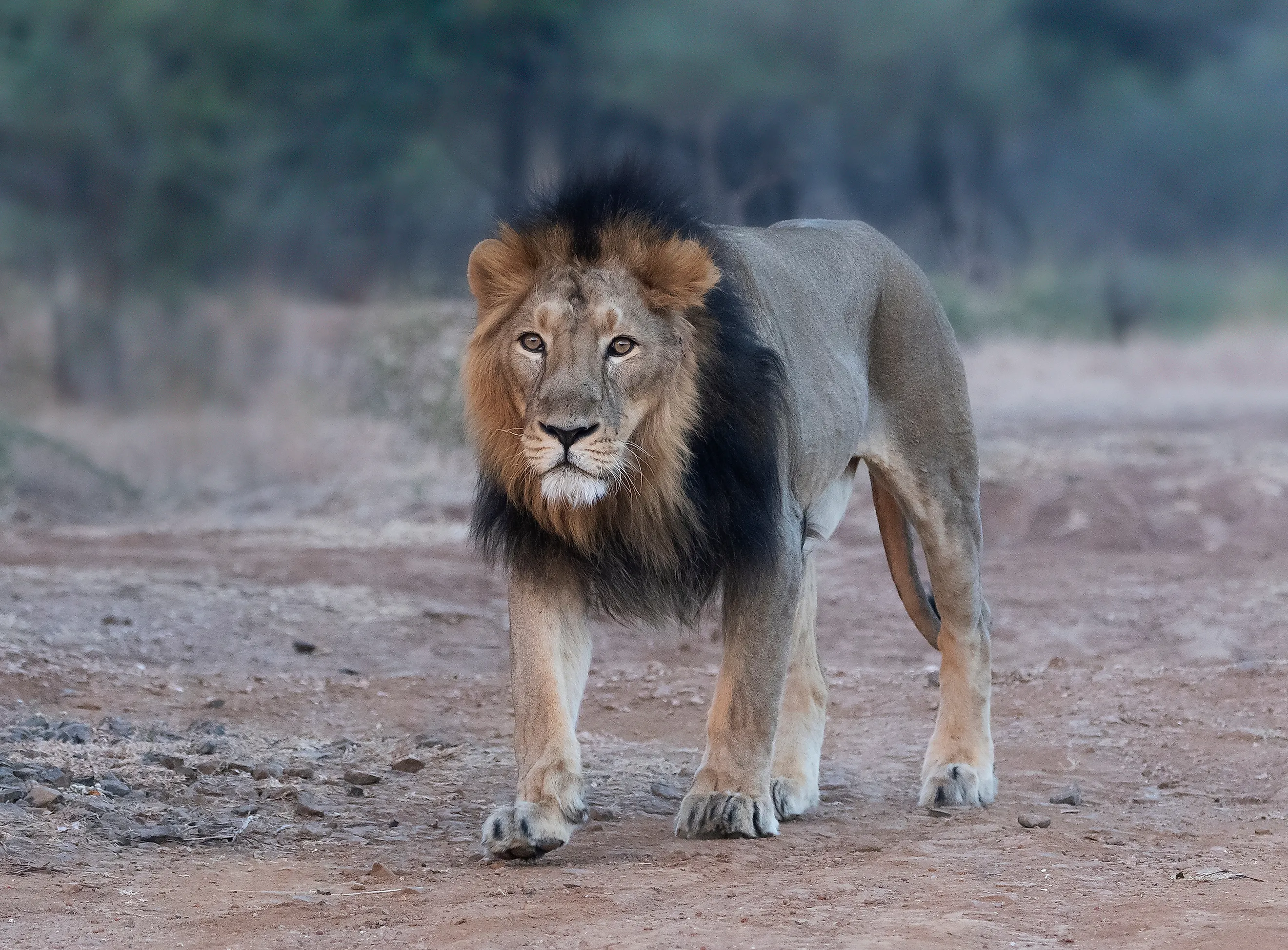
Popular culture associates lions almost unerringly with Africa. They’re the bucket-list species of every safari-goer. But there was a time when lions ranged all the way from Turkey to India, and the Asiatic Lion (Panthera leo leo) is still around today — albeit in a tiny, isolated patch of western Indian forest. What was once the apex predator of a vast stretch of Western and Central Asia is now a relic of roughly 600 individuals living in the Gir Forest of Gujarat.
Although it may sound odd to refer to a near-extinct species as isolated, there’s no better description of the remaining Asiatic Lions. And you can tell by observing them: compared to their African cousins, Asiatic lions are smaller, and you’ll see greater variation in coat color and thinner manes. But it isn’t only the African lion population from which this surviving remnant was isolated: the Gir Forest population split genetically from other Asiatic Lion populations when rising water levels isolated this part of India from mainland Central Asia some millennia ago.
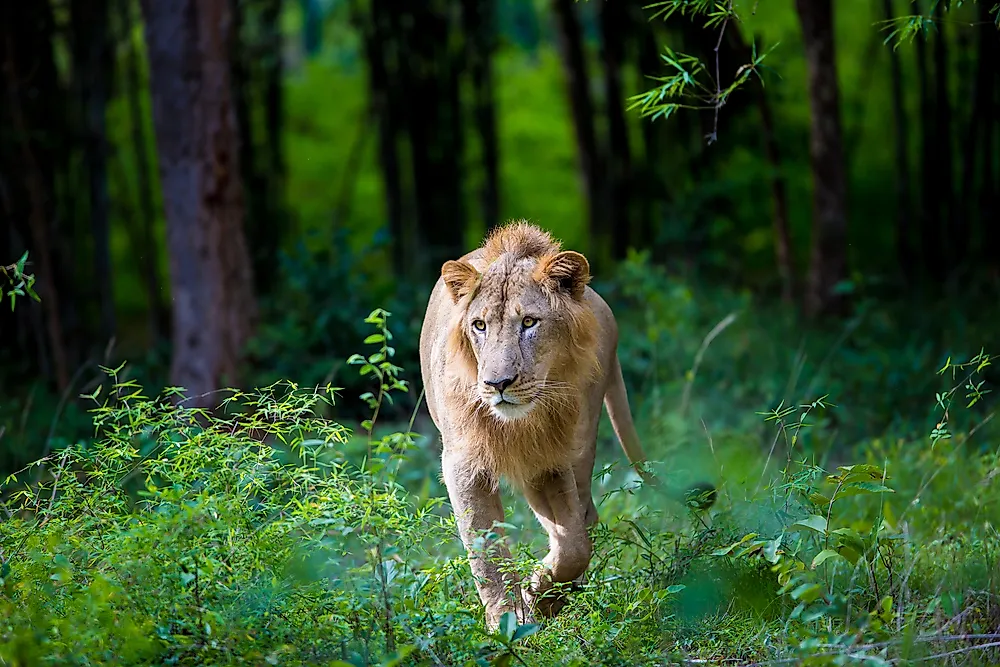
Conservation efforts are underway to prevent disease or conflict with humans from wiping out this last bastion of the Asiatic Lion’s range. (Though several hundred individuals are kept in zoos worldwide, this is the last remaining wild population.)
The Nene: A Canada Goose Blown Off-Course

Once upon a time, a Canada goose took a sightseeing trip. Okay, no, that’s not what happened - at least not on purpose. However, researchers know that it must have happened somehow, all the same, because an ordinary Canada goose had been blown off course and wound up in Hawaii. It’s believed that a whole flock of them made landfall on the islands about 500,000 years ago, and the island life changed them. The result: a smaller, decidedly more agreeable herbivorous goose species with little love for the water and a lot more peril to contend with to survive.
Living in isolation on the Hawaiian Islands, the Nene - or Hawaiian goose - never had a backup plan. Human encroachment on their habitat and the introduction of land-altering livestock nearly drove the species to extinction by the 1950s. However, thanks to successful reintroduction programs, the nene is on the rise, and this iconic symbol of Hawaii’s fragile ecosystems is now appearing everywhere, even in residential areas. (They’re well-known not to be very fearful of humans.)

Though seven species of geese are thought to have branched off from that initial flock, all but the nene went extinct shortly after the first Polynesian navigators reached and settled Hawaii. Thus, the nene (Branta sandvicensis) remains the sole survivor of that Canada goose flock’s fateful tropical vacation. And, though the nene is genetically distinct from its ancestor, it’s one of the more interesting examples of the effects of isolation on a species that you’ll ever find.
Unique Animal Populations Around The World
Whether by accident or in an attempt to exploit a new niche, it’s not uncommon for biologists to find small populations of a species breaking off from the pack and adapting to that lifestyle change in surprising ways. And these populations are extreme examples, ending up in wildly different contexts than their species-mates in ways not all isolated populations do. Still, they’re fascinating examples of a truth biology teaches people over and over again: when life closes a door - say, cuts one off from the rest of their species - it probably opens a window.