How Burmese Pythons Took Over the Florida Everglades
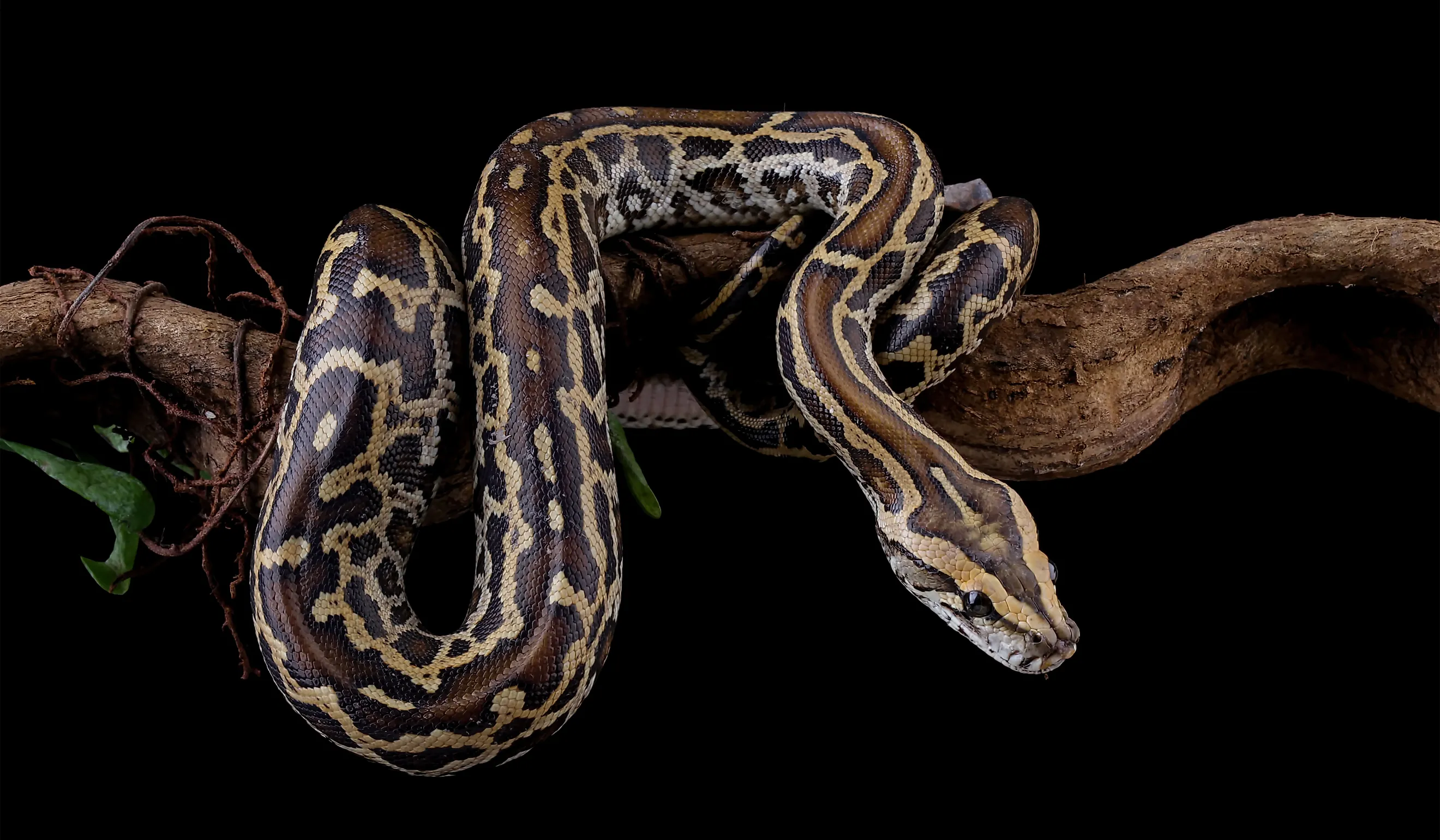
At twenty feet long and 200 pounds, Burmese pythons (Python molurus bivittatus) are formidable predators. But unlike in Southeast Asia, where their populations are struggling, the invasive varieties within the Florida Everglades have been thriving for generations. The Sunshine State's first wild specimen was caught in 1979, but this was far from an isolated incident. In subsequent decades, escaped and intentionally released pythons have continued to find their way into America's largest subtropical wilderness (and are inching toward major cities), where they feed and breed uncontrollably. Despite the best efforts of hunters, scientists, and government authorities, hundreds of thousands of these constrictor snakes are choking the life out of this delicate ecosystem. This is the story of how Burmese pythons took over the Everglades.
How Did Pythons Get Into The Everglades?

Burmese pythons have slithered their way into the southern third of Florida via two main sources. The exotic pet trade is the primary culprit, but Hurricane Andrew in 1992 also played its inadvertent part.
Exotic pets, whether obtained legally or illegally, make up a billion-dollar industry in the United States. This includes everything from lions and monkeys to venomous critters and large snakes, all of which are in high demand. The trend toward exotic pet ownership began around the 1920s, but the sale of Burmese pythons in Florida surged notably in the 1980s. Between 1996 and 2006, more than 100,000 baby Burmese pythons were imported into the U.S., with many of them headed for Florida.
As the number of pythons in American homes increased, so did the cases of escaped and abandoned juggernauts. For you see, these formerly adorable babies grow into some of the largest snakes in the United States—easily overpowering most living spaces and owners (not to mention racking up a grocery bill similar to that of a small family). Feeling they have no other choice, especially after the state of Florida banned private ownership of invasive reptiles, pet owners often release them into the wild—in many cases, into the vast, dense, and unchecked wilderness of the Everglades.
Hurricane Andrew, a Category 5 storm that hit southern Florida in August 1992, also contributed to the growing python gene pool in the Everglades. As if 65 fatalities and $27.3 billion in damage weren't enough, Hurricane Andrew also destroyed a local breeding facility, releasing numerous Burmese pythons into the surrounding wetlands. It's worth noting that Andrew, along with many other seasonal storms, has likely released single snakes as they destroyed homes and the fragile animal cages within.
Why Do Burmese Pythons Thrive in the Everglades?

Hurricanes and exotic pets are not limited to southern Florida, so it’s understandable to wonder why the Everglades, in particular, has become such a breeding ground for Burmese pythons (and now even anacondas). This is where Florida's unique geography works against it. The 1.5 million acres that make up today's Everglades (it used to be twice as large) are located in a subtropical region that is unapologetically wild. Yes, Everglades National Park is a popular tourist destination, but its infrastructure barely touches the wet and grassy landscape. Snakes native to the jungles of Southeast Asia and South America fit right into this ecosystem. There are countless places to hide, plenty of animals to eat (for now), and no natural predators to worry about. Southern Florida also remains unaffected by winter. While the northern parts may be nice for most of the year, temperatures approaching near-freezing eventually arrive, and occasional snowfall does happen.
Furthermore, given their finely tuned ambush tactics, and voracious appetites to boot, Burmese pythons are blamed for having reduced the population of several small mammals native to the Everglades by anywhere from 88% to 99%. In fact, the South Florida Water Management District estimates that in order for one Burmese python to reach 13 feet over the span of five to seven years, it would have to consume something like: one raccoon, one opossum, four five-foot alligators, five American coots, six little blue herons, eight ibises, ten squirrels, 15 rabbits, 15 wrens, 30 cotton rats, and 72 mice. Multiply that hypothetical diet by the 100,000 to 300,000 Burmese pythons that are currently estimated to live in the Everglades, and an obvious problem presents itself.
The theme surrounding the Everglades python invasion is escalation. Case in point, as smaller animals are extirpated, these fruitful and adaptable snakes turn to bigger and bigger meals. As previously mentioned, juvenile alligators are very much on the menu, but recently, scientists even observed a 15-foot female python swallowing a 77-pound white-tailed deer…whole! That's approximately 67% of its own mass in a single sitting.
The known territory of Florida's pythons is also expanding. Back in the early 2000s when only a few hundred were known to exist in the wild, they were confined to Everglades National Park (in Miami-Dade County). Burmese pythons are now known to occur from Key Largo to just south of Lake Okeechobee, and from western Broward County to Collier County. Evidently, the entire Everglades region (which includes not only the national park, but also Big Cypress National Preserve and three water conservation areas) presents a plethora of opportunities for these apex predators.
What Is Being Done To Suppress the Python Problem?

Even though Burmese pythons are amazing creatures - ones that feel pain and are simply trying to survive in whatever environment they find themselves in - the hard truth is that humans must intervene in order to restore balance to the Everglades. At this point, it is not clear that hundreds of thousands of powerful, well-camouflaged, and quickly-reproducing apex predators can be eradicated. But there are a few strategies in play.
The first step is to stop the bleeding. As of 2012, the United States banned the import of Burmese pythons, and by 2021, Florida made it illegal for anyone to own, buy, or sell these snakes (along with other problematic species). Those who had a pet python before the rule change are allowed to keep it but must register it with the state and have a microchip implanted. To prevent ongoing pet owners—whether legal or illegal—from abandoning their unsuitable animals, Florida Fish and Wildlife established a no-questions-asked Exotic Pet Amnesty Program. The Floridian government also set up a reporting system for anyone who spots an invasive animal or plant (use the IveGot1 mobile app, visit IVEGOT1.org, or call 1-888-IVE-GOT1). Concerned citizens can send a signal, and the proper authorities will respond accordingly.
The next step involves abating the rapid expansion of wild python populations. To do this, males are tagged with radio transmitters so that researchers can follow them to breeding females. Since female pythons are capable of laying upwards of 100 eggs per year, each one that is removed (and subsequently euthanized) tilts the ecosystem back towards equilibrium. Scientists are also experimenting with gene and pheromone manipulation in order to disrupt the direction of flow. Unfortunately, given the extent of the problem, a third, final, and much more drastic strategy is required: mass killing.
South Florida has relaxed its laws so that anyone can humanely kill non-native reptiles on 32 Commission-managed lands, or on private land when permission has been granted by the owner. Otherwise, no permit is required, and even a hunting license is superfluous. The only protective measure in favor of Burmese pythons is one against unnecessary cruelty (a two-step stipulation that necessitates the animal immediately lose consciousness and its brain be destroyed). Those competing in the annual Florida Python Challenge must practice said humane methods. This year, 857 participants removed 195 invasive pythons from the Everglades throughout the ten-day August challenge. Ronald Kiger won the $10,000 grand prize by catching 20 pythons.
Sicking massive snakes loose on the Everglades has proven to be devastating for this National Park, World Heritage Site, International Biosphere Reserve, and Wetland of International Importance. Oddly enough, Burmese pythons are not the world's largest invasive species, but they are certainly one of the most overwhelming. Hopefully the changes in local laws, public awareness, and ongoing mitigating strategies will help plateau the runaway trend. But given how stealthy, well-adapted, powerful, and rapacious they are, Burmese pythons are likely to maintain their stranglehold on southern Florida for generations to come.