Lemur
Scientists cannot agree on how many lemur species exist, with estimates ranging from 50 to 112, depending on who is doing the counting. That uncertainty runs alongside a more urgent problem: roughly 94% of known lemur species are currently threatened with extinction, driven by deforestation, illegal logging, and widespread poverty in Madagascar. Lemurs themselves are adapted to extremes, with mating windows that can last only a few hours and diets flexible enough to include cyanide-tolerant bamboo. Understanding what lemurs are, how they live, and why so many are disappearing turns out to be more complicated than it first appears.
Physical Description

Lemurs are primates, but they belong to a distinct branch of the primate order (the suborder Strepsirrhini) that split from the ancestors of monkeys and apes roughly 60 million years ago. Several traits distinguish them. Lemurs rely heavily on their sense of smell for communication, aided by longer snouts and wet noses. Their night vision is enhanced by a reflective layer behind the retina called the tapetum lucidum, suggesting a nocturnal ancestry. Most lemurs have a toothcomb (forward-leaning incisors and canine teeth used for grooming and sometimes feeding) and a grooming claw on the second digit. The aye-aye is the only exception: it lacks a toothcomb and has evolved a highly unusual elongated middle finger for extracting insect larvae from dead wood.
Lemur Diversity
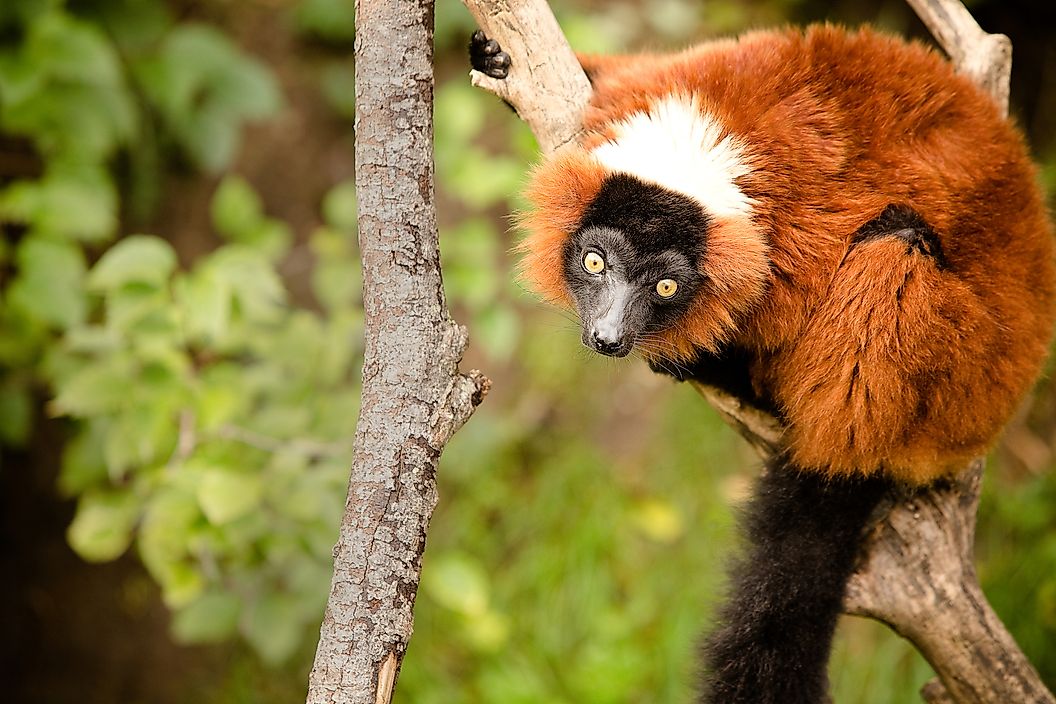
Lemurs vary enormously in size. The indri, the largest living species, weighs up to 9.5 kilograms and stands nearly a metre tall. At the other end, Madame Berthe's mouse lemur weighs about 30 grams, making it the smallest primate in the world. Between these extremes sit well-known species like the ring-tailed lemur (recognized by its black-and-white striped tail), the sifakas (which leap through the forest in an upright posture), the black lemur, the aye-aye, and the golden-crowned sifaka. All lemur species are found only in Madagascar, the result of some 40 million years of isolated evolution on the island.
Behavior

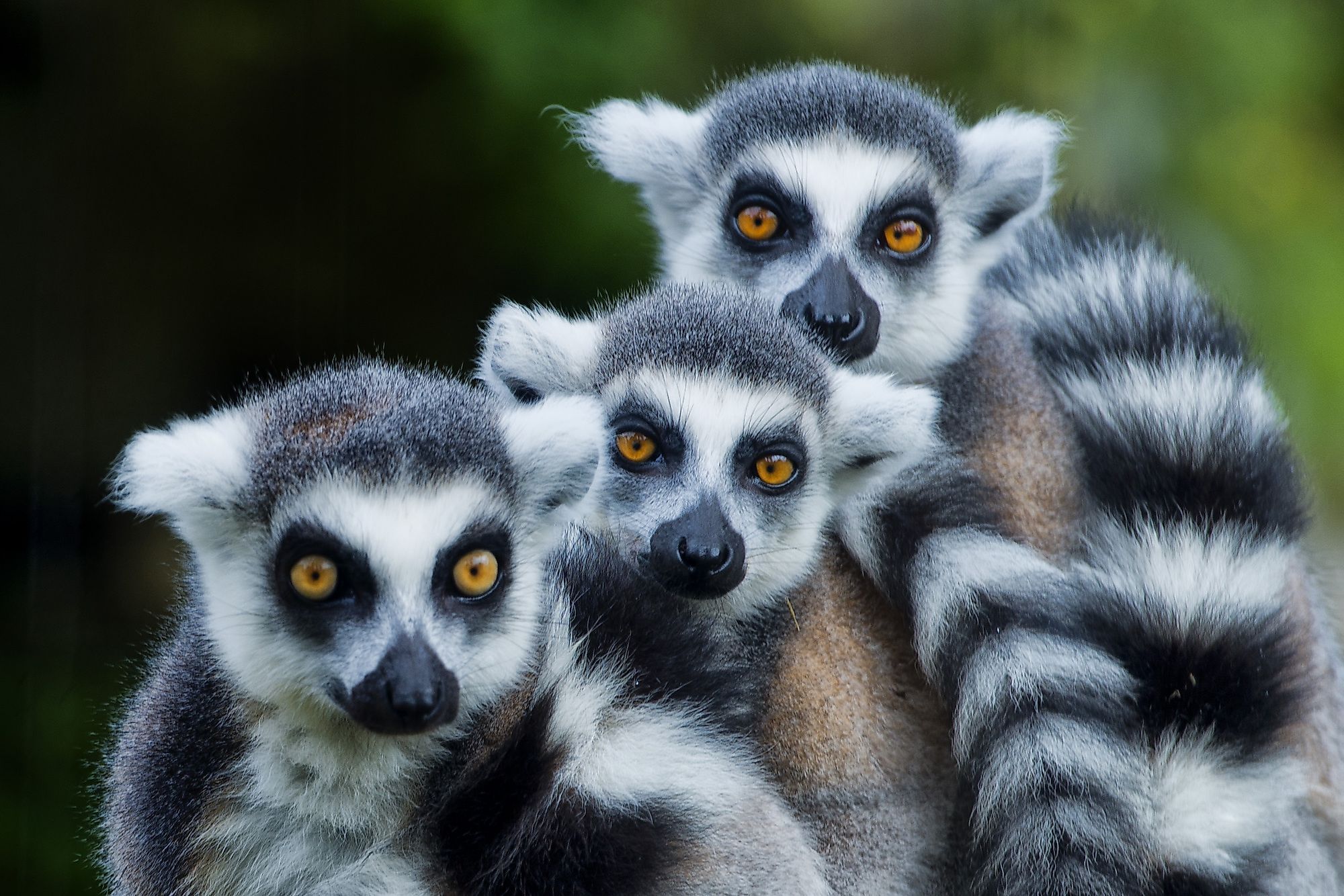
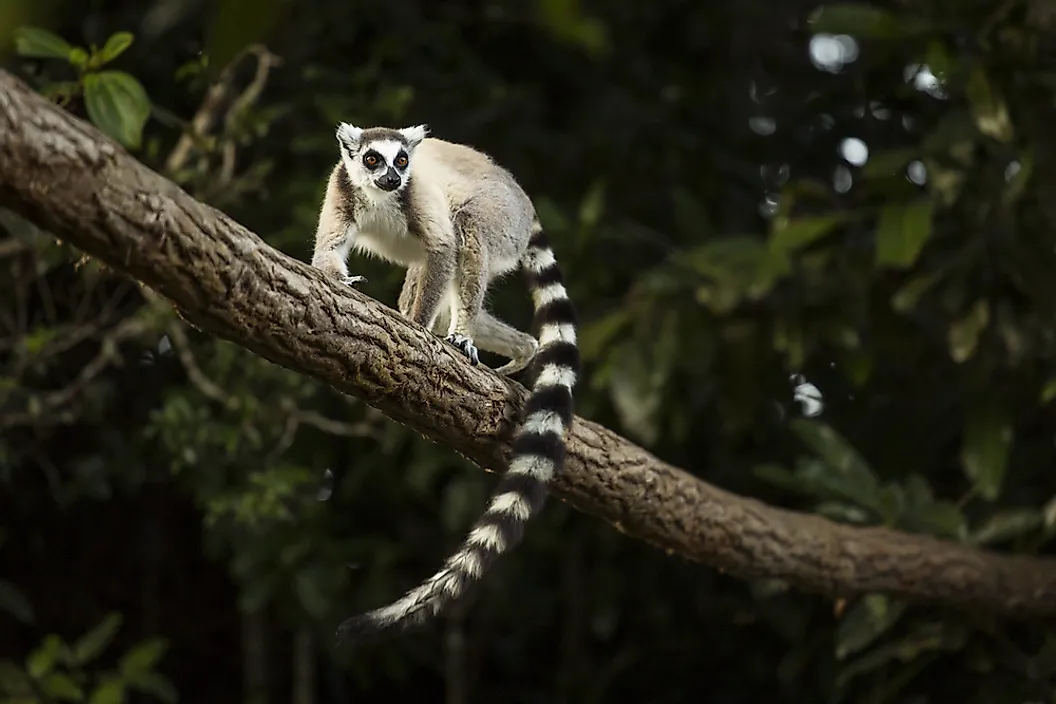
Lemur behavior is as variable as lemur morphology, with differences in diet, social systems, activity patterns, locomotion, and communication setting species apart. The general pattern is that smaller species tend to be nocturnal and solitary, while larger species are diurnal and social. The ring-tailed lemur is the classic diurnal, social example. Native to southern and southwestern Madagascar, it tolerates a wide range of habitats including spiny forests, gallery forests, dry deciduous forests, rocky canyons, and scrublands. The IUCN has classified it as Endangered, with threats including habitat loss, overgrazing by domesticated animals, hunting for food and the pet trade, and frequent droughts.
Ring-tailed lemurs live in groups called troops, typically 6 to 30 animals strong. Each troop is matriarchal, led by a dominant female, which is unusual among primates. Scent glands play a central role: lemurs mark territory to warn rival troops, and disputes can break out where ranges overlap. Researchers have also documented a "sunning" posture, where ring-tailed lemurs sit with their undersides exposed to morning sunlight for thermoregulation after cold nights.
Reproduction
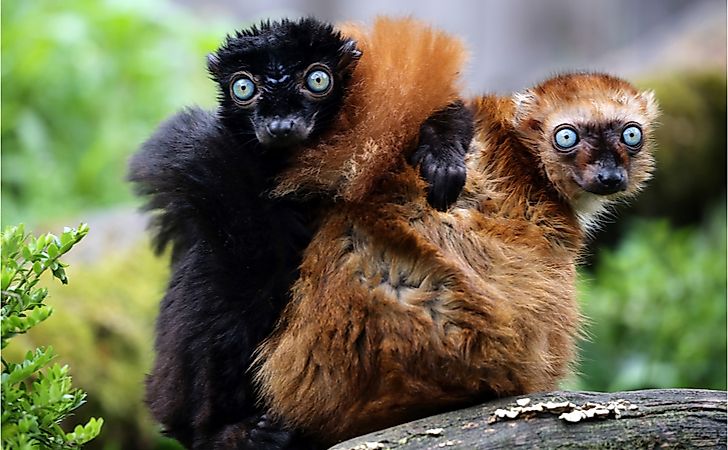
Most lemurs are seasonal breeders, with mating and birth seasons shaped by the highly seasonal availability of food. The mating season typically lasts less than three weeks each year, and females are receptive for only a few hours to a few days within that window. These narrow windows are tied to lemurs' short gestation periods, rapid maturation, and low basal metabolic rates, along with the high energy cost of reproduction for females. The exceptions are the aye-aye and the Lac Alaotra gentle lemur, which give birth across a six-month period rather than in a sharply defined season.
Ring-tailed lemurs reach sexual maturity at about 2.5 to 3 years. Males compete for mates through "stink fights," covering their long tails with secretions from wrist and shoulder glands and waving them to drive off rivals. After a 4.5-month gestation, females give birth to a single infant, occasionally twins. The infant clings to its mother's belly for the first two weeks before shifting to her back. Wild ring-tailed lemurs live an average of 16 years.
Mating strategies vary widely across the lemur family. Monogamous species include the red-bellied lemur (Eulemur rubriventer) and the mongoose lemur (Eulemur mongoz), though even the mongoose lemur has been observed mating outside its pair bond. Monogamy is most common among nocturnal species. Mouse lemurs practice something different: males develop enlarged testes during the mating season and deposit sperm plugs in females, a reproductive system known as scramble competition polygyny, where males cannot physically defend females or their resources. Scent-marking activity escalates across the mating season, and pheromones appear to coordinate reproductive timing among females entering estrus.
Food

Lemur diets are highly variable and remarkably flexible. The general pattern is that the smallest species are omnivorous, primarily consuming fruit and insects, while larger species lean more herbivorous, relying on leaves and other plant material. The ring-tailed lemur, though mostly frugivorous, will eat insects and small vertebrates when necessary and is best described as an opportunistic omnivore. Coquerel's giant mouse lemur (Mirza coquereli) is mostly frugivorous but will consume insect secretions during the dry season. Perhaps the most specialized eaters are the bamboo lemurs, which consume bamboo shoots containing levels of cyanide that would kill most mammals, apparently tolerating the toxin through mechanisms that are still not fully understood.
Lemurs time their breeding so that weaning periods align with peak food availability. Mouse lemurs can fit their entire breeding cycle into the wet season, while larger species like sifakas must lactate for two months into the dry season. Infant survival in species such as Milne-Edwards's sifaka is directly affected by environmental conditions and the rank, age, and health of the mother. Photoperiod also drives breeding timing: mouse lemurs give birth between September and October in their native habitat in the Southern Hemisphere, but between May and June in captive settings in the Northern Hemisphere, where the seasons are reversed.
Ecological Importance

Lemurs are critical to the structure and regeneration of Madagascar's forests. As they move through the canopy searching for fruit and nectar, they pick up pollen and seeds on their fur and transfer them to other flowers and locations. Seeds also get dispersed through their digestive systems, carried kilometres from the parent tree before being deposited in nutrient-rich waste. The black-and-white ruffed lemur is one of the most important: it is the primary pollinator of the traveller's palm (Ravenala madagascariensis), a plant whose flowers are so large and sturdy they can only be effectively pollinated by a lemur-sized animal prying them open. Without their lemur partners, many Madagascan plant species would lose their main seed disperser or pollinator.
Threats

An estimated 94% of all known lemur species are threatened with extinction, placing lemurs among the most endangered mammal groups on Earth. The main driver is habitat loss. Madagascar has lost the majority of its original forest cover over the past century, and the pace has accelerated during periods of political instability when environmental enforcement weakens. Widespread poverty drives slash-and-burn agriculture, where farmers cut and burn forest to make room for rice and other subsistence crops, leaving behind degraded soil that supports only a few seasons of cultivation before being abandoned. Illegal hardwood logging, particularly of rosewood and ebony, removes the mature canopy trees that many lemur species depend on for food and shelter.
Taxonomic Classification
The classification of lemurs within the suborder Strepsirrhini is still debated. Under the most widely used taxonomy, the infraorder Lemuriformes contains all living strepsirrhines, divided into two superfamilies: Lemuroidea (all lemurs) and Lorisoidea (lorises and galagos from Africa and Asia). Some researchers prefer to separate these groups entirely, placing lorisoids in their own infraorder, Lorisiformes. A third taxonomy proposed by Colin Groves goes further, placing the aye-aye in its own infraorder, Chiromyiformes, on the grounds that its anatomy diverged so sharply from other lemurs that it represents a separate evolutionary lineage. The ongoing debate reflects how much about lemur evolutionary history is still being worked out.
Why Lemur Conservation Matters
Lemurs represent a unique evolutionary experiment: 40 million years of isolated adaptation to a single island ecosystem that produced an extraordinary range of primates found nowhere else. Their reproductive strategies, dietary flexibility, and social systems reveal a group finely tuned to seasonal scarcity and ecological pressure. Protecting them requires both scientific clarity on what each species needs and practical action on deforestation, poverty, and illegal logging in Madagascar. If lemurs disappear, so do the ecological services they provide, and an evolutionary story that took 40 million years to unfold ends.